Category: Travel Adventures

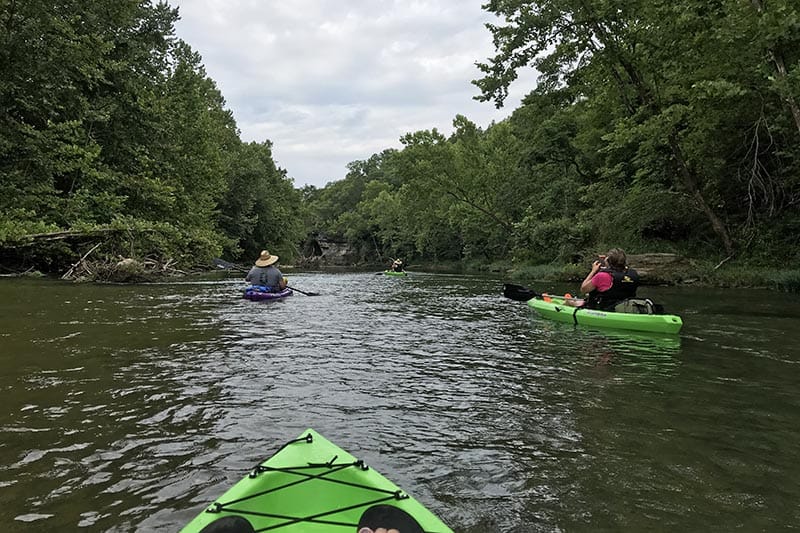
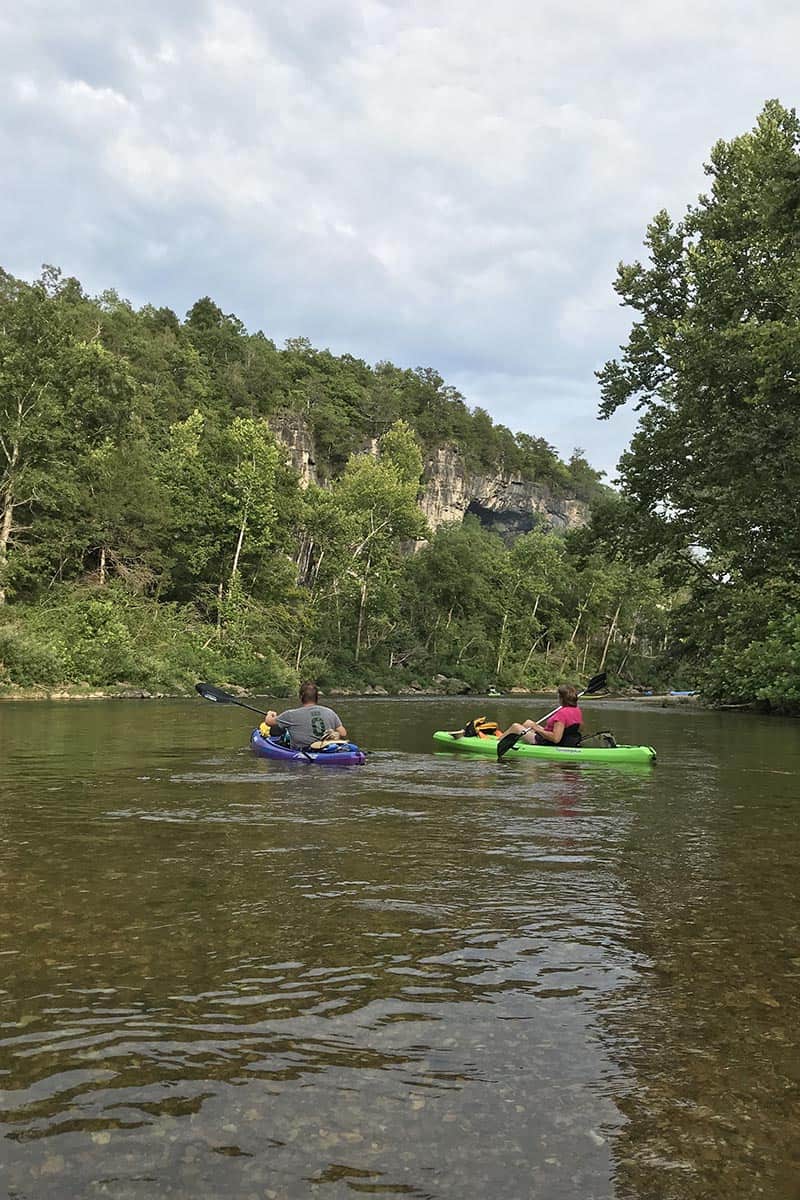
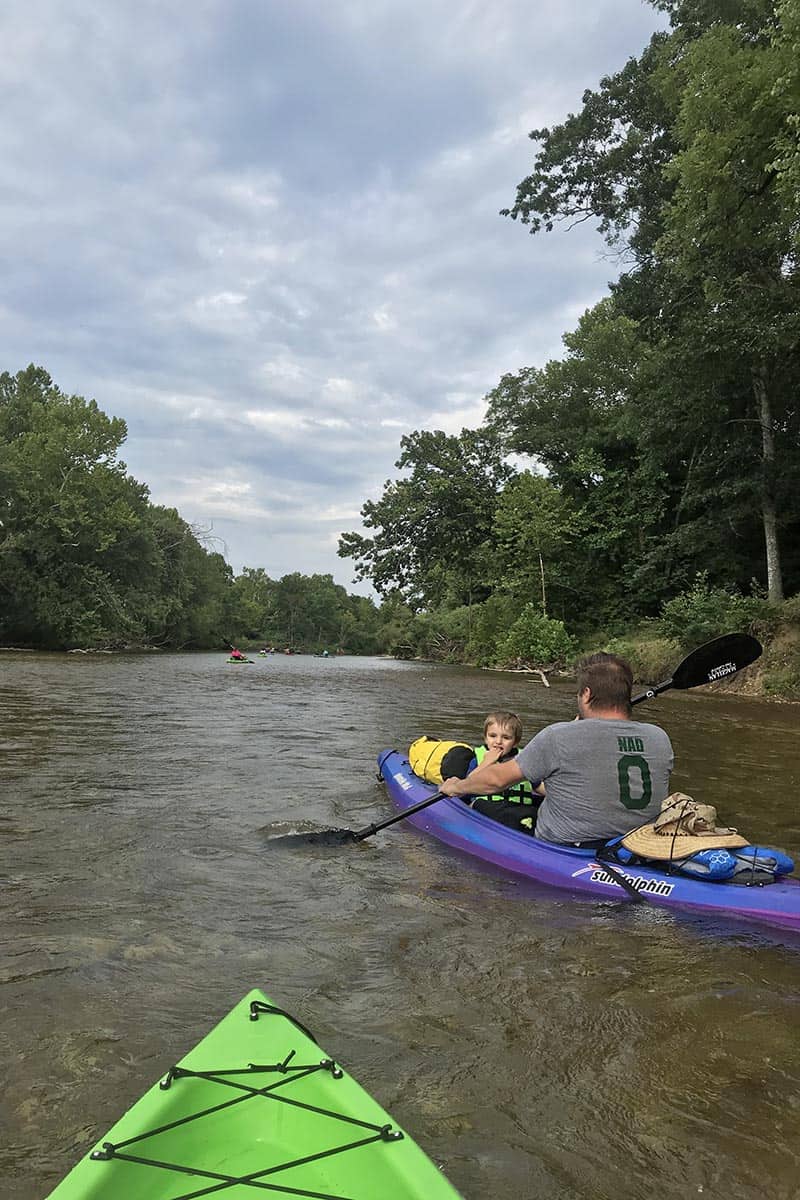
  • 21+ Unusual Spring Break Destinations for Families

    21+ Unusual Spring Break Destinations for Families

    21+ unique and unusual spring break destinations for families, mostly in the USA. Cheaper ideas, amazing locations, and unforgettable travel adventures!

    Every year February starts to ravel away, March gets ever closer, and I get this intense hankering to travel somewhere new. Spring break road trip ideas, trips, and thoughts of family vacations begin to bob around in my head.
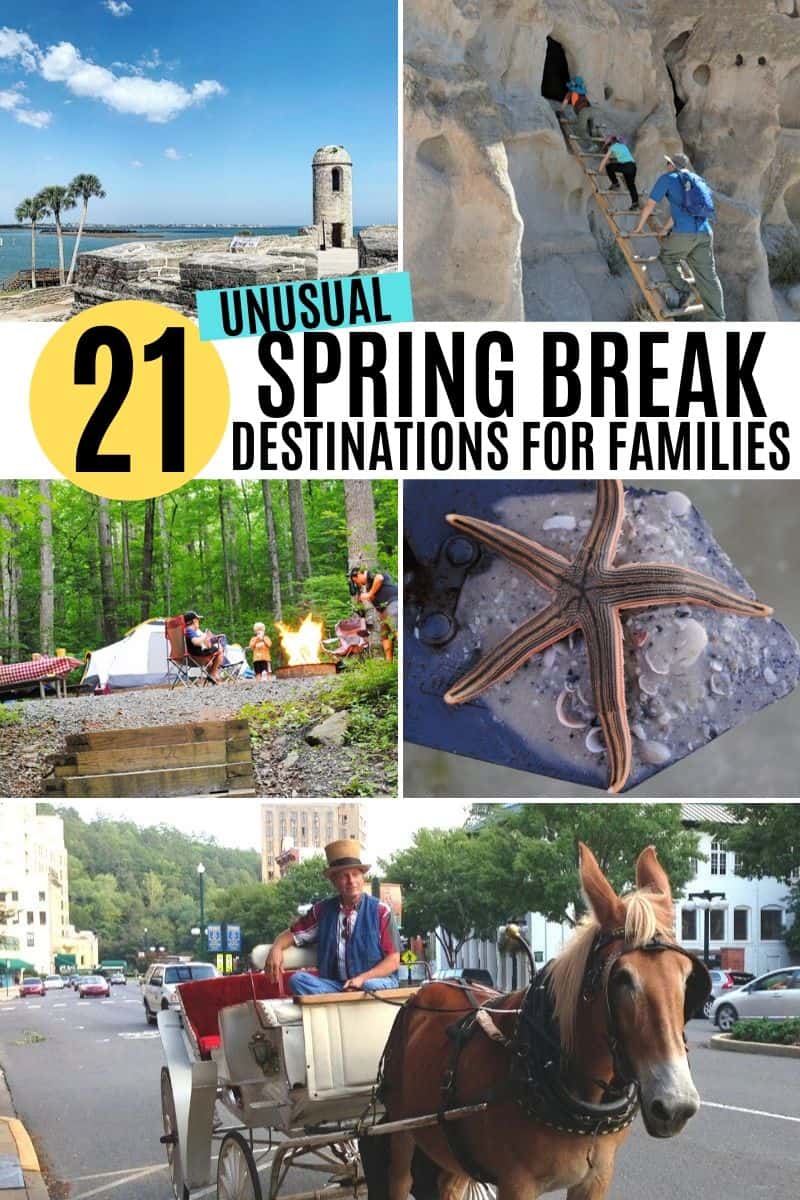
    photo collage with 21 ideas for unique and unusual spring break destinations for families, including the beach, mountains, road trips, camping, and small town America

    It’s like a craving, but it’s not for food. Rather it’s a craving to get outside, get away from the everyday norm, to travel, and go explore something with my family. It’s like we’re breaking out of winter and longing to get back out there.

    But my family and I aren’t really into party scenes. Instead we really enjoy flying under the radar, enjoying a little peace and quiet at off the beaten path gems, but at the same time adventure and fun for all ages.

    All this hankering for a real vacation gave me motivation to create a list of unique spring break destinations and spring break ideas!

    21+ Unusual Spring Break Destinations for Families

    21+ unique and unusual spring break destinations for families, mostly in the USA. Cheaper ideas, amazing locations, and unforgettable travel adventures!

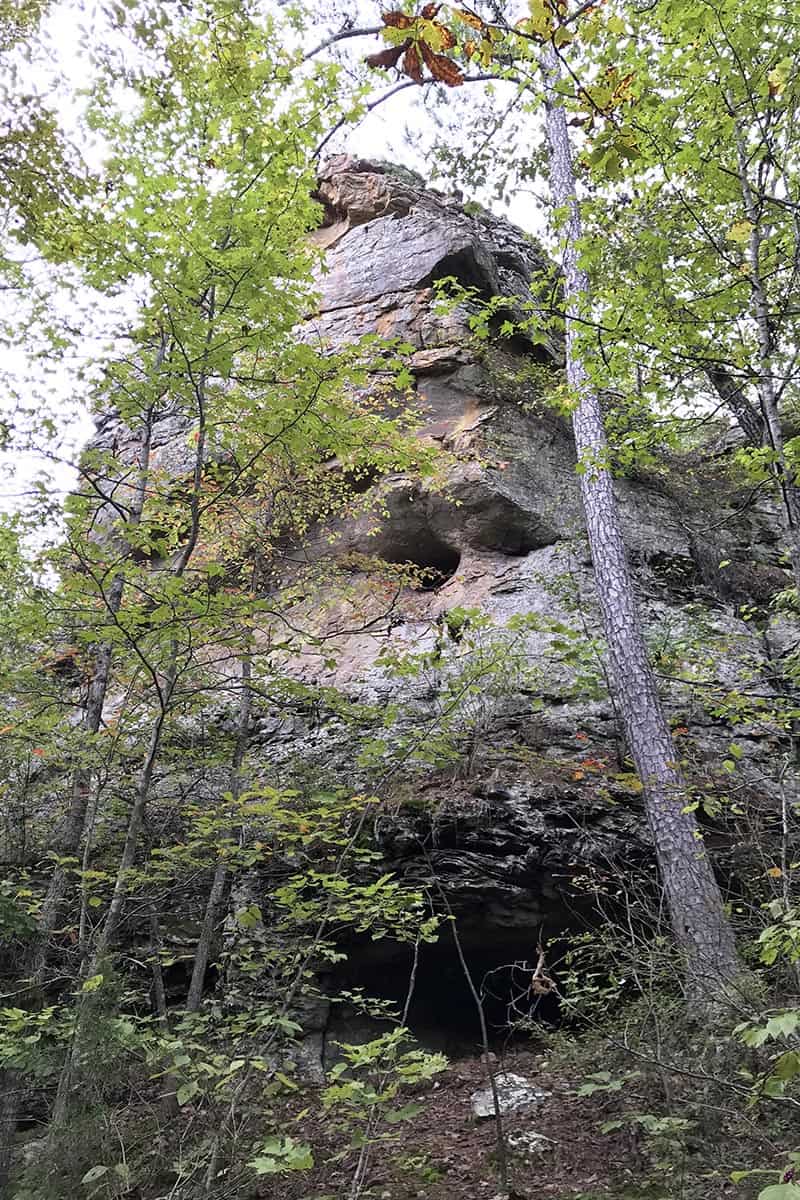
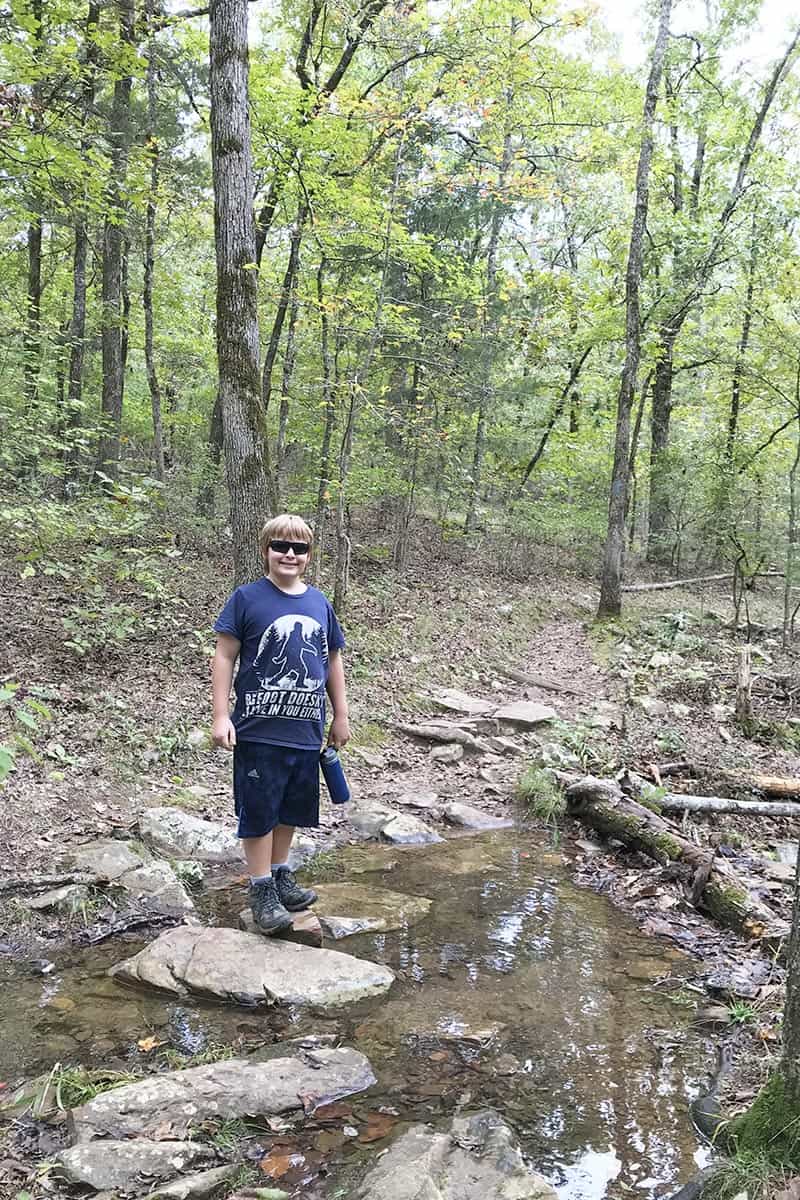
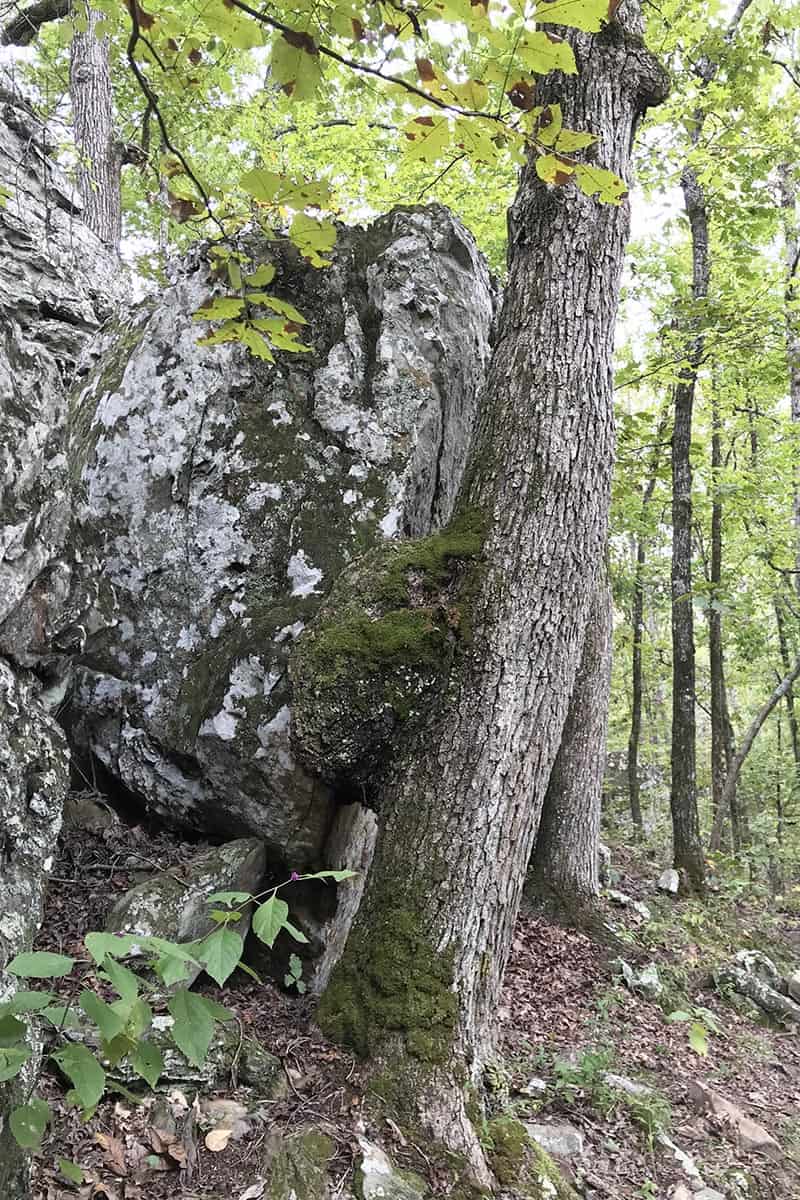
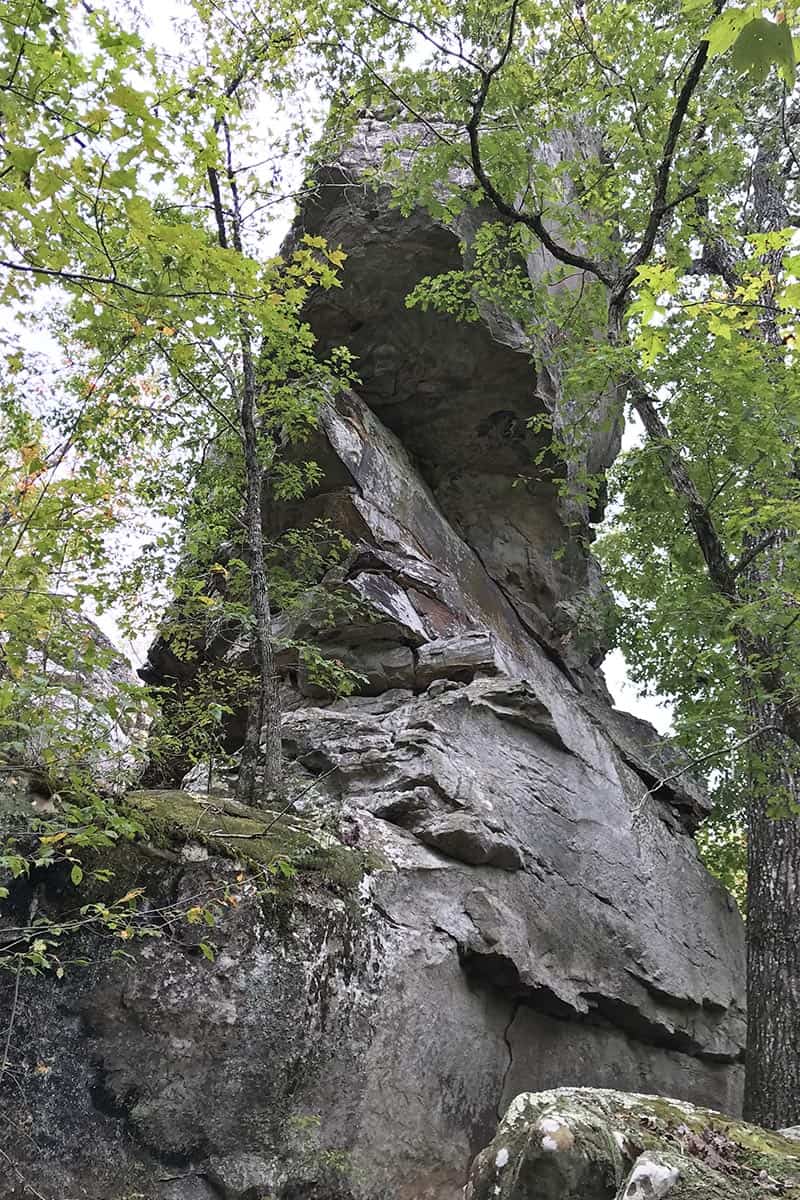
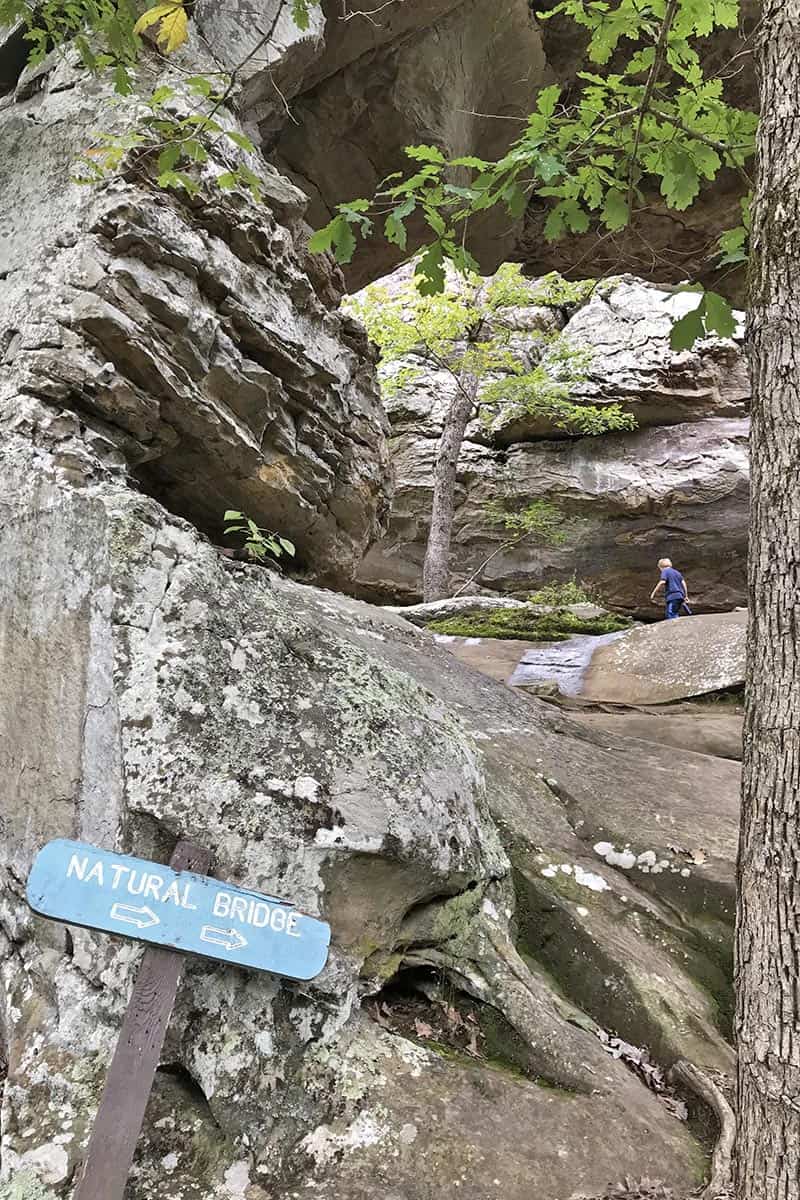
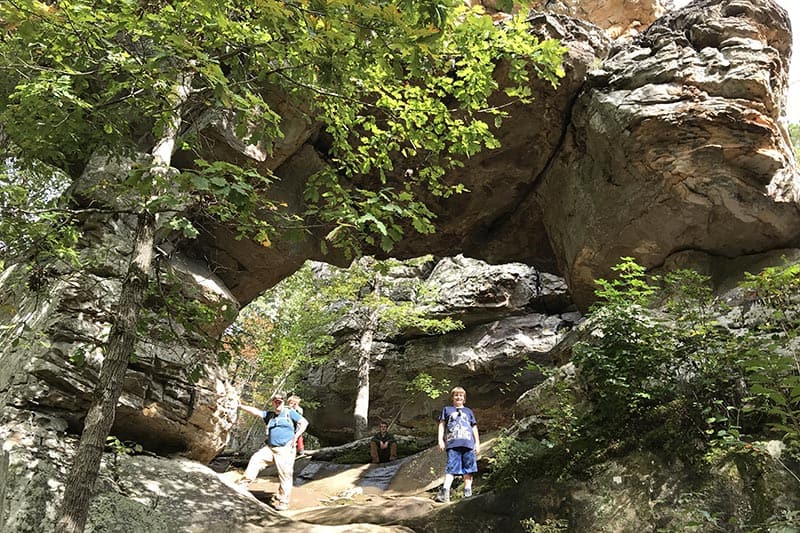
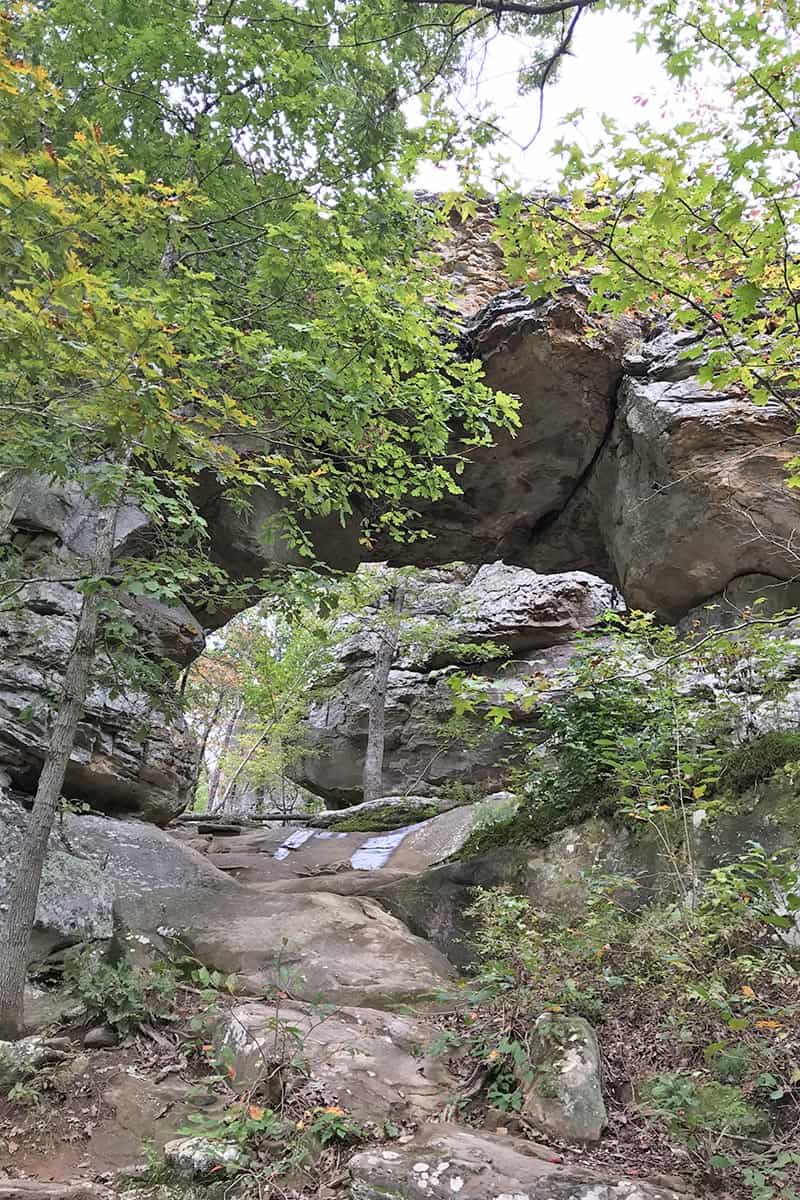
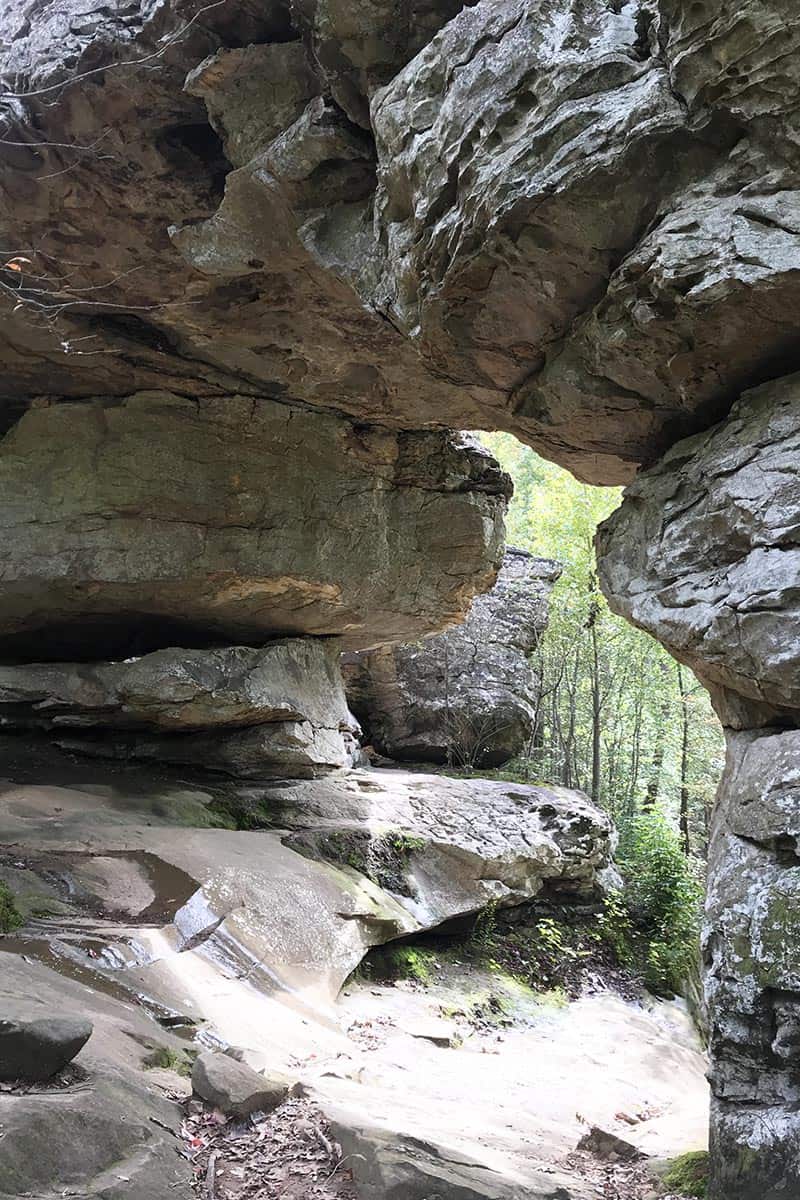
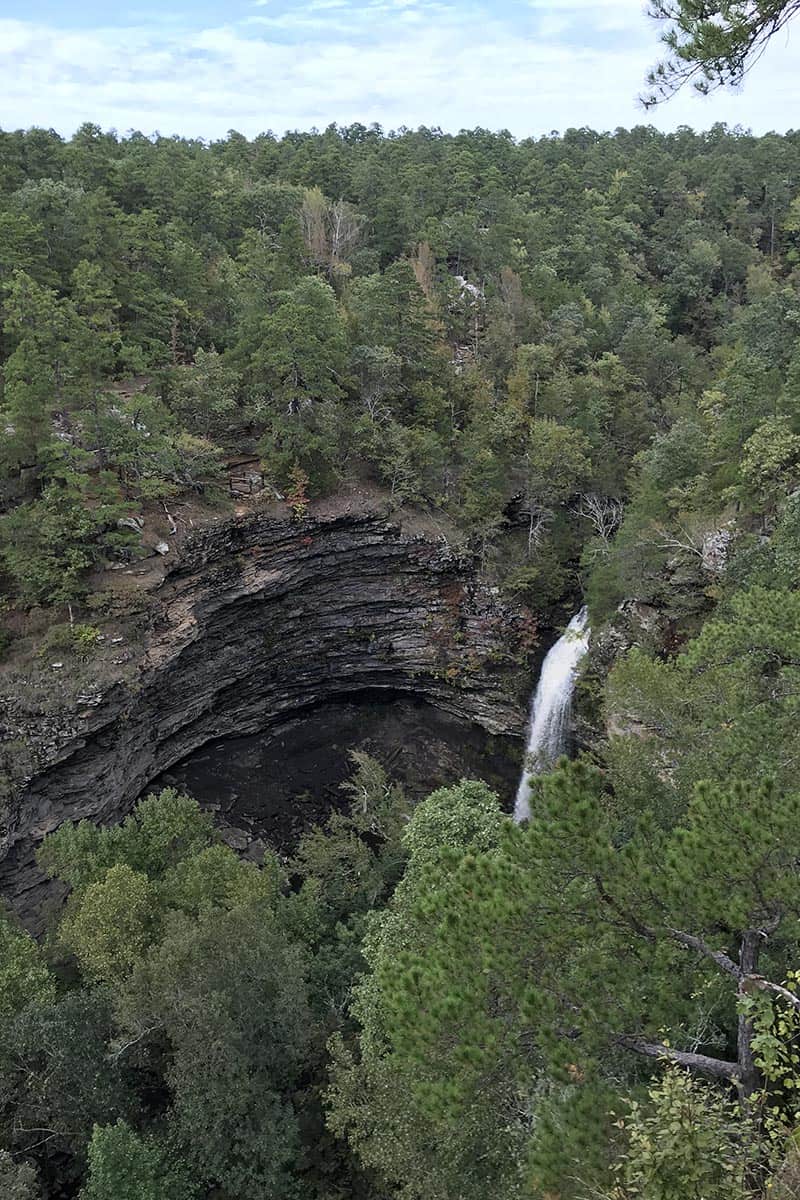
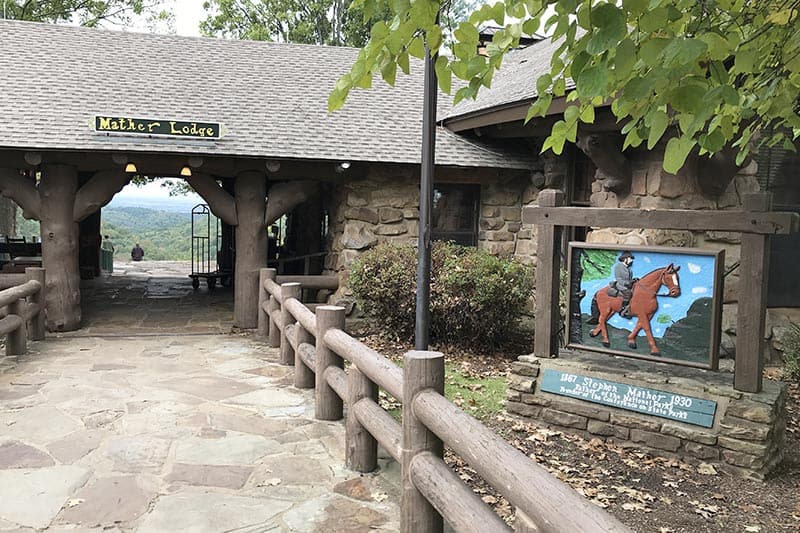
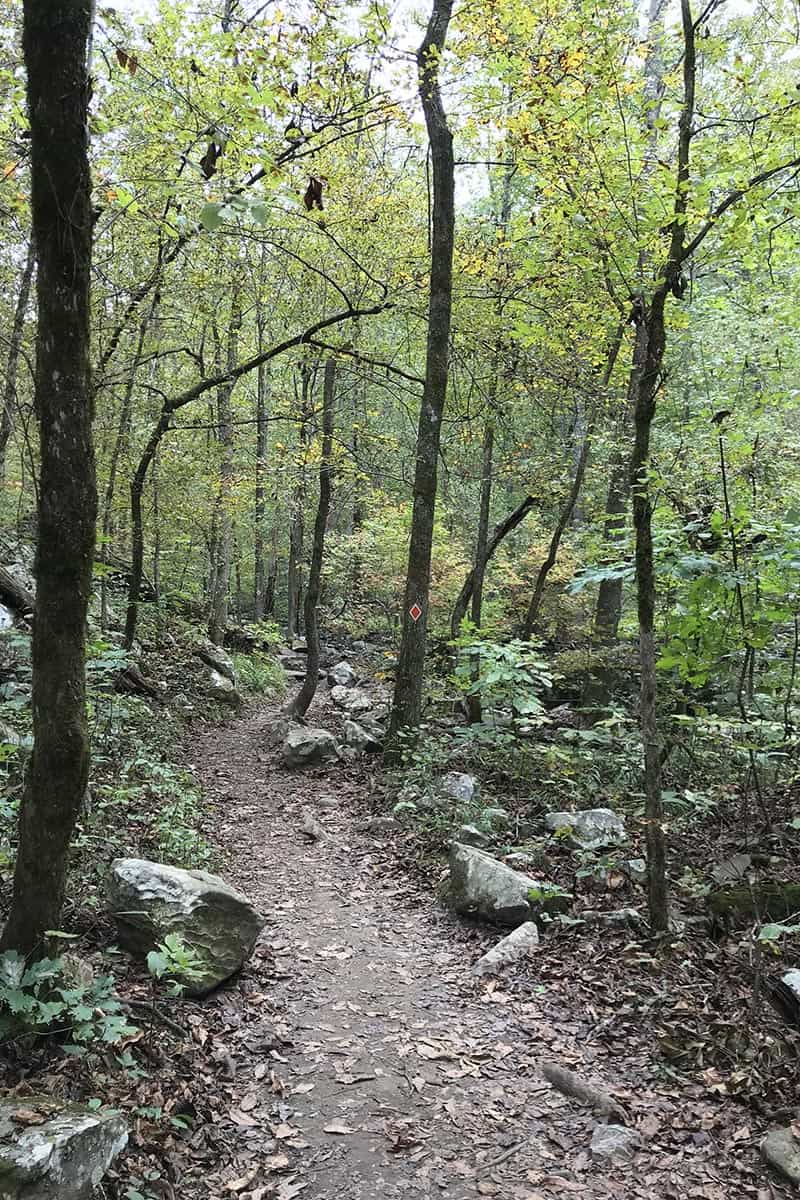
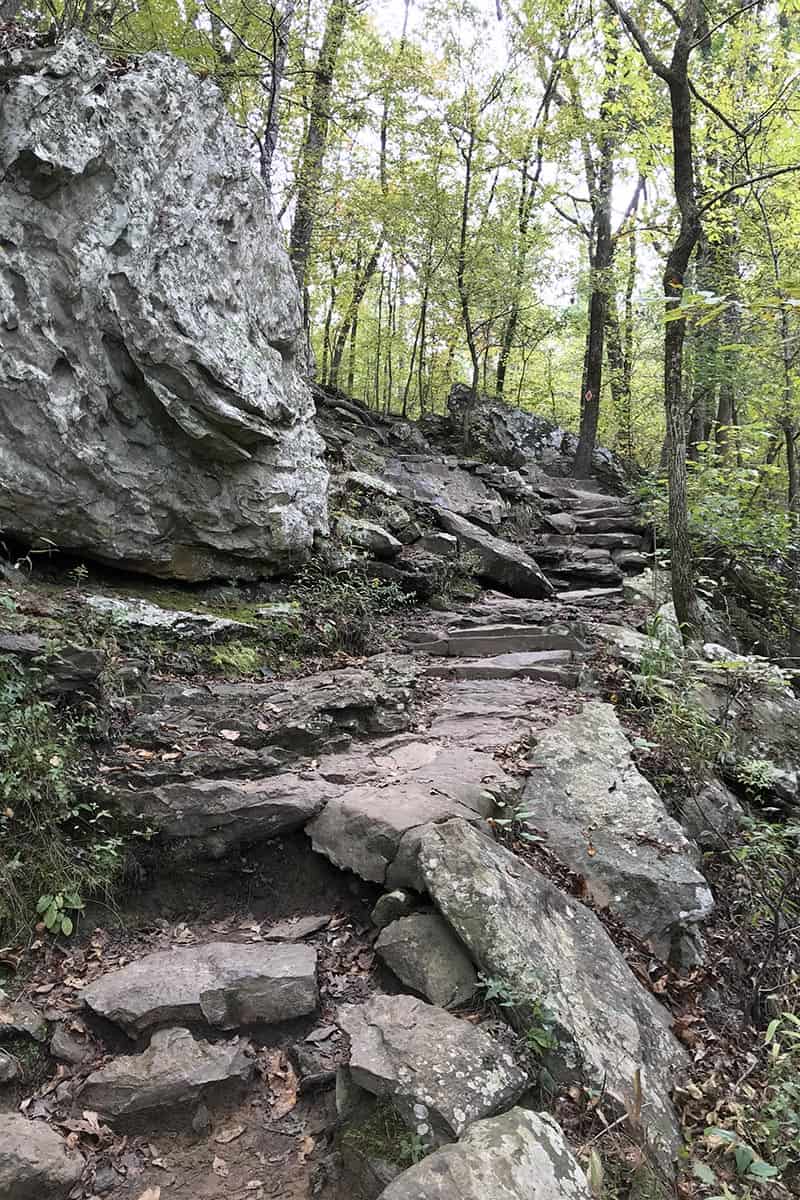
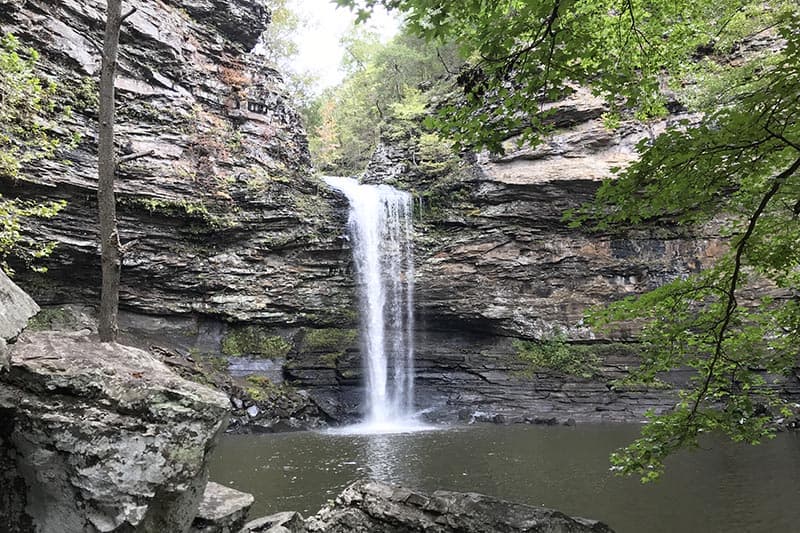
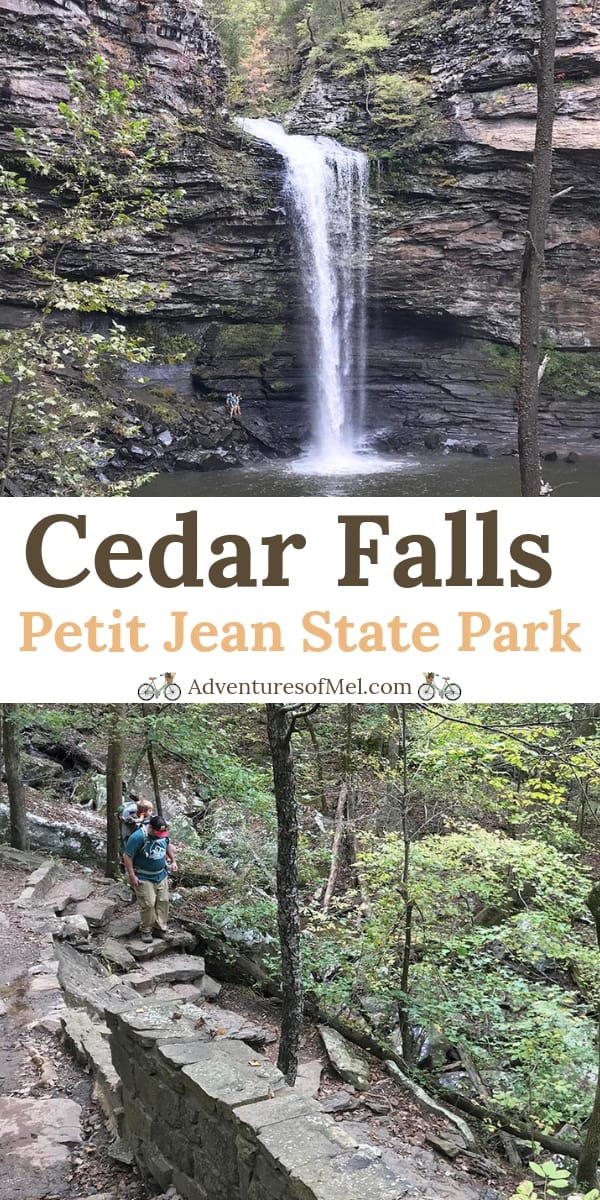
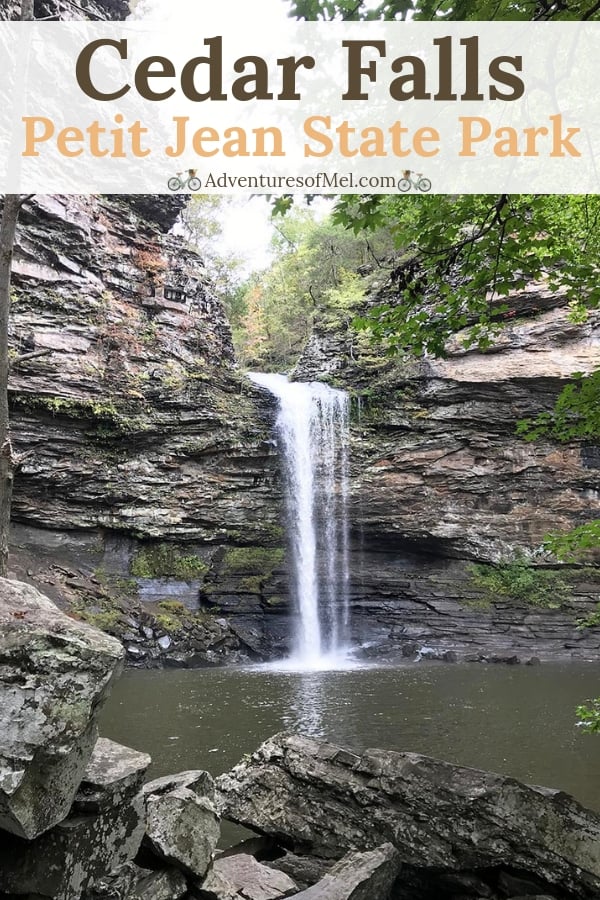
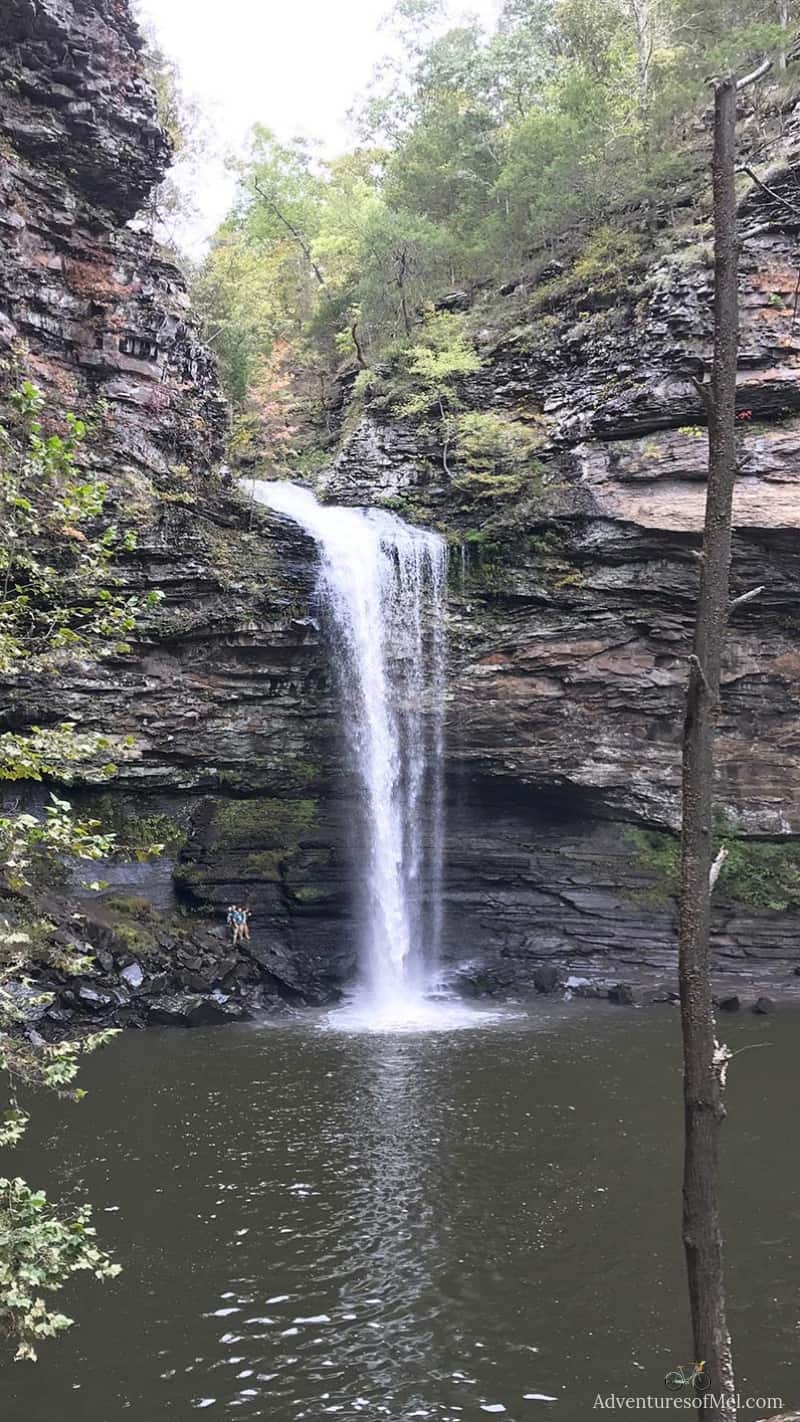
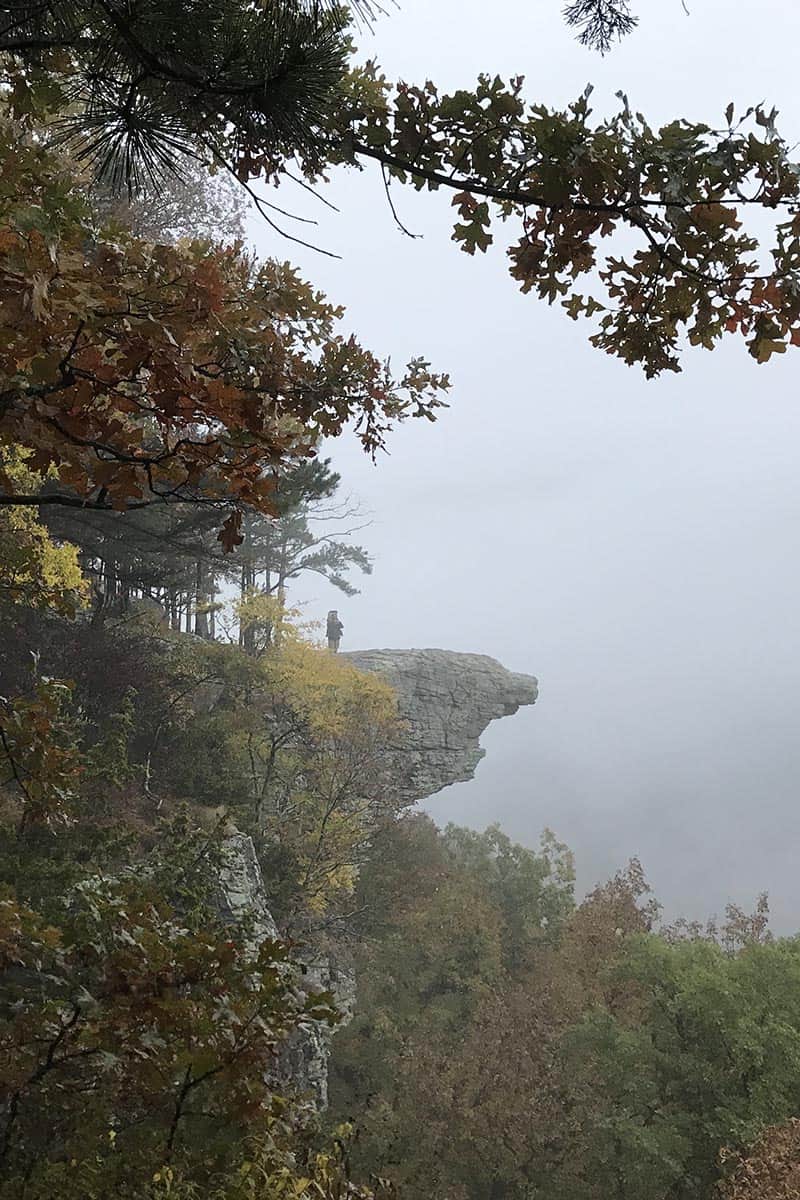
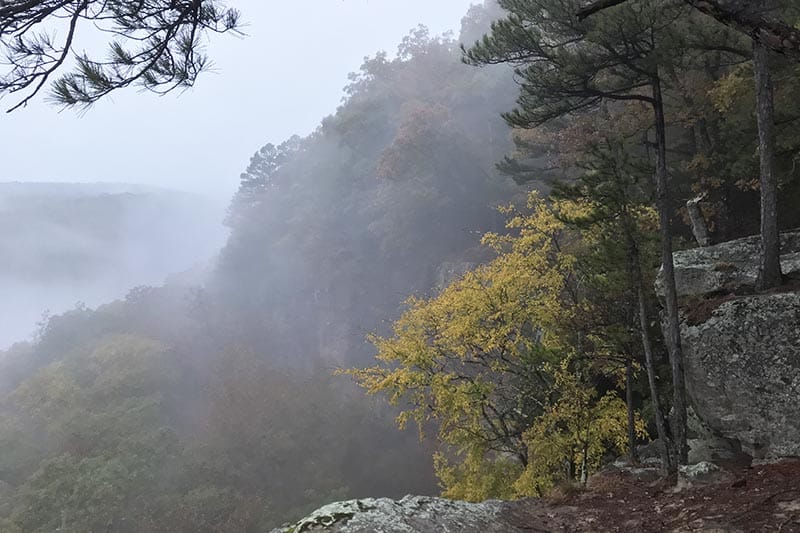
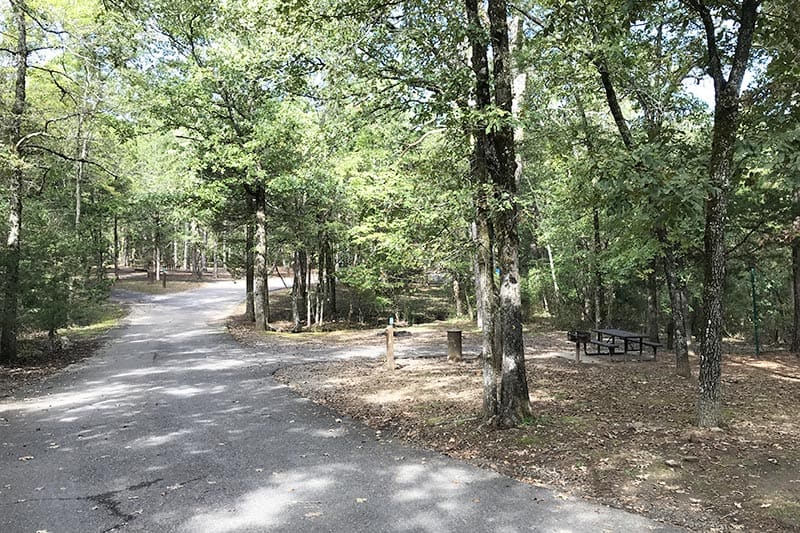
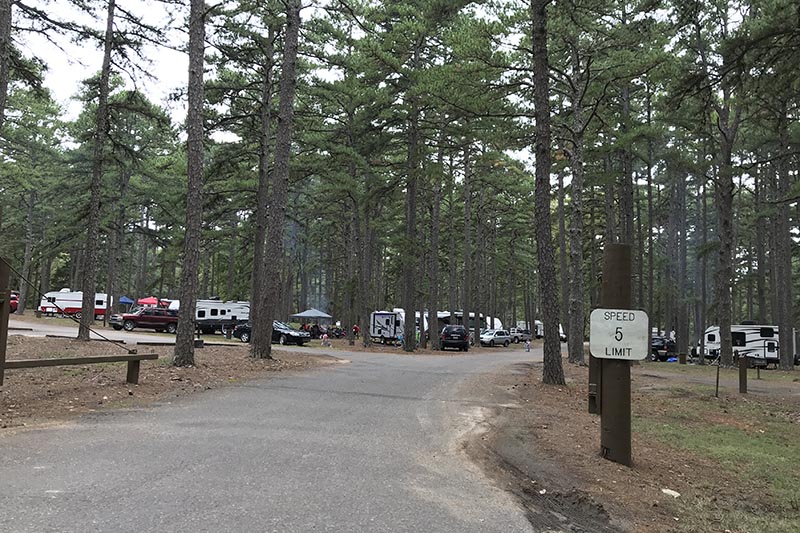
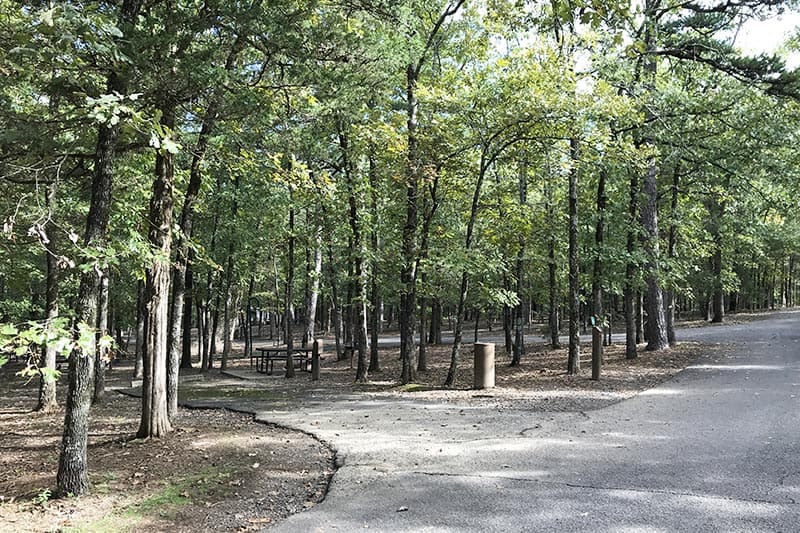
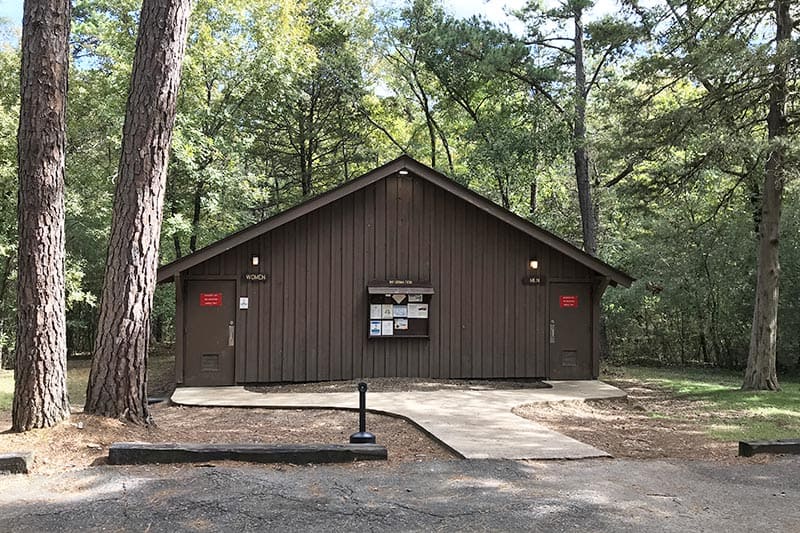
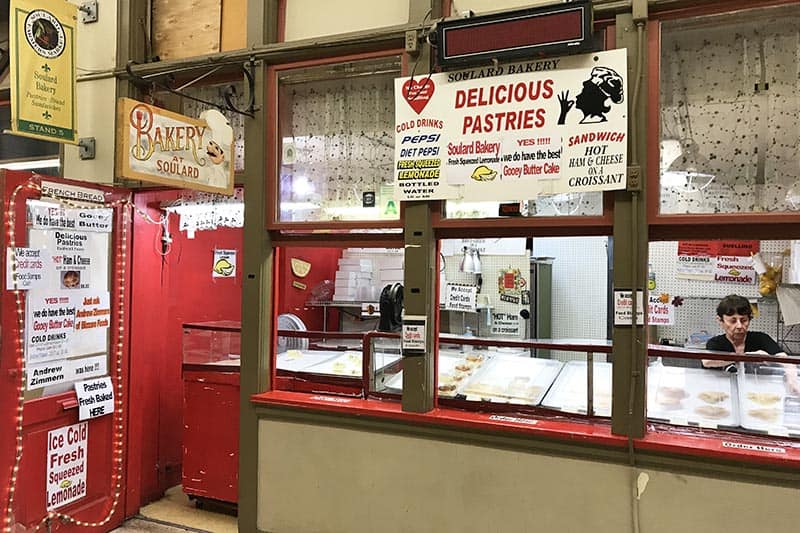
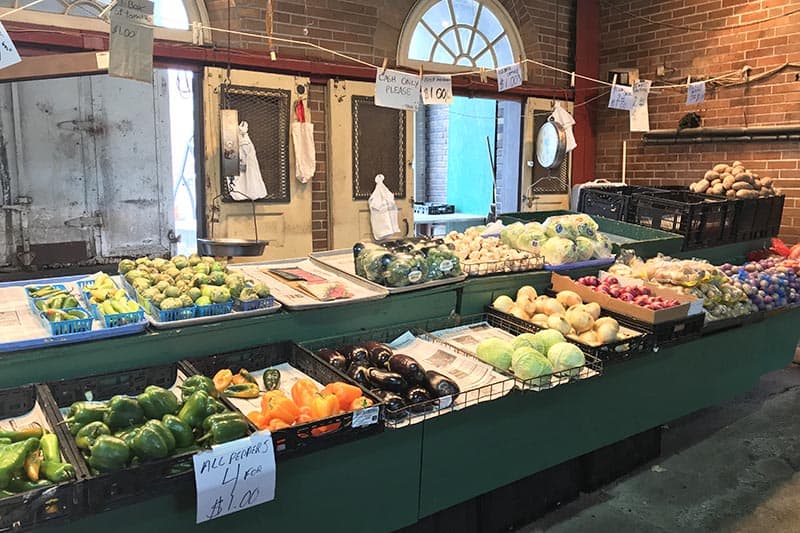
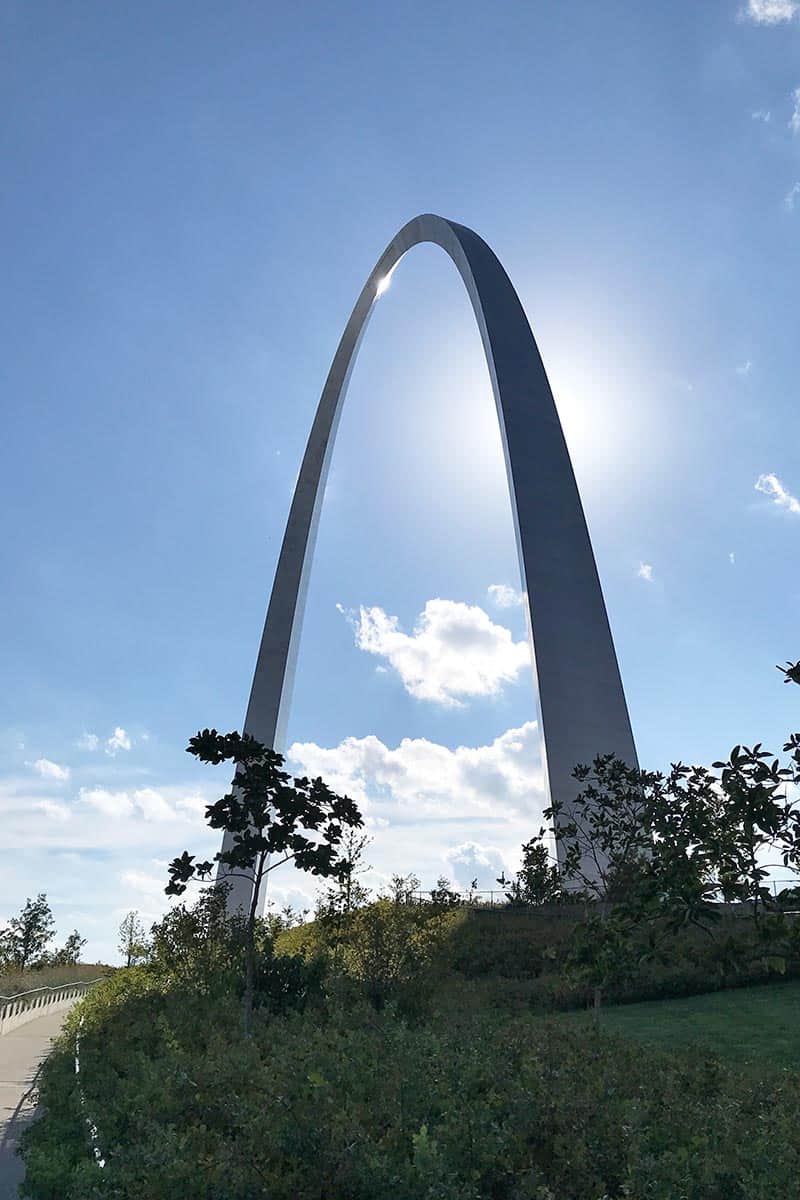
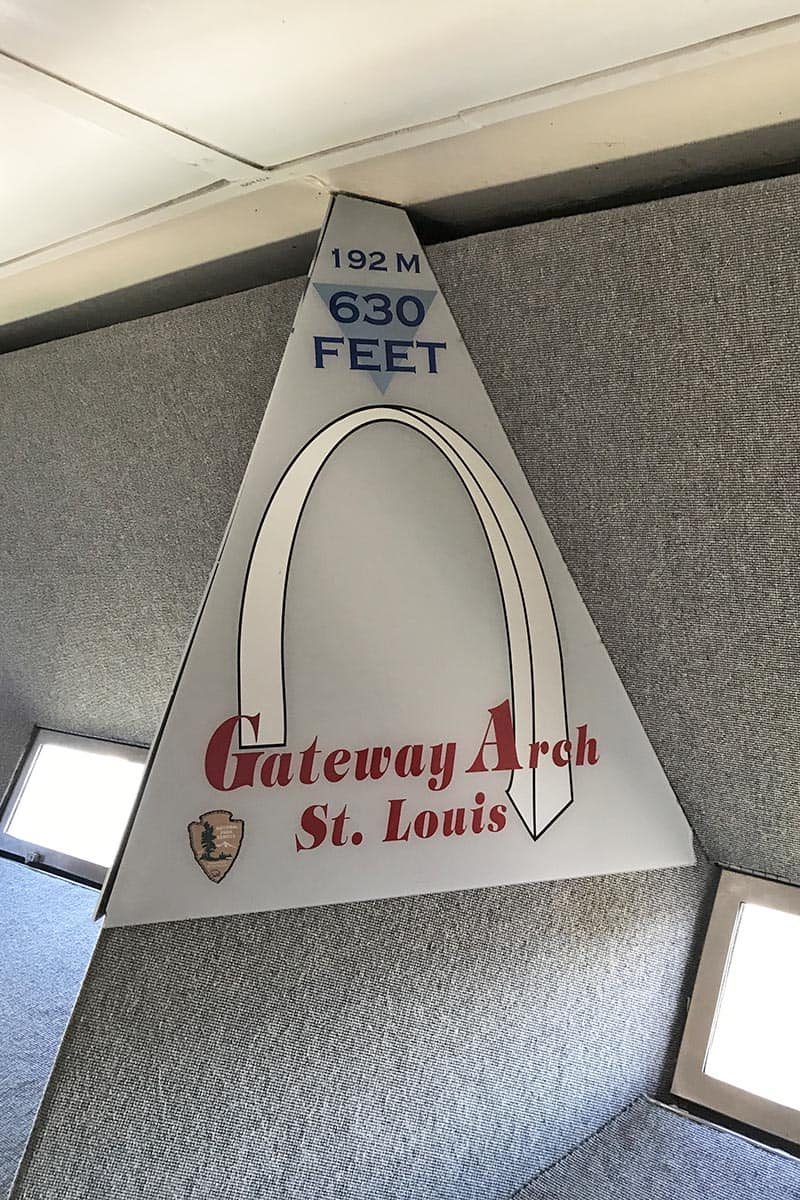
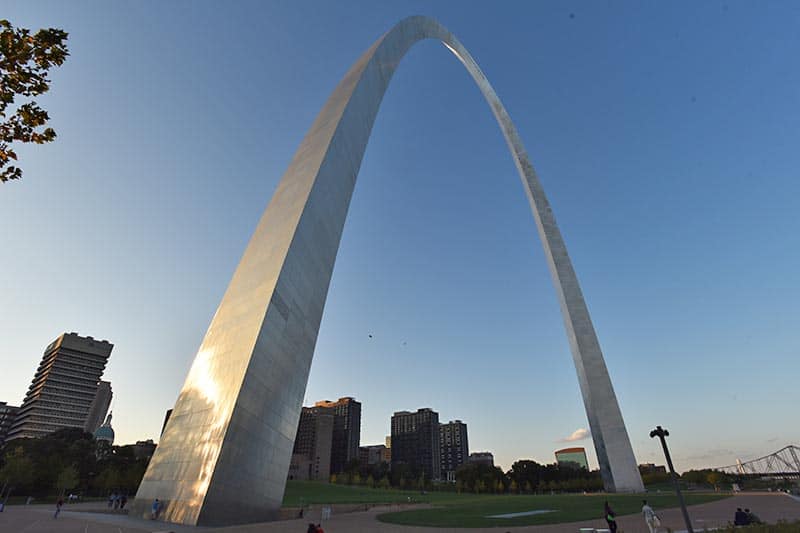
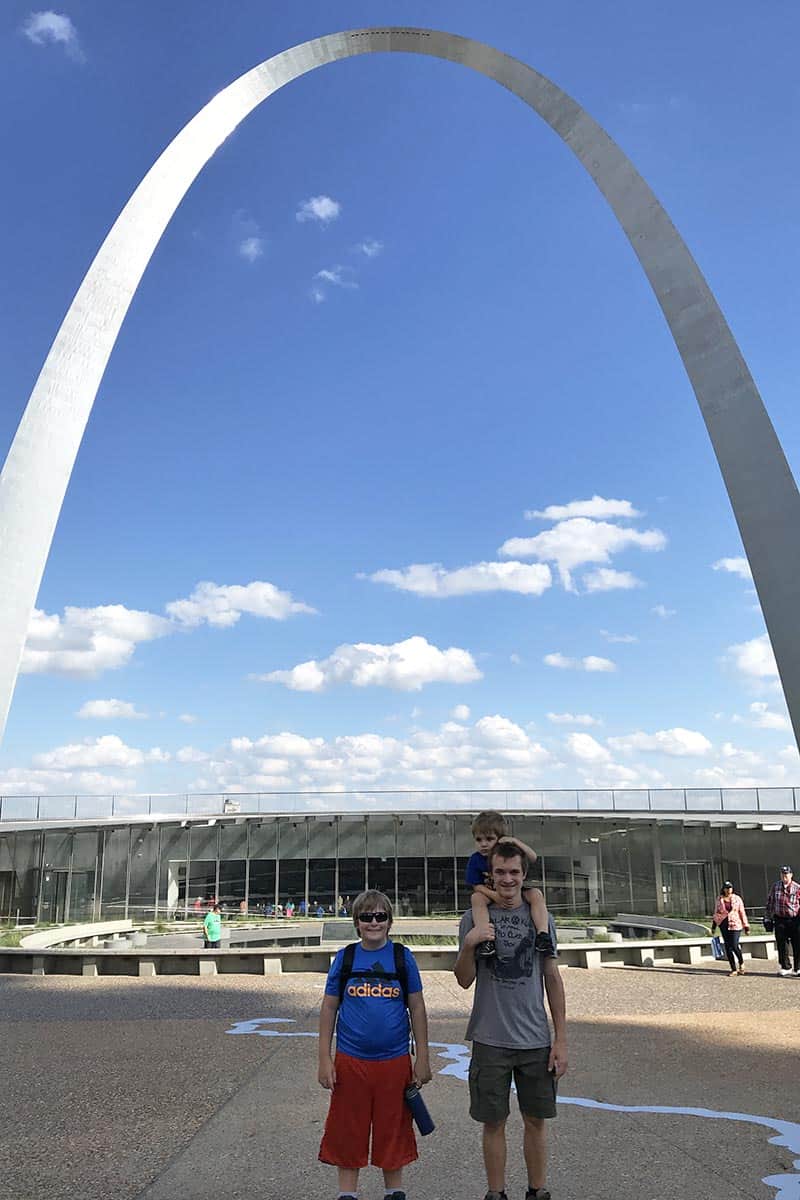
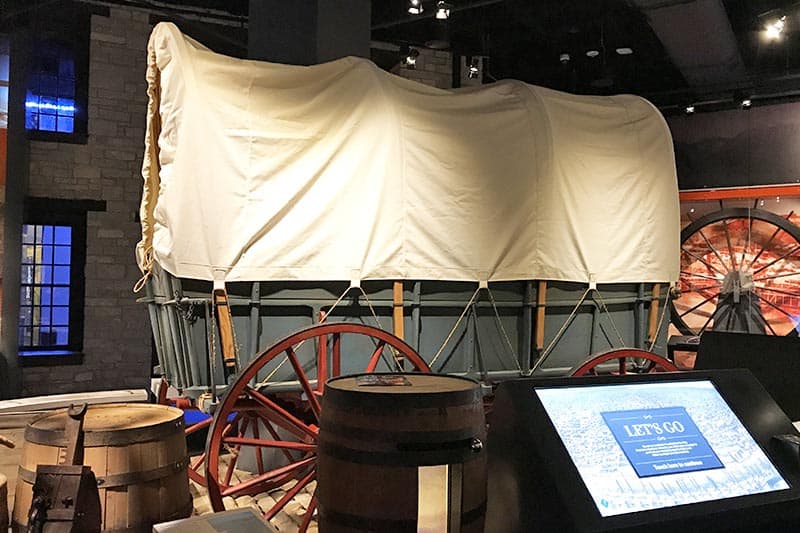
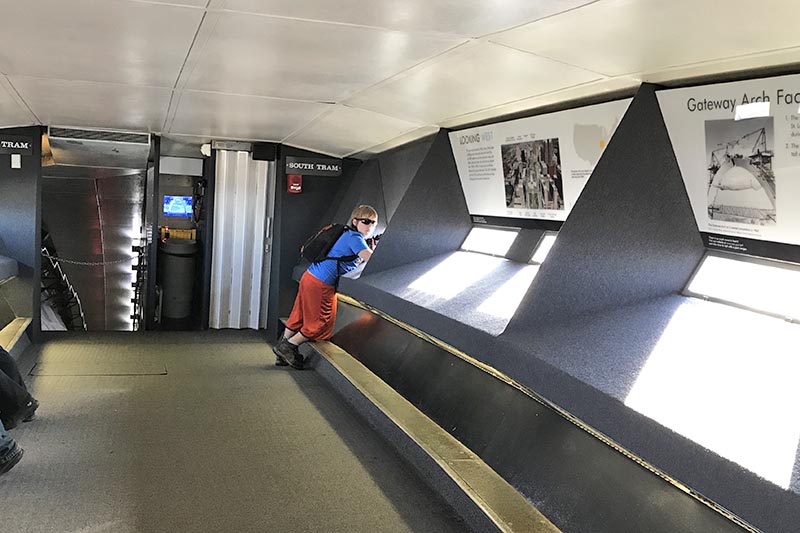
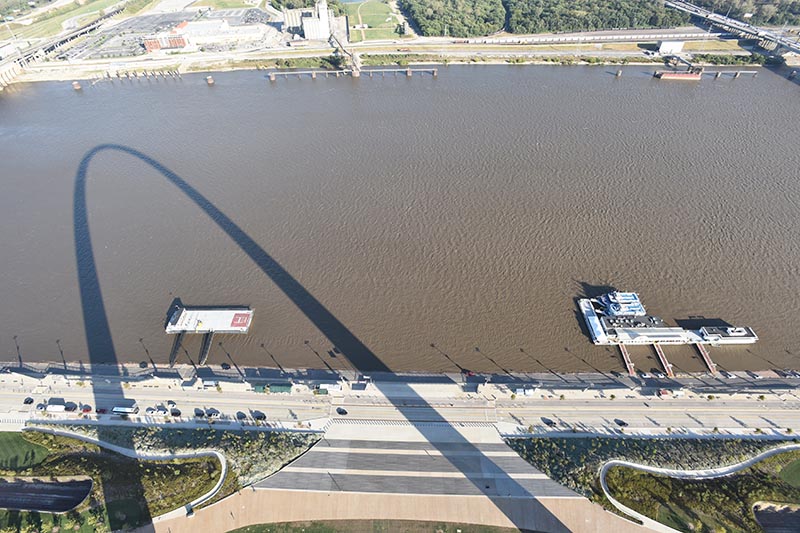
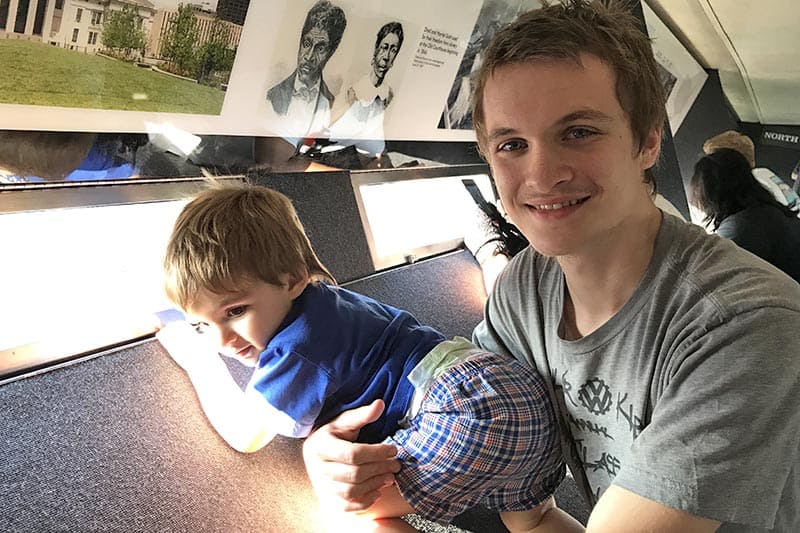
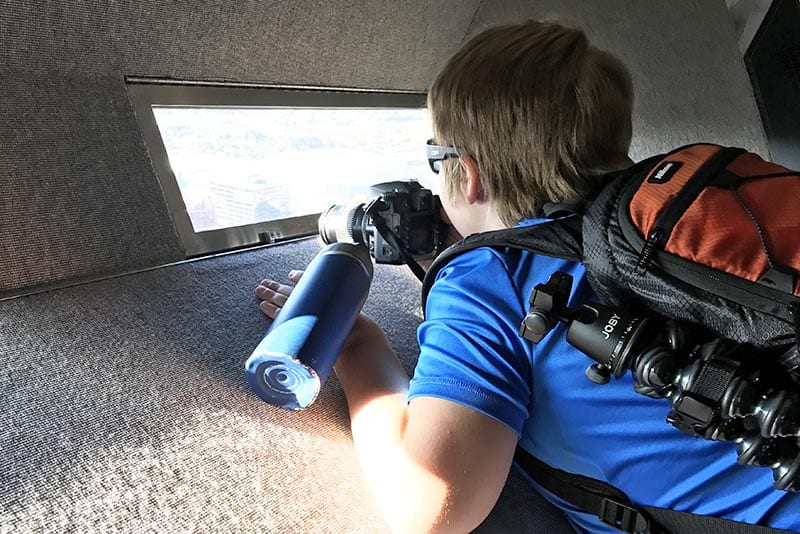
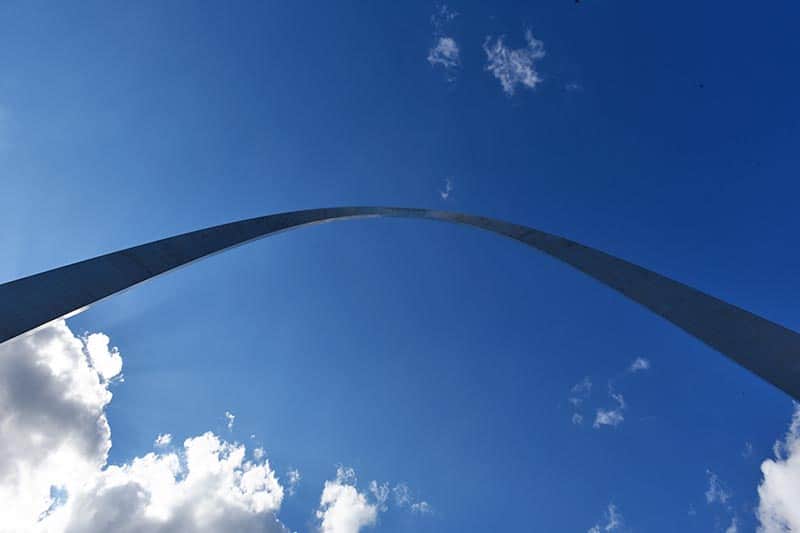
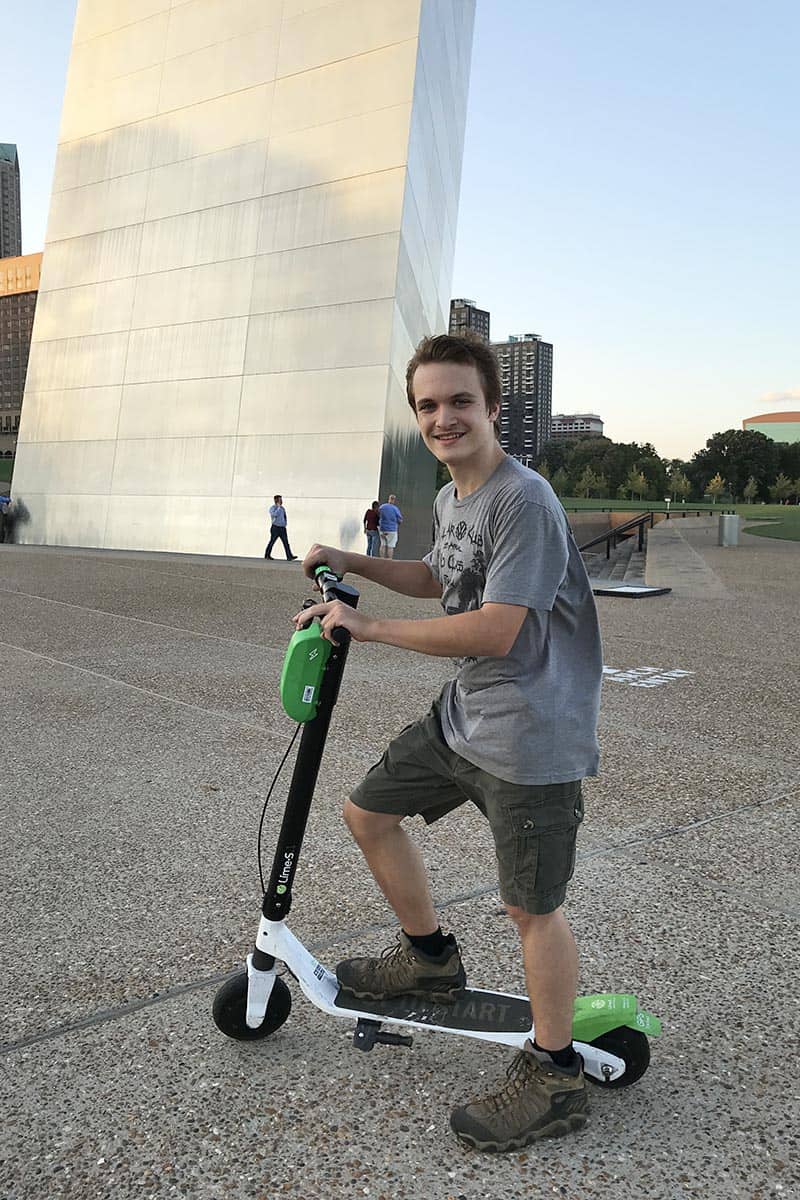
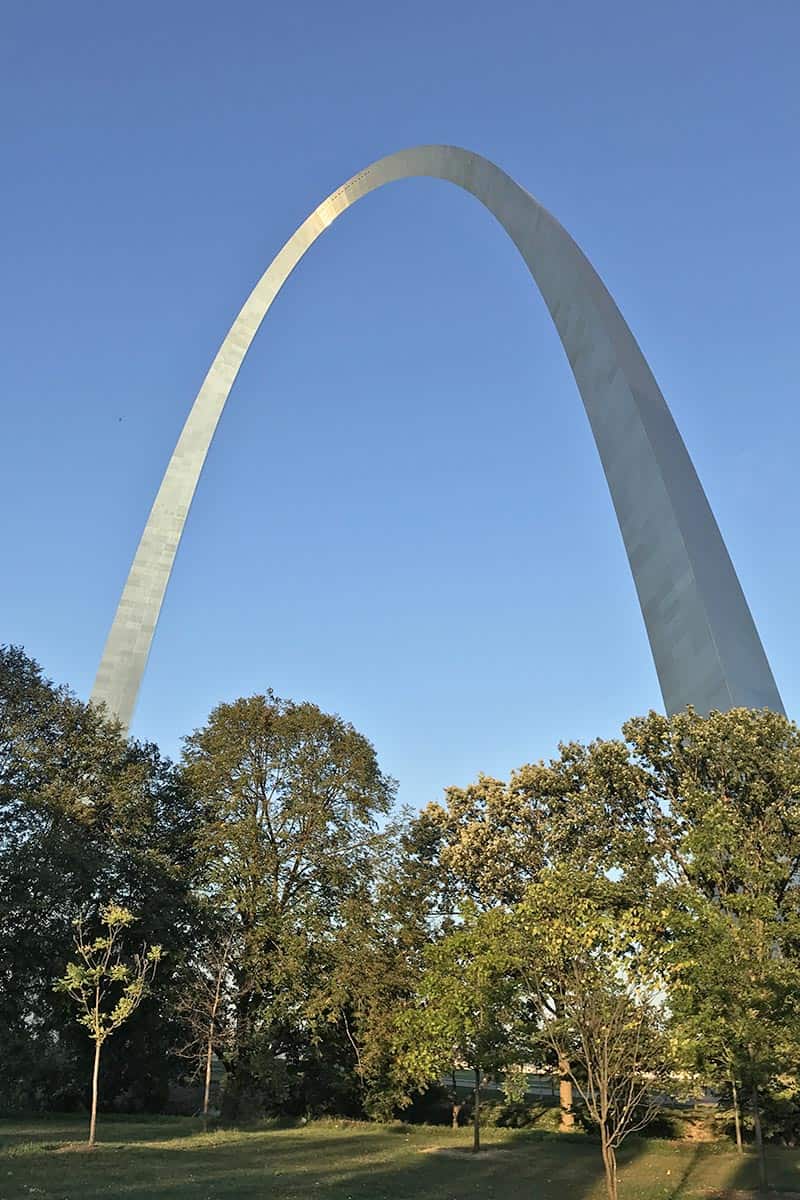
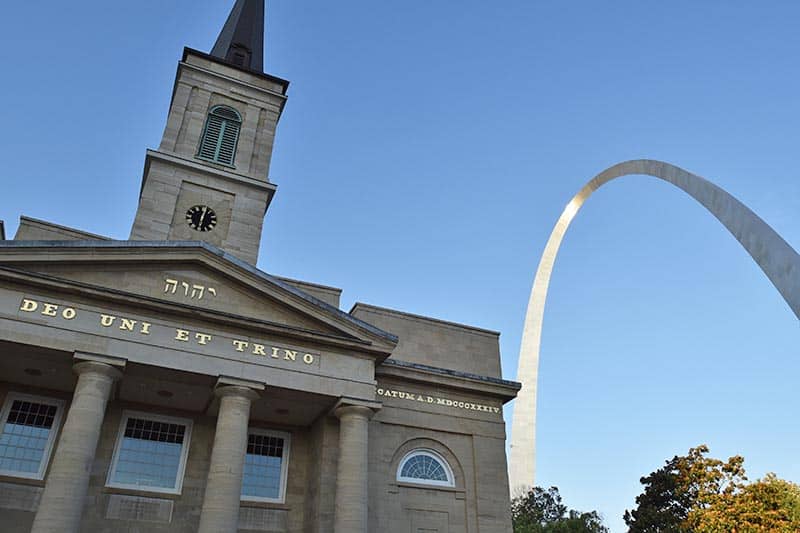
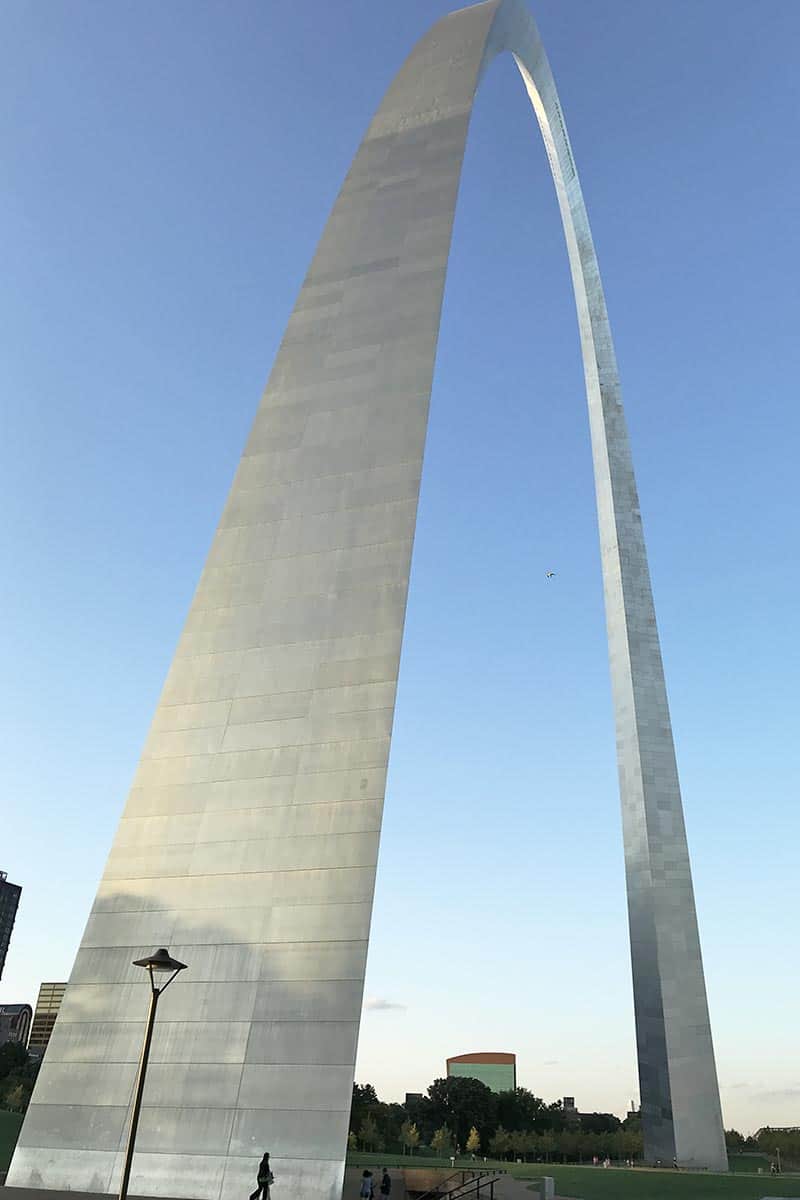
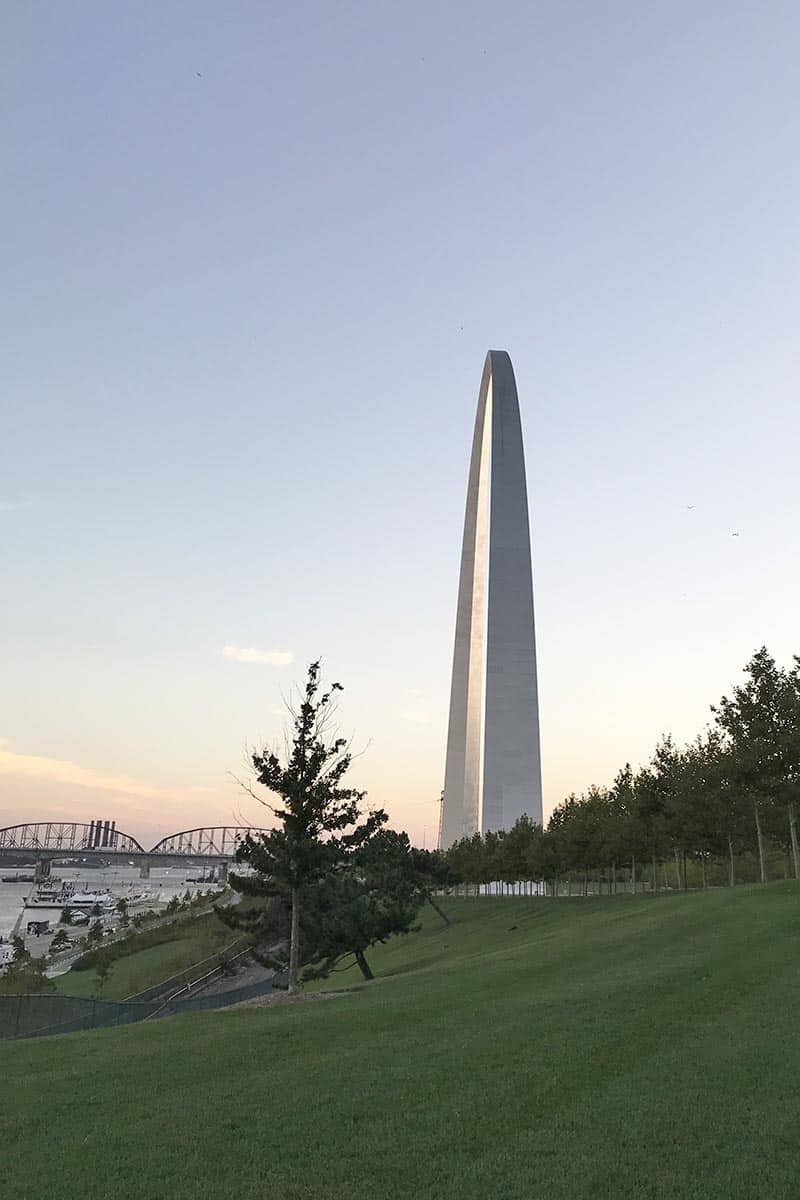
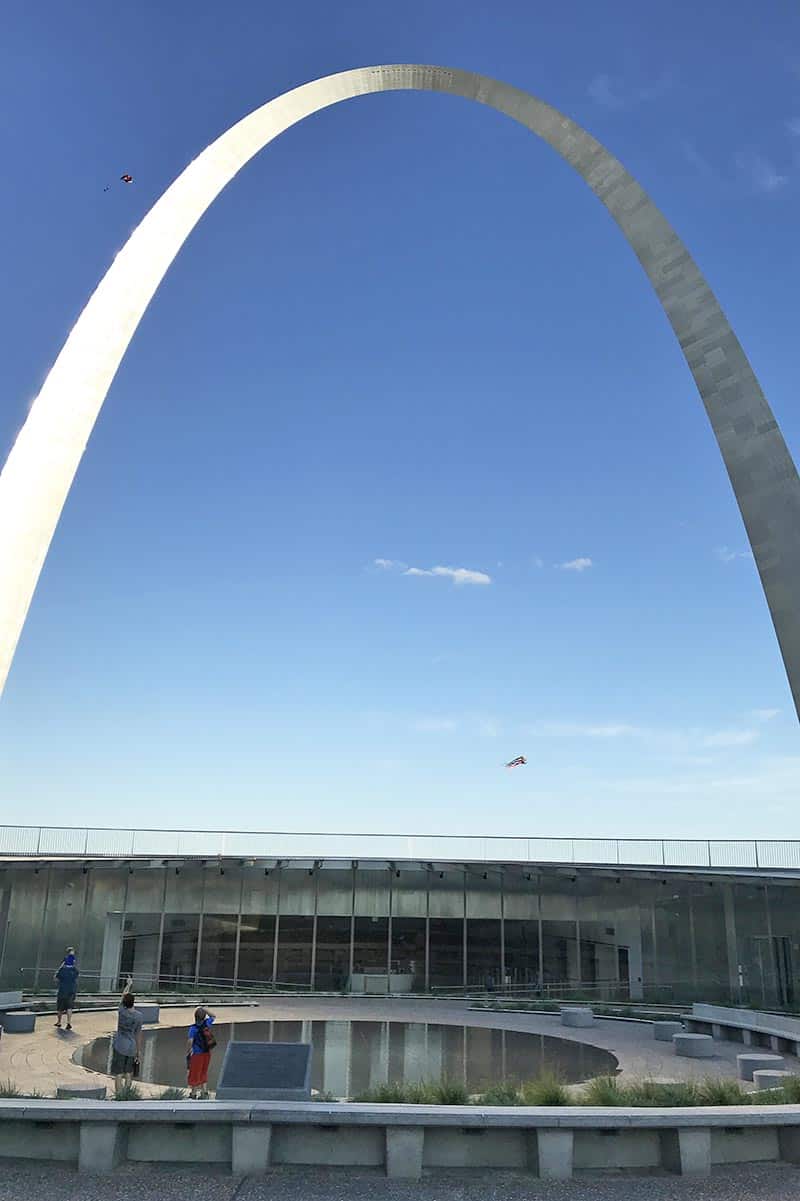
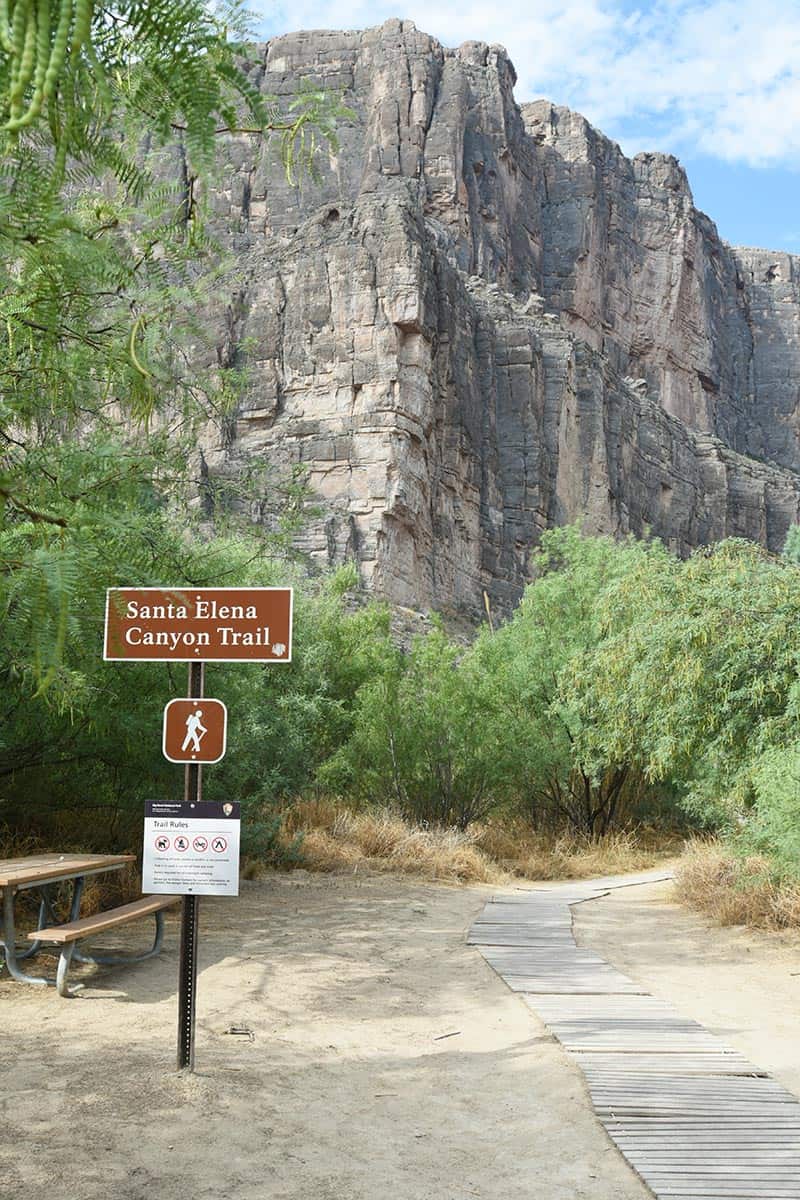
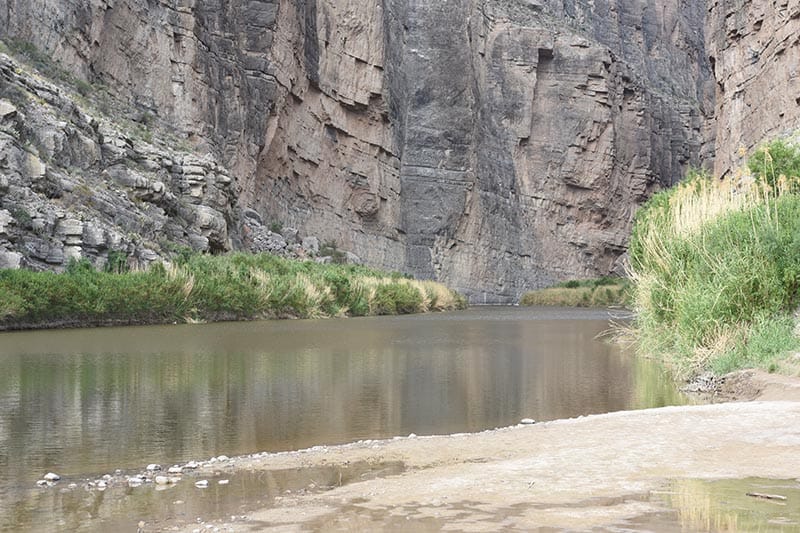
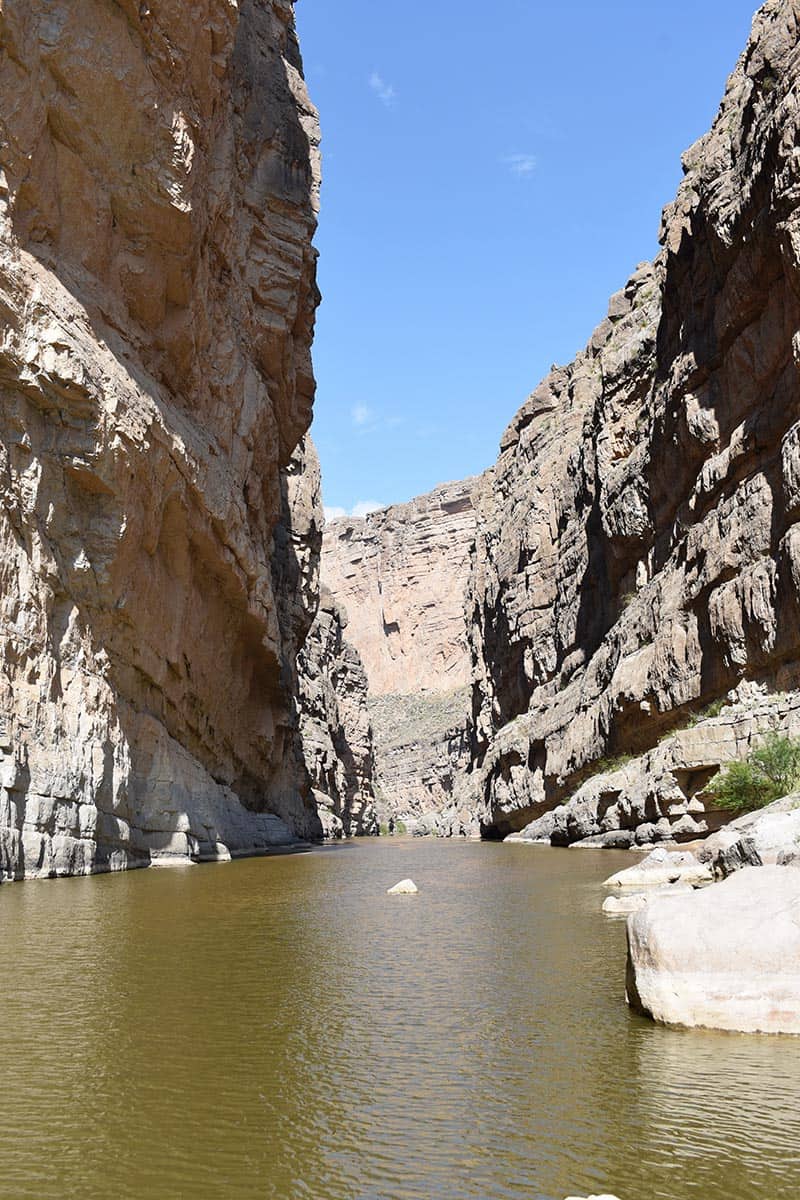
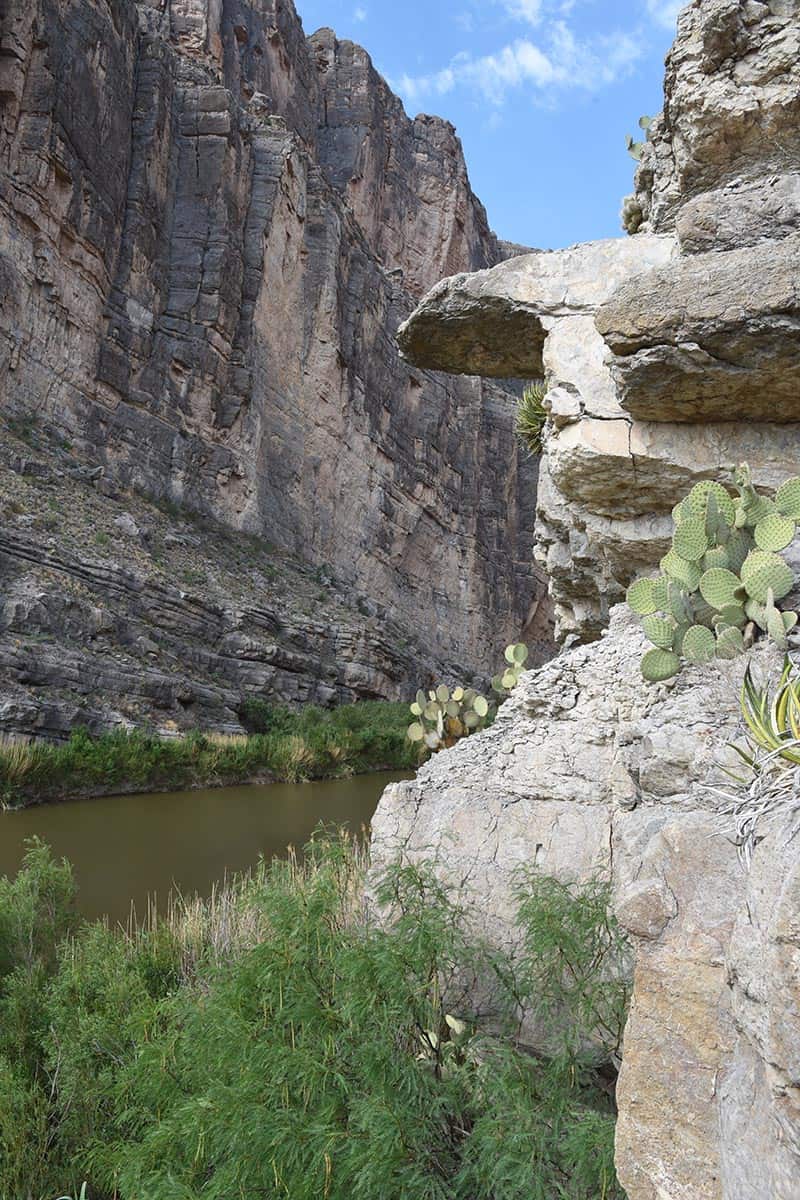
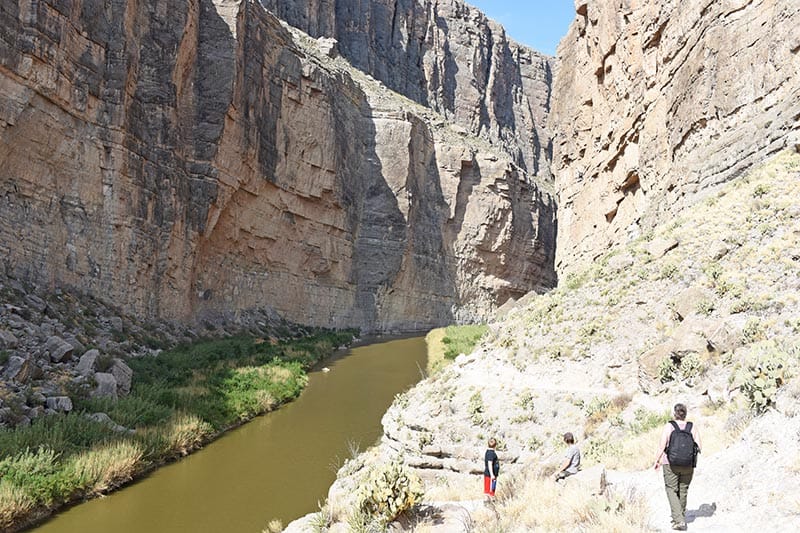
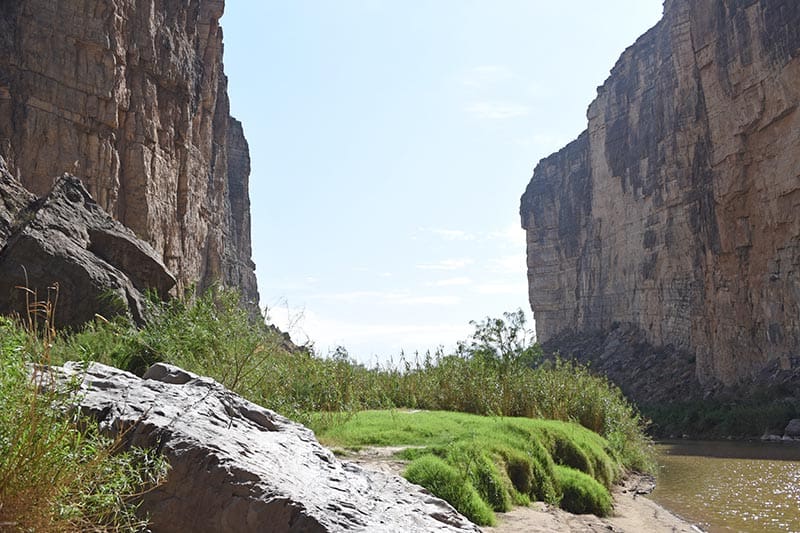
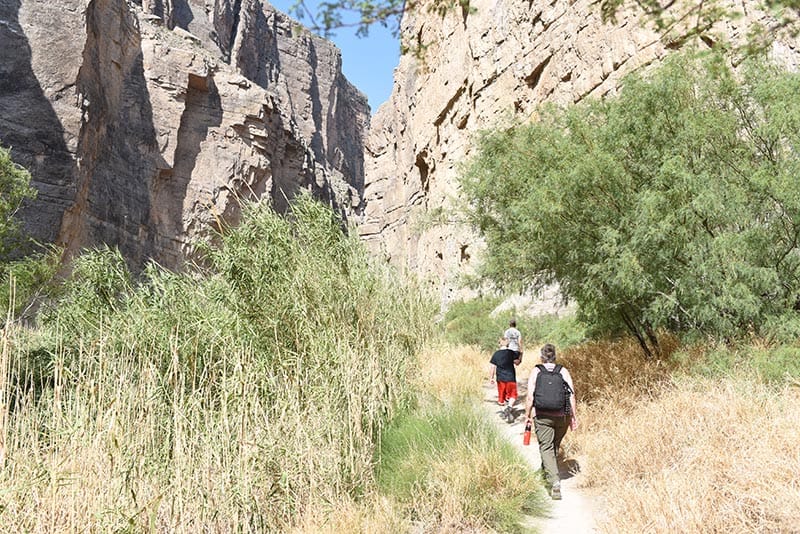
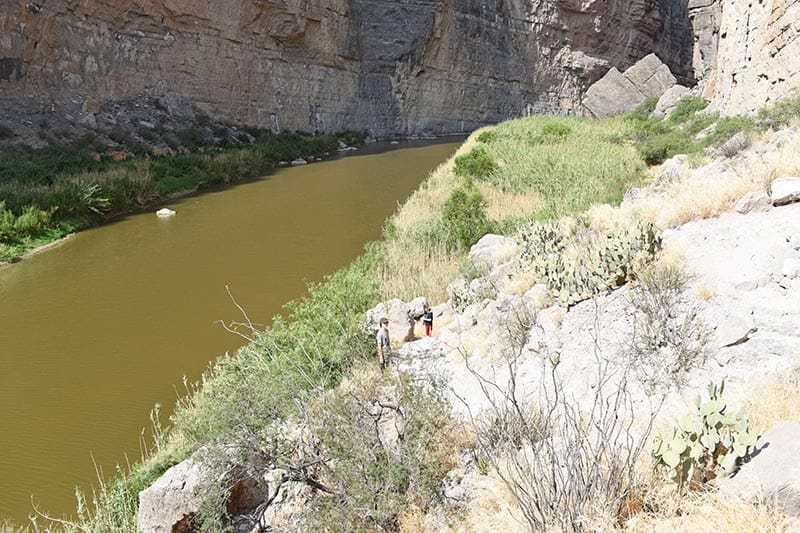
    [wprm-recipe-roundup-item link=”https://www.nps.gov/thingstodo/romo_emeraldlake.htm” name=”Hike Emerald Lake Trail in Rocky Mountain National Park” summary=”<p>Visit Rocky Mountain National Park in Colorado, and hike Emerald Lake Trail. 3.6 miles roundtrip, it's full of the most breathtaking places you'll ever see, leading through the forest and up the mountain past magical Nymph Lake and Dream Lake.</p><p>And if it happens to be open, you can even drive the back way up the mountains, via Old Fall River Road, and enjoy a little alpine picnic up amongst the snow.</p>” button=”Read More” image=”42188″] [wprm-recipe-roundup-item id=”22542″ name=”Relax at Anchor Inn and Cottages on Sanibel Island” summary=”<p>Sanibel Island has a relaxed, laid back feel, and its beaches aren't quite as crowded as your typical Florida spring break beaches. Collect gobs of seashells, watch the sunset, eat good food, and enjoy the charm and feel of a sunny, laid back coastal town.</p>” button=”Read More”] [wprm-recipe-roundup-item id=”36849″ name=”Visit the Arch in St. Louis, Missouri” summary=”<p>Everything you need to know for your family's visit to the Arch in St. Louis, Missouri, from the tram to the museum, parking information, and more!</p><p>While you're there, explore other <a href=%22https://staging.adventuresofmel.com/things-to-do-in-st-louis-with-kids/%22>things to do in St. Louis</a>, like visiting the Cathedral Basilica, go see the animals at the St. Louis Zoo, visit <a href=%22https://staging.adventuresofmel.com/soulard-market-st-louis-missouri/%22>Soulard Farmer's Market</a>, and eat loads of <a href=%22https://staging.adventuresofmel.com/delicious-st-louis-foods/%22>good St. Louis food</a>, including St. Louis style <a href=%22https://staging.adventuresofmel.com/gooey-butter-cake-recipe-box/%22>gooey butter cake</a>.</p>” button=”Read More”] [wprm-recipe-roundup-item link=”https://www.savvymamalifestyle.com/albany-georgia-travel-guide/” name=”Things to Do in Albany GA: 11 Best Family-Friendly Destinations” summary=”<p>Albany, Georgia is a family-friendly adventure driven destination. The tea is sweeter and outdoor activities are abundant. Plus, Albany has several kid-focused museum options.</p>” button=”Read More” image=”42192″ credit=”savvymamalifestyle.com”] [wprm-recipe-roundup-item id=”34973″ name=”Backcountry Camping in Big Bend National Park” summary=”<p>A beautiful, rugged, and unforgiving place, Big Bend is full of adventure with some of the best camping known to man (or woman). We've got loads of tips for backcountry or dispersed camping in Big Bend National Park, including where to stay for the best views.</p><p>And while you're there, don't miss out on <a href=%22https://staging.adventuresofmel.com/hiking-santa-elena-canyon-big-bend-national-park/%22>hiking Santa Elena Canyon</a>. You'll cross Terlingua Creek and hike up through the actual canyon, all along the Rio Grande River, with stunning views of Big Bend National Park!</p>” button=”Read More”] [wprm-recipe-roundup-item link=”https://www.nps.gov/bibe/planyourvisit/visiting-boquillas.htm” name=”Cross the Rio Grande River and Visit Boquillas, Mexico” summary=”<p>Crossing the Rio Grande River to the Mexican village of Boquillas, Mexico, from Big Bend National Park, created amazing memories my family will never forget. What it's like to row across the Rio Grande, catch a ride into town on a burro, and enjoy an afternoon in old Mexico.</p>” button=”Read More” image=”42198″] [wprm-recipe-roundup-item link=”https://thegoodheartedwoman.com/orcas-island-may-relaxing-vacation-spot-pacific-nw/” name=”Orcas Island: The Most Relaxing Vacation Spot in the Pacific NW” summary=”<p>Orcas Island, the largest of the San Juan Islands, is located just over an hour by ferry off the northern coast of Washington State. An unassuming paradise, it is quite possibly the most relaxing vacation spot in the Pacific Northwest.</p>” button=”Read More” image=”42200″ credit=”thegoodheartedwoman.com”] [wprm-recipe-roundup-item id=”25996″ name=”12 Scenic Roads (and off the Beaten Path National Parks) in Colorado to Visit with Your Kids” summary=”<p>If you've ever been to Colorado, you know how beautiful it truly is. Our last trip to Colorado, with no plans and every road an adventure, inspired this collection of roads, by-ways, and 4×4 trails in that beautiful state we love so much. And while it may not be a comprehensive list, these are a few of the scenic roads in Colorado that we've discovered, taken, and enjoyed so far.</p><p>Along the way, you'll also discover off the beaten path national parks you can visit with your kids, to make it a great spring break road trip. They include Great Sand Dunes National Park, Black Canyon of the Gunnison National Park, and Mesa Verde National Park. While these parks aren't as widely talked about, they offer so much incredible beauty, history, and adventure. As you make travel plans with your family, don't forget about these parks.</p><p>They're well worth adding to your spring break travel itinerary. America the Beautiful!</p>” button=”Read More”] [wprm-recipe-roundup-item id=”37250″ summary=”<p>Camping at Petit Jean State Park is a beautiful way to enjoy this Arkansas state park. With both open and more tucked in campsites, there's something for every outdoor enthusiast.</p>” button=”Read More”] [wprm-recipe-roundup-item id=”37475″ summary=”<p>Cedar Falls Trail is a strenuous hike that ends with a waterfall in Petit Jean State Park in Arkansas. What it's really like to hike this beautiful Arkansas trail.</p><p>And while you're visiting Petit Jean, take advantage of other gorgeous hiking trails, like <a href=%22https://staging.adventuresofmel.com/hiking-bear-cave-trail-in-petit-jean-state-park/%22>Bear Cave Trail</a> and <a href=%22https://staging.adventuresofmel.com/seven-hollows-trail-to-natural-bridge-in-petit-jean/%22>Seven Hollows Trail</a>.</p>” button=”Read More”] [wprm-recipe-roundup-item link=”https://julieblanner.com/things-to-do-in-branson-with-kids/” name=”Things to Do in Branson MO” summary=”<p>Branson is a family friendly destination filled to the brim with fun things to do! There are so many Branson Attractions that you’ll never find yourself bored whether you spend a day or a week!</p>” button=”Read More” image=”42206″ credit=”julieblanner.com”] [wprm-recipe-roundup-item link=”https://www.nps.gov/saan/index.htm” name=”San Antonio Missions National Historical Park” summary=”<p>Mission Concepción, one of the Missions along the San Antonio River, still stands in all of its regal beauty in San Antonio Missions National Historical Park in Texas.</p><p>If you're planning to visit San Antonio, I definitely recommend getting trolley tickets, so you can visit other landmarks like Mission San José and Mission Concepcion, walk around the King William Historic District, and eat delicious food at The Guenther House.</p>” button=”Read More” image=”62475″] [wprm-recipe-roundup-item id=”23945″ image=”23974″ summary=”<p>While you may need 4-wheel drive if there's snow on the ground, this Colorado chalet is a wonderfully quiet place to spend some time relaxing and reflecting together. Just the peace and quiet is a vacation in and of itself.</p><p>However, if you do crave activity, it's in the perfect location with all sorts of outdoor activities, the mountain town of Nederland nearby, Rocky Mountain National Park a short drive away, and even a ski lodge nearby for those who love to ski.</p>” button=”Read More”] [wprm-recipe-roundup-item link=”https://www.nps.gov/pais/index.htm” name=”Hit the Beach at Padre Island National Seashore” summary=”<p>The Texas Gulf Coast is just brimming with great beaches, including Padre Island National Seashore. With beautiful blue-green water and white-capped waves, this beach destination is a place the whole family will enjoy.</p><p>Padre Island National Seashore has 70 miles of undeveloped coastline, 60 miles of which you can drive on, though conditions do change. You'll also find a prairie-like landscape, along with sand dunes and lots of coastal wildlife.</p>” button=”Read More” image=”42207″] [wprm-recipe-roundup-item link=”https://justisafourletterword.com/things-to-do-in-st-augustine-with-kids/” name=”7 Things to Do in St. Augustine with Kids” summary=”<p>If you’re looking for a great family vacation on the Florida coast, check out these fun things to do in St. Augustine with kids. It's one spring break family vacation where everyone will have a great time and won't hesitate to visit again!</p>” button=”Read More” image=”42210″ credit=”justisafourletterword.com”] [wprm-recipe-roundup-item link=”https://public.nrao.edu/visit/very-large-array/” name=”Very Large Array in New Mexico with Kids” summary=”<p>Space enthusiasts and astronomy buffs will love this spring break road trip idea. The Very Large Array Radio Telescope Facility in New Mexico is a very exciting and mesmerizing place to visit with kids.</p>” button=”Read More” image=”42203″] [wprm-recipe-roundup-item link=”https://hotsprings.org/” name=”Places to Visit in Hot Springs, Arkansas” summary=”<p>Hot Springs, Arkansas, is definitely a family-friendly spring break vacation destination. And it's in a beautiful area of Arkansas, as well!</p><p>With places like Garvan Woodland Gardens, the Mid-America Science Museum, Hot Springs National Park, McClard's Bar-B-Q, the Purple Cow Restaurant, and Superior Bathhouse Brewery and Distillery, there's something for every member of the family to enjoy.</p>” button=”Read More” image=”42209″] [wprm-recipe-roundup-item link=”https://www.offtheeatenpathblog.com/outer-banks-travel-guide/” name=”The Ultimate Outer Banks Travel Guide: Plan Your Next Beach Vacation” summary=”<p>Off the Eaten Path’s Outer Banks Travel Guide highlights what to do, where to stay, what to eat, and so much more about a family favorite place, North Carolina’s Outer Banks.</p>” button=”Read More” image=”42214″ credit=”www.offtheeatenpathblog.com”] [wprm-recipe-roundup-item id=”17196″ summary=”<p>Cosby Campground in Great Smoky Mountains National Park in Tennessee is one of the best. Sites tucked in the trees allow for quiet, peaceful camping with a secluded feel.</p><p>And while you're visiting this gem of a national park, be sure to explore places like the <a href=%22https://staging.adventuresofmel.com/hiking-to-laurel-falls-in-great-smoky-mountains-national-park/%22>Laurel Falls Hiking Trail</a> and Mingus Mill.</p>” button=”Read More”] [wprm-recipe-roundup-item link=”https://sanibel-captiva.org/” name=”Enjoy Beach Day Bliss on Captiva Island” summary=”<p>Captiva Island is a blissful island just west of Fort Myers, Florida. With water a teal blue-green color, abundant coastal and ocean wildlife, and piles of seashells everywhere you look, it's definitely one of my number 1 choices when considering where to go for spring break.</p>” button=”Read More” image=”42215″] [wprm-recipe-roundup-item link=”https://www.exploremorecleanless.com/6-days-new-mexico-road-trip-with-kids/” name=”6 Days New Mexico Road Trip with Kids” summary=”<p>A week driving around Central New Mexico takes you to see sand dunes, lava caves, a slot canyon, petroglyphs, and the indescribable Meow Wolf art installation! Spring is a great time to visit; check out this road trip itinerary!</p>” button=”Read More” image=”42217″ credit=”www.exploremorecleanless.com”] [wprm-recipe-roundup-item id=”37348″ summary=”<p>What it's really like to hike Hawksbill Crag, or Whitaker Point Trail, in Arkansas. Both autumn and spring are beautiful times to hike this gorgeous, beautiful trail in the Ozark National Forest near the Buffalo River.</p>” button=”Read More”]

    I’m so ready for a good spring break vacation. How ’bout you?

    Love a Li’l Family Adventure?

    I always appreciate your feedback. Be sure to leave a comment, and follow me on Pinterest, Facebook, Instagram, and YouTube. You can subscribe to my email list too.
  • Ozark National Forest Dispersed Camping

    Ozark National Forest Dispersed Camping

    Our complete and comprehensive guide gives everything you need to know about Ozark National Forest dispersed camping. Find free camping spots, recreation opportunities, and area info. Know before you go!

    It’s really no secret that my family and I love to get away to a quiet camping spot away from all civilization and people and noise. Sometimes we go farther away, and sometimes we stick closer to home here in the Natural State.

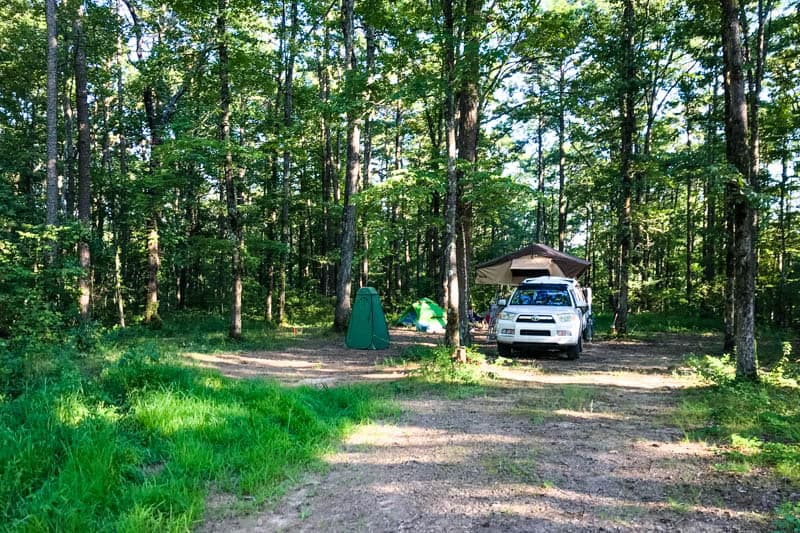
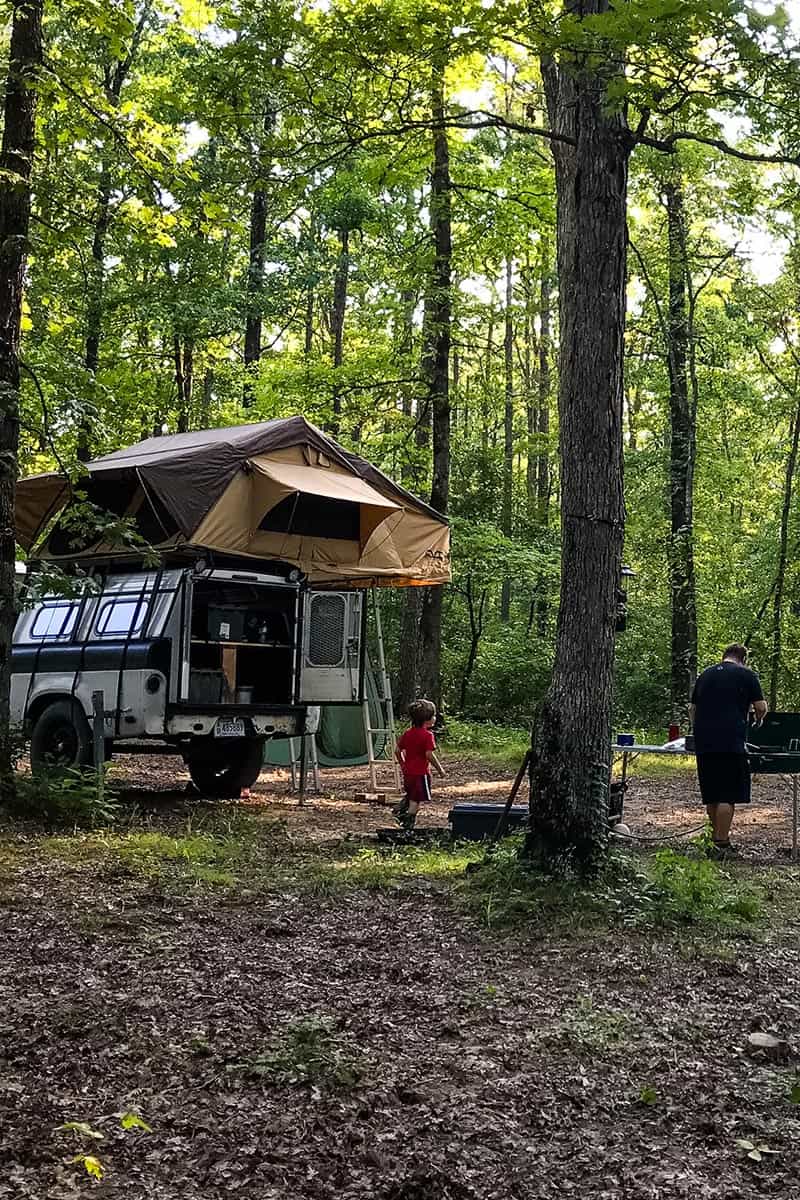
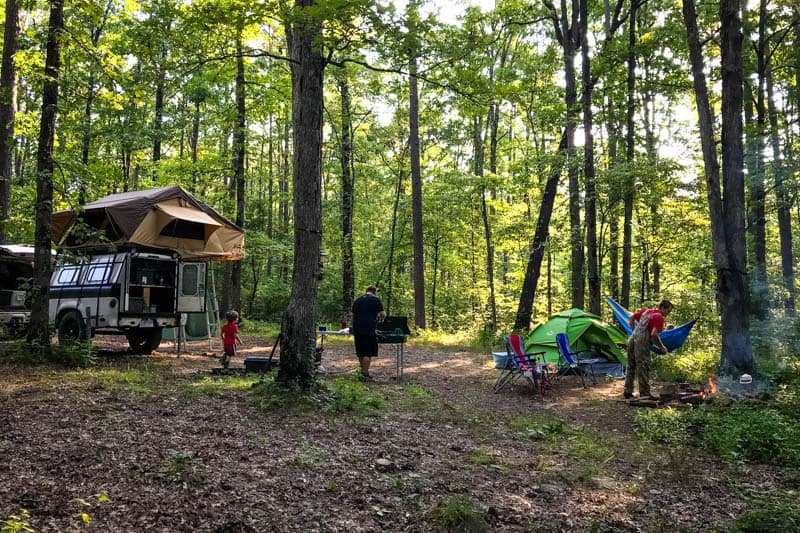
    family in Ozark National Forest dispersed camping spot with rooftop tent and ground tent and hammock

    For the longest time we didn’t really know where to go camping in Arkansas. We were stuck in a rut when it came to finding good campsites that weren’t in a campground.

    However, we put some of our free camping skills to the test as we started digging for more info. And let me tell you, there are plenty of places to choose from, including one of our favorites, Ozark National Forest camping, right in the heart of the Ozark-St. Francis National Forest.

    Now you may be looking for a campground. And if you are, The Dyrt has all “the dirt” on where to find good campgrounds in the Ozark National Forest.

    But we’re going to focus more on dispersed camping, where to find campsites, getting the most out of your rugged camp experience, what the Ozark-St. Francis National Forests offer, and what all you can do when visiting this magical, beautiful area of the Natural State.

    Where is the Ozark National Forest?

    The Ozark National Forest is located mostly in Northwest Arkansas, but part of it extends along the Arkansas River Valley to meet the Ouachita Mountains in the southern part of Arkansas.

    It covers more than one million acres and was established in March of 1908.

    This forest is home to a handful of National Scenic Byways, as well as wilderness areas, lakes, streams, and trails for mountain biking, horseback riding, hiking, etc.

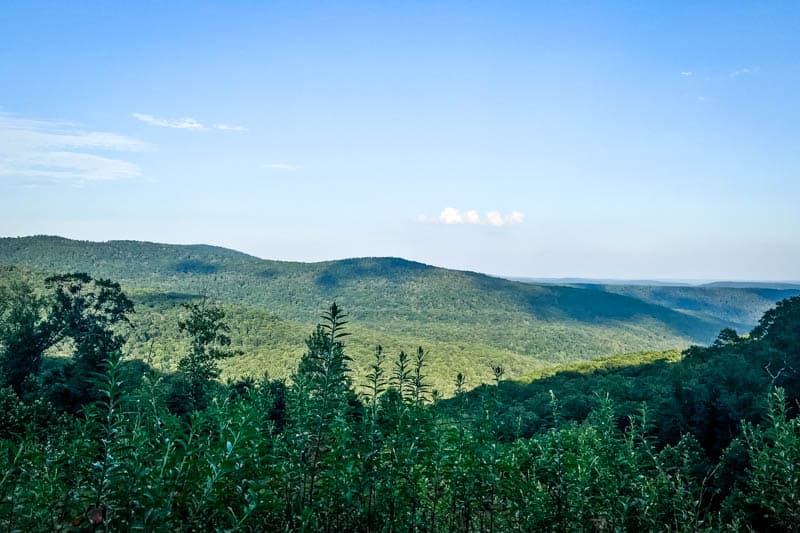
    the Ozark National Forest from a view on the Pig Trail Scenic Byway in Northwest Arkansas

    Ozark National Forest Dispersed Camping

    Camping in National Forests is usually our #1 choice. In fact, we plan most of our trips around being able to find good camp spots in the National Forest.

    Camping in Ozark National Forest is usually good for all kinds of camping, whether you’re an RV camper, in a fifth wheel or trailer, a van, tent camper looking for tent sites, or backpacking. There are usually options for all.

    Note: There are some roads in the forest that really are not conducive to longer trailers or any trailer at all. Be wise, use good judgment, and stay safe.

    And be aware, there will be no amenities. We’re talking dry camping here. You won’t have access to restrooms, picnic tables, bear lockers, running water, electricity, or trash service.

    The Best Camping Spot in Ozark National Forest

    One of our favorite campsites (pictured and in our YouTube video below) is located a few miles outside Salus, Arkansas, at these coordinates.

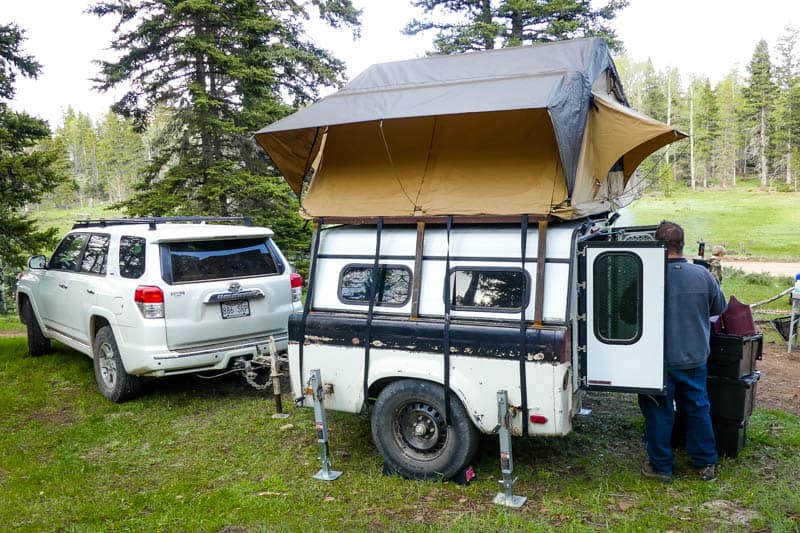
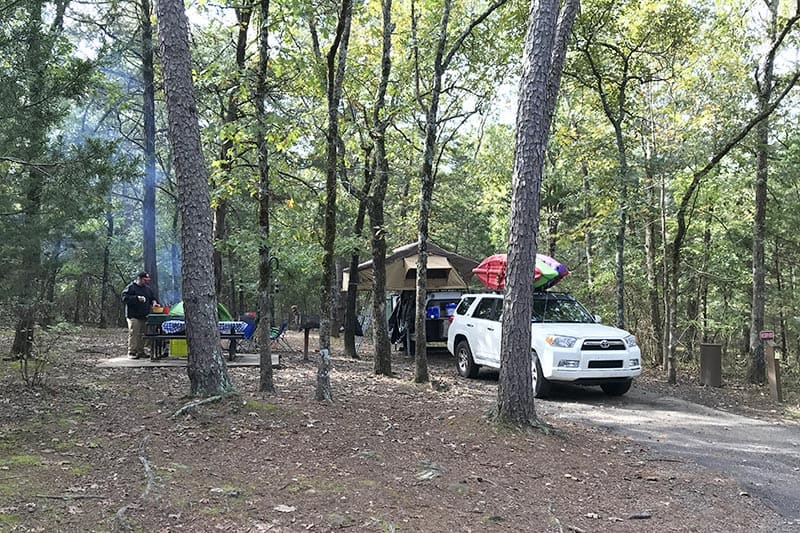
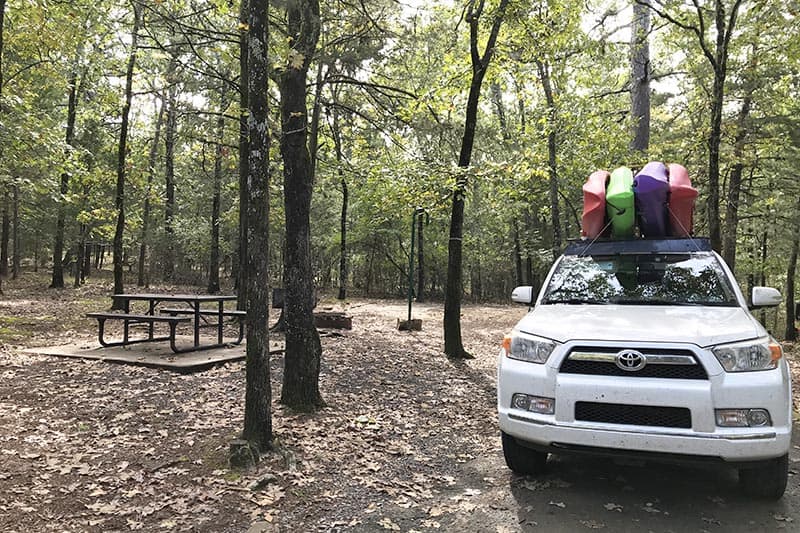
    Ozark National Forest camping with rooftop tent and white Toyota 4Runner at free campsite

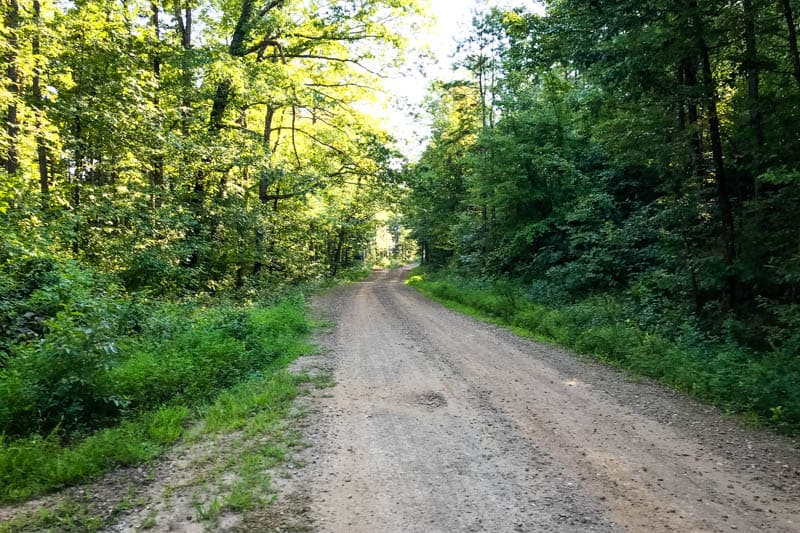
    We take a winding road, just outside the sleepy town of Salus, up the mountain and over through a small series of more gravel roads and eventually land in an area that’s not too far from the Haw Creek Falls Recreation Area.

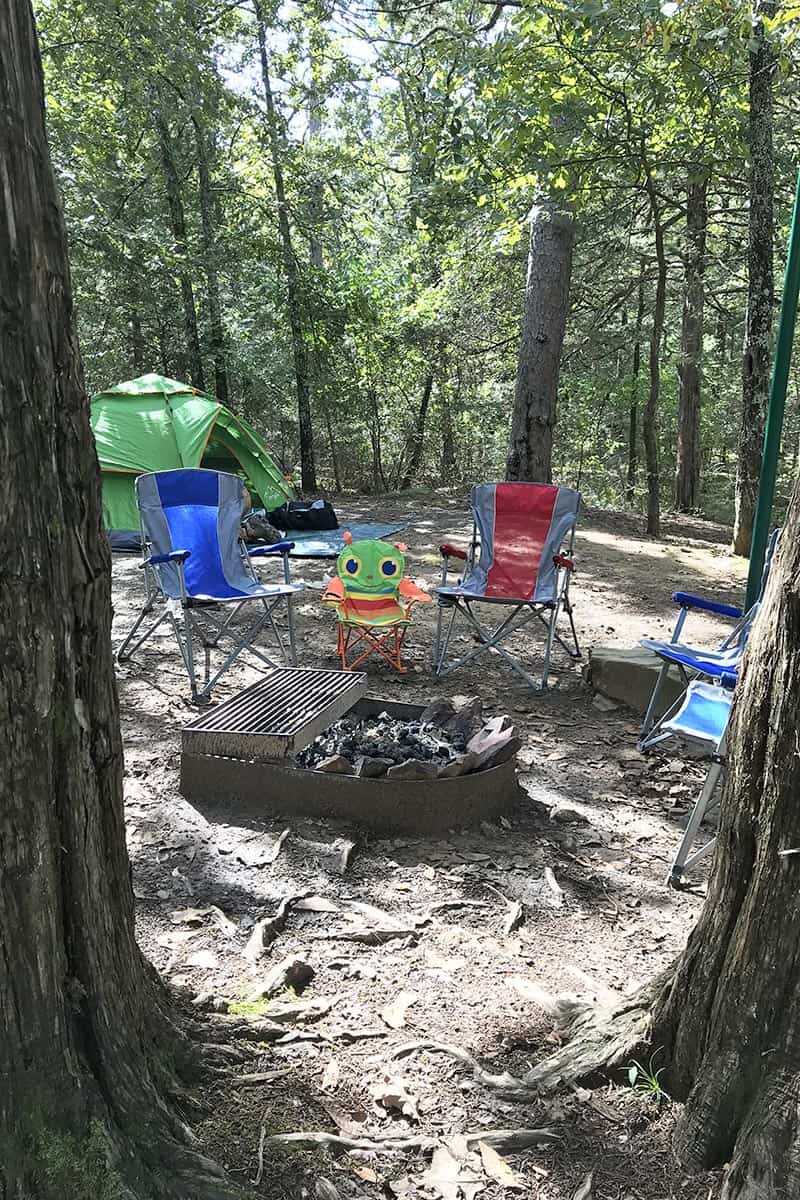
    What we love about this camping spot is that it’s just us and the forest. We’ll see the occasional ATV ride by, but it’s a quiet spot to camp and relax together as a family.

    gravel road in the Ozark National Forest

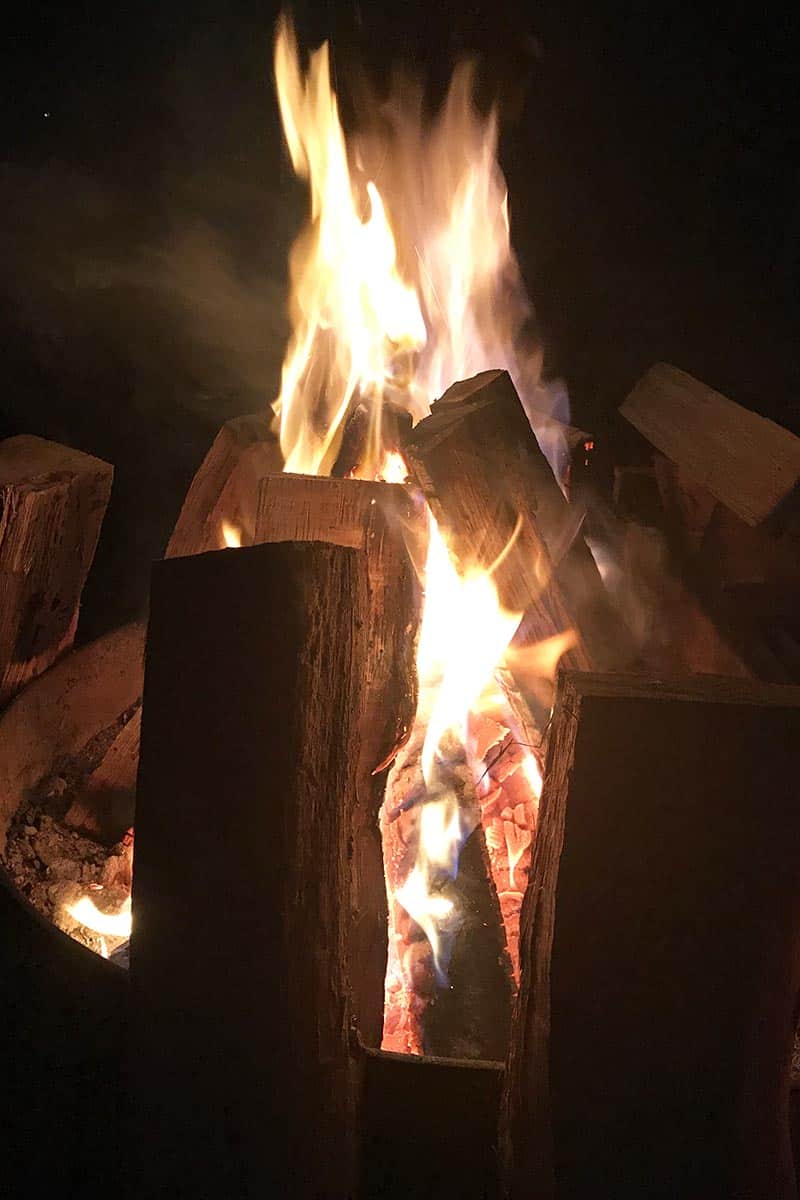
    Whether we’re reading a book, playing badminton, or chowing down on s’mores, there’s nothing like a good, roaring campfire and the quiet peace of nature all around our tent.

    The mostly hardwood trees, with some pine interspersed, are magnificent, and peepers fill the trees with buzzing and chirping. You can even catch a faint whiff of pine every now and again.

    This is exactly the kind of dispersed camping spot we look for.

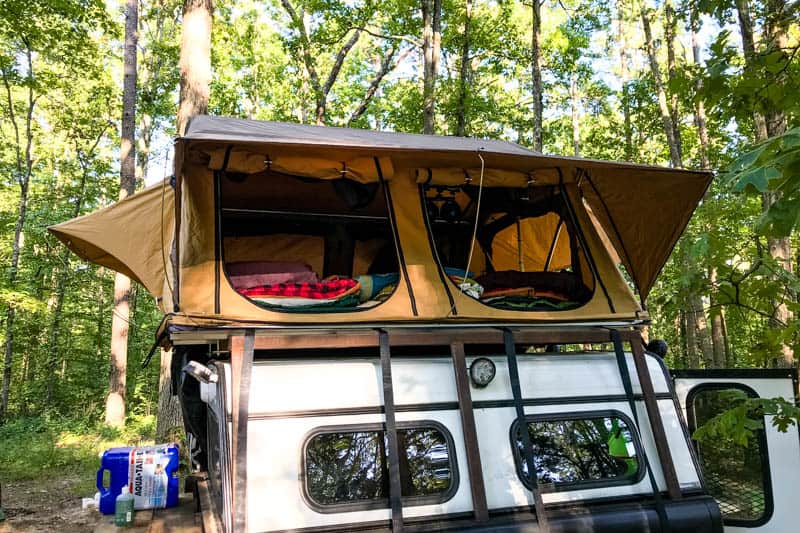
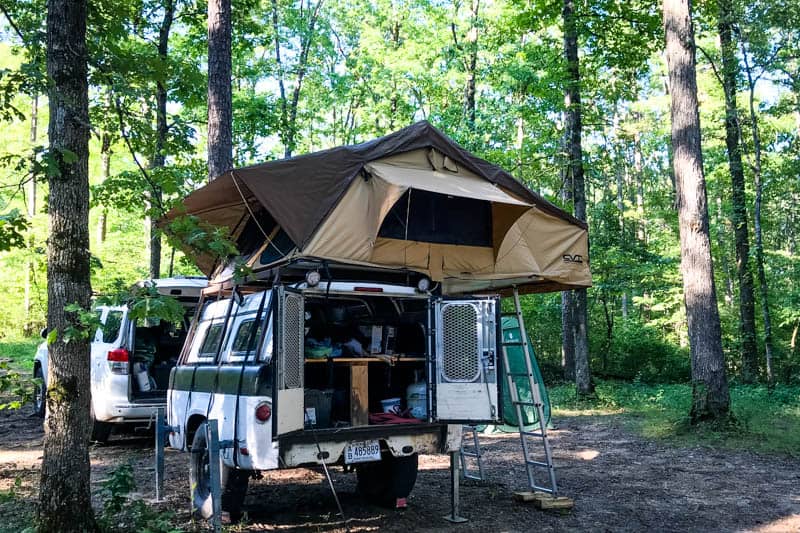
    camping in Ozark National Forest in Arkansas in tan rooftop tent on camping trailer

    How to Find National Forest Campsites

    Unless there is a sign stating otherwise or it’s a wildlife food plot, you can find some of the best camping in Arkansas just about anywhere in the Ozark-St. Francis National Forest.

    • When searching for Ozark National Forest camping, look for light green areas on your map. You can find them in Google Maps (you may need to zoom in/out to see more detail) or in any road trip atlas or adventure atlas.
    • Use Google Earth to get a satellite view and find pull-offs or clearings, both being pretty good indicators that there are campsites in the area you’re searching.
    • Driving just about any Forest Service road (usually dirt roads) will lead to all sorts of places you can camp for free. Look for spots alongside the road, or look for sites that are tucked back into the forest more. You may even be able to backpack in to a site if that is your preference.
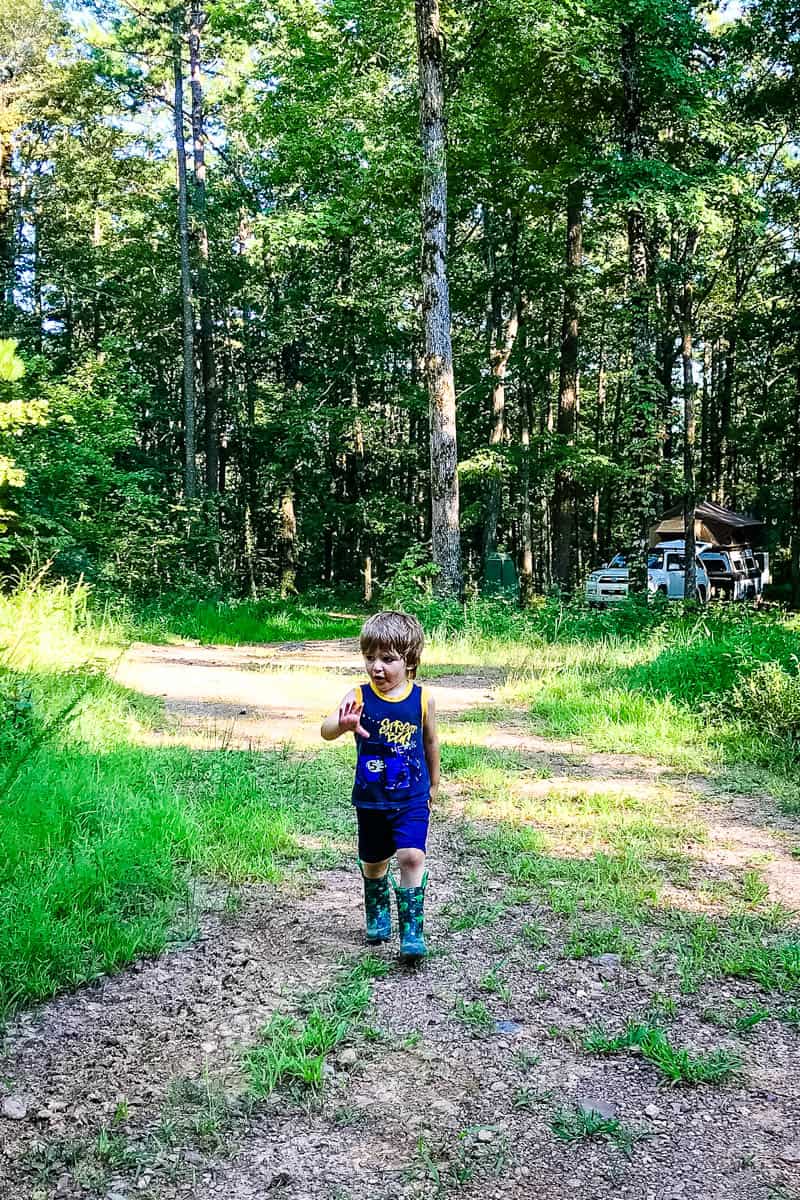
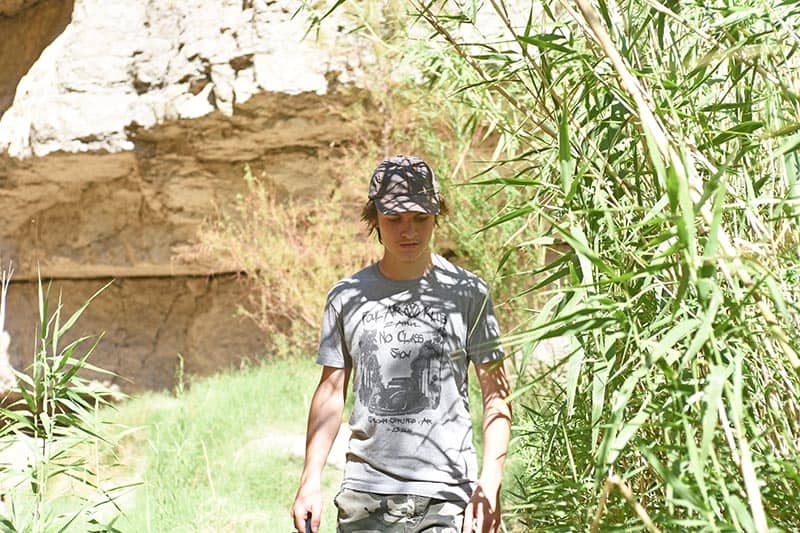
    boy walking on road from Ozark National Forest dispersed campsite in Arkansas
    • Always look for a fire ring and an already established site. Never create your own site.
    • Locating and stopping at a ranger station enables you to get all the information you need, as well as more detailed maps and Motor Vehicle Use Maps (the best maps you can have because they’re updated regularly with road closures) of the area, which you can also find on the Gaia GPS app. Plus, you can get all of your questions answered and become aware of any problems/issues they’re experiencing at the time (example: burn bans, wildlife warnings, road closures, etc.)
    • We have a favorite YouTuber here in Arkansas, Dispersed Camper Man. He shares all the different places he likes to camp and explore here in the Natural State. You’ll likely learn of quite a few new places if you give him a watch.

    Here is where you can find digital, downloadable maps. You may also find this Arkansas Atlas with Detailed Topographic Maps helpful.

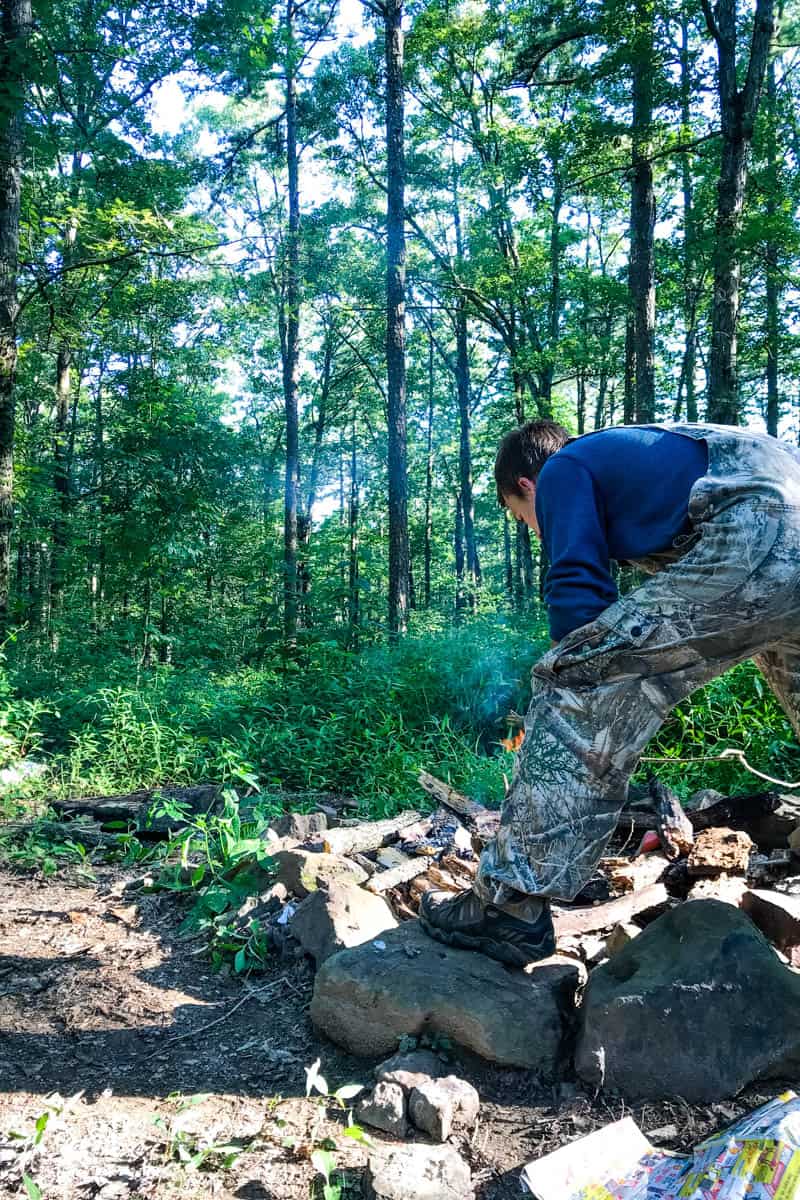
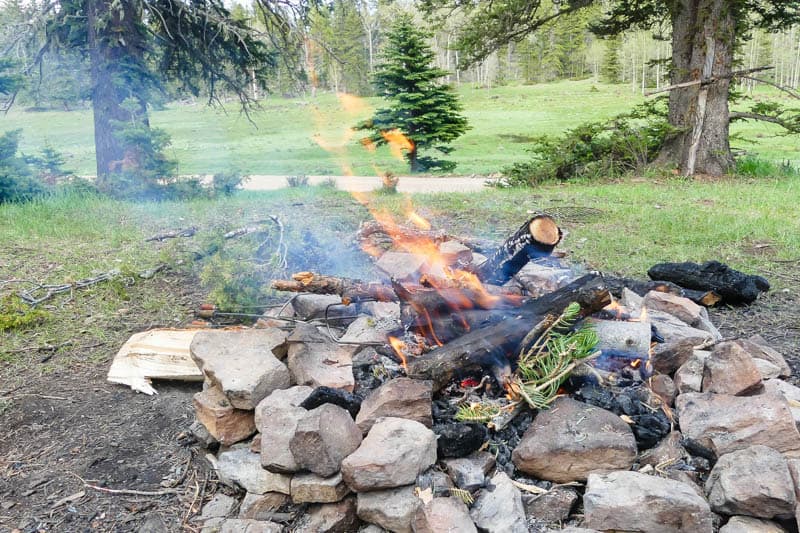
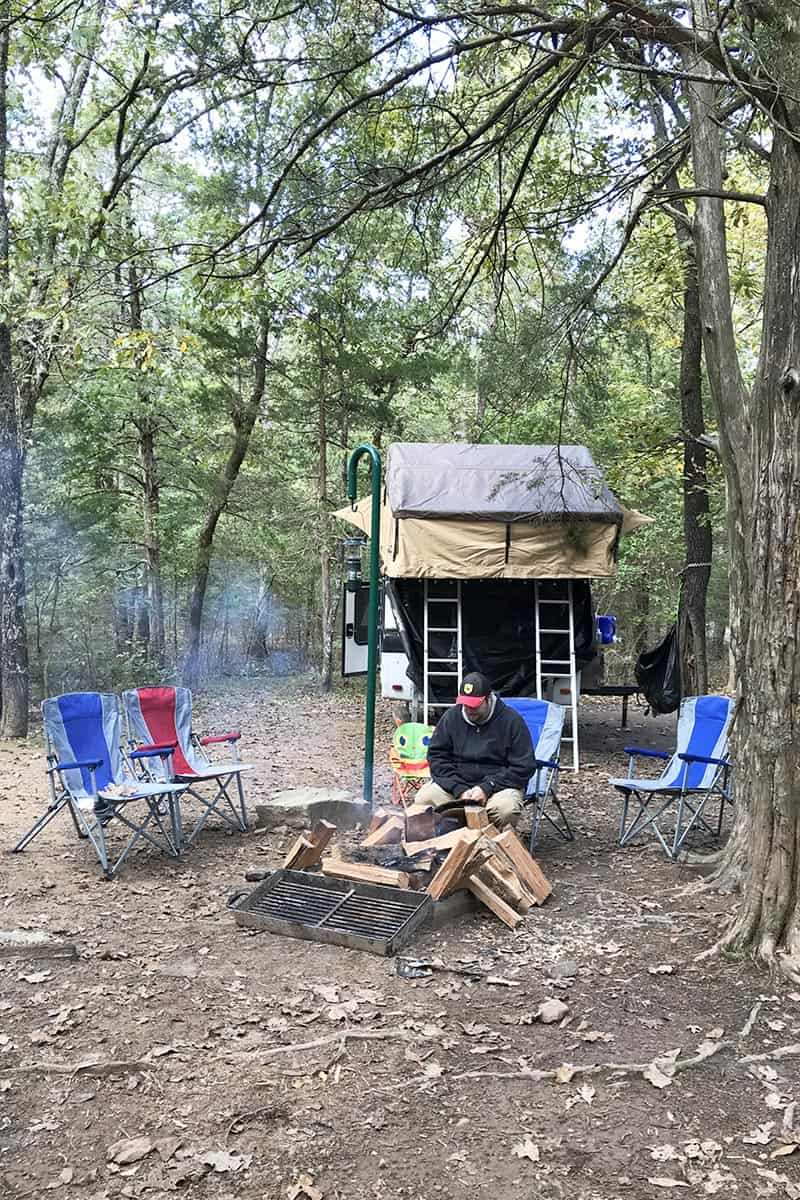
    starting a campfire while camping in the Ozark National Forest in Arkansas

    Ozark National Forest Camping Rules and Regulations

    Usually, there is no fee or permit required, meaning you can camp for FREE the entire time, unless you’re in a campground or recreation area!

    All campsites are first come, first serve. You can not reserve these remote sites.

    Rules are posted online. And you can sometimes find signs with rules and updates upon entering the area you’re visiting. You may even notice signs along the road that communicate what is and isn’t allowed on certain portions of the road, in day use areas, or in recreation areas.

    Here Are a Few Rules…

    • Stay on existing roads, whether paved or unpaved.
    • Check fire conditions and for burn bans before starting a fire. On that same note, drown your fire before going to bed and before leaving the campsite.
    • Check for alerts and notices before traveling to the National Forest.
    • Always camp at least 100-200 feet away from any type of water source, such as rivers, creeks, tributaries, lakes, and wetlands. Flash flooding can and does occur.
    • Leave no trace. Always pack in what you pack out. And don’t harm any vegetation or feed any wildlife.
    • All caves and mines in the Ozark National Forest are closed to prevent and slow the spread of White Nose Syndrome in our bat population.
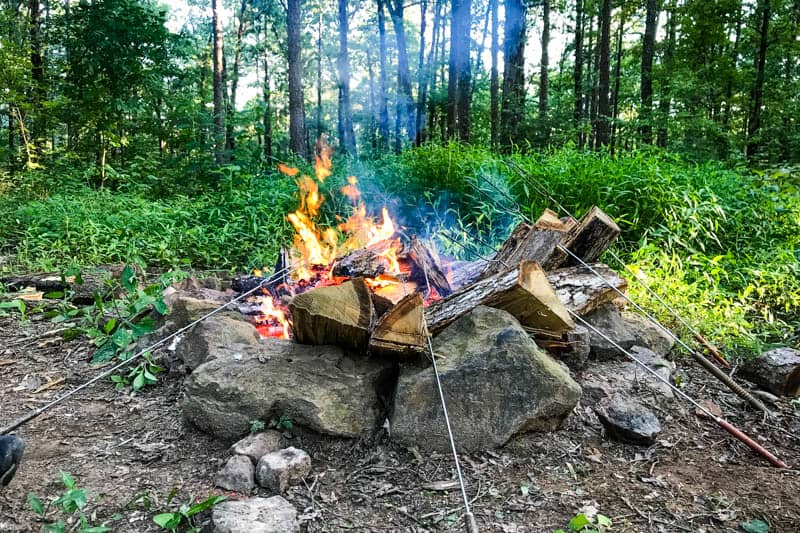
    roasting sticks with campfire in Ozark National Forest

    Expert Tips and Camping FAQ’s

    Is the Ozark National Forest free?

    Dispersed camping in the Ozark National Forest is free. If you’re camping in an actual campground, then no, it won’t be free and will likely cost a small fee. As far as recreation, most recreation is free of charge, but some areas will require a day-use fee. You can learn more about specific passes and permits.

    Can you camp anywhere in Ozark National Forest?

    Pretty much anywhere in the actual Forest is up for grabs. You’re not allowed to camp in or near recreational areas, like picnic areas, trailheads, campgrounds, etc. You also have to camp at least 100 feet away from streams or any water source. There are rules you’ll have to follow, but the sky’s the limit when picking a spot to camp. You’re allowed to stay in the same campsite up to 30 days maximum; then you have to move at least 5 miles from that spot.

    Do you need a bear canister in Arkansas?

    This is actually a really great question because there are bears in the Ozark National Forest. It would not hurt to follow bear safety regulations, like packing up food and toiletries where a bear cannot get to them, being bear aware, and keeping trash picked up and put away out of reach. Don’t be like us when we encountered a bear while camping in Cosby Campground in Great Smoky Mountains National Park.

    What is Ozark National Forest weather like?

    Weather in the Ozarks can change on a dime, so just be aware of forecasts before heading out, and if possible, stay aware of changes and updates while out and about. Winters can be cold and wet; summers can be hot, humid, and sometimes dry. Spring and fall are usually the best times to camp in Arkansas, though some would argue winter because in some areas, the weather is very mild, with temperatures hovering in the 50’s or 60’s for quite a bit of the winter.

    Wildlife You May Encounter

    Arkansas has abundant wildlife, and the National Forest is no exception.

    I’ve been told by one of the locals that this is bear country, but we have yet to see a bear.

    Other wildlife you may encounter, anywhere in the Ozark National Forest, include the following:

    • Snakes – including venomous snakes.
    • Spiders – including black widow, brown recluse and wolf spiders.
    • Insects – Ticks, mosquitoes, wasps, bees, etc.
    • Possums
    • Raccoons
    • Armadillos
    • Deer
    • Turkey

    The list could go on and on.

    Things to Do and See in the Ozark-St. Francis National Forest

    While you’re camping in this beautiful part of Arkansas, you may as well explore the area too, because there is SO much to see and do.

    Just a few ideas to whet your appetite…

    • Hiking Trails – We have a soft spot for places like Hawksbill Crag, Devils Canyon, and Sam’s Throne.
    • Driving – Take a ride down some of the most scenic byways you’ll ever travel, including the Sylamore Scenic Byway, the Pig Trail Scenic Byway, the Boston Mountains Scenic Loop, and the Ozark Highlands Scenic Byway.
    • Horseback Riding
    • Mountain Biking
    • Floating and Kayaking – The nearby Buffalo National River, the Mulberry River, and Shores Lake are just a few places to choose from.
    • Swimming
    • Fishing
    • Nature Study
    • And so much more…

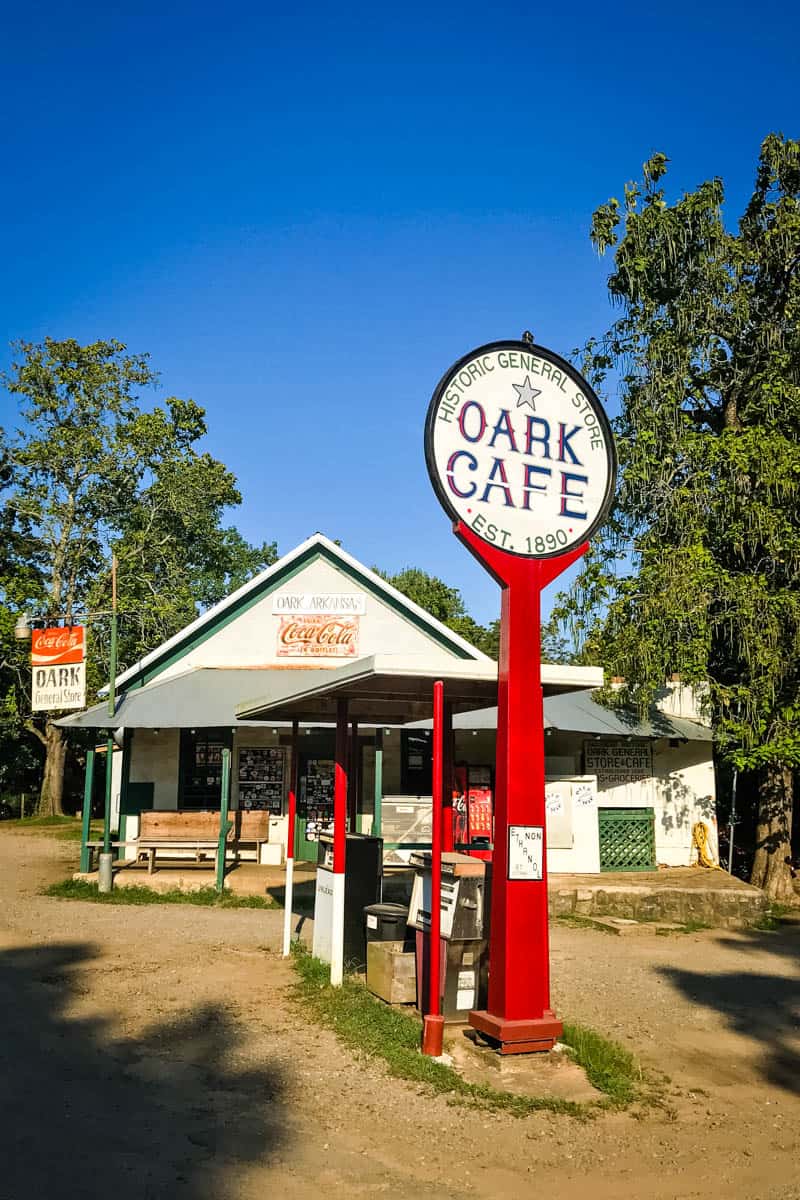
    You may even want to spend an afternoon at Blanchard Springs Caverns. Or go enjoy a burger at the Oark General Store.

    Oark General Store in Oark, Arkansas

    Things to Know Before You Go

    Before you head out for a fun few days of free camping in Arkansas, here are some things to remember, as well as suggestions for supplies you may need.

    • Some forest roads can be quite rocky and rough, so use caution and good judgment when deciding which roads to take.
    • Weather can change on a dime, so be prepared for any and all weather situations that may arise.
    • There are no bathrooms. You’ll need to carry your own portable toilet or shovel. You may even want to pack along a camping shower.
    • Take your own drinking water, and pack any snacks or food you need for the trip, along with cooking gear.
    dispersed camping Ozark National Forest in Arkansas with rooftop tent
    • Pack a first aid kit. On that same note, know where you last lost cell coverage (you may or may not have cell coverage at your campsite) and where the nearest hospital is, in case something happens.
    • If it’s general camping supplies you need, use our camping checklist for packing. It’ll ensure you have everything you need for your trip.
    • Be sure to take your camera and/or your binoculars!
    • Finally, leave no trace! Pack out what you pack in.

    Watch Our YouTube Video!

    The Ozark National Forest in Arkansas is a wonderful place to step back, take a deep breath, and enjoy a little time in the great outdoors. Hope to see you out there!

    CRAVING MORE ADVENTURE IN YOUR LIFE? Subscribe to my newsletter and follow along on PinterestFacebookYouTube, and Instagram for all the latest updates!

  • Jeep Tour from Marble to Crystal Mill, Colorado

    Jeep Tour from Marble to Crystal Mill, Colorado

    What it’s like to take the Jeep tour from the small mountain town of Marble, Colorado, to beautiful Crystal Mill and the semi ghost town of Crystal.

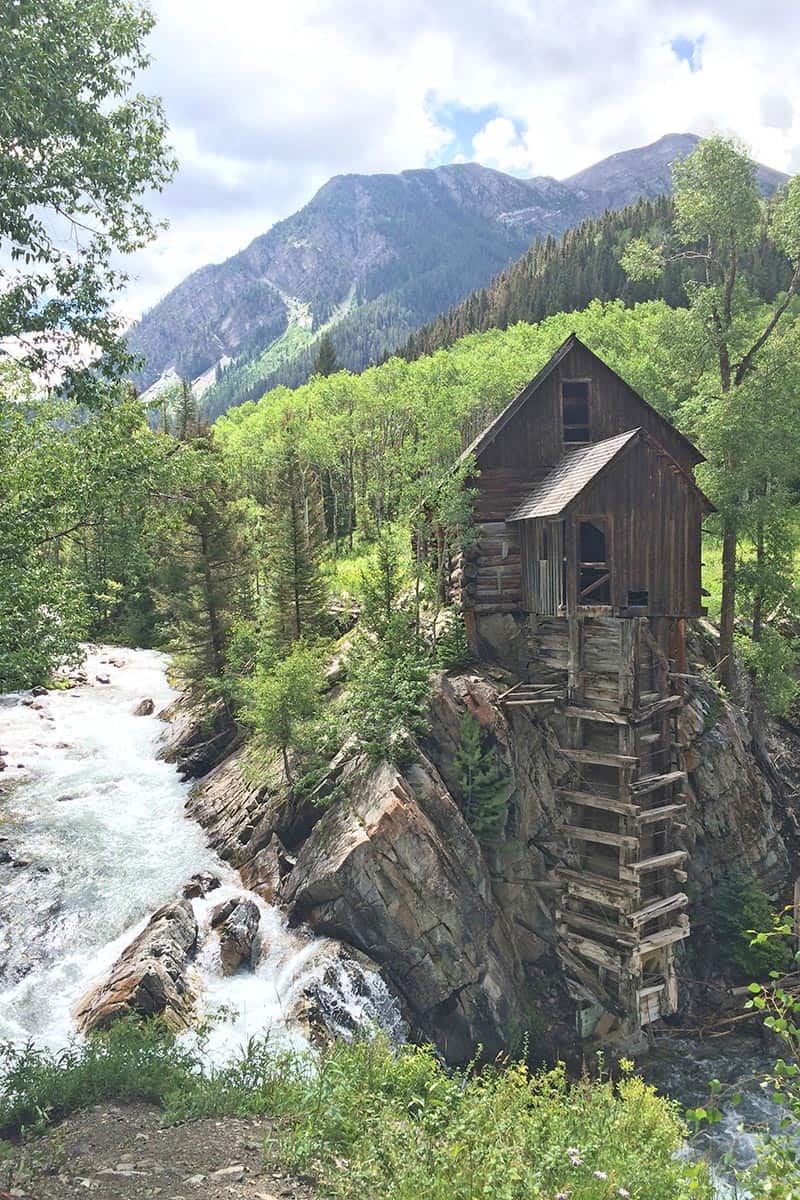
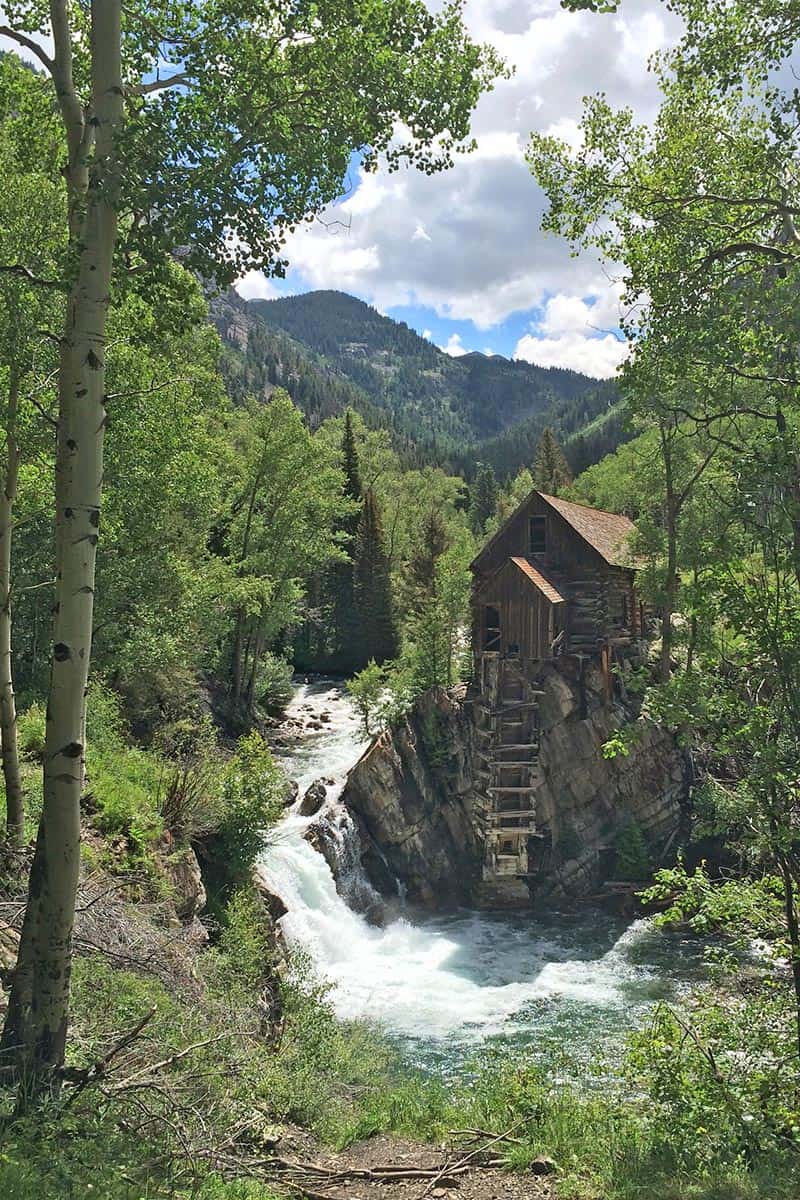
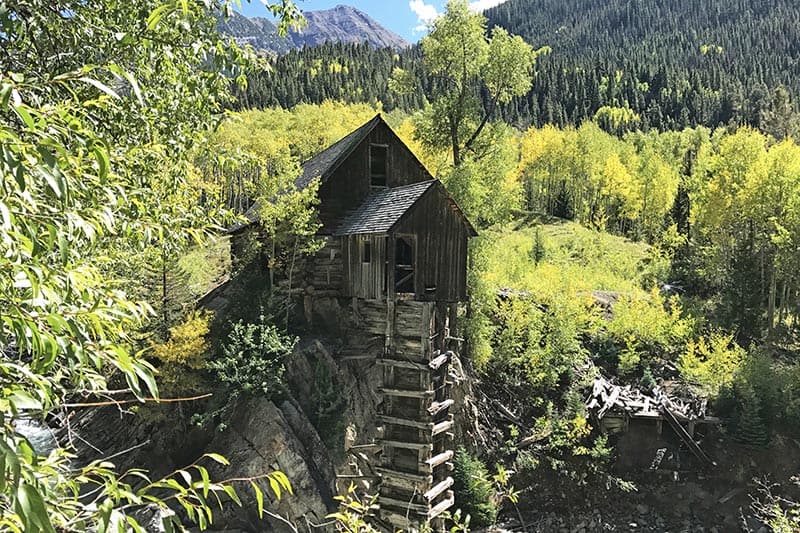
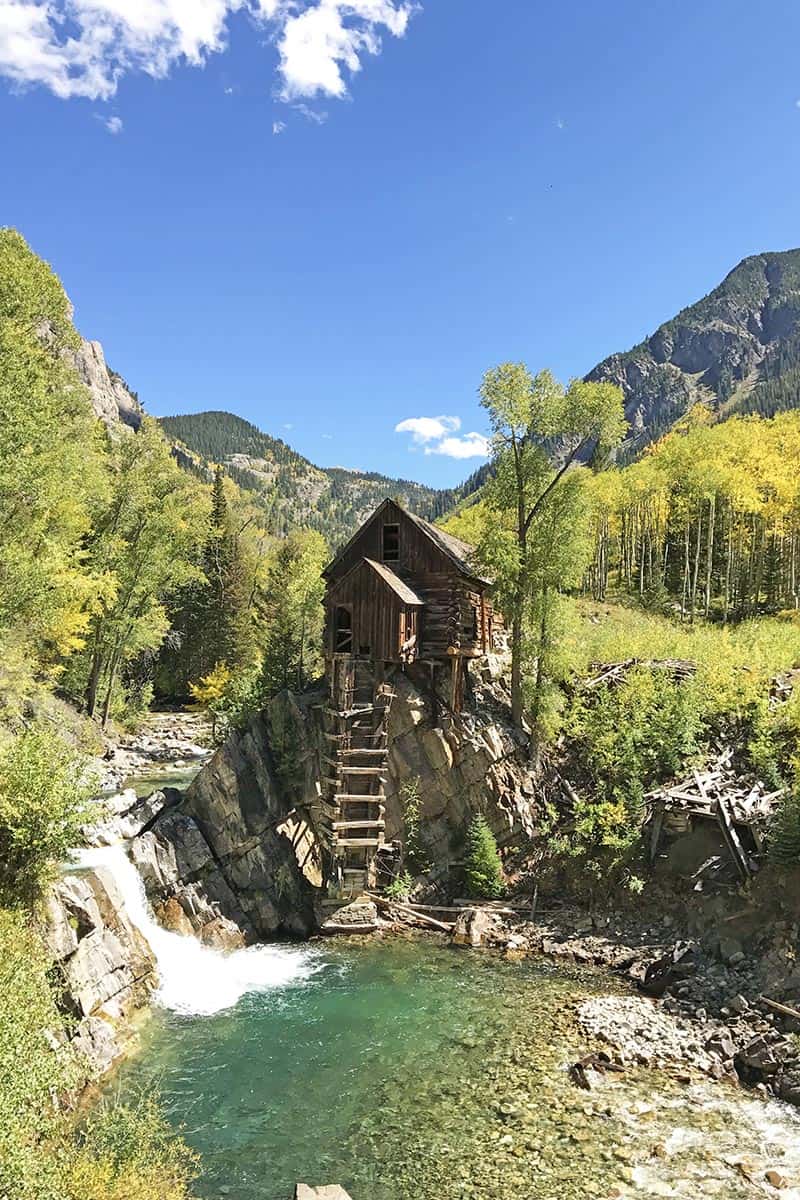
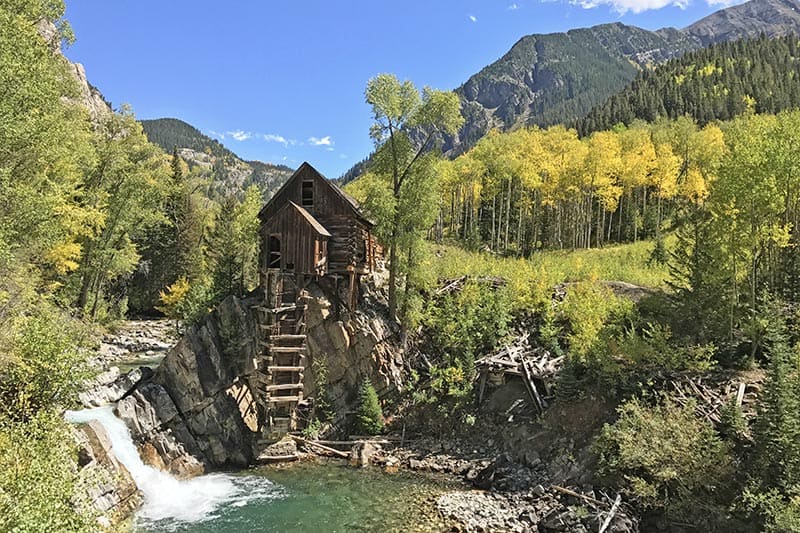
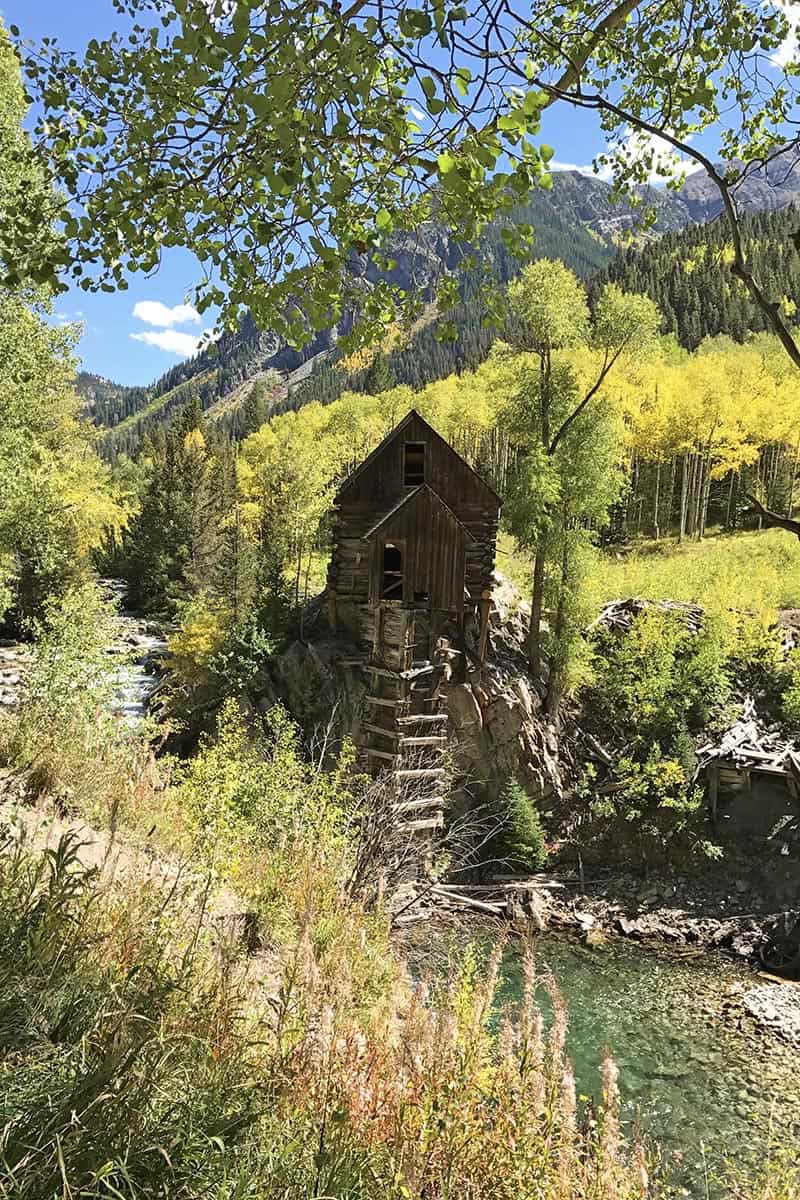
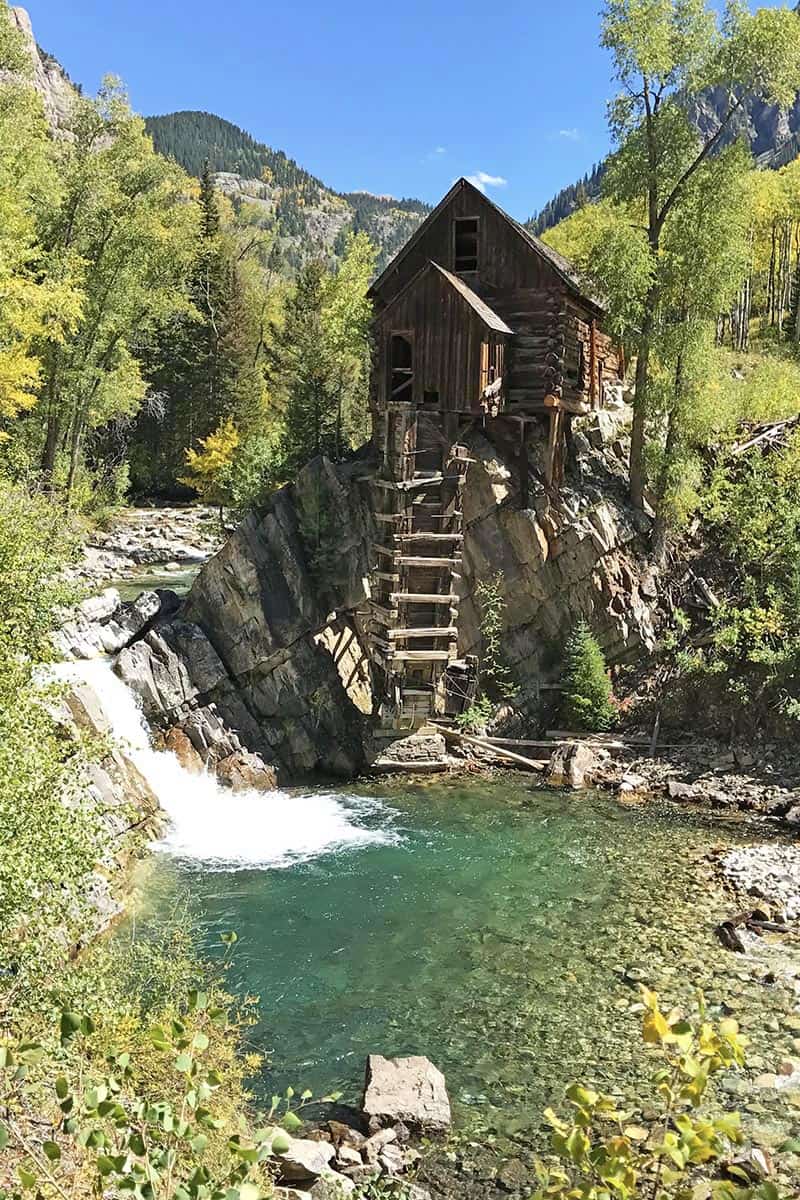
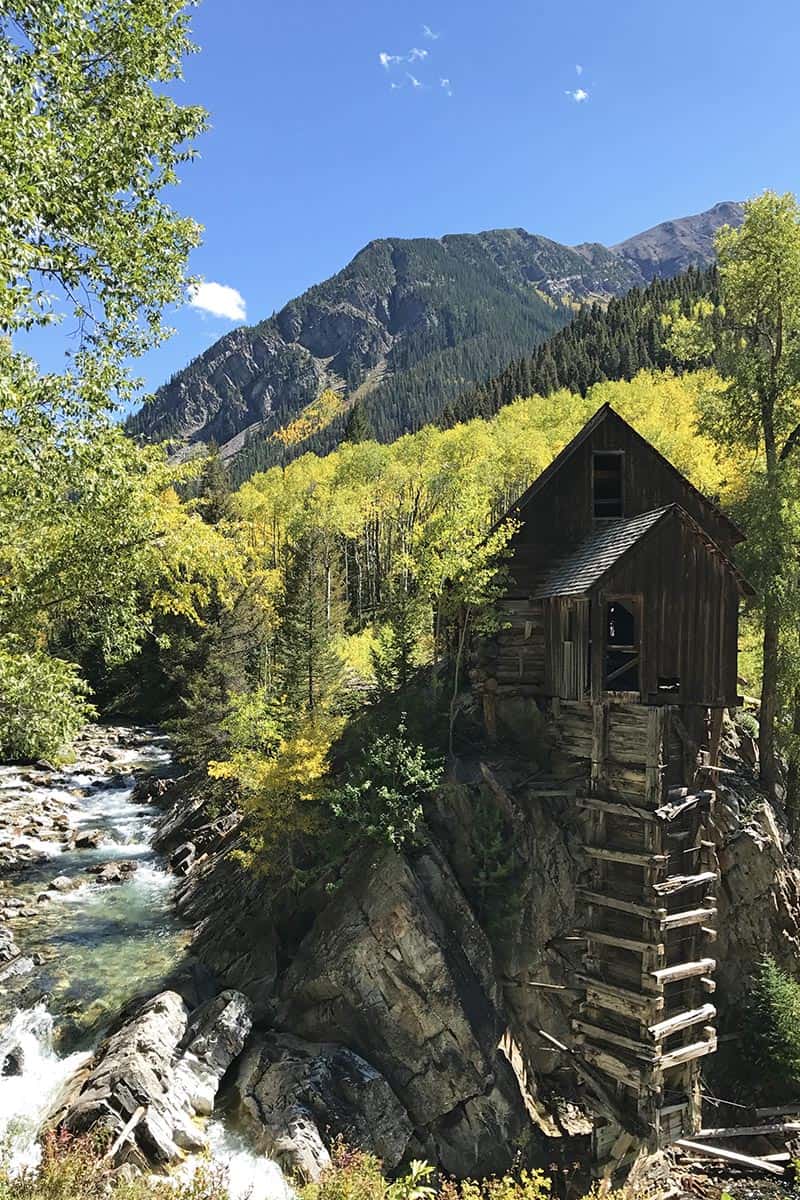
    Crystal Mill, Colorado, on the edge of the Crystal River in the Maroon Bells Wilderness during the summer

    While traveling in Colorado awhile back, we made the split-second decision to camp near Marble, Colorado. We wanted to experience slow travel, and really take our time exploring this beautiful area of Central Colorado.

    Part of the experience was to take a Jeep tour from the small mountain town of Marble to the most beautiful place I’ve ever seen in my life, Crystal Mill, Colorado.

    While we’ve since made the drive to Crystal Mill ourselves in our 4Runner (it’s a 4WD road), we previously decided to give the Jeep Tour a try. No stranger to mountain roads (like the road to Mount Evans) and other scenic roads in Colorado, we were excited for the journey ahead.

    Crystal River Jeep Tours offers several Jeep tours, including Lead King Basin, Devil’s Punchbowl, and Sheep Mountain. We chose to take their Crystal Tour.

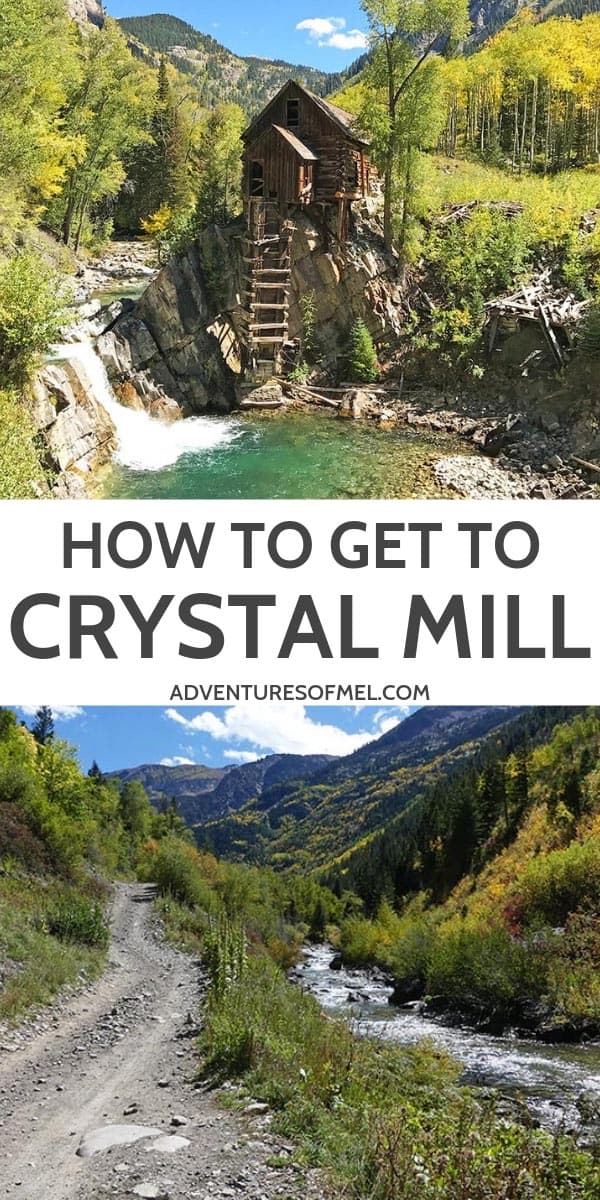
    HOW TO GET TO CRYSTAL MILL, COLORADO

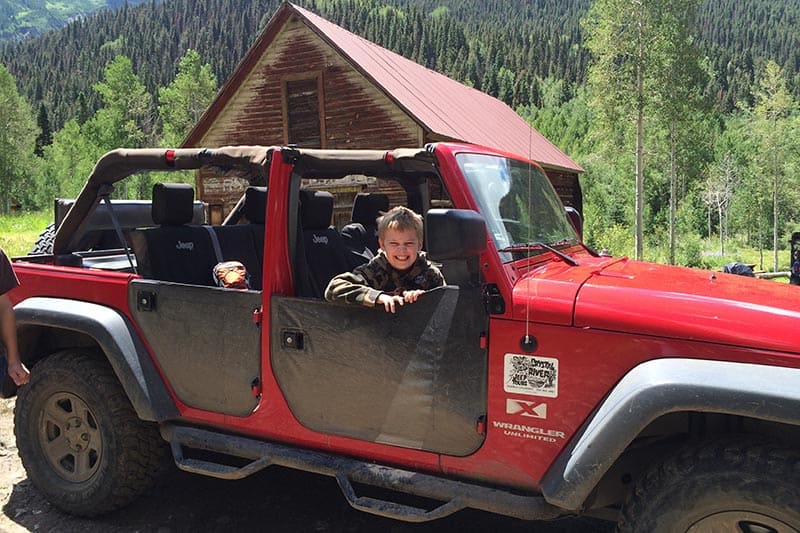
    After purchasing our tour, we piled into Big Red with our driver, Chuck. The boys sat in a rumble seat in the back that allowed them to see from a slightly higher vantage point.

    boy sitting in Big Red, one of the heavy duty Jeeps operated by Crystal River Jeep Tours

    We learned that Chuck spends his summers in Colorado working with the tour company. He was full of stories and knowledge about the area, pointing out landmarks and sights along the way, telling stories of past residents of the area.

    One such resident was Captain Helen Jack. Her story was so interesting, we purchased a book written by her when we arrived back home from this particular trip.

    We passed by Beaver Lake as we made our way to the road that leads to Crystal. The road then quickly changed from paved to unpaved and eventually led to the Jeep trail.

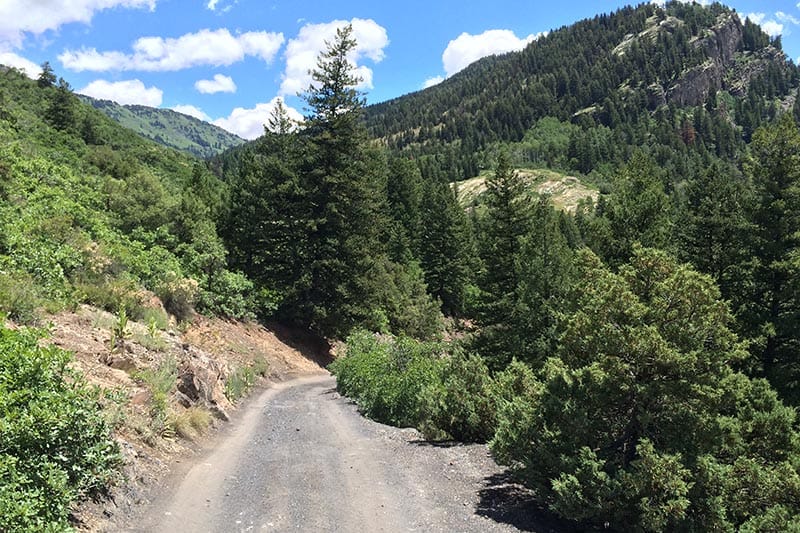
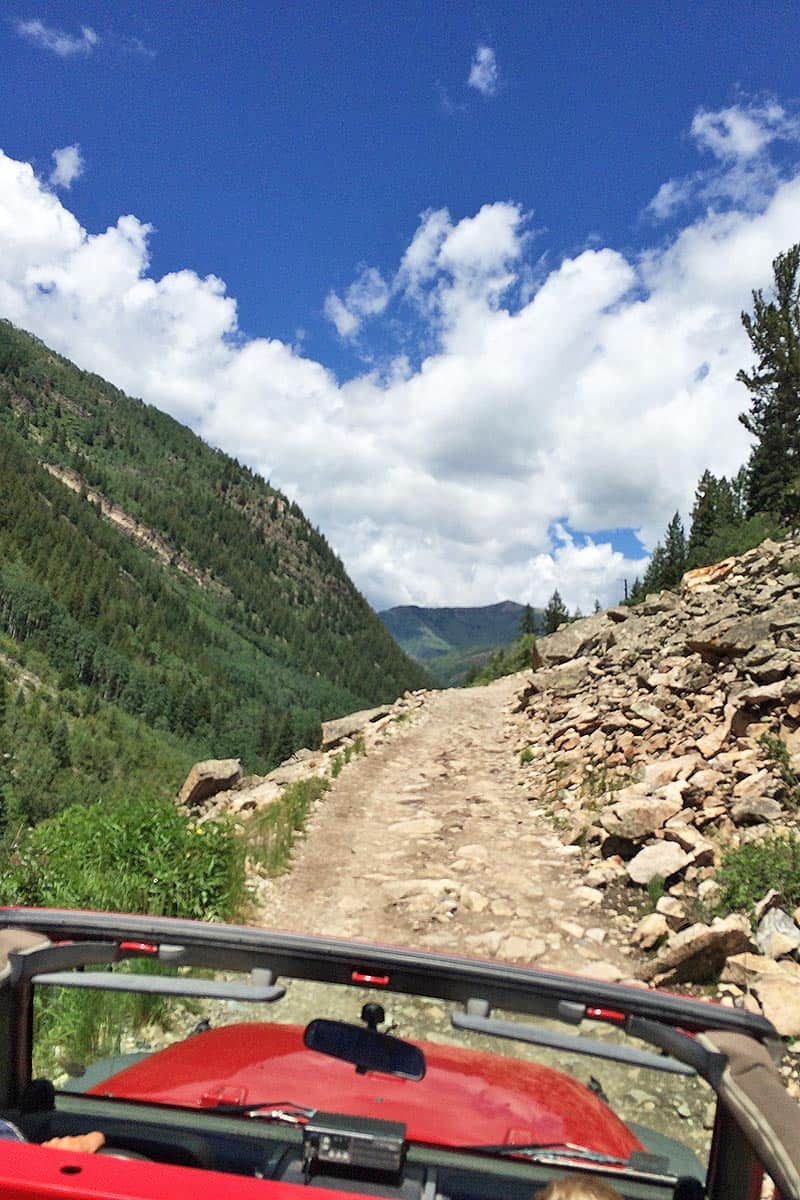
    starting out driving on unpaved Crystal Mill Road in Colorado

    DRIVING THE CRYSTAL RIVER JEEP TRAIL

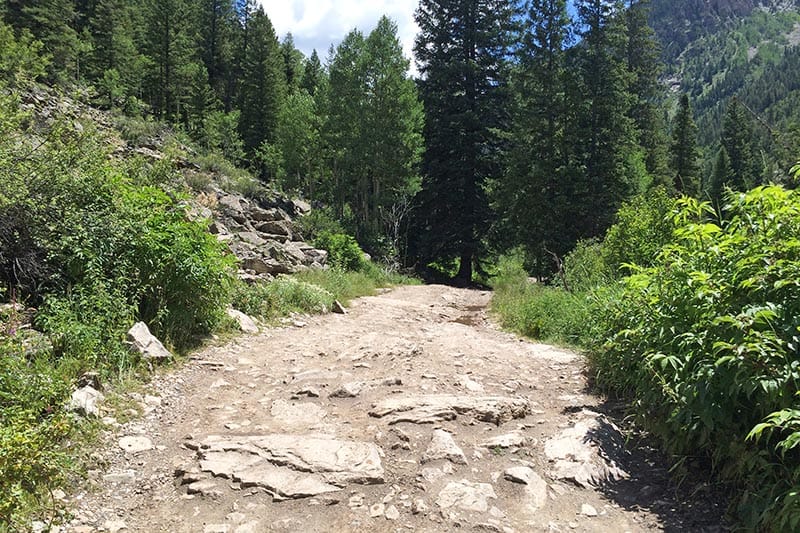
    The Crystal Mill road is narrow and rocky as it winds along, much of the time beside the Crystal River. It’s a very narrow shelf road, built by settlers in the late 1800’s.

    rocky four wheel drive road to Crystal Mill in Colorado

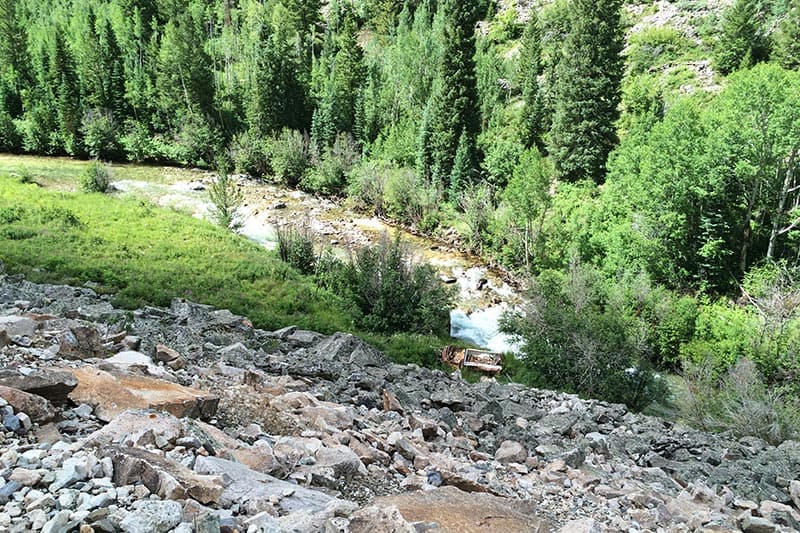
    We did notice the wreckage of an old truck along the way.

    wreckage of a truck along the road to Crystal Mill, on the Crystal River in Colorado

    There are small turnouts along the way, ensuring that if two vehicles meet, one can maneuver mostly out of the way and let the other one pass. Most of the time, one will have to back up to find said turnouts.

    As we drove along, Chuck pointed out sights like Lizard Lake, natural spring waterfalls flowing down from the mountains, and signs that this was once a thriving mining community.

    The Maroon Bells Wilderness is a sight to behold.

    Jeep tour along road to Crystal, Colorado

    I could share pictures of the road and the mountains all day long, but they would not do the beauty of this Colorado backcountry justice. 

    Chuck told us that normally it’s not as green as it was the summer we visited. It was so green, and there were gorgeous, colorful wildflowers everywhere.

    MYSTERIOUS AND BEAUTIFUL CRYSTAL MILL

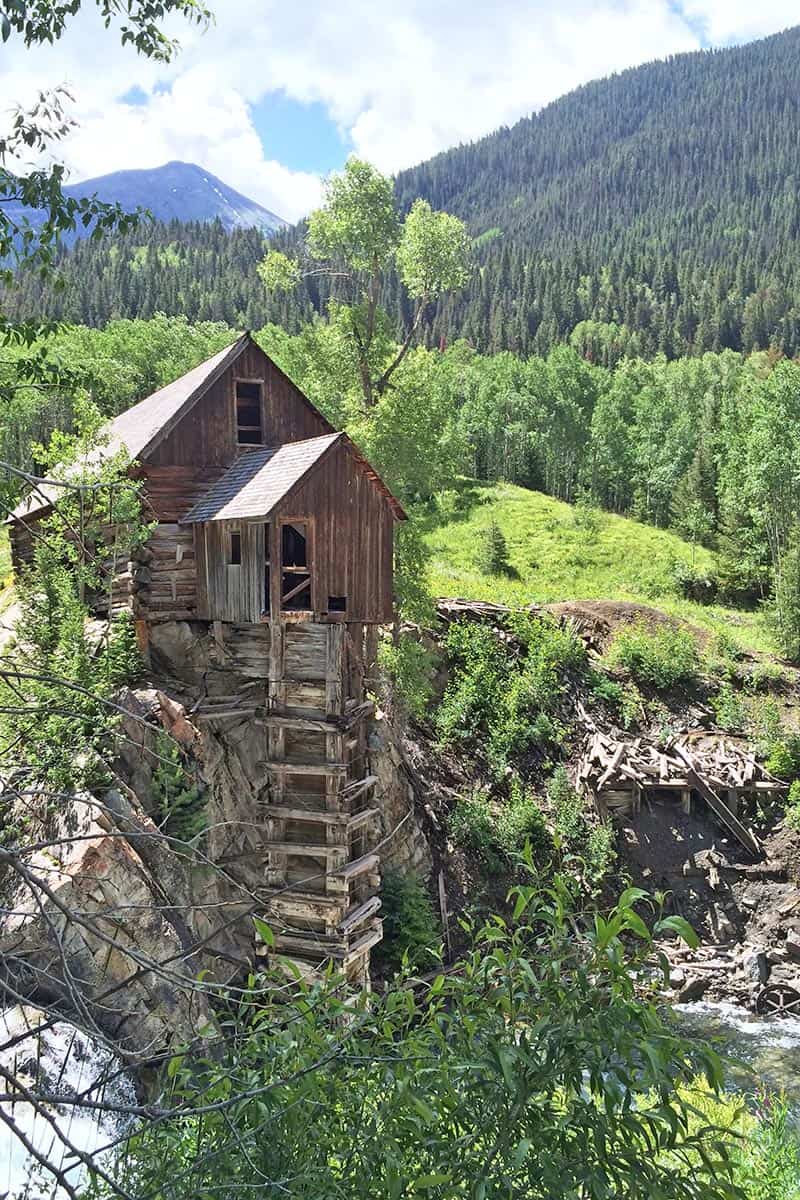
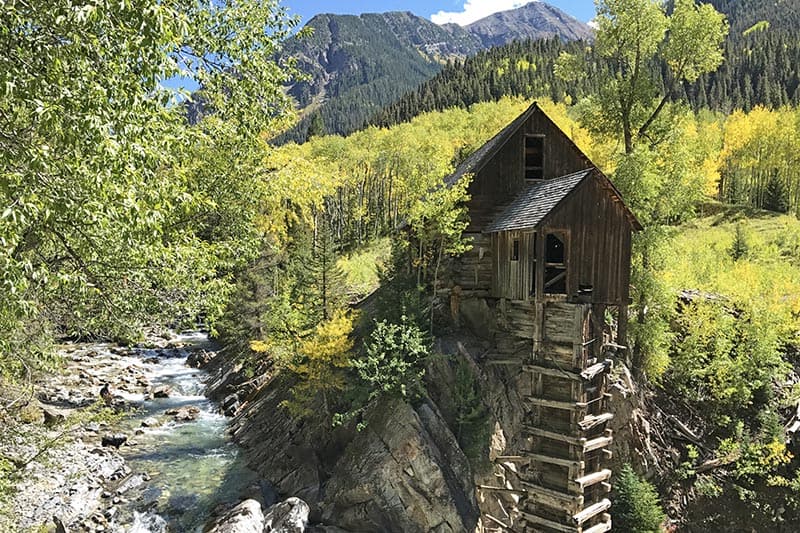
    There’s nothing quite like rounding the bend to finally see the mysterious Crystal Mill perched on the edge of the Crystal River.

    Crystal Mill, Colorado with the Crystal River and Rocky Mountains

    It’s a historical landmark and one of the most picturesque, photogenic places I’ve ever seen in my life.

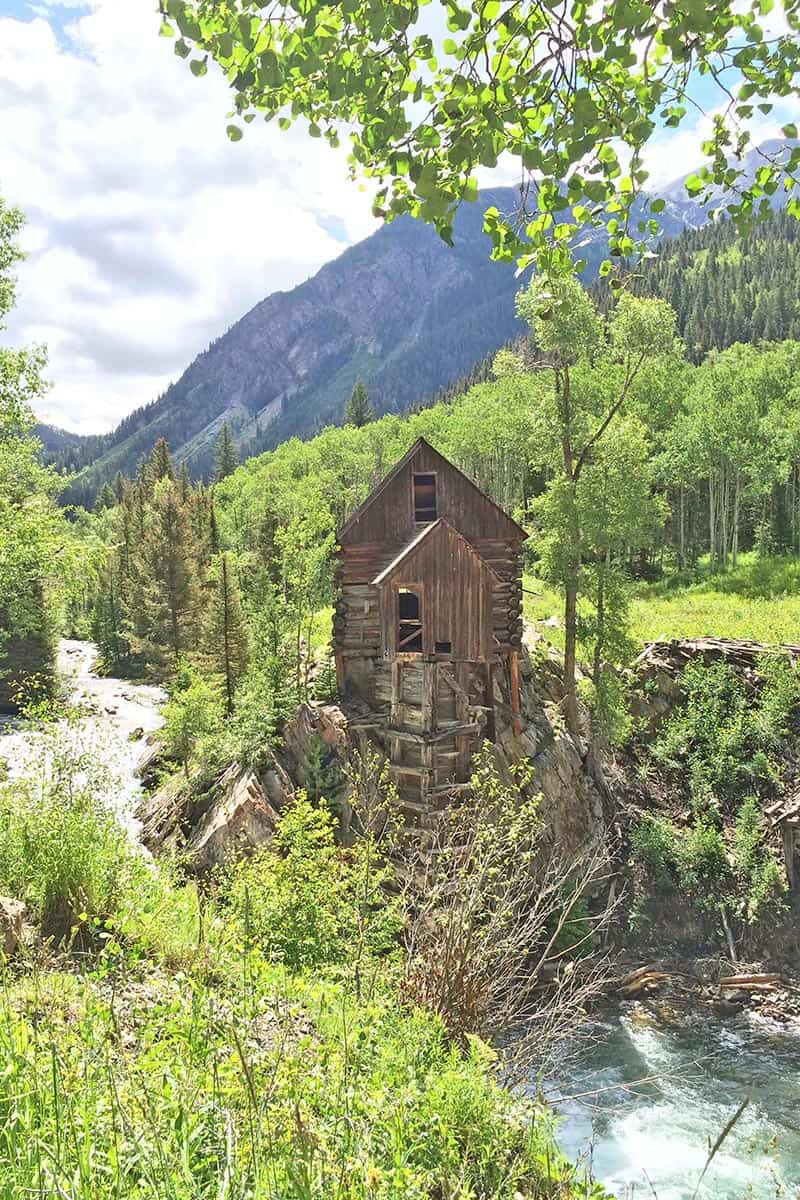
    Crystal Mill once operated as a powerhouse or power plant for mining operations. Its rugged appearance gives it a haunted look… The stories I bet it could tell, if old walls could talk.

    haunted Crystal Mill outside Marble, Colorado, during the summertime

    The river swirls and flows below the mill, while Rocky Mountain peaks tower behind. I could have stood there forever just drinking it all in.

    JUST AROUND THE BEND IS CRYSTAL, COLORADO

    At one time, the town of Crystal, just around the bend from Crystal Mill, had 400 residents, most of whom were miners and their families.

    Now it’s pretty much a ghost town, though there are people who come there to spend their summers.

    semi ghost town of Crystal City in Colorado mountains

    Roger Neal, an author who has written extensively about the area, spends his summers there, sharing his Crystal Tale Books with visitors who come to Crystal. We bought more than a few of his books while visiting.

    He’s written books with the history of Crystal and creepy tales of some of its residents. He shared with us that his family spent summers there when he was a child.

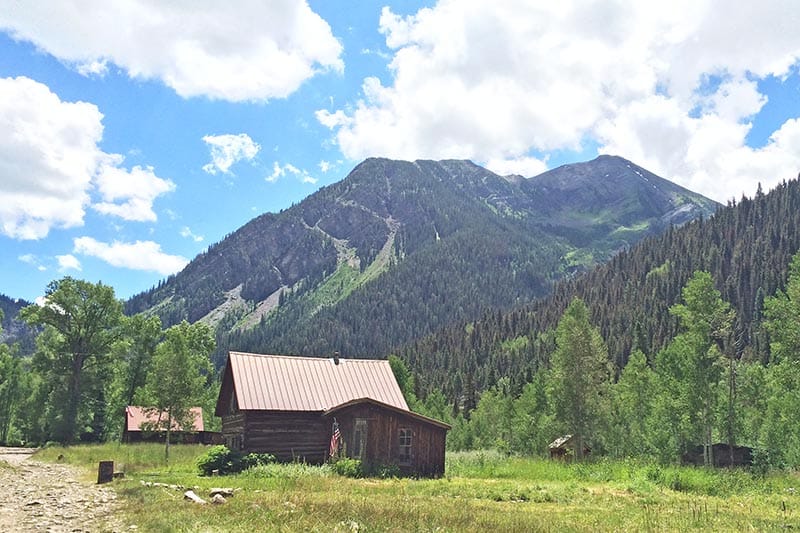
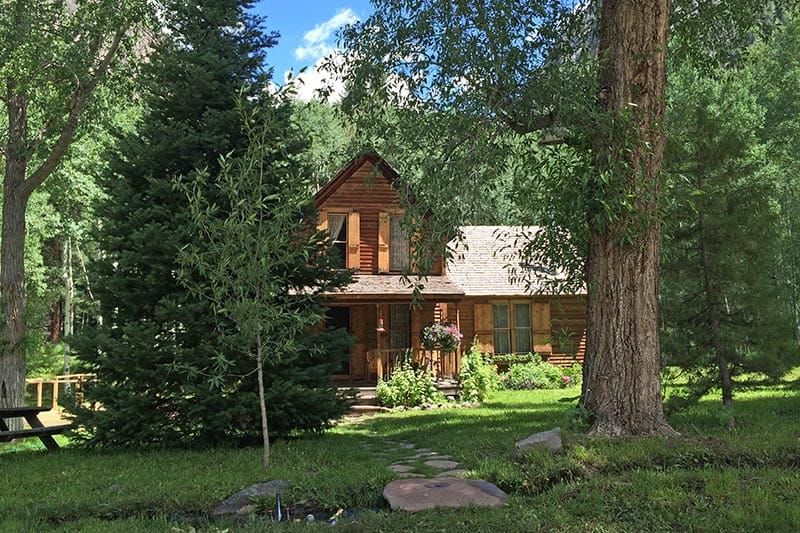
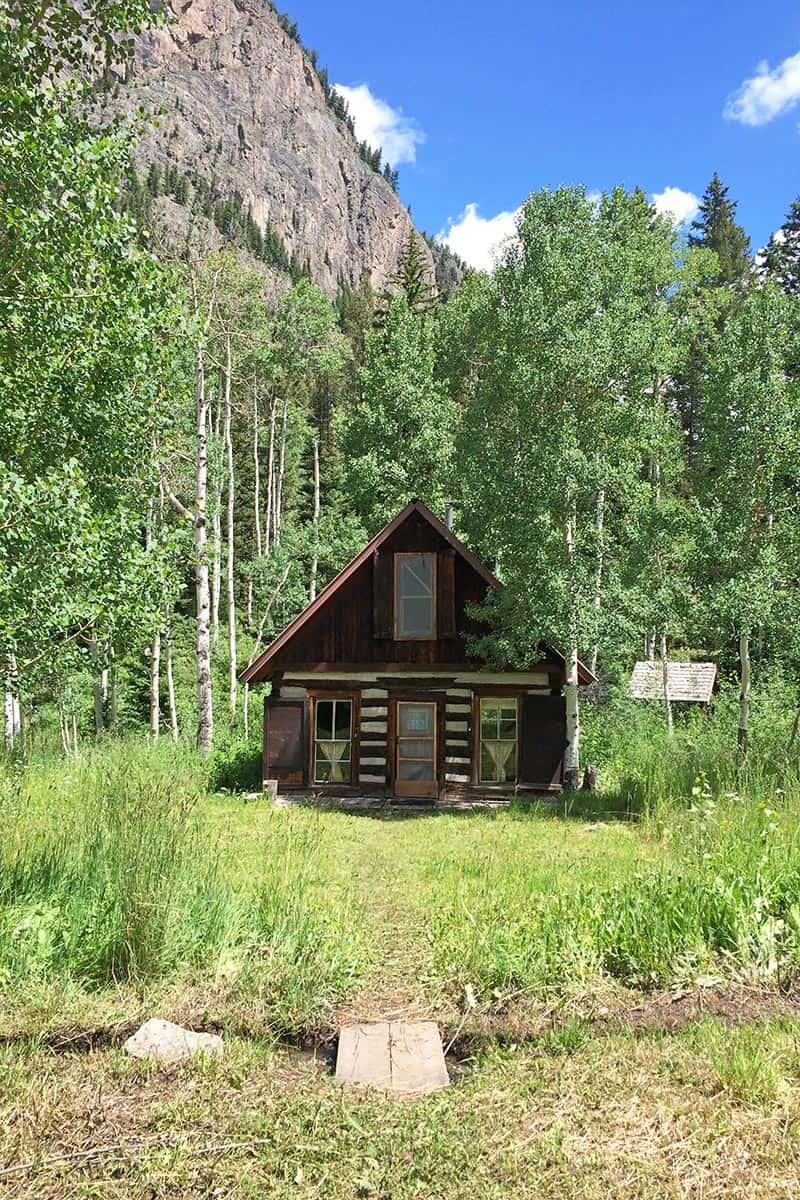
    cabin home in Crystal, Colorado

    There are cabins and small houses still standing and in use in Crystal, some of which are available for short-term rental. You’ll also find a general store (Crystal Store) and an outhouse.

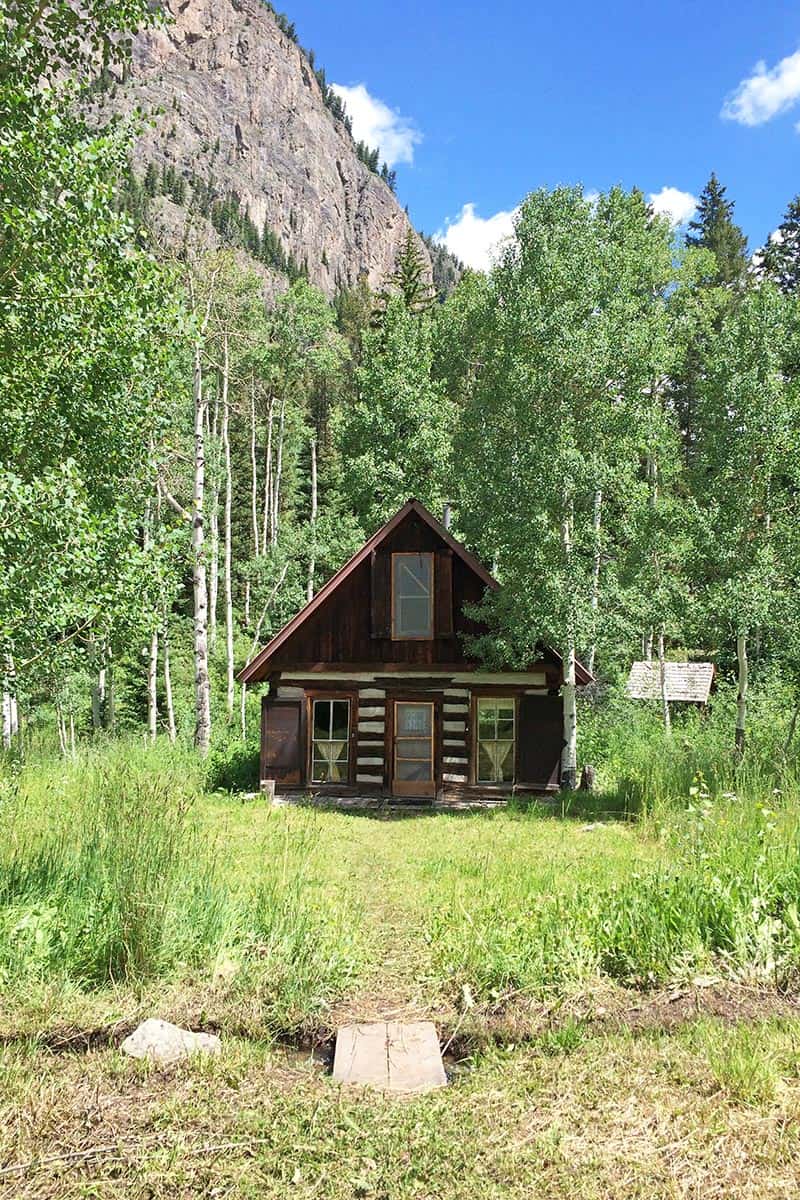
    The top “snow door” in one house gave us some perspective as to how deep the snow gets in the winter time.

    cabin with snow door in Crystal, Colorado

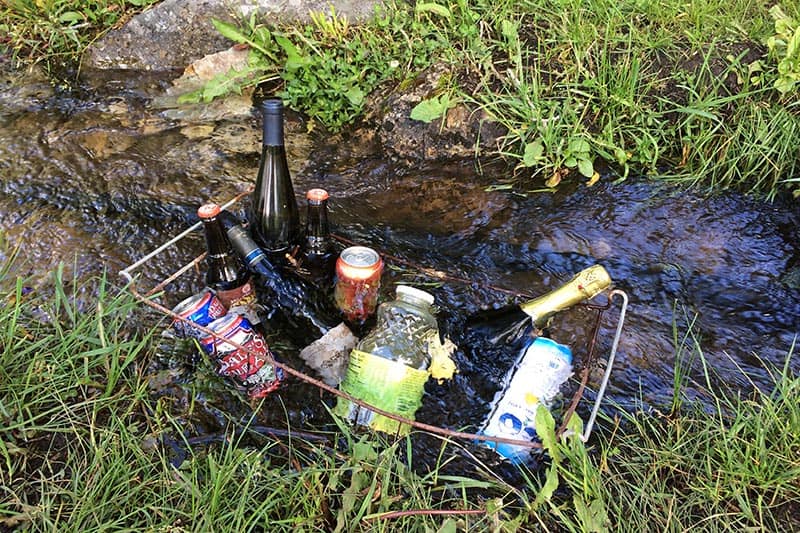
    A small stream flowed beside the road, a great way to keep drinks cold since there is no electricity in this mountain town.

    keeping drinks cold in a mountain stream in Crystal City, Colorado

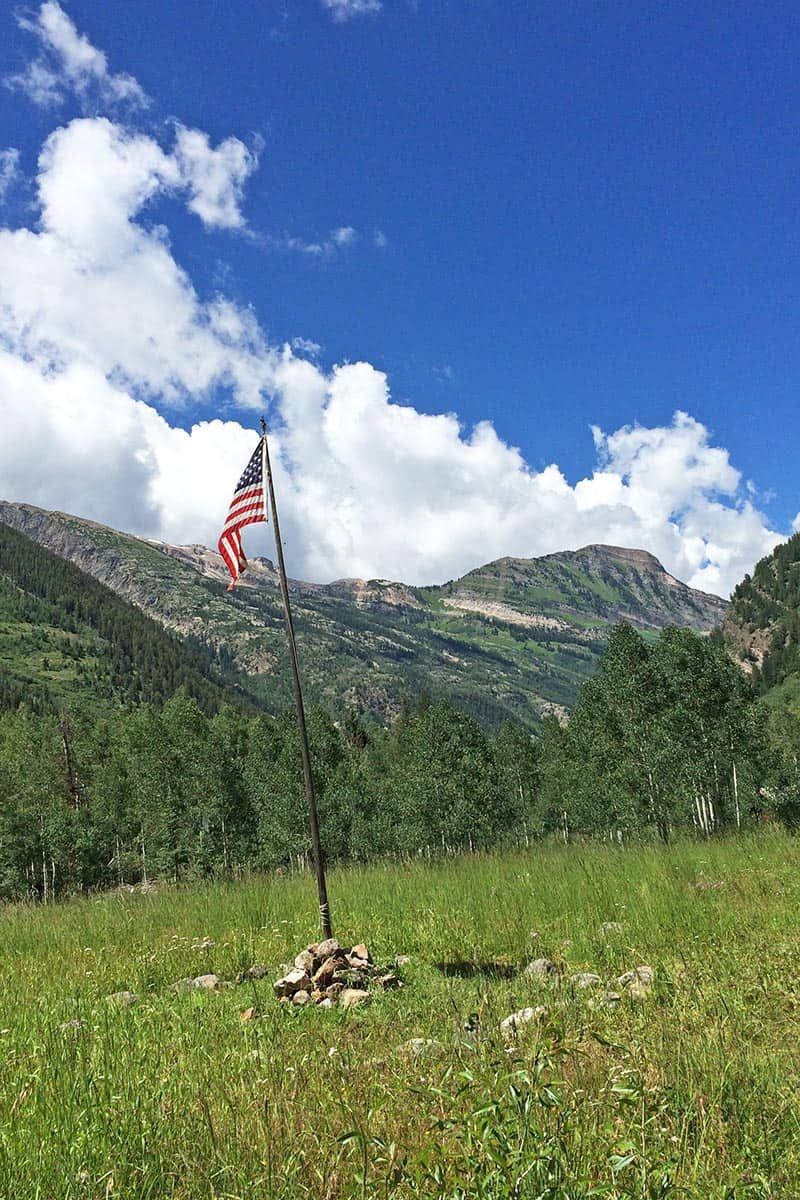
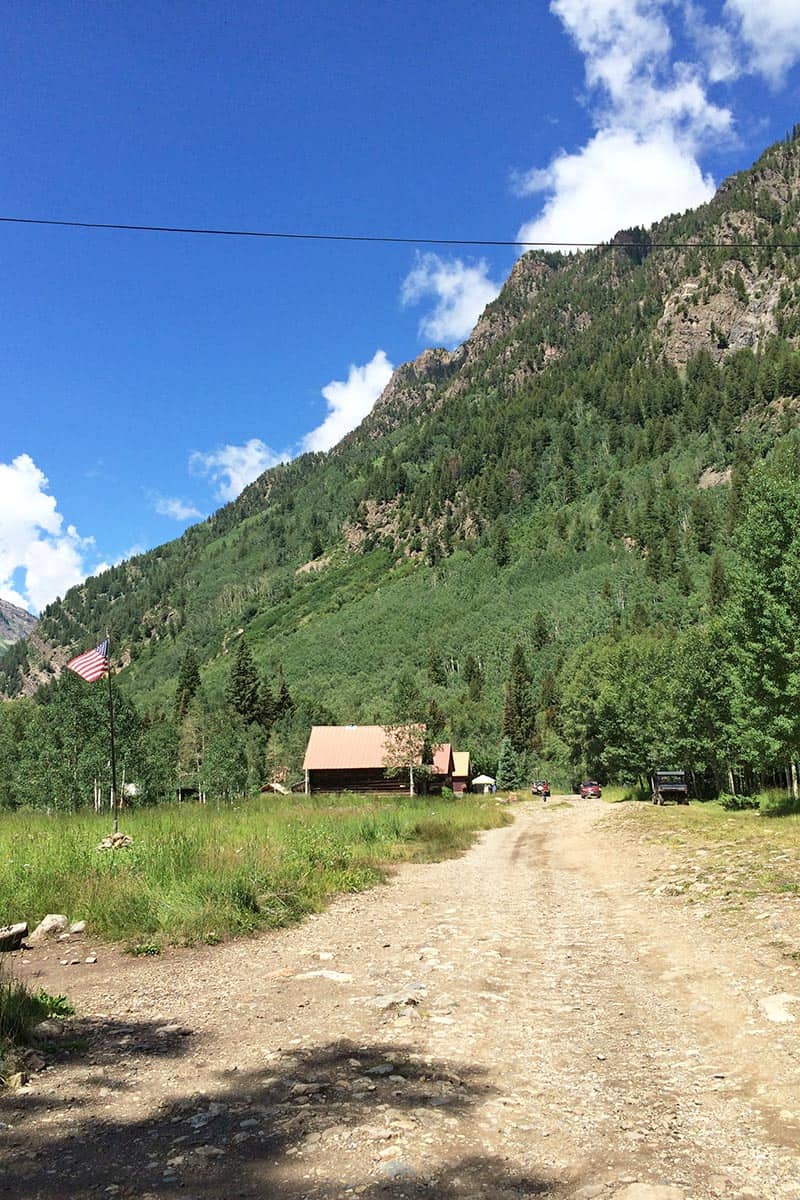
    And a flag in the center of town whipped back and forth in the wind.

    American flag standing tall in the Rocky Mountains in Crystal, Colorado

    If I had the opportunity to spend a week or more in this quiet mountain town, I totally would.

    The road continues on through the town of Crystal and winds its way to Crested Butte via Schofield Pass.

    I’m feeling adventurous enough that some day I would love to go back and do the entire loop, even the Devil’s Punchbowl, which is considered one of the most dangerous 4WD trails in Colorado.

    Crystal Mill on the Crystal River in the Maroon Bells Wilderness in Colorado

    CRAVING MORE ADVENTURE IN YOUR LIFE? Subscribe to my newsletter and follow along on PinterestFacebookYouTube, and Instagram for all the latest updates!

    THINGS TO KNOW BEFORE YOU GO

    Before you book one of the Marble, Colorado Jeep tours, be sure to pick the right tour for you. Some tours involve hiking, and some require you to bring a sack lunch.

    Also, a few more tips…

    • Tours operate from Memorial Day to November 30.
    • Bathrooms are few and far between, though there is one at your starting point in Marble and an outhouse in Crystal.
    • Roads are quite rocky, meaning lots of bumps and jolts.
    • Take your own drinking water, and pack any snacks or food you need for the trek. You may even want to pack a small cooler.
    • Jeeps are open, so wear comfortable clothing and shoes, and carry a jacket, even in summer.
    • Reservations are recommended, but they do take walk-ins. You’ll want to be sure to arrive 15 minutes early, so you can pay and fill out paperwork, including signed waivers.
    • If your family doesn’t fill up the Jeep (our family of 5 did), they will fill it up with more people you may not know.
    • Be sure to take your camera and/or your binoculars!

    And finally, two more very important tips…

    • The property along the road and even the mill itself is all private property. Do not trespass.
    • Also, leave no trace! Pack out what you pack in.

    Have you been to Crystal Mill? Have you taken some of the other Jeep tours? Share in the comments!

    More Colorado treasures you may enjoy visiting:

    PIN THIS COLORADO ROAD TRIP TO SAVE IT FOR LATER!

    Crystal Mill Jeep Tour in Colorado
  • How to Find the Best Free Camping in the USA (Video)

    How to Find the Best Free Camping in the USA (Video)

    Tips for how and where to find awesome free camping on your next USA road trip adventure. Find amazing, off the beaten path, beautiful places to camp!

    Probably the question I get asked the most about our style of camping is, “Where can I find free camping?”

    rooftop tent in one of many free campsites in New Mexico mountains

    People will message me, email me, and comment asking where they can find free campsites in different parts of the country.

    Listen, we’ve camped in some pretty amazing places… Like 10,000 feet up a mountain pass close to an old abandoned mine… On the edge of a meadow with a herd of elk peacefully grazing nearby… In the middle of the desert with a night sky chock full of brightly shining stars… In the heart of a national forest where wolves wake you up at night with their howls right outside your tent.

    But we’ve also been in your shoes trying to figure all this out, searching for ‘free camping near me’… In the dark, it’s getting late, we haven’t eaten yet, still looking for a good place to stop for the night and pitch our tent.

    We’ve even camped on a roadside pull-out with cars honking their horns all night long as they passed. Oh the joy that night was! If only we’d known that just up the road was a beautiful campsite on top of the mountain, tucked back into the trees away from honking jerks, er, cars.

    That very scenario and all of the questions I get on a regular basis about how to camp for free, lead me to writing this, so I can give you all the details, down to the nitty gritty, of how to find free camping in the USA.

    Stay tuned because eventually, we’ll be covering Canada and individual states. We’re also planning to share places where we’ve camped in the United States, as well.

    [mv_video doNotAutoplayNorOptimizePlacement=”false” doNotOptimizePlacement=”false” jsonLd=”true” key=”wtcwt4exh6vbjn2gtpdx” thumbnail=”https://mediavine-res.cloudinary.com/video/upload/wtcwt4exh6vbjn2gtpdx.jpg” title=”How to Find the Best Free Camping in the USA” volume=”100″]

    WHY WE CAMP FOR FREE

    When I say ‘free’, I mean free in a money sense, as well as free in a ‘wild and free’ sense.

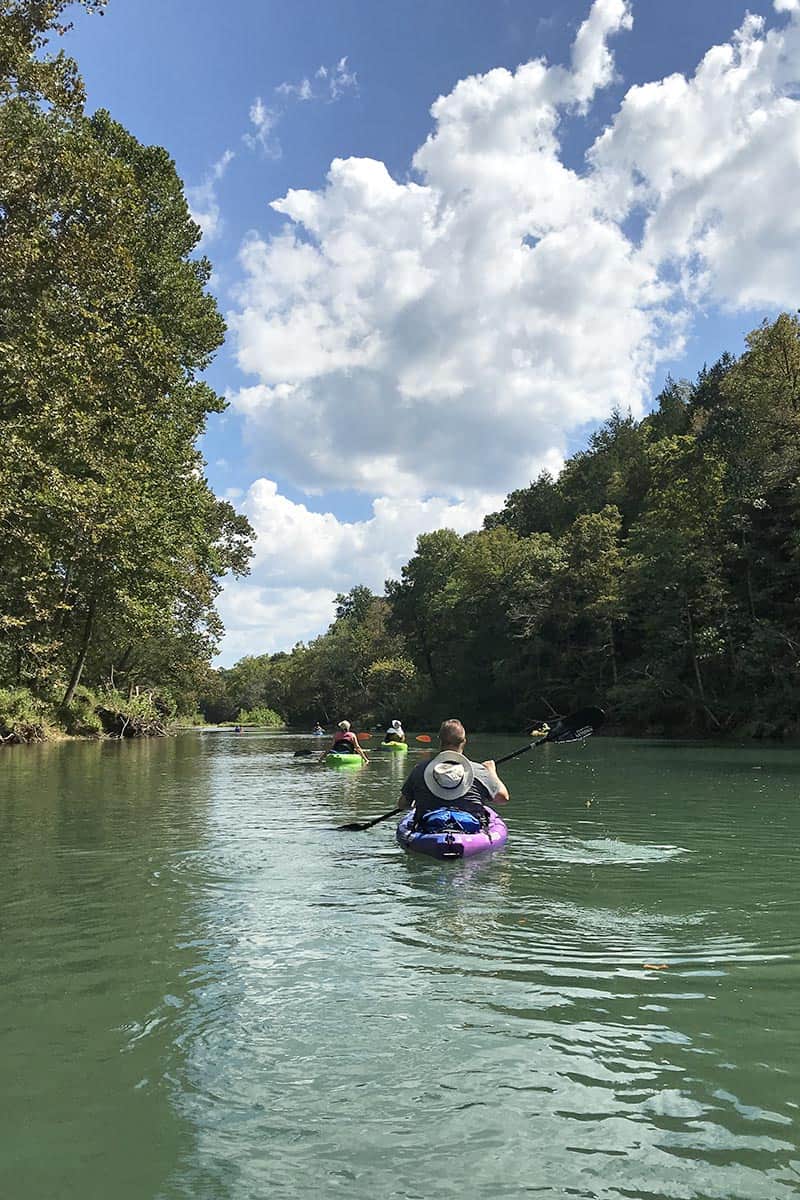
    Dispersed camping allows our family to travel and experience everything this beautiful amazing country has to offer. Like kayaking Beaver Lake, it gives us the opportunity to explore places we may only have otherwise dreamed of exploring.

    For us, camping means an escape away from civilization and most of the time, away from developed campgrounds. While the preparation and all that it entails may not be free, we like to stick to wild camping in off the beaten path camping spots.

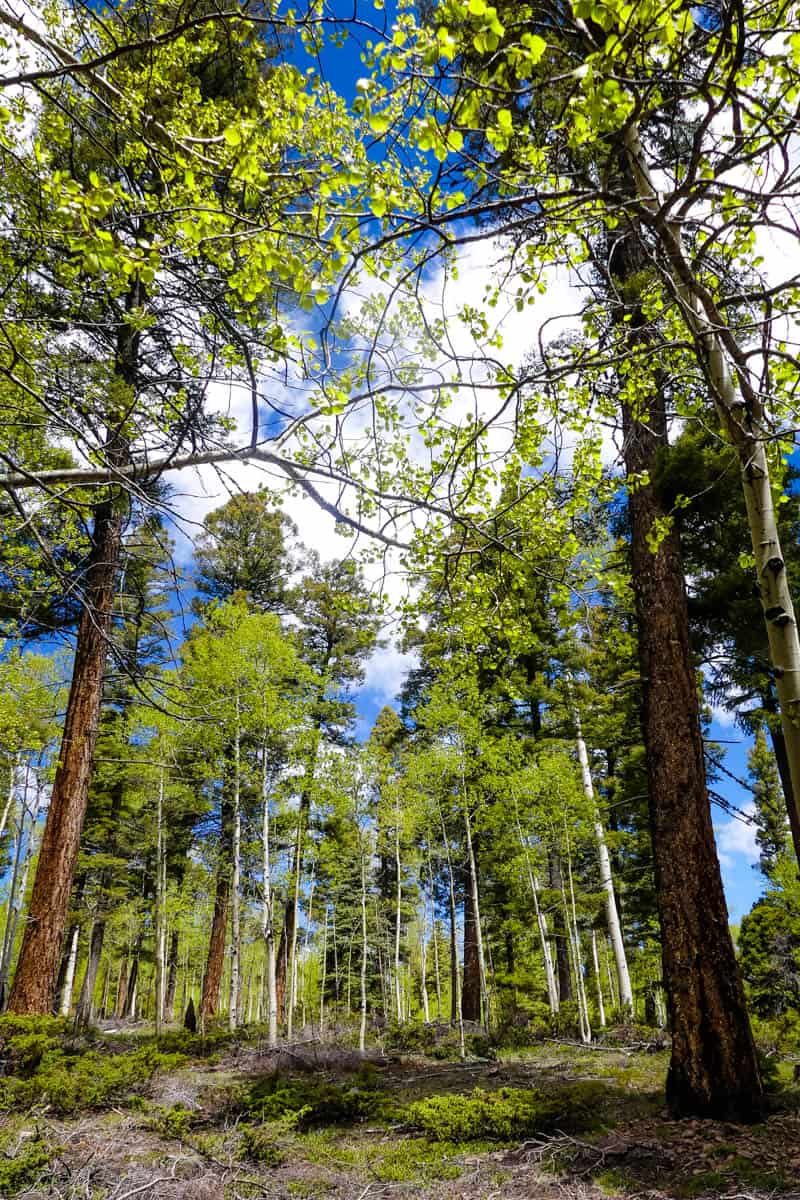
    gorgeous hardwood trees and aspens in the Carson National Forest in New Mexico, USA

    WHERE TO FIND FREE CAMPSITES

    Finding free places to camp may require a little bit of research before you pack up and head out. The type of campsite you need will depend on the type of equipment you have.

    For example, are you RV camping or boondocking? Tent camping? Are you backpacking?

    All of this will factor in to your decision as to where you want to look for camping spots.

    Below is a comprehensive list of all the places where you can find free camping in the USA, as well as tools you can use to find these places. You’ll find descriptions and details, rules and regulations, and even a few examples.

    NATIONAL GRASSLAND AND NATIONAL FOREST CAMPING

    Camping in National Forests is usually our #1 choice. In fact, we plan most of our trips around being able to find good camp spots in the National Forest.

    One of our favorite places to camp closer to home is the Ozark National Forest.

    We also have a favorite spot on the Rita Blanca National Grassland where we like to stop for free overnight camping if we’re making our way out West.

    Camping in a National Forest or on the Grasslands are usually good for all kinds of camping, whether you’re an RV camper, in a fifth wheel or trailer, a van, tent camper, or backpacking. There are usually options for all.

    But be aware, there will be no amenities. We’re talking dry camping here. You won’t have access to restrooms, picnic tables, bear lockers, running water, electricity, or trash service.

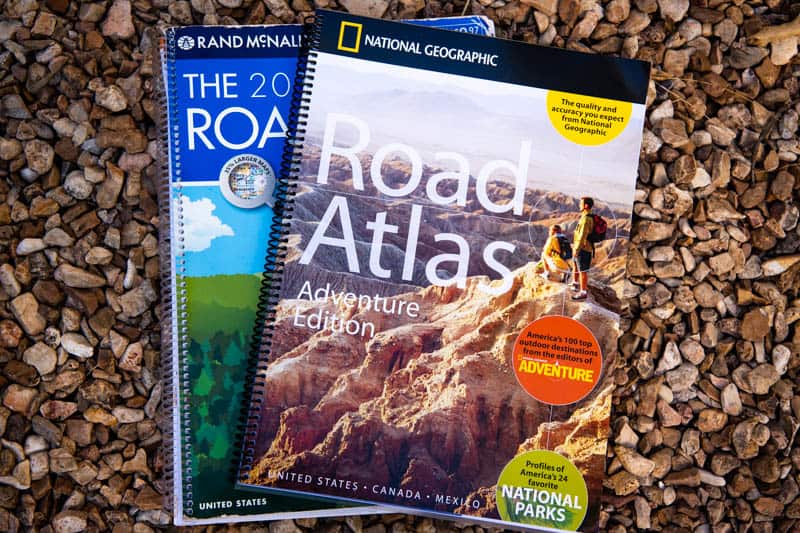
    road atlas and adventure road atlas  on rocks

    How to Find Camping Spots in a National Forest or Grassland:

    • Look for light green areas on your map. You can find them in Google Maps (you may need to zoom in/out to see more detail) or in any road trip atlas or adventure atlas.
    • Use Google Earth to get a satellite view and find pull-offs or clearings, both being pretty good indicators that there are campsites in the area you’re searching.
    • Driving just about any Forest Service road (usually dirt roads) will lead to all sorts of places you can camp for free. Look for spots alongside the road, or look for sites that are tucked back into the forest more. You may even be able to backpack in to a site if that is your preference.
    • Always look for a fire ring and an already established site. Never create your own site.
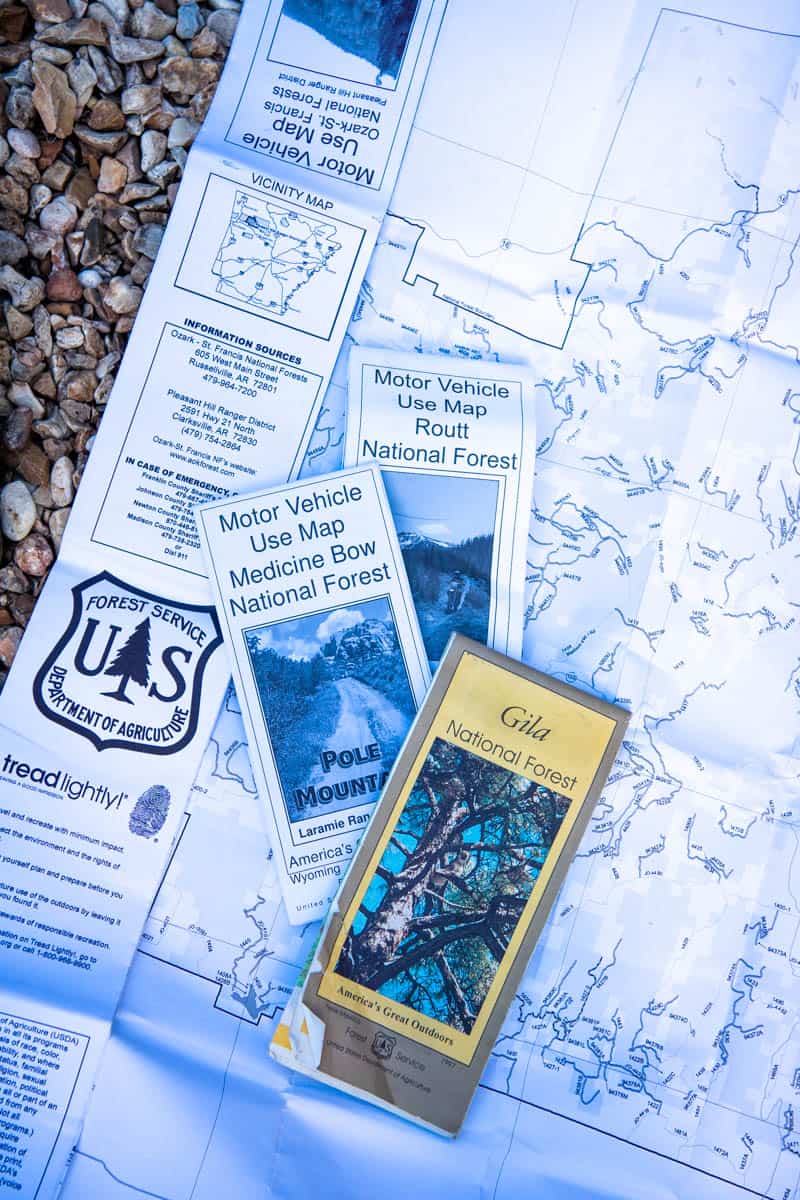
    • Locating and stopping at a ranger station in the Forest you’re visiting enables you to get all the information you need, as well as more detailed maps and Motor Vehicle Use Maps (the best maps you can have because they’re updated regularly with road closures) of the area, which you can also find on the Gaia GPS app. Plus, you can get all of your questions answered and become aware of any problems/issues they’re experiencing at the time (example: burn bans, wildlife warnings, road closures, etc.)
    • If camping in a Grassland, calling the local authorities may give you insight as to whether or not it’s ok to park for the night in a picnic area.

    You may also find a Benchmark Road & Recreation Atlas for each state helpful.

    motor vehicle use maps on rocks, perfect for finding back roads, Forest Service roads, and free camping in the USA

    Rules and Regulations:

    Usually, there is no fee or permit required, meaning you will probably camp for FREE the entire time! You just have to check with each area you are planning to enter because some do require permits.

    All campsites are first come, first serve. You can not reserve these remote sites.

    Rules are posted online. And you can usually find signs with rules and updates upon entering the area you’re visiting.

    Here are a few…

    • Stay on existing roads, whether paved or unpaved.
    • Check fire conditions and for burn bans before starting a fire. Also, make sure you don’t need a permit to have a campfire. On that same note, drown your fire before going to bed and before leaving the campsite.
    • Always camp at least 200 feet away from any type of water source, such as rivers, creeks, lakes, and wetlands.
    • There’s usually a 14 day limit, and you can’t return to that exact campsite for 1 whole year. So if you find a good site, you may wanna stay and enjoy it for as long as possible.
    • Leave no trace. Always pack in what you pack out. And don’t harm any vegetation or feed any wildlife.

    BUREAU OF LAND MANAGEMENT (BLM LANDS)

    BLM Lands can be found mostly in western states. When I think BLM, I think of a spot in the desert outside Roswell, New Mexico, where a sudden windstorm nearly blew us away.

    However difficult they may be to locate, you can find some really beautiful camping spots on BLM Lands. Note that you’ll also find some developed campgrounds, but they usually charge a fee for camping.

    All campsites are first come, first serve. You can not reserve these remote sites.

    Camping on BLM lands is usually good for all kinds of camping, whether you’re an RV camper, in a fifth wheel or trailer, a van, tent camper, or backpacking.

    But be aware, there will be no amenities. Again, dry camping… You won’t have access to restrooms, picnic tables, bear lockers, running water, electricity, or trash service.

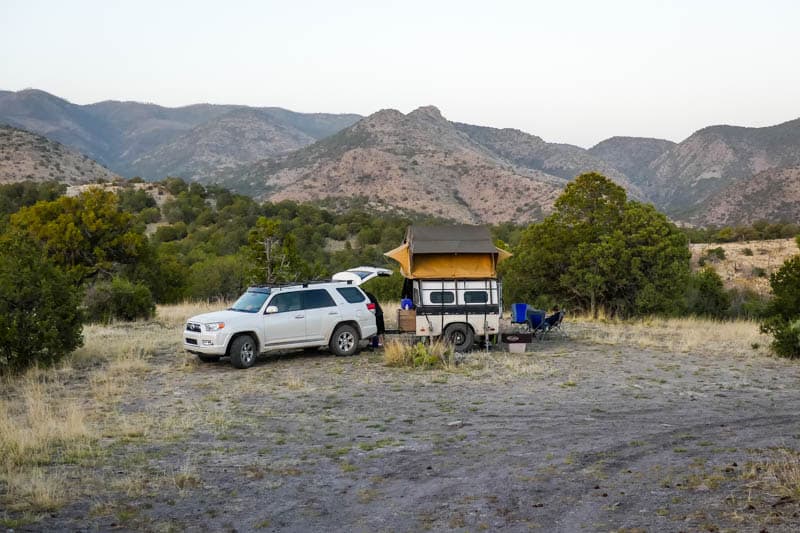
    4Runner with rooftop tent dispersed camping in the mountains of New Mexico, USA

    How to Find Camping Spots on BLM Lands:

    • Find maps on the BLM website for the state/s you’re visiting.
    • Look for spots alongside the road, already established campsites where previous visitors have camped.
    • If possible, stop by a local BLM office to get more information, as well as hard copy maps.

    Here is a list of Public Lands where you can search by state and then by BLM Lands, National Forests, etc.

    Rules and Regulations:

    Some BLM Lands are in use by mining companies or ranchers with grazing rights. So, there may be livestock running on the lands.

    • Stay on public land. Never enter private land or go through a gate without getting permission to do so first. And then if you do go through a gate, leave it the way it was.
    • Check fire conditions and for burn bans before starting a fire. Also, make sure you don’t need a permit to have a campfire. On that same note, if you are allowed to have a fire, drown your fire before going to bed and before leaving the campsite.
    • You’re usually limited to 14 days within a 28 day period.
    • Always camp at least 200 feet away from any type of water source, such as rivers, creeks, lakes, and wetlands.
    • Leave no trace. Always pack in what you pack out. And don’t harm any vegetation, livestock, water supply, or feed any wildlife.
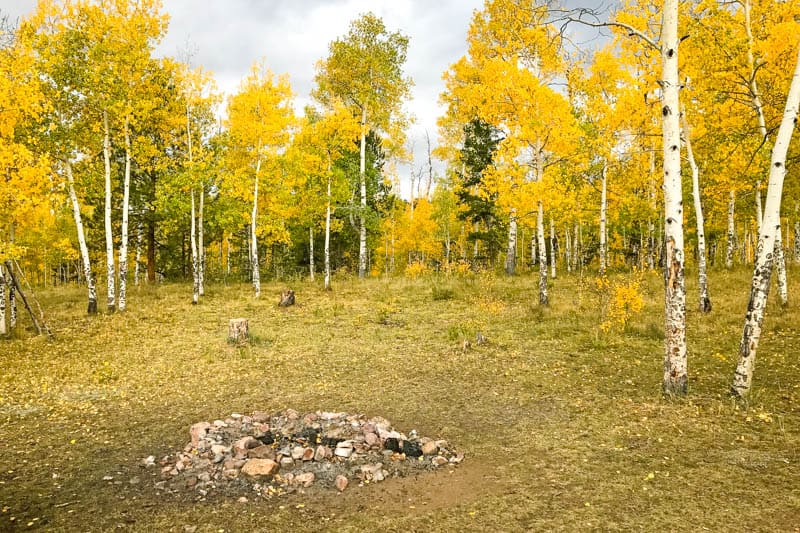
    national forest camping in Colorado with fire ring in golden aspen trees

    OTHER OPTIONS FOR FREE CAMPING

    You may find other options for free camping in wilderness areas, state areas, Wildlife Management Areas, county and city parks, and even a rare spot in a National Park.

    Some state parks and national parks allow backpacking in, camping in the backcountry, and primitive camping, as well.

    Check the state you’re visiting for these types of camping areas, and contact the appropriate office to get more information.

    Just keep in mind, it may not always be free because you may need a permit. But usually, a permit will be much cheaper than paying for a nightly campsite.

    Though it does require a paid permit, we’ve enjoyed backcountry camping in Big Bend National Park. Pick a spot, pay the permit fee, and drive out into the backcountry to set up camp. It is amazing and treacherous all at the same time.

    Another national park that has free campsites is Great Sand Dunes. You can drive out on a 4-WD road beyond the sand dunes and find 21 free campsites that are first come, first serve. This was actually one of our first experiences with dispersed camping.

    Not Exactly Camping, But…

    You may also find a place for overnight parking (and sleeping in your vehicle or camper) at places like truck stops, Walmart, and even some casinos.

    They’ll sometimes allow you to stay the night in their parking lot.

    wild camping with a rooftop tent and camp trailer in the Carson National Forest in New Mexico, USA

    WEBSITES AND APPS FOR FINDING FREE CAMPSITES

    We’ve used a few resources, both paper and electronic, in our years of camping together out in the boonies. The great thing about modern technology is that it’s given us way more options for finding campsites than ever before.

    1. Free Campsites We’ve used this website quite a bit, especially when we just need a spot for free overnight camping. We found a great little spot one night next to Ottawa State Fishing Lake while driving through Kansas on our way to Wyoming.

    2. iOverlander Both a website and an app, you can find both established campgrounds, including free campgrounds, and wild campsites where you can camp away from anyone else. It even has sites in Kansas… Any app that can tell me where to camp across the empty expanse of Kansas is a-ok in my book.

    I like that you can add filters for amenities and types of sites too. For example, you can search by wild camping or established campground; you can search for sites with water, dump stations, propane, etc.

    3. Campendium I notice this app shows a lot more campgrounds than actual dispersed camping sites, but if you filter by ‘free’, you’ll get a lot more dispersed campsites in your search results.

    I do love that you can also search by National Forests, National Parks, State Parks, etc., so it gives you the ability to really narrow down your search.

    4. The Dyrt Yet another website and app that allows you to filter and search for both established campgrounds and dispersed campsites by location. You can also find cabins with this app.

    *PAID* APP FOR FINDING GREAT CAMPING SPOTS

    1. Gaia GPS I mentioned finding the MVUM maps on this app. We use this app on every single trip. Dan and I both highly recommend it!

    It’s a great way to download maps (including offroad and topo maps), plot your route, get the latest weather/fire information, and get information on whether lands are public or private. You can also sync data between devices, and you can record your own trips or hikes. It’s an amazing app!

    CAMPING RESOURCES FOR YOUR NEXT ADVENTURE:

    WATCH OUR VIDEO TO SEE HOW AWESOME DISPERSED CAMPING CAN BE!

    PIN IT FOR LATER!

    If you love camping as much as we do, help me share the “how to” on Facebook and Pinterest!

    how to find the best free campsites in the USA
  • How to Drive to Crystal Mill from Marble, Colorado

    How to Drive to Crystal Mill from Marble, Colorado

    What it’s like to drive alongside the Crystal River from Marble, Colorado, to Crystal Mill and the ghost town of Crystal in the beautiful Maroon Bells.

    beautiful Crystal Mill alongside the Crystal River in the Maroon Bells area of the Rocky Mountains in Colorado

    While you can take a Jeep tour to Crystal Mill, Colorado, you can also drive it yourself. Overlanding to Crystal, Colorado, is an experience of a lifetime. 

    We always knew we wanted to go back and drive the narrow shelf road that follows the Crystal River. The difference was that now we were visiting when aspens had reached their peak with rich golden leaves.

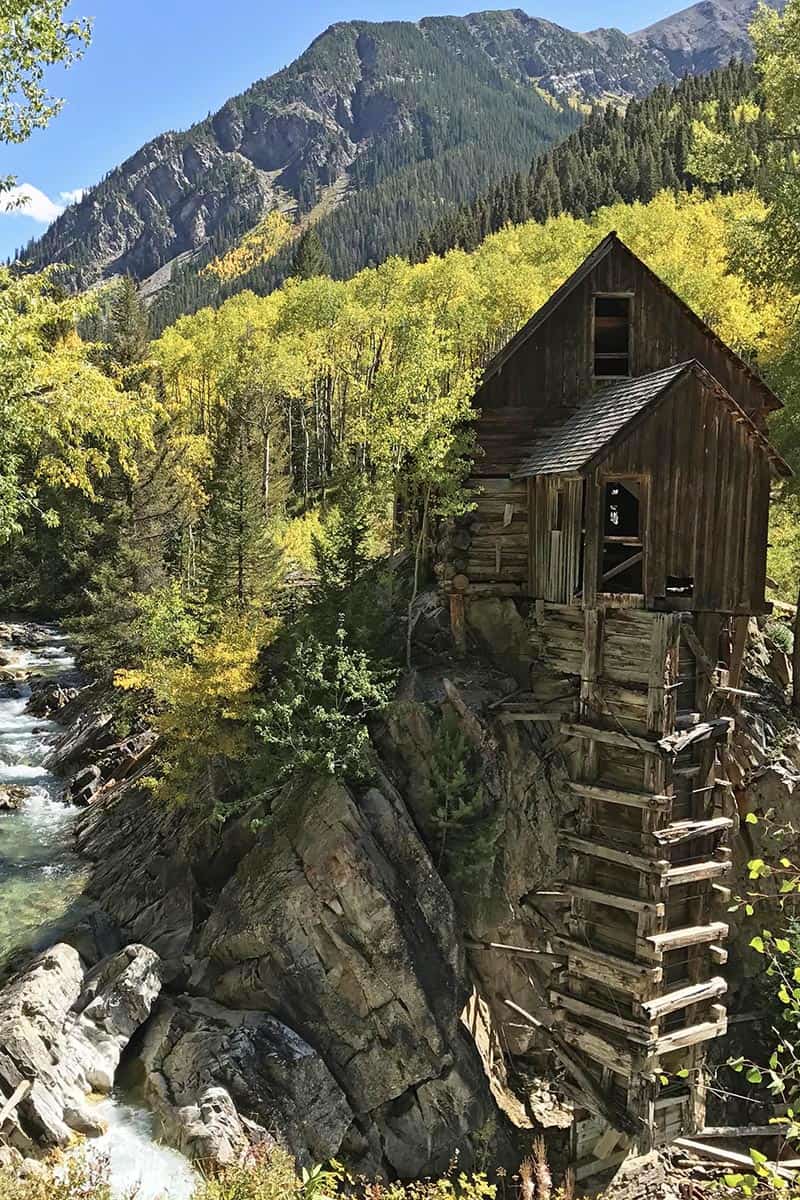
    Crystal Mill CO in the Rocky Mountains of Colorado

    I’ll tell you, there is nothing like the majestic Maroon Bells Wilderness with its towering Rocky Mountain peaks covered in shades of green and gold, amazingly beautiful fall colors.

    It takes your breath away, and it almost feels as though you’re looking through the lens of a fairy tale. 

    Crystal River flowing around and below Crystal Mill, Colorado, and golden aspens

    While we longed for serenity, we didn’t mind sharing the view with others who’d made the journey to photograph and capture such a peaceful yet mysterious place.

    It’s a road less traveled that’s quickly becoming more and more traveled, as Crystal Mill has become one of the most photographed sites in Colorado. 

    WATCH THE VIDEO OF OUR OVERLANDING ADVENTURE TO CRYSTAL MILL

    HOW TO GET TO CRYSTAL MILL

    Leaving the town of Marble, Colorado, you’ll pass by Beaver Lake. Its placid waters beckon to come back again for a li’l kayaking adventure.

    Beaver Lake in Marble, Colorado

    The road quickly changes to unpaved road and as you go on, it becomes more and more rocky. At one point, you’ll come to a fork in the road where you can decide to go on toward Lead King Basin or you can turn to your right, then take a sharp left past a mountainside house toward the mill.

    You may be tempted to turn around at this point because of the steep drop off to your right. Just keep going and don’t chicken out, because this narrow shelf road, built by settlers in the late 1800’s, is totally worth it.

    Lizard Lake near Marble, Colorado

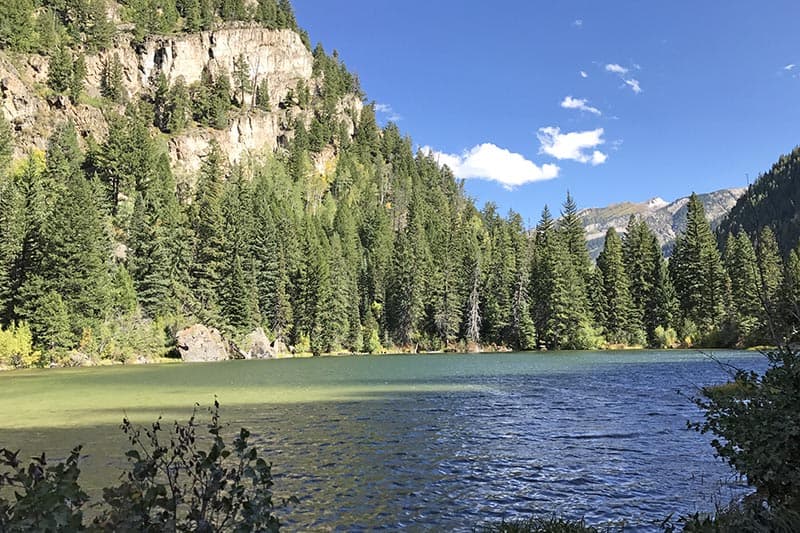
    You’ll come upon the rippling waters of Lizard Lake pretty quickly. You’re likely to see others fishing or families exploring around the edges of this serene patch of water.

    Beautiful Lizard Lake in the autumn on the road to Crystal Mill

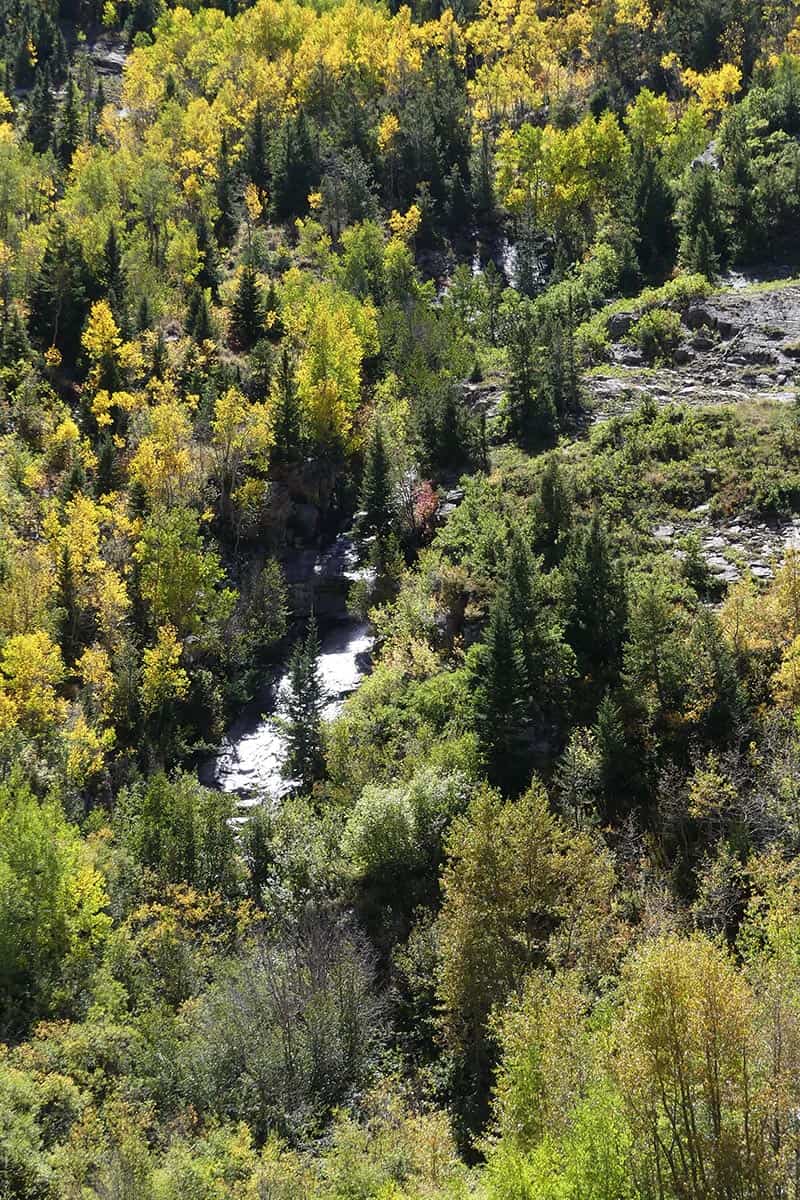
    Along the way are mountain views, natural spring waterfalls, and signs that this was once a thriving mining community.

    waterfall on road to Crystal Mill, Colorado

    The mountains are rugged and covered with fir trees and aspens that turn a vibrant gold in the autumn.

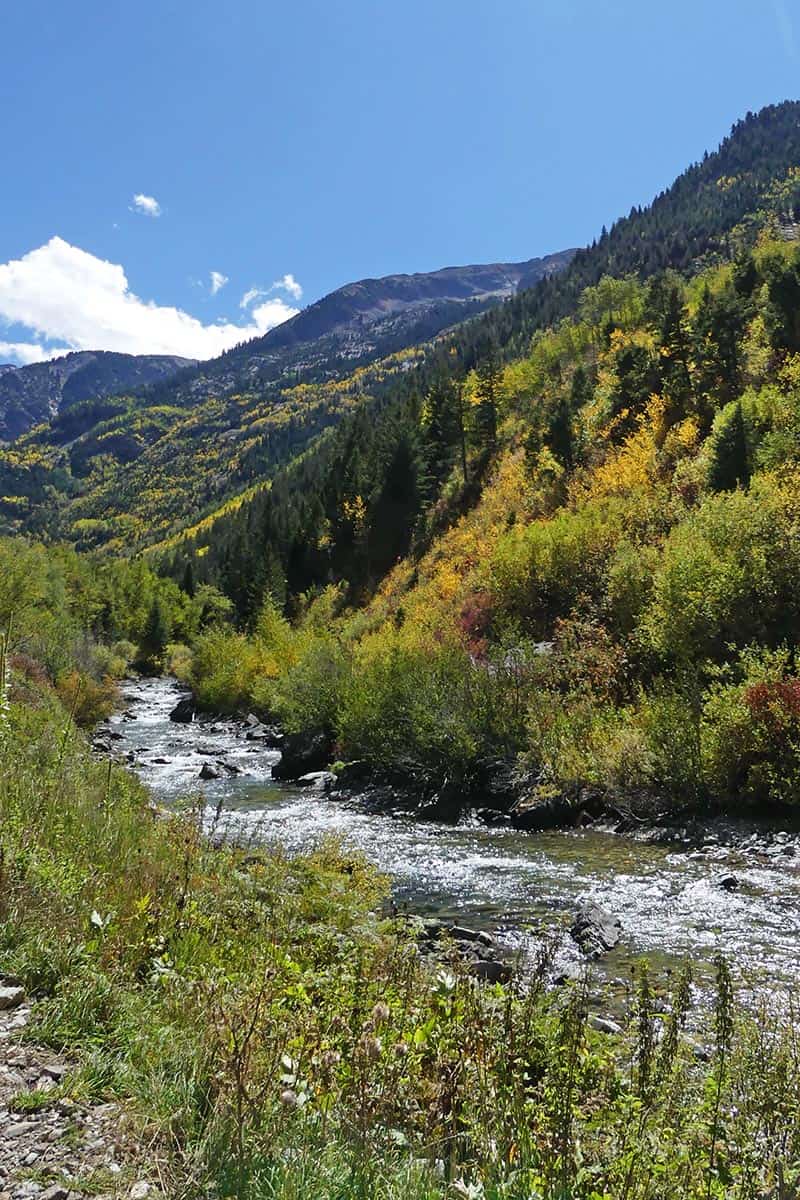
    Crystal River and golden yellow aspens in a Colorado fall

    Take a moment just to enjoy the view before you move on. 

    rugged Rocky Mountains near Crystal and Marble, Colorado

    The trail is narrow and rocky as it winds along, much of the time beside the Crystal River.

    how to get to Crystal Mill on a winding road beside the Crystal River near Marble, Colorado

    While you can hike it (and we passed many hikers), if you plan to drive it, 4 wheel drive vehicles are a must. 

    narrow rocky road to Crystal Mill Marble Colorado

    There are small turnouts all along the way. This ensures that if you meet another vehicle, one of you can maneuver mostly out of the way and let the other pass.

    road with turnouts to Crystal Mill Marble CO

    Though most of the time, one will have to back up to find said turnouts. 

    wreckage of a truck on the road to the semi ghost town of Crystal, Colorado

    You’ll even pass by the wreckage of one vehicle that didn’t quite make it. 

    ARRIVE AT CRYSTAL MILL, COLORADO

    Crystal Mill and the Crystal River Colorado with golden yellow aspens in autumn

    Finally, you’ll round the corner and there it’ll be… Almost like a dream but very real indeed. 

    ghostly Crystal Mill in Colorado surrounded by golden yellow aspen trees and mountains

    Crystal Mill, Colorado, is a historic landmark and one of the most photogenic places we’ve ever experienced. Its rugged appearance gives it a ghostly haunted feel. 

    overlanding to Crystal Mill and the Crystal River in Colorado

    Crystal Mill once operated as a powerhouse or power plant for mining operations. It was known as the Sheep Mountain Power House, or Lost Horse Mill.

    Now the mill sits mysteriously quiet, framed by the Crystal River and the aspen covered mountains of the Maroon Bells Wilderness. 

    haunted Crystal Mill in Colorado

    The river swirls and flows to the side and around to the front of the mill. Between both the blue of the sky and the clarity of the water, it boasts a beautiful blue green tint. 

    WHERE IS CRYSTAL, COLORADO?

    Crystal ghost town, Colorado, with cabins, a general store, and outhouse

    At one time, the Crystal ghost town, Colorado (just around the bend from Crystal Mill), had 400 residents, most of whom were miners and their families. They call it a semi ghost town, though there are people who come there to spend their summers. 

    Roger Neal, an author who has written extensively about the area, spends his summers there, sharing his Crystal Tale Books with visitors who come to Crystal.

    Roger had shared with us before that his family spent summers there when he was a child; now he and his wife do the same. 

    Jaden has read every single book of Roger’s that we bought on our last trip to Crystal, so he was excited to see Roger again and talk more with him. Unfortunately, we didn’t get to see Mr. Neal on this trip, but hopefully, next time.

    cabin in Crystal, Colorado, a semi ghost town

    There are actually cabins to rent in the small town of Crystal now, so you can stay the night or longer.

    And there’s a general store (the Crystal Store), as well as an outhouse.

    The road continues on through the town of Crystal and winds its way to Crested Butte via Schofield Pass. Or you can experience the entire loop, including Lead King Basin, Devil’s Punchbowl, and Sheep Mountain. 

    haunted Crystal Mill outside Marble, Colorado

    KNOW BEFORE YOU GO TO CRYSTAL MILL, MARBLE, COLORADO

    There are definitely a few things to note before taking off on an overlanding trip to Crystal Mill and beyond…

    • You can either drive it yourself or take the Jeep tour to Crystal Mill with Crystal River Jeep Tours. Of course, if you don’t want to ride at all, you may even want to hike it; just plan enough time if you do.
    • While there is a bathroom in Marble and an outhouse in Crystal, there are no bathrooms along the way. Plan accordingly.
    • Roads are quite rocky, meaning lots of jolts and bumps.
    • Pack any water and snacks or food you need for the trip, maybe a small cooler; also, pack extra because the mountains are unpredictable, and you never know what may happen.
    • Wear comfortable clothing and shoes, and carry a jacket, even in summer.
    • Along those same lines, pack a spare tire or two or three. Just make sure your tires are fit and you have spare/s.
    • Crystal Mill is reachable on in the summer and fall months. So, the best time to travel the road is from Memorial Day to the end of November (this is when the Jeep tours operate), though the closer you get to winter, the more you risk snow. We’ve traveled the road to Crystal in both the middle of summer and September; both times were gorgeous.
    • Make sure you have a camera and binoculars! You don’t want to miss a thing.
    • The property along the road and even the mill itself is all private property. Don’t trespass.

    Finally, you know me well enough by now to know what my next point will be… Leave no trace! Pack out what you pack in.

    For real… Let’s just pledge right now to take responsibility in keeping this place a treasure.

    gorgeous Crystal Mill surrounded by yellow aspens in Colorado

    Crystal Mill is a Colorado treasure and one place that everyone should experience in their lifetime. Make this bucket list journey, and you’ll agree that it’s unforgettable. 

    MORE COLORADO TREASURES YOU MAY ENJOY VISITING

    PIN THIS POST TO SAVE IT FOR LATER!

    how to drive to Crystal Mill from Marble, Colorado
  • Campfire Cooking Equipment (The Ultimate Guide)

    Campfire Cooking Equipment (The Ultimate Guide)

    Ultimate guide and checklist for essential campfire cooking equipment, including the best cookware and utensils, along with storage ideas.

    Camping cooking equipment and cookware are the first things I pack for every camping trip we take, whether we’re camping in one of our favorite off the grid Arkansas camping spots or roadside camping on the Rita Blanca National Grassland in Texas. We have to eat, and since we do our best to include most of our food in our usual grocery budget, we need to make sure our camping kitchen setup is ready to go.

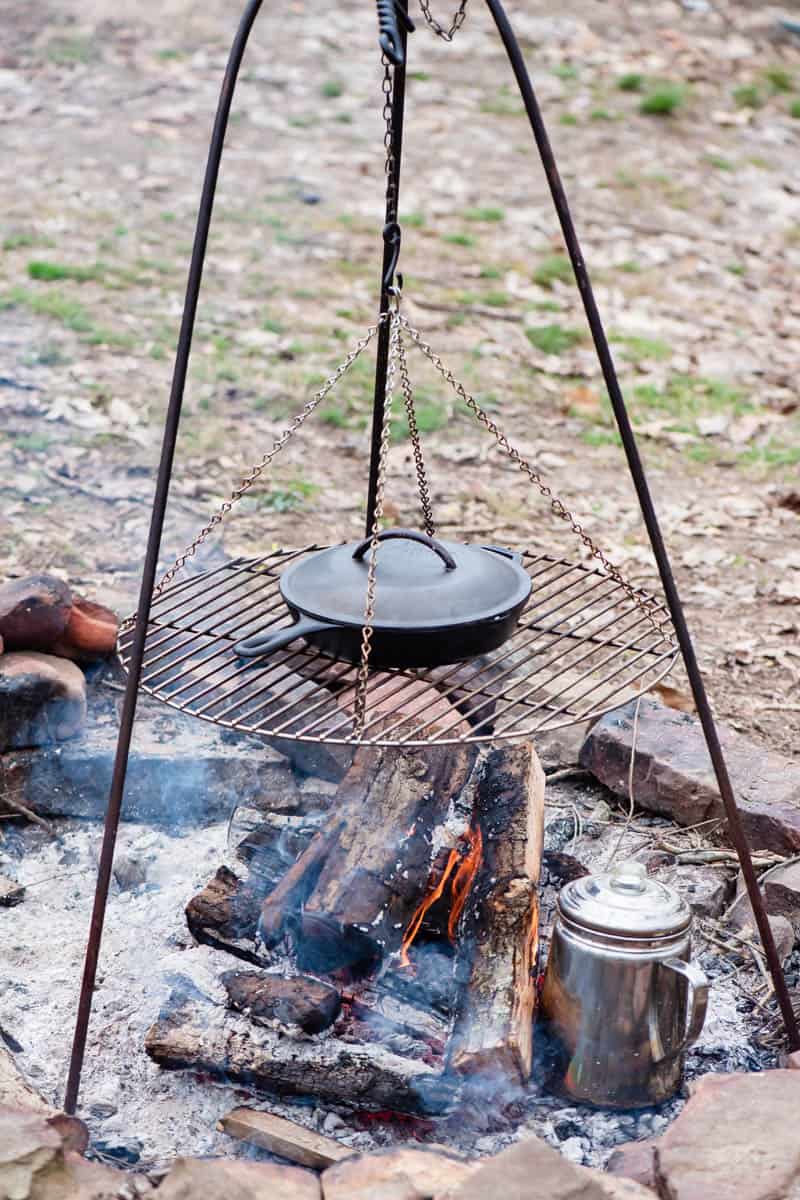
    campfire cooking equipment, including tripod grill with cast iron skillet over campfire

    We really try our best to keep things affordable, simple, and efficient when it comes to camping cooking gear, so we’ve put a lot of thought into our set up and take down. And because we prefer wild camping, we usually end up in the middle of nowhere, where bears or wolves can be an issue, so we have to be able to pack things up tight at night to keep everyone safe.

    Our campfire kitchen has come a long way since our early days of camping.

    While our camping cooking gear isn’t really fancy, it definitely works for us. We constantly look for ways to affordably improve it, but I have to say… We eat pretty darn good when we’re on the road.

    Keep reading, and you’ll find our YouTube video that shows how we cook while camping, toward the bottom of the page.

    Table of Contents

    If it’s camping recipes you’re looking for, we’ve got you covered.

    cheeseburger pizza cooked with camping cooking gear essentials

    Storage Ideas for Campfire Cooking Equipment

    When it comes to packing up our food, I like to stop and think before I ever pack. The way I pack our campfire cooking kit is how our food will be stored while we’re traveling, so it needs to be both efficient and easy to get out/put away.

    We Usually Pack 2-3 Ice Coolers:

    • One large cooler for most of our food
    • A drinks cooler with water (because I prefer cold water in my water bottle, especially during the summer) and maybe a few juice boxes
    • And sometimes a “lunch” cooler for sandwich and lunch materials

    We Also Have 2 Food Boxes, and We Picked up Plastic Bins for These.

    • One food box holds all our non-perishable food items.
    • The other we like to call the snack box because it holds all our snacks and foods we may want to get into through the day when we’re not necessarily sitting in a campsite but out exploring.

    Packing and Storage Accessories

    • Ziploc bags
    • Egg Holder – This protects eggs from any breakage or mess.
    • Water Jugs – We like the jugs with a spigot, since it can act as both water storage and a faucet.

    What to Pack in Your Portable Camp Kitchen Box

    The portable camp kitchen box is the heart of your camping kitchen. Kitchen in a box camping is the easiest way to cook in the great outdoors.

    It’s important to pack all the necessary camping kitchen items you’ll need for cooking meals while gone. Most of our camping kitchen essentials are from our own kitchen, and we’ve designated all of them for camping (not all but most). So they live in our camp box and/or camp trailer.

    Our campfire cooking kit includes kitchen tools, camping cooking utensils, dishes, and cookware.

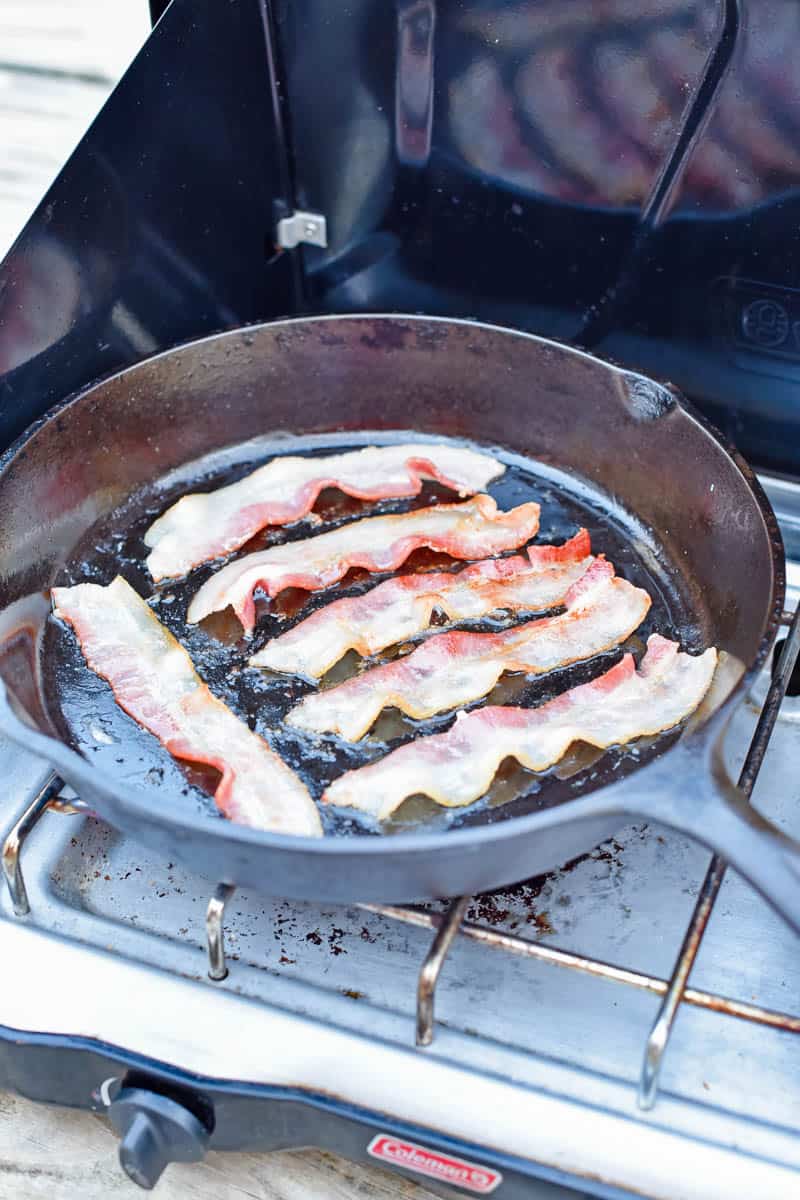
    cooking bacon in a cast iron skillet on a camp stove

    Camping Cookware

    We love cooking with cast iron, which goes hand in hand with cooking over a campfire. Cast iron works well on a camp stove too, so it’s a winning choice.

    cooking chicken nachos over campfire using campfire cooking equipment like a cast iron pizza pan or griddle

    If you’re cooking solely on a camp stove, you might be able to get away with just a set of nesting pots.

    Camping Cooking Utensils

    We always need a few tools to help us make our meals. Things like…

    campfire for outdoor cooking

    Knives and Cutting

    Making Coffee and Tea over the Campfire

    My guys have recently started drinking coffee, and Jacob loves a warm cup of tea, so we’ve added a few things for this to our kitchen camp box.

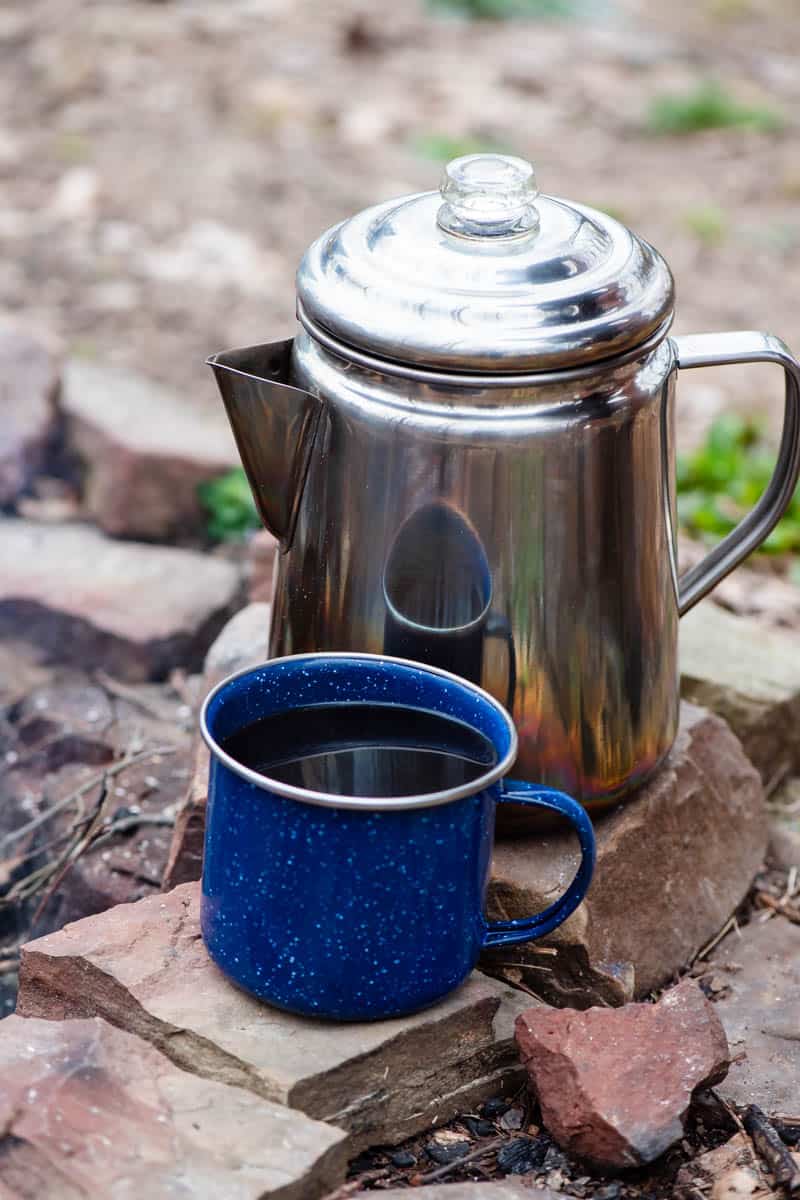
    coffee percolator with coffee mug for camping cookware
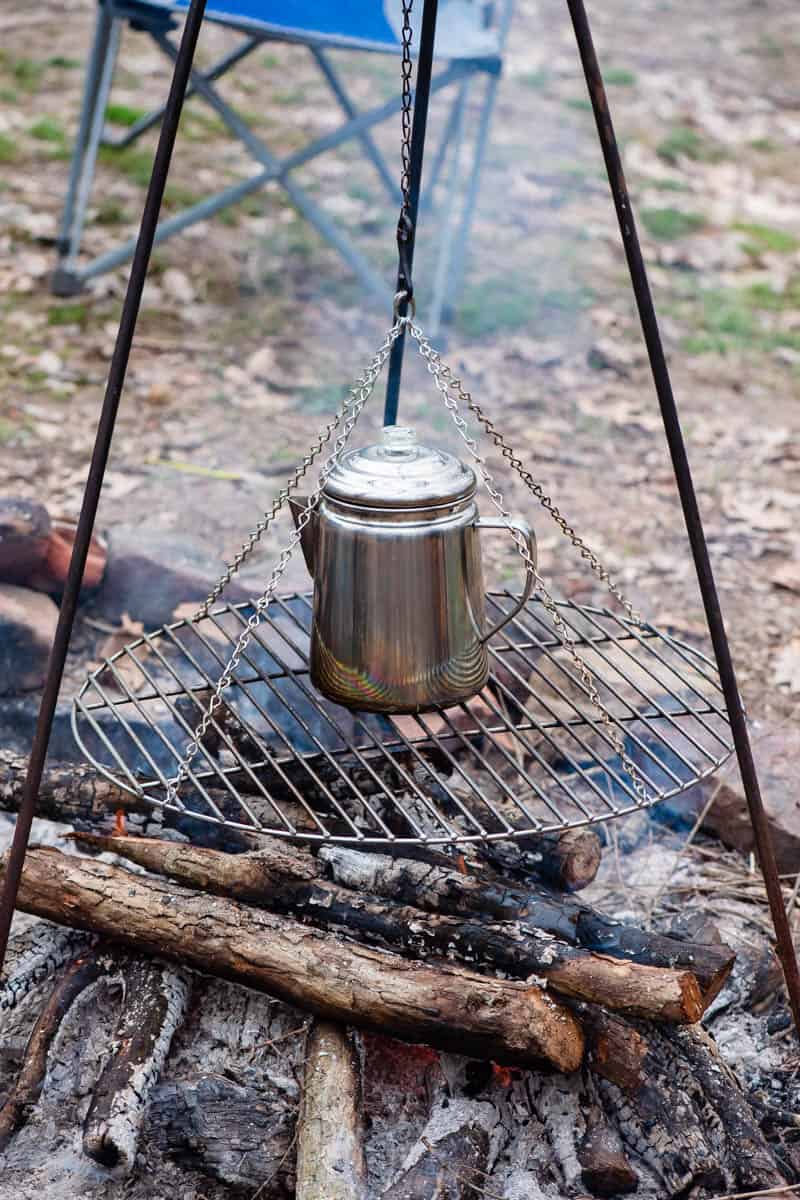
    • Percolator – Our favorite way to make coffee over a fire is to cook it in a stainless steel percolator, with coffee grains added right into the water. A percolator gives options for making your morning brew.
    • Tea kettle – Ok, so we don’t actually have a tea kettle; we just use a pan for boiling water. But I’m thinking we definitely need this.
    • Insulated Mugs – Insulated will protect your fingers. Go with insulated.

    Camping Serve Ware

    Of course, we can’t eat without all the little things we take for granted at home. Things like…

    More Camping Kitchen Accessories

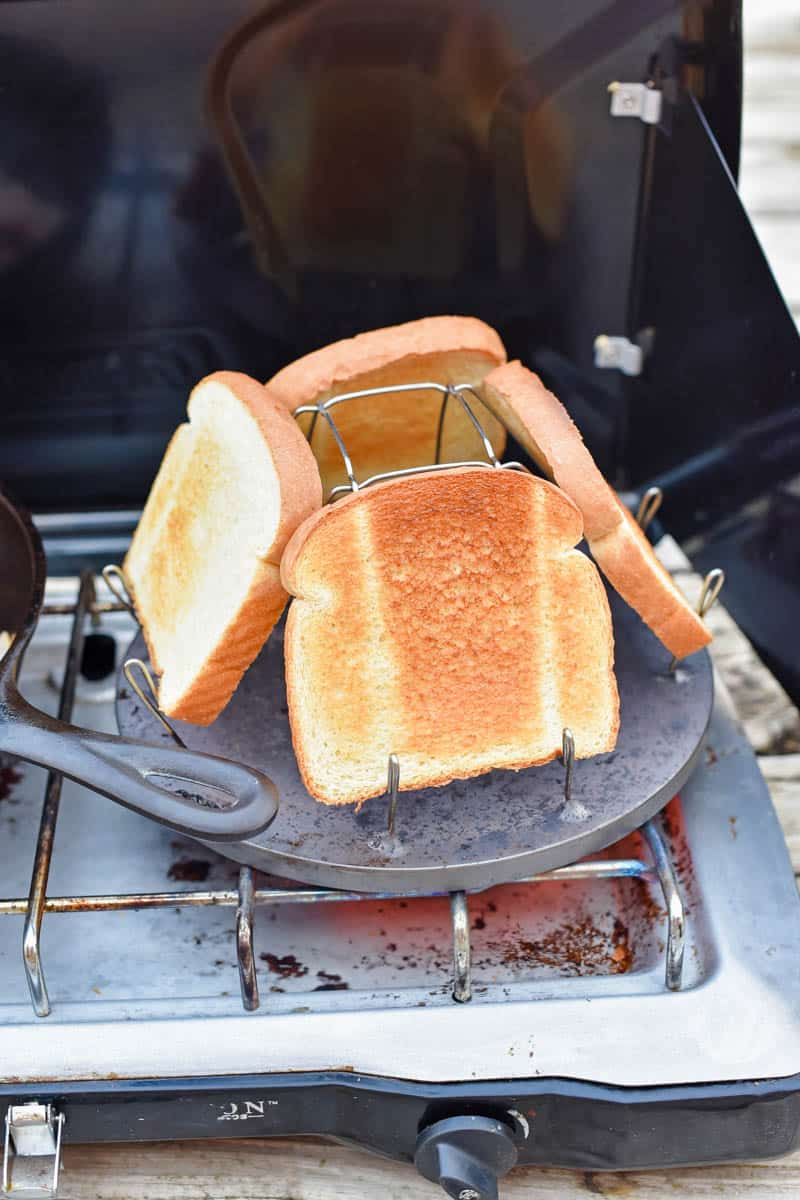
    camping cooking equipment, including camp stove, cast iron skillet, and camp stove toaster with bread toasting

    Clean Up Supplies

    When you’re camping, there’s not a ton of mess to clean up, but you still have dishes. Dishes will always be there, no matter what.

    And sometimes you have a bit to clean up from raw eggs or meat. So, it’s a good idea to keep a few things in your clean up kit.

    Also, don’t forget to pack a first aid kit, a must have for any camping trip.

    Bigger Camp Cooking Equipment

    In our early days, we relied on a small table that folded out the back of our old Honda. It was super small, but it helped a lot by giving us extra space to prep food.

    With overlanding and dispersed camping, you don’t usually have any of the perks of campground camping, like a picnic table or a grill. You’re lucky if you have a stump, and sometimes you have to improvise.

    Outfitting and supplying the best camp kitchen is a necessary improvisation for camping with a family. Just a few items we recommend…

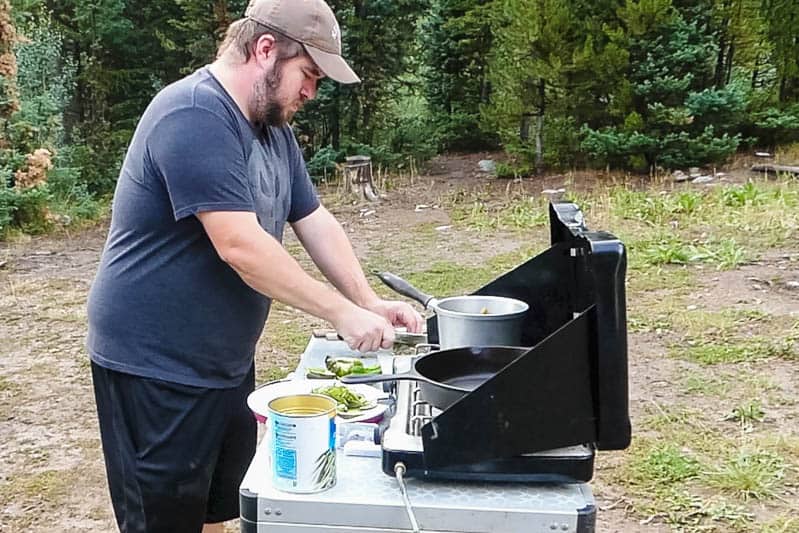
    man cooking chicken fajitas outdoors on camp stove on camping kitchen table

    Coleman Pack-Away Deluxe Kitchen

    We bought this back when we first got our rooftop tent. While we don’t necessarily use the sink part, we use the table more as a prep area and place to hold our cookstove and set things like plates, condiments, and utensils when we’re making breakfast or dinner.

    This table has come in handy more times than I can count. 

    Cons: It’s pretty heavy (and a little bulky). But it works for what we need.

    Coleman 2 Burner Stove

    Sometimes we cook over a campfire, if we’re allowed to have one. But there have been many times when we’re not allowed to have a fire (when there’s a burn ban in the area we’re exploring). We use the heck out of our stove.

    Over the Fire Grate or Tripod Grill

    We love using our semi-homemade tripod grill, but since ours is homemade, it does have a bigger grill on it. A grill like this works really well for cooking just about anything you want to cook over the fire.

    making coffee over campfire on tripod grill, campfire cooking

    Portable Charcoal Grill

    Sometimes we take our grill along, and other times we leave it at home. It’s definitely nice to have with us when we’re craving a nice juicy burger and don’t want to spend the money to eat out.

    Propane Lantern

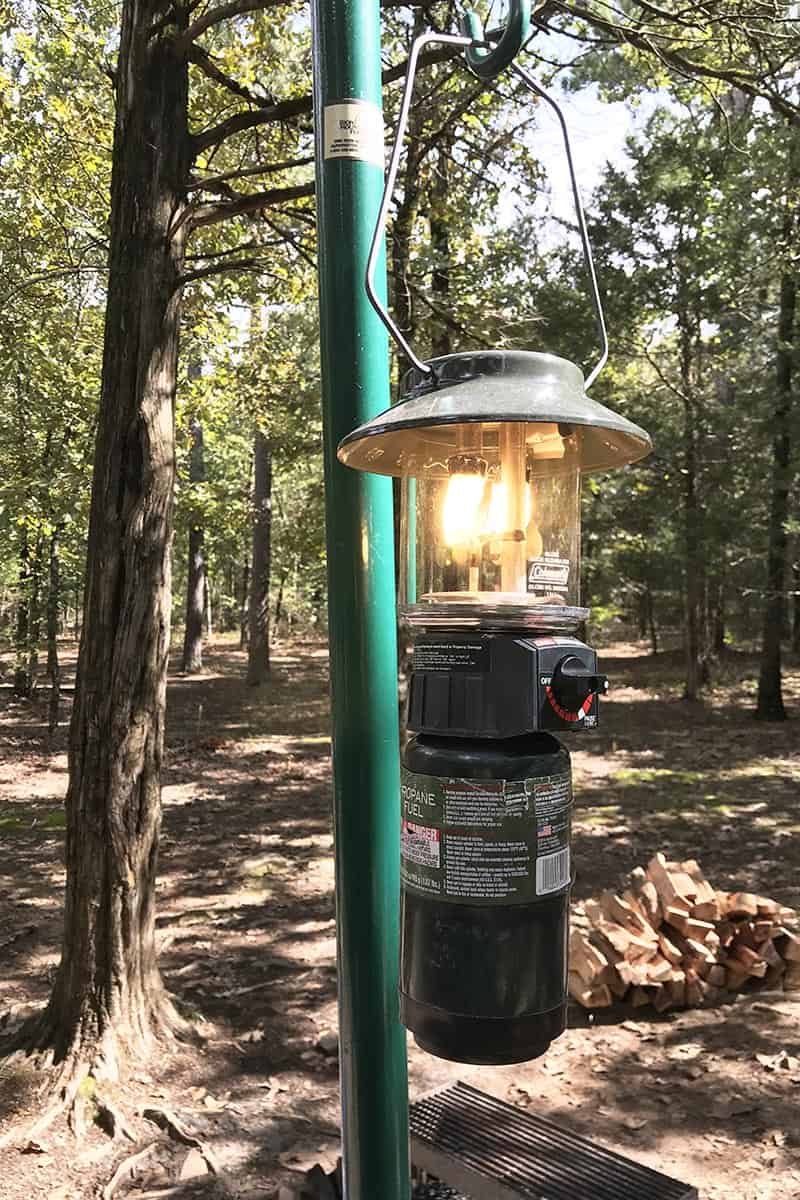
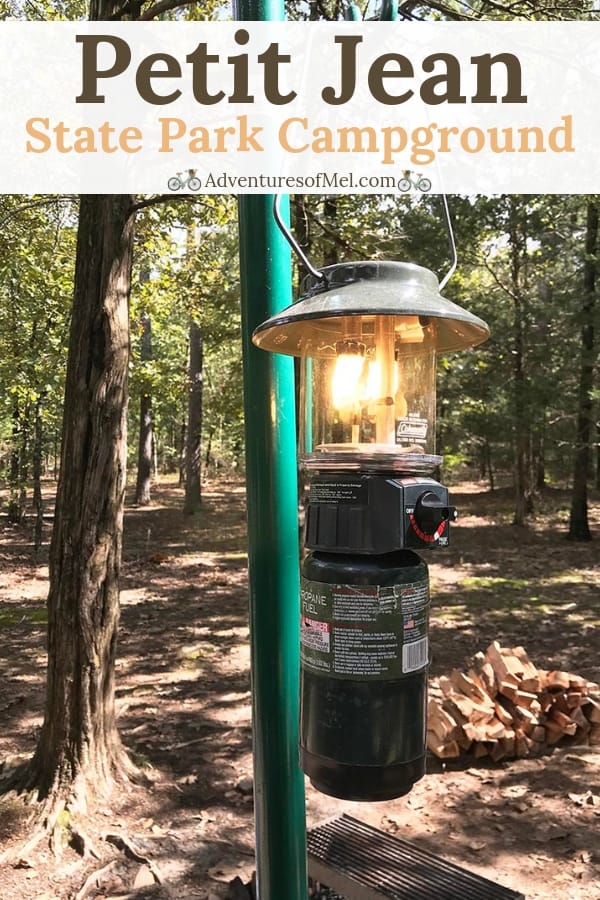
    We use a Coleman Distribution Tree with an extension hose for ours, and it lights up our whole campsite, plus saves so much money.

    Take my advice. There are times you will roll into a campsite after dark, your whole family is hungry, and you’ve got to cook a meal. Invest in a lantern or two.

    cast iron pan with s'mores dip and forks on stump, camping food

    Who’s Ready to Go Camping? (Raises Hand)

    After writing this post, I’m ready to hit the road and go camping. Just writing about it gets me excited for our next trip.

    Are you feeling a little more prepared to organize your own portable kitchen? What did I leave off the camping cooking gear list that you would add?

    If you have any questions about our setup or any of the cooking gear for camping we’ve mentioned, don’t hesitate to leave a comment or feel free to email me at [email protected]. We love sharing tips and tricks we’ve learned along the way, and we love to talk about taking your family camping. Happy camping!

    Watch Our Video to See How We Cook While Camping

    I always appreciate your feedback. Be sure to leave a comment, and follow me on Pinterest, Facebook, Instagram, and YouTube. You can subscribe to my email list too.
  • Hiking Bear Cave Trail in Petit Jean State Park

    Hiking Bear Cave Trail in Petit Jean State Park

    EXPLORE BEAR CAVE TRAIL IN PETIT JEAN STATE PARK

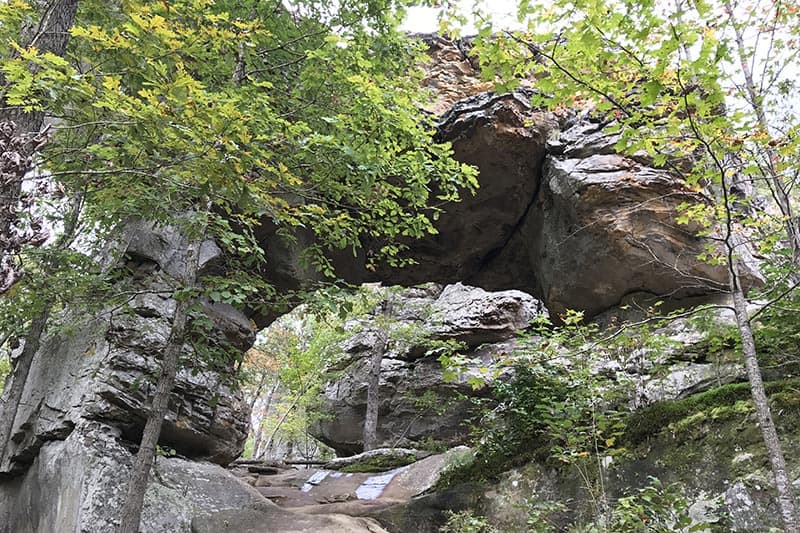
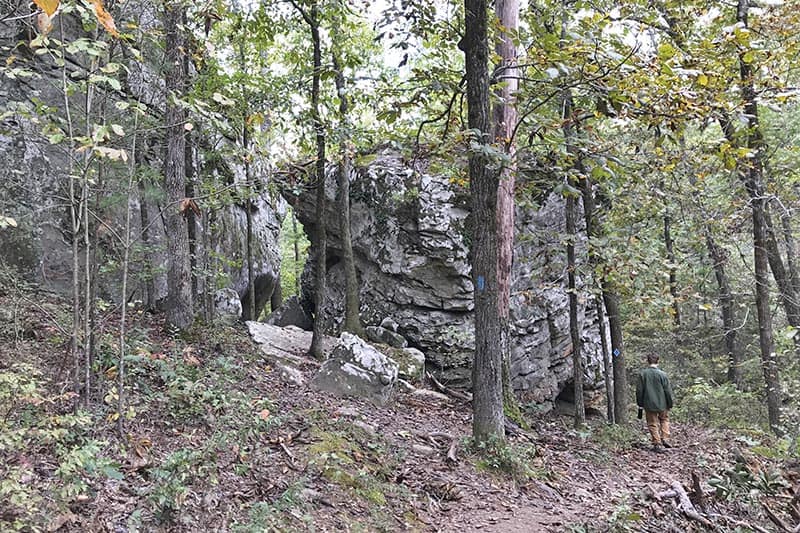
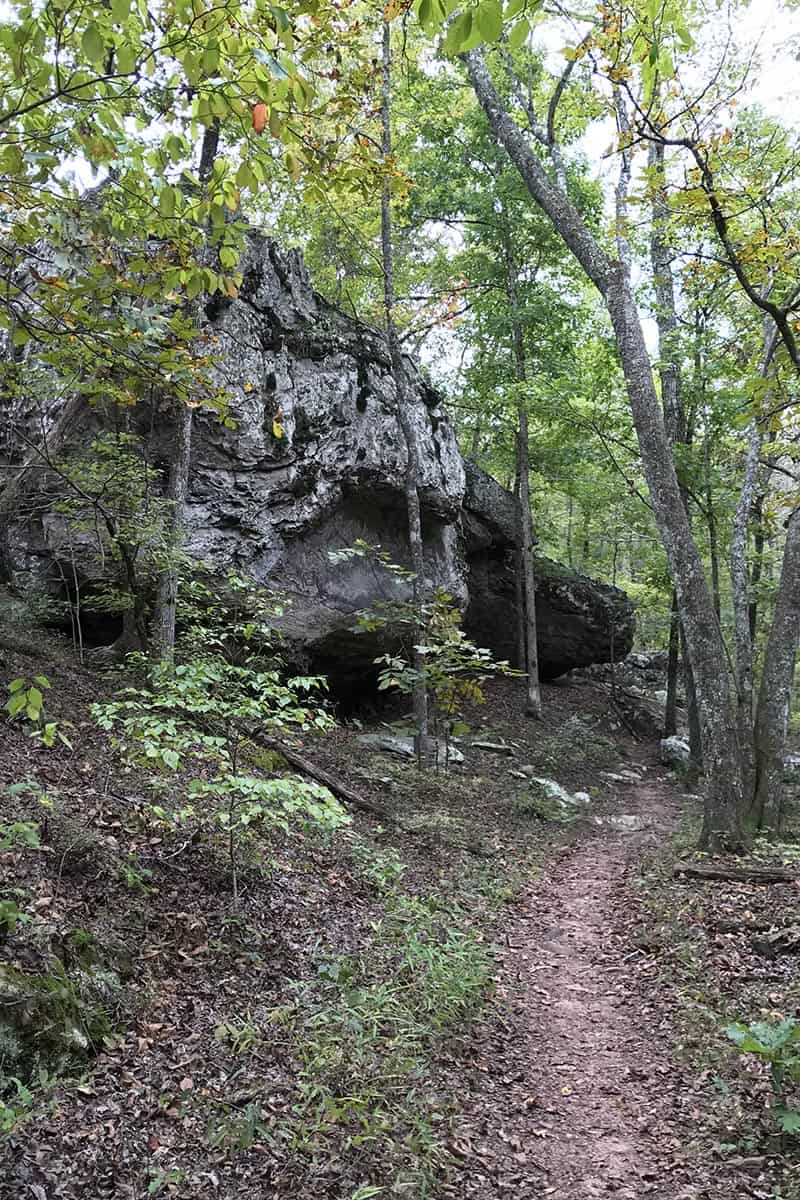
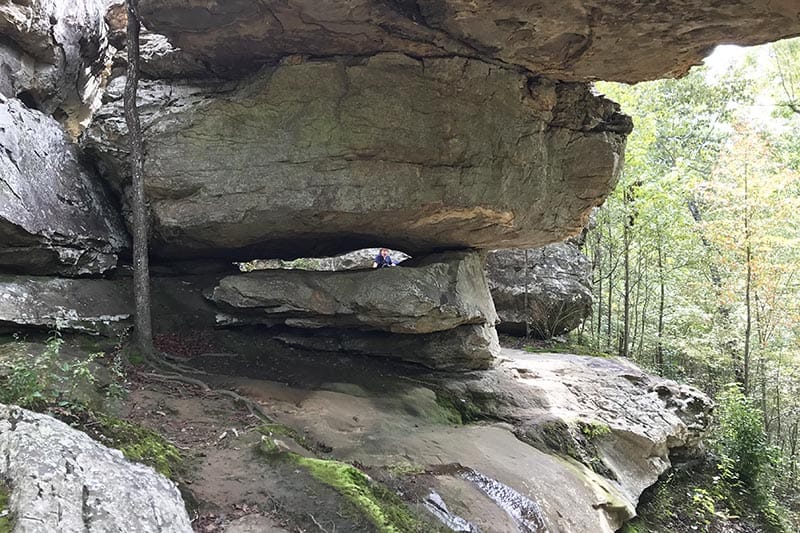
    Bear Cave Trail in Petit Jean State Park is a quarter mile Arkansas hiking trail filled with beautiful rock formations and narrow passageways.

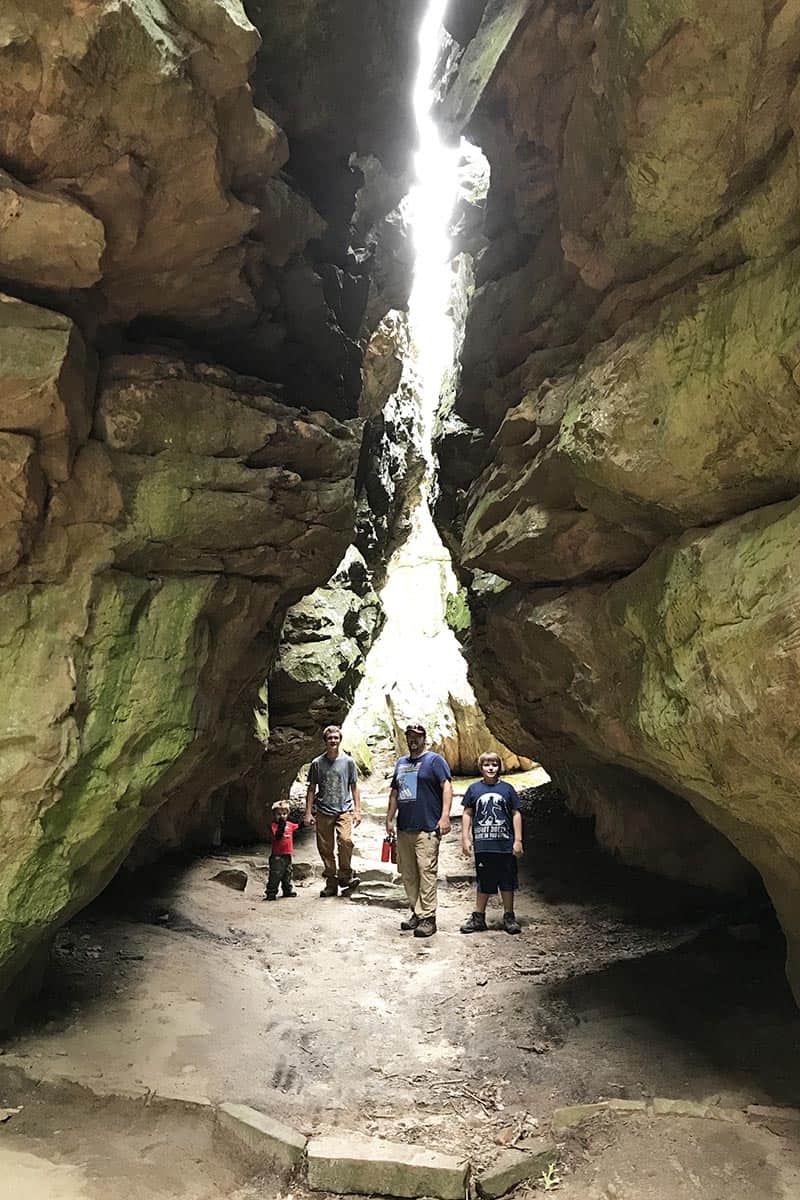
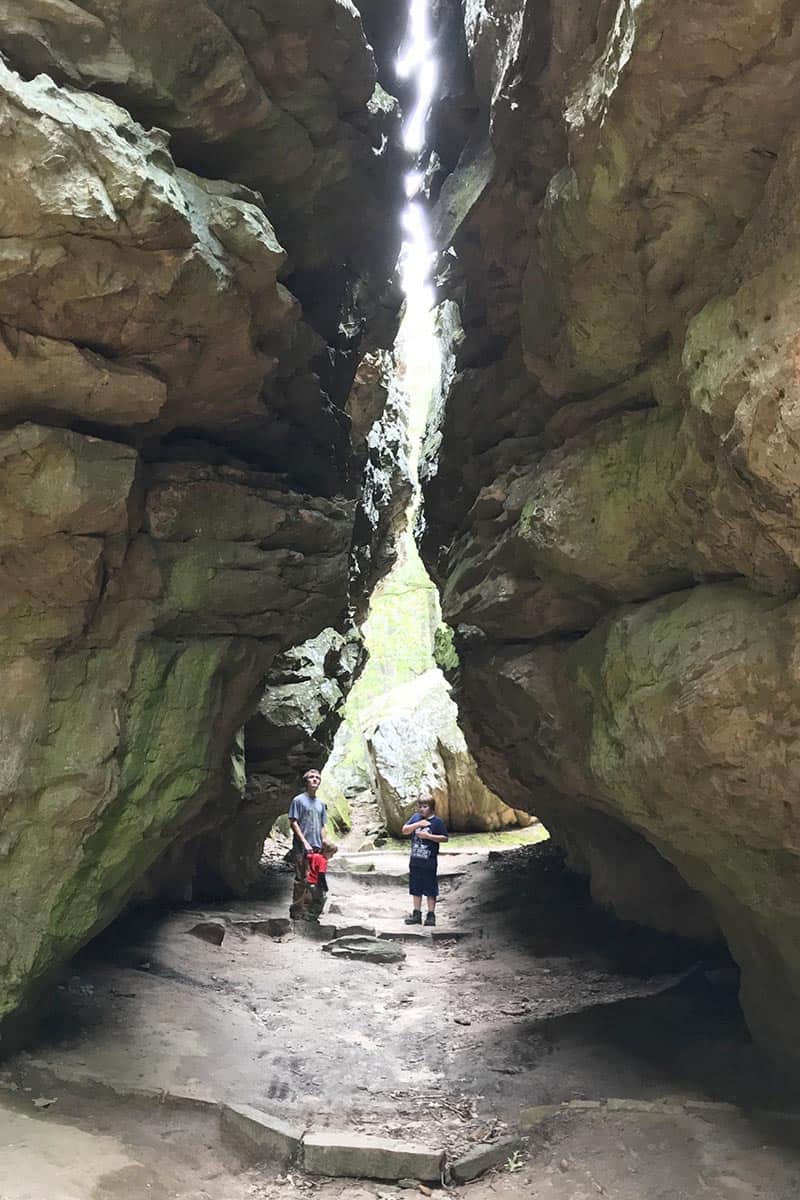
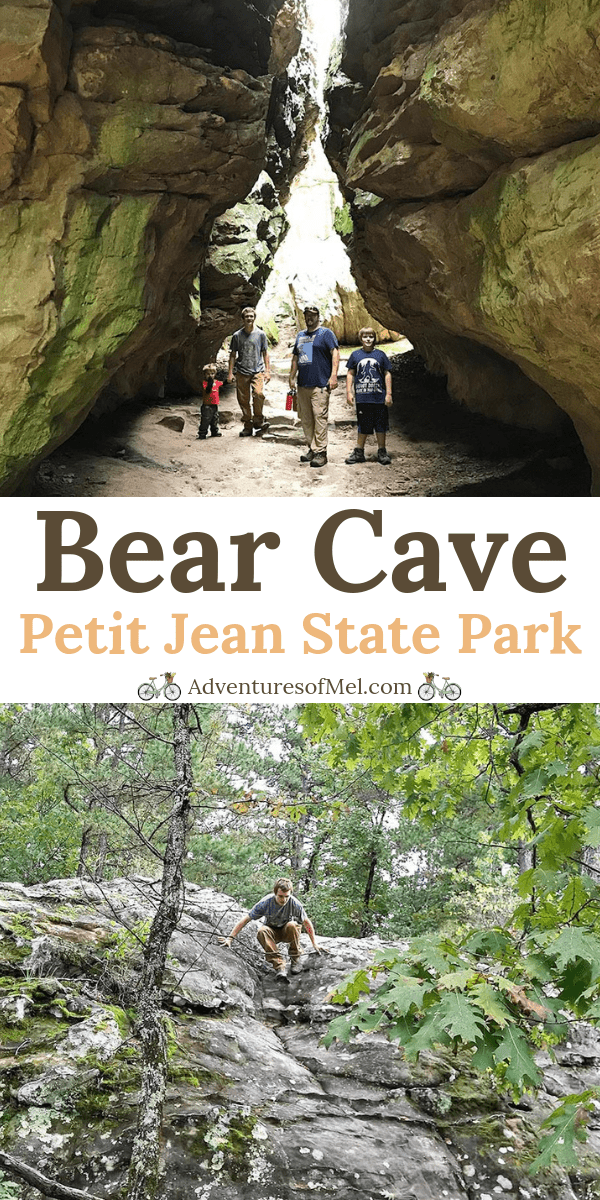
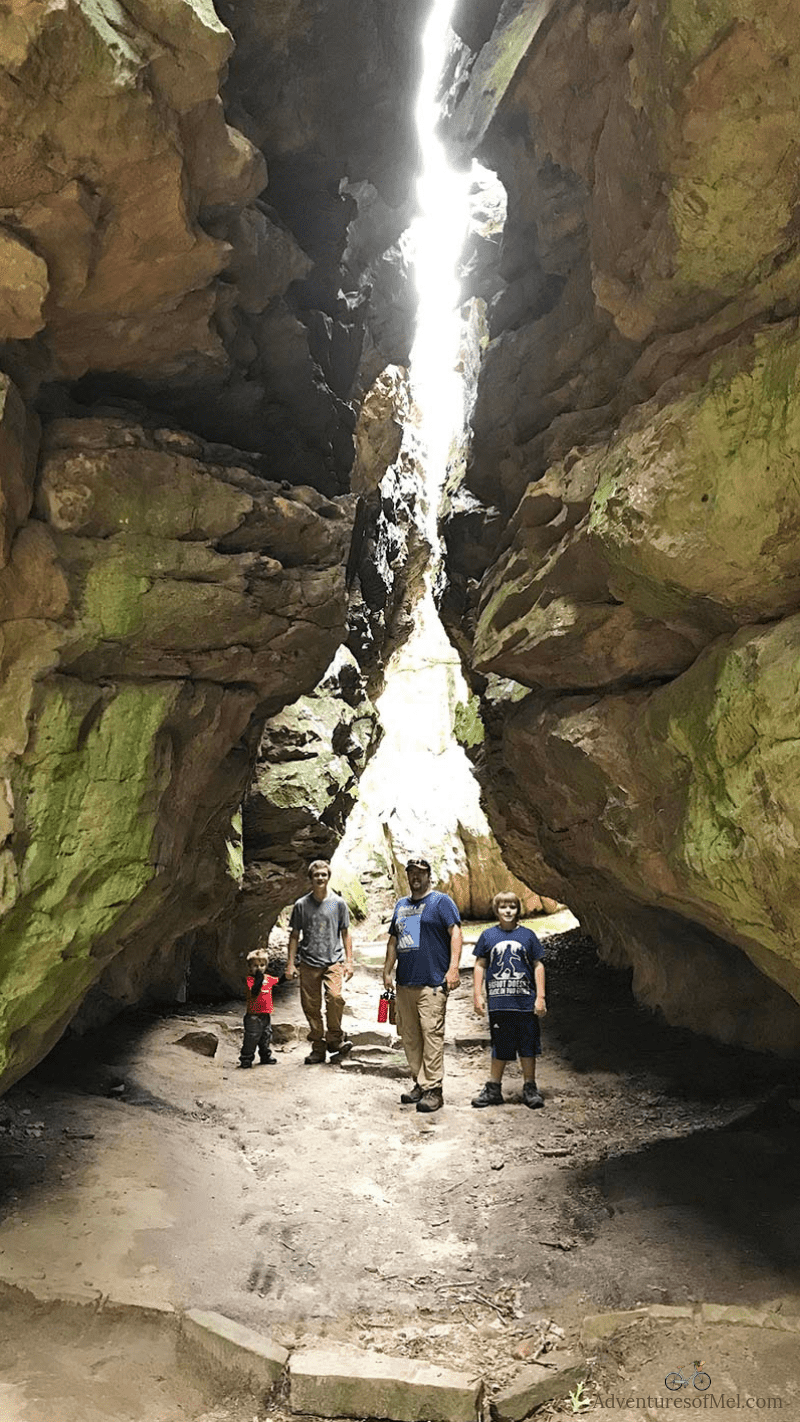
    Family standing in Eye of the Needle on Bear Cave Trail in Petit Jean State Park in Arkansas

    While camping at Petit Jean State Park, we spent time exploring and hiking quite a few trails, including Seven Hollows Trail and Cedar Falls Trail. Bear Cave Trail was actually one of the first hikes we did after setting up camp, sort of a warmup to what was to come.

    This Petit Jean hiking trail was just a warm up to what was to come. It’s only a quarter of a mile long and a pretty easy trail.

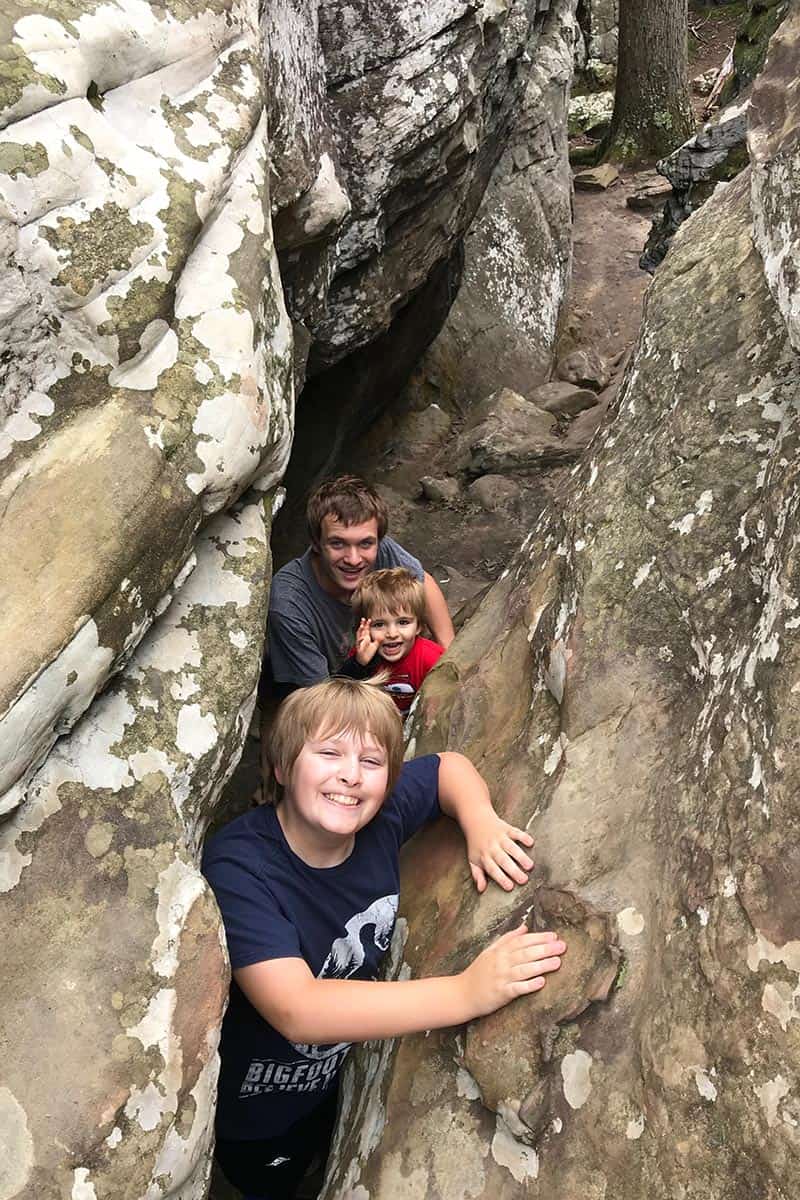
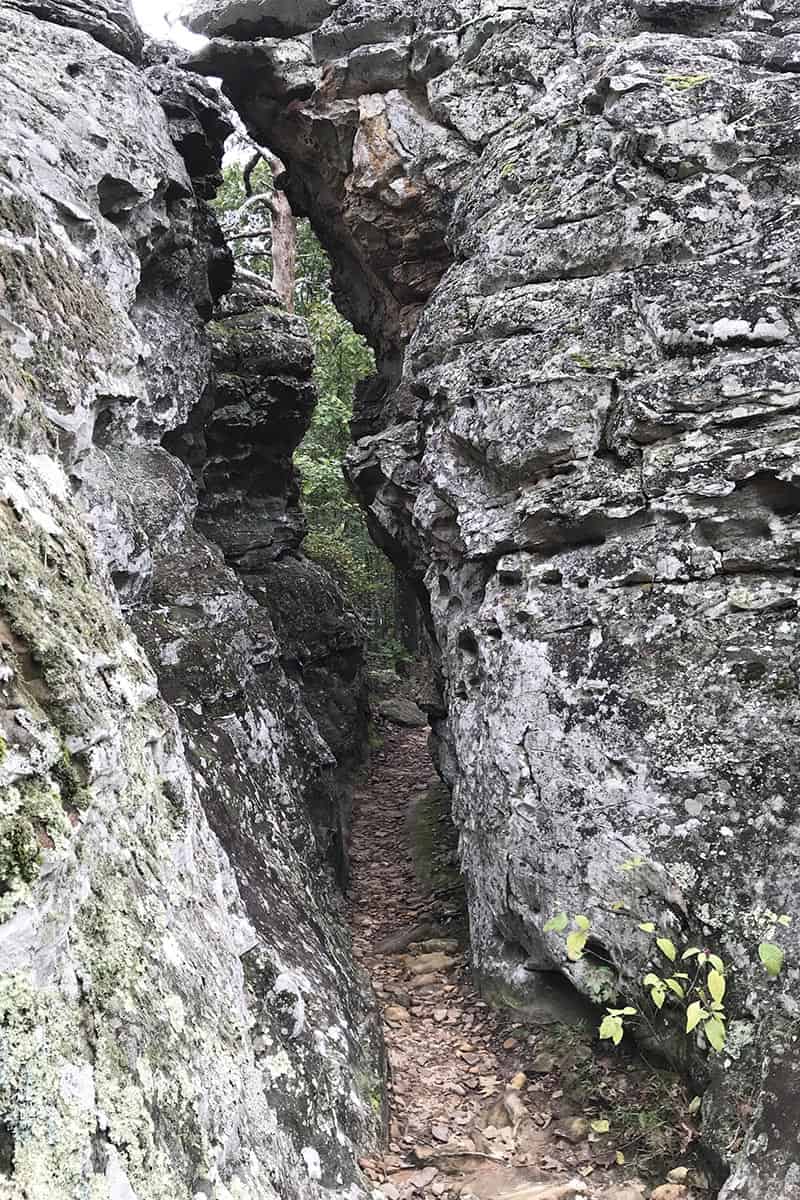
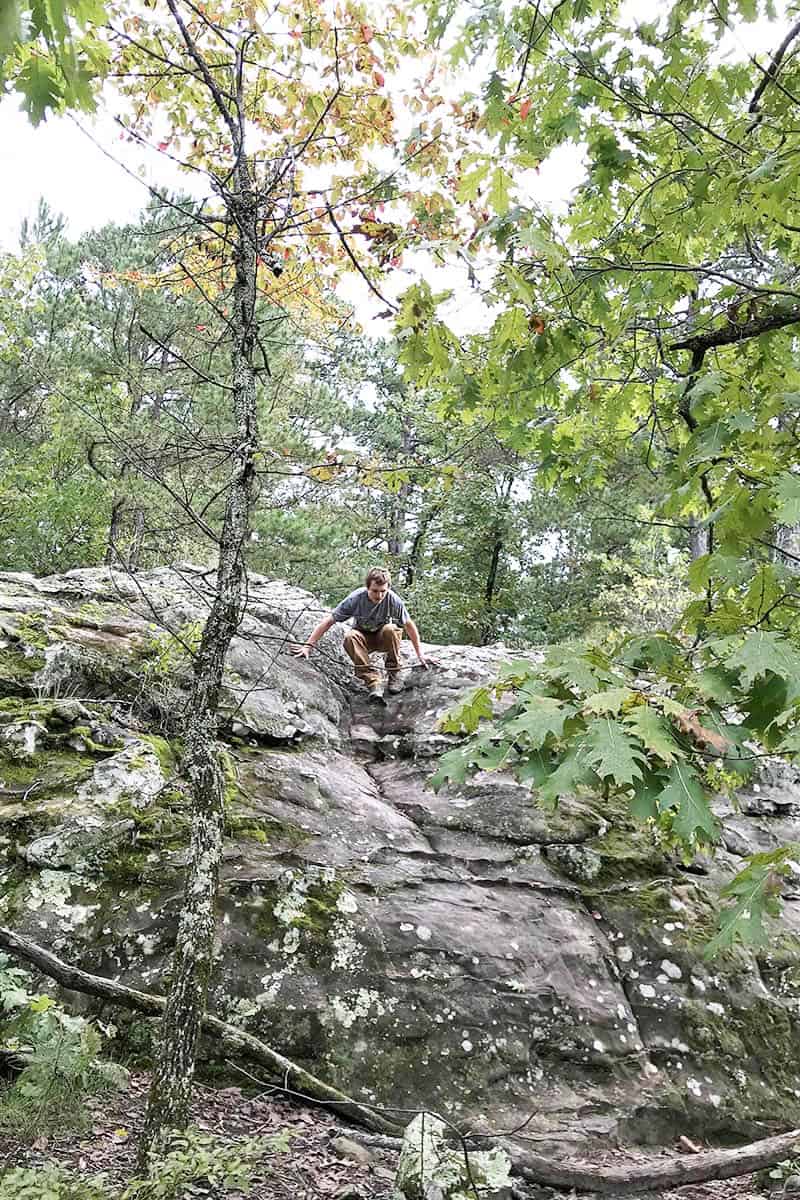
    The thing about this trail… There are so many nooks and crannies to explore. Our boys had the best time climbing on all the magnificent rocks, exploring, and making their way through the narrowest of passageways and crevices.

    boys exploring a crevice between boulders and rocks on Bear Cave Trail in Petit Jean State Park

    Besides two other families, we pretty much had the trail to ourselves. It was a natural playground, as well as a peaceful place to just be in the moment.

    This little spot in Petit Jean is a great way to start your adventures in the park. It’s so beautiful, it will get you excited about all of the other trails you plan to hike in one of our family’s favorite places to visit in Arkansas.

    [mv_video doNotAutoplayNorOptimizePlacement=”false” doNotOptimizePlacement=”false” jsonLd=”true” key=”irkakd3327ijoiglj1mq” thumbnail=”https://mediavine-res.cloudinary.com/video/upload/irkakd3327ijoiglj1mq.jpg” title=”Hiking Bear Cave Trail in Petit Jean State Park” volume=”100″]

    HOW TO GET TO BEAR CAVE TRAIL IN PETIT JEAN STATE PARK

    Petit Jean State Park is close to both Morrilton, Arkansas, and Dardanelle, Arkansas, pretty much in the heart of the Natural State.

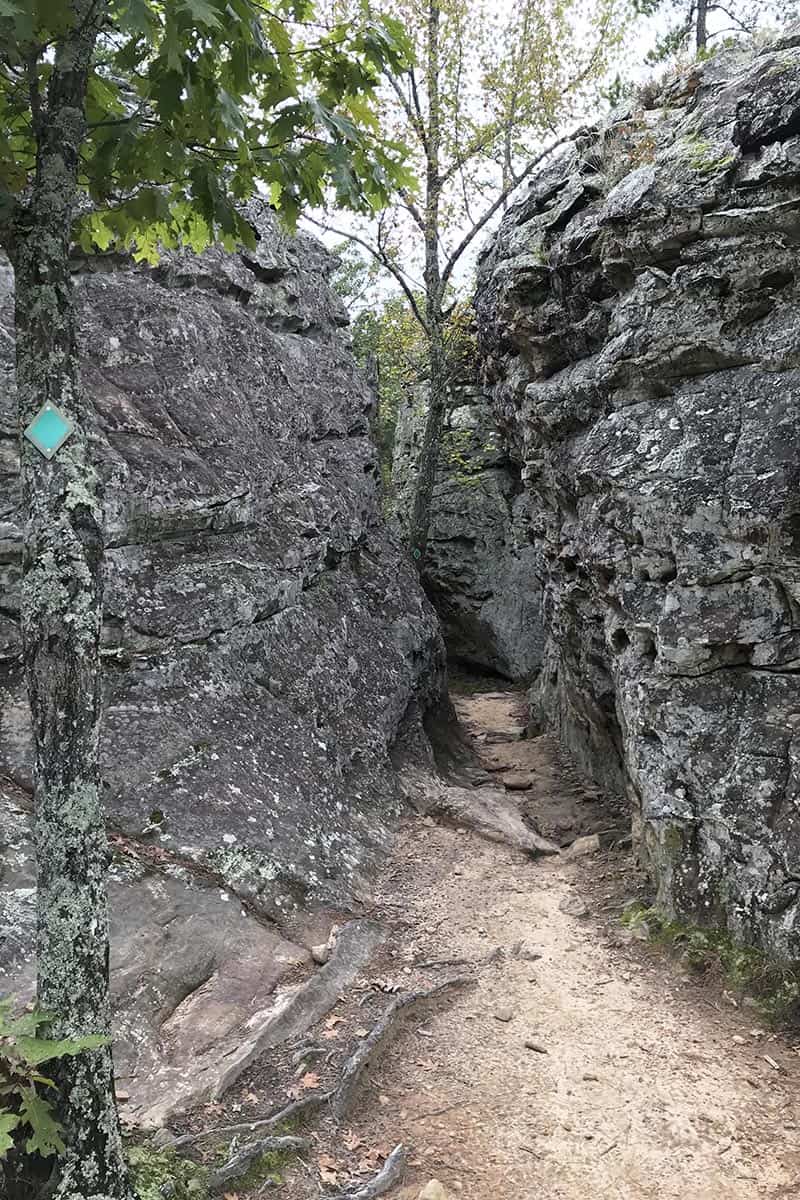
    green trail marker on tree and narrow crevice trail along Bear Cave Trail in Petit Jean

    Bear Cave Trail is west of Mather Lodge on Highway 154, the main road that runs through Petit Jean Mountain. About a mile past the lodge, the entrance to the trail parking lot will be on your right.

    The parking lot provides ample parking, as well as signs with information about the trail. Walk past the signs right onto the trail, following the green trail markers as you make your way down the trail.

    WHAT IT’S REALLY LIKE HIKING BEAR CAVE TRAIL

    Arkansas State Parks brochures and maps say that this trail ends with backtracking back to the parking lot, but we actually did a whole loop. As long as you follow the green trail markers, you’ll be golden.

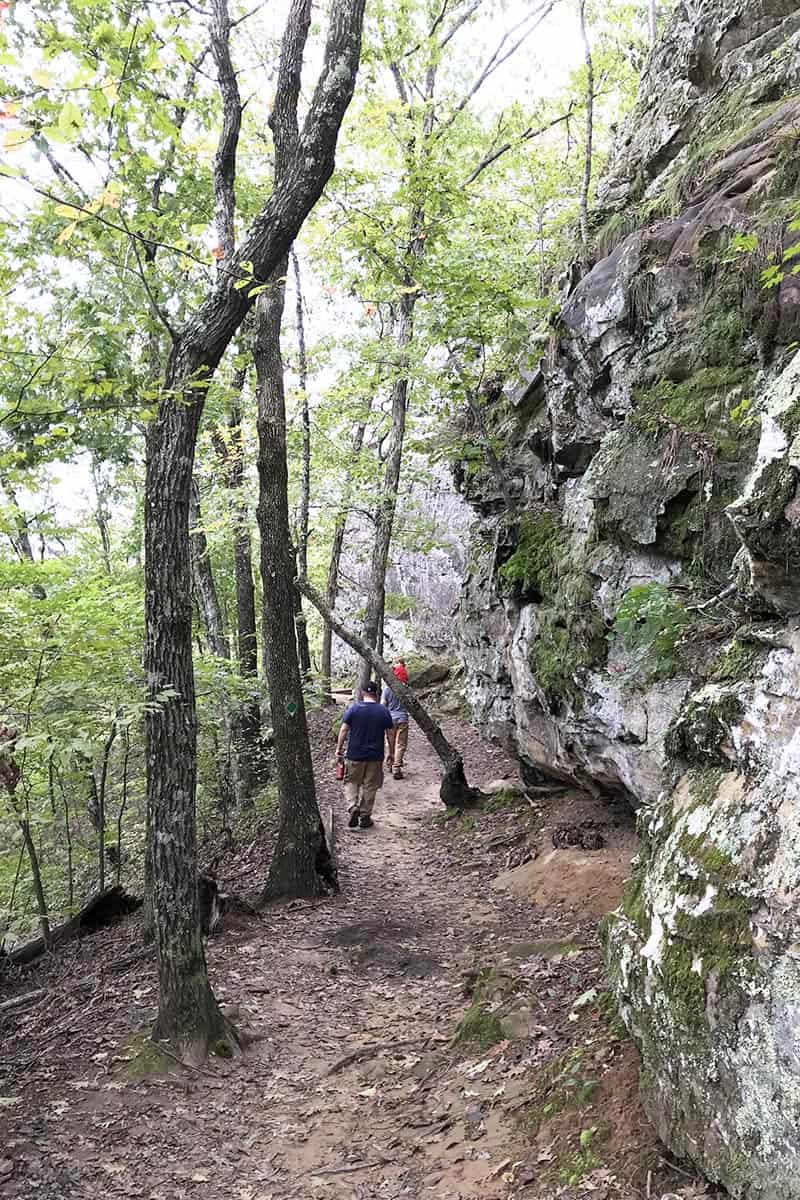
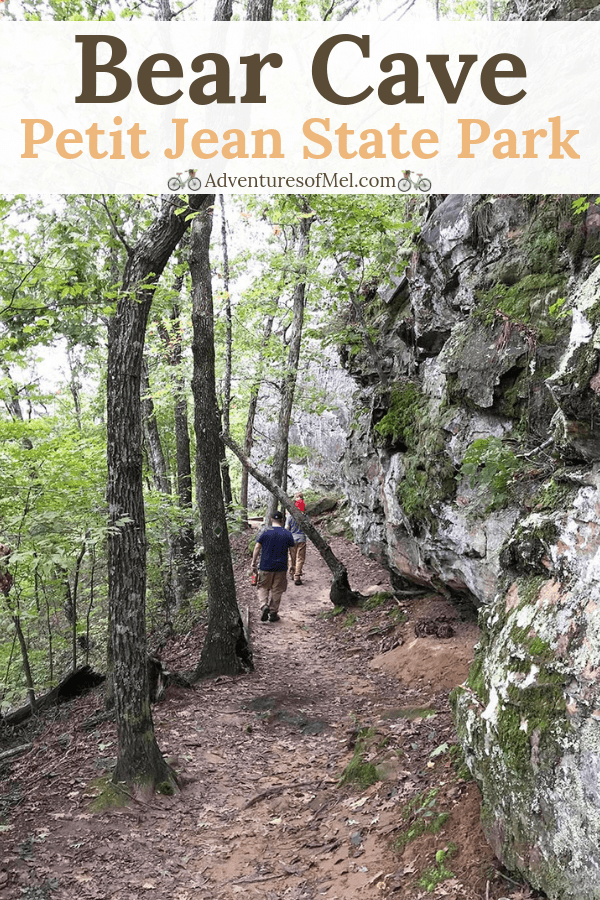
    Walking past all of the signs, you’ll find yourself walking on a slight incline down toward Bear Cave. Similar to Hawksbill Crag, the trail tends to follow the bluff line, so you’ll have plenty of opportunity to enjoy amazing views along the way.

    family hiking along the bluffline on Bear Cave Trail in Arkansas State Parks, Petit Jean

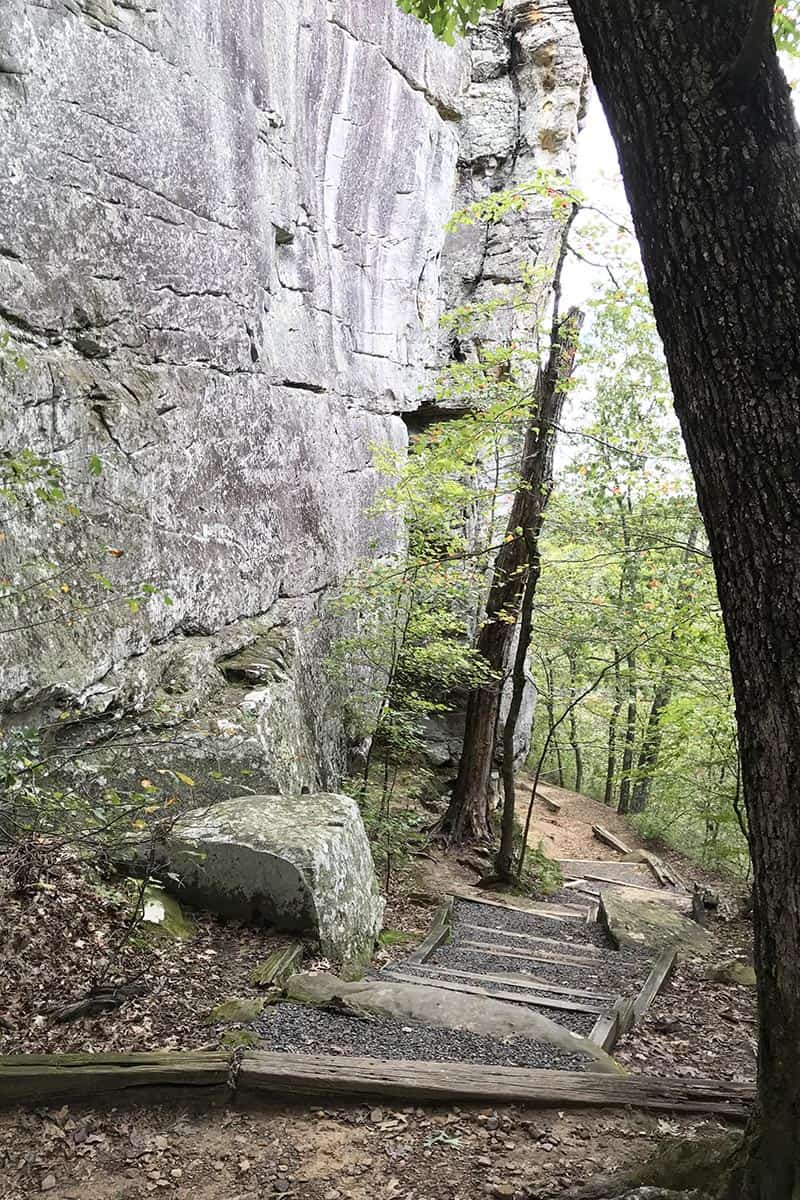
    There are quite a few steps along the trail, all made with railroad ties. Even though there are small inclines, the trail is an easy trail, so much so that even Zeke at 2 years old was able to walk most of it with us.

    railroad tie steps on Bear Cave Trail in Petit Jean

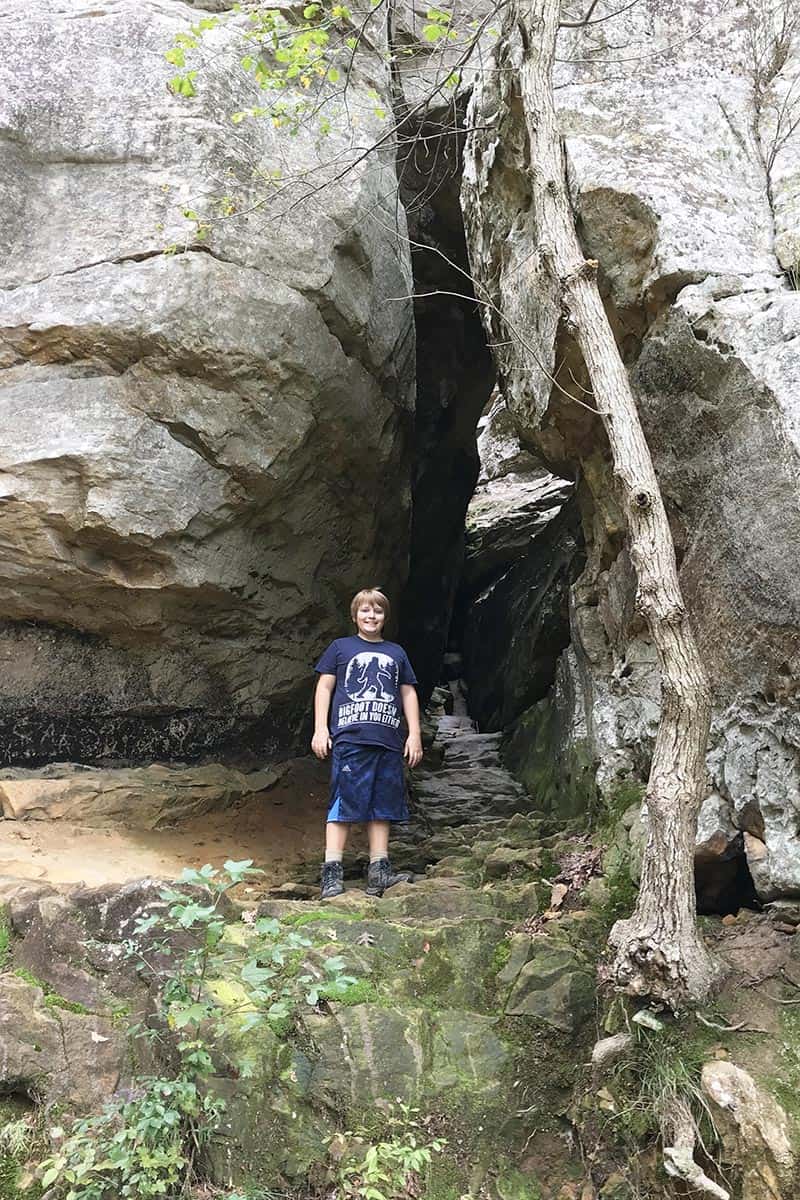
    Speaking of hiking with kids, they’ll find plenty of rock shelters and narrow passageways to explore. They can climb in, around, over, and through all the huge boulders and stone monoliths.

    boy with Bigfoot shirt exploring crevice along Bear Cave Trail in Petit Jean State Park

    Get Jaden’s “Bigfoot Doesn’t Believe in You Either” T-shirt.

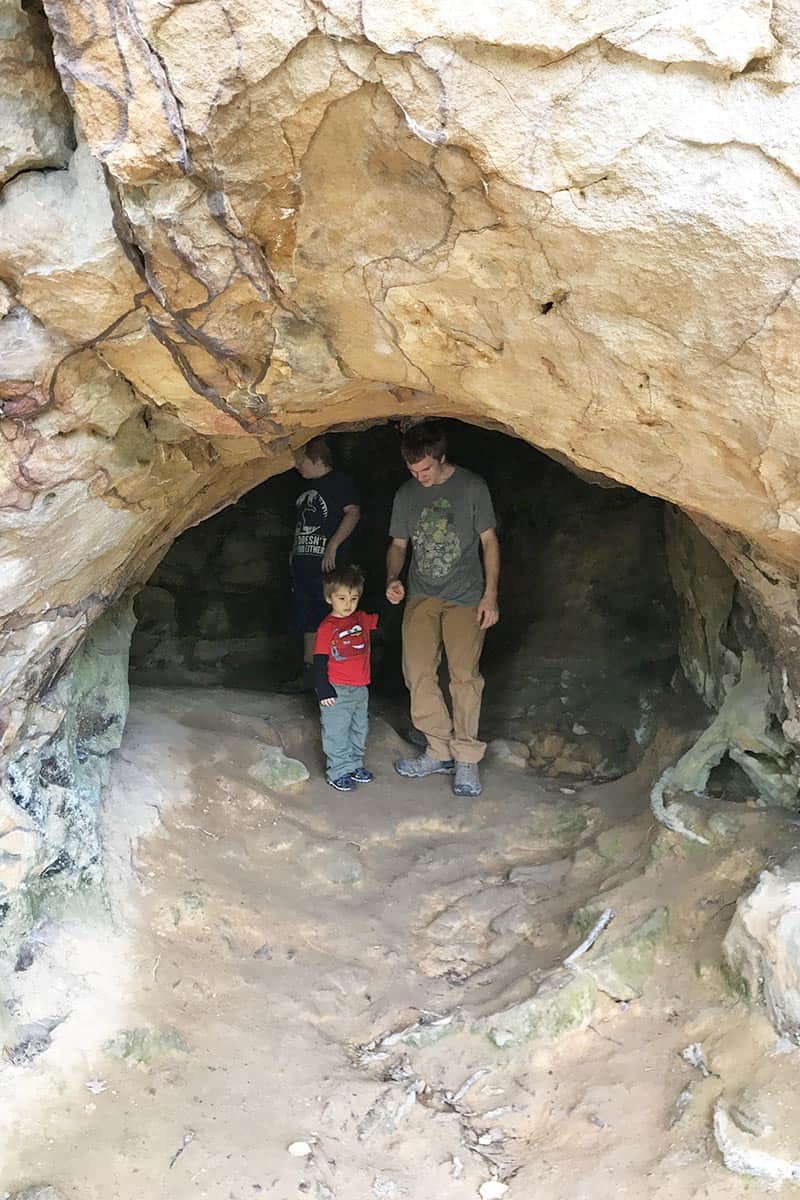
    Not really a cave but more of a rock shelter, Bear Cave is along the way before you get even halfway through the trail.

    boys inside Bear Cave in Petit Jean

    One of my favorite spots is the Eye of the Needle, a really narrow passageway through gigantic sheer walls of rock. It reminded me of pictures I’ve seen from places like Zion National Park and other places out west.

    You can walk through and stand right in the middle of that passageway and look up to see a sliver of sky above. It’s just incredible and pictures don’t do it justice.

    boys looking up through Eye of the Needle crevice in Petit Jean State Park

    TOWARD THE END OF THE TRAIL…

    You can pass through Eye of the Needle and explore and climb around. I believe you can even find just the right passageway to take you back to the parking lot at this point.

    Or you can keep going around the corner where you’ll climb up and around the trail, with boulders to your right.

    Keep in mind at this point, you can continue onto the Boy Scout Trail if you want. But veer to your right, and you can find your way back to the parking lot, as you wrangle your kids from their natural playground heaven.

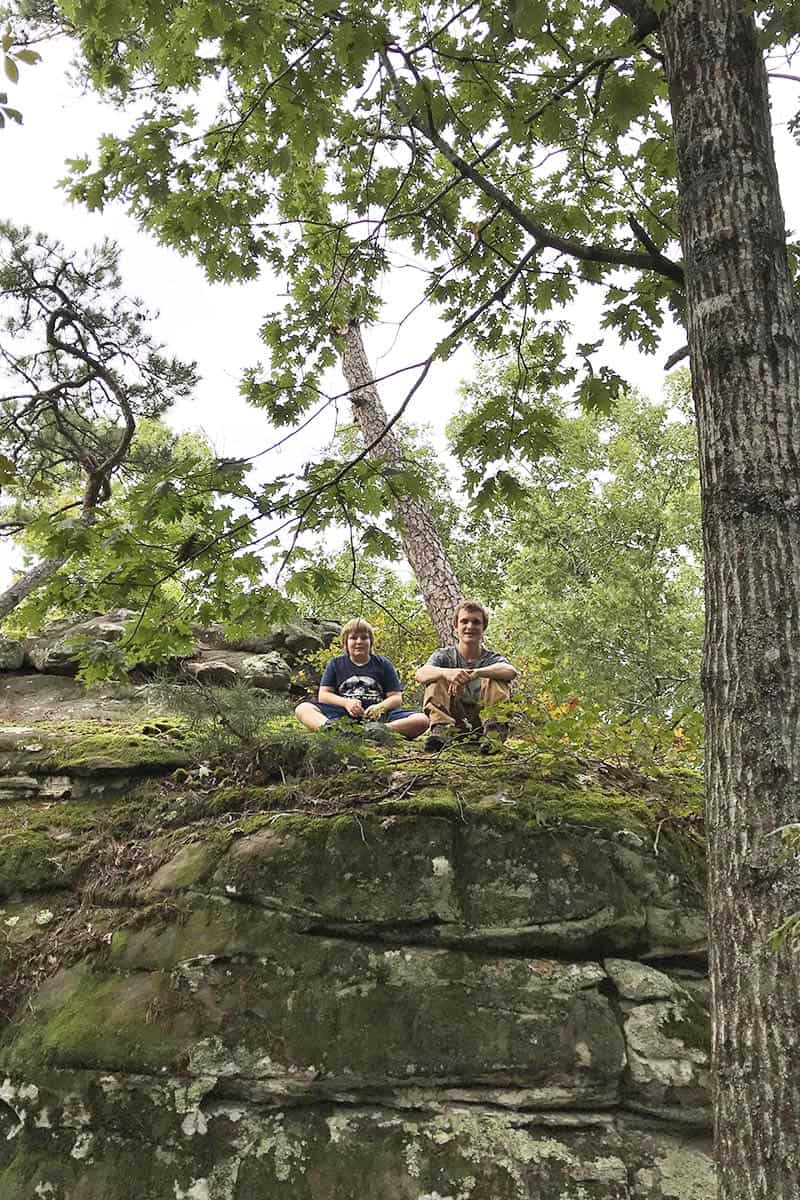
    boys sitting on boulder along Bear Cave Trail in Petit Jean State Park, Arkansas

    This is the part of the trail where you’ll find all sorts of narrow passageways through the rocks. Some will lead to a dead end, and others will lead you through.

    It’s kinda like a maze or labyrinth. A really fun maze that you’ll hate to leave when you catch a glimpse of the parking lot ahead.

    WILDLIFE YOU MAY ENCOUNTER HIKING BEAR CAVE TRAIL

    We really didn’t see any wildlife on the trail, besides a bird here and there. That’s not to say there isn’t any wildlife because Petit Jean is full of critters.

    narrow crevice trail on Bear Cave Trail in Petit Jean State Park

    It’s said that the last bear that was killed on Petit Jean Mountain, years ago, was in this area. Hence the name Bear Cave.

    That said, you may see a few birds and animals in Petit Jean State Park, including the following:

    • Rabbits
    • Quail
    • Birds
    • Deer
    • Possums
    • Skunks
    • Bobcats
    • Foxes
    • Black Bears, etc.

    Anytime you get out into nature, especially in the Natural State, you’re sure to see some sort of wildlife if you just take the time to look and observe.

    WHAT TO PACK FOR HIKING BEAR CAVE TRAIL

    So I’ll be honest, I’m not sure we packed a single thing because this is such a short trail. Well, I take that back, we may have carried camera gear and water.

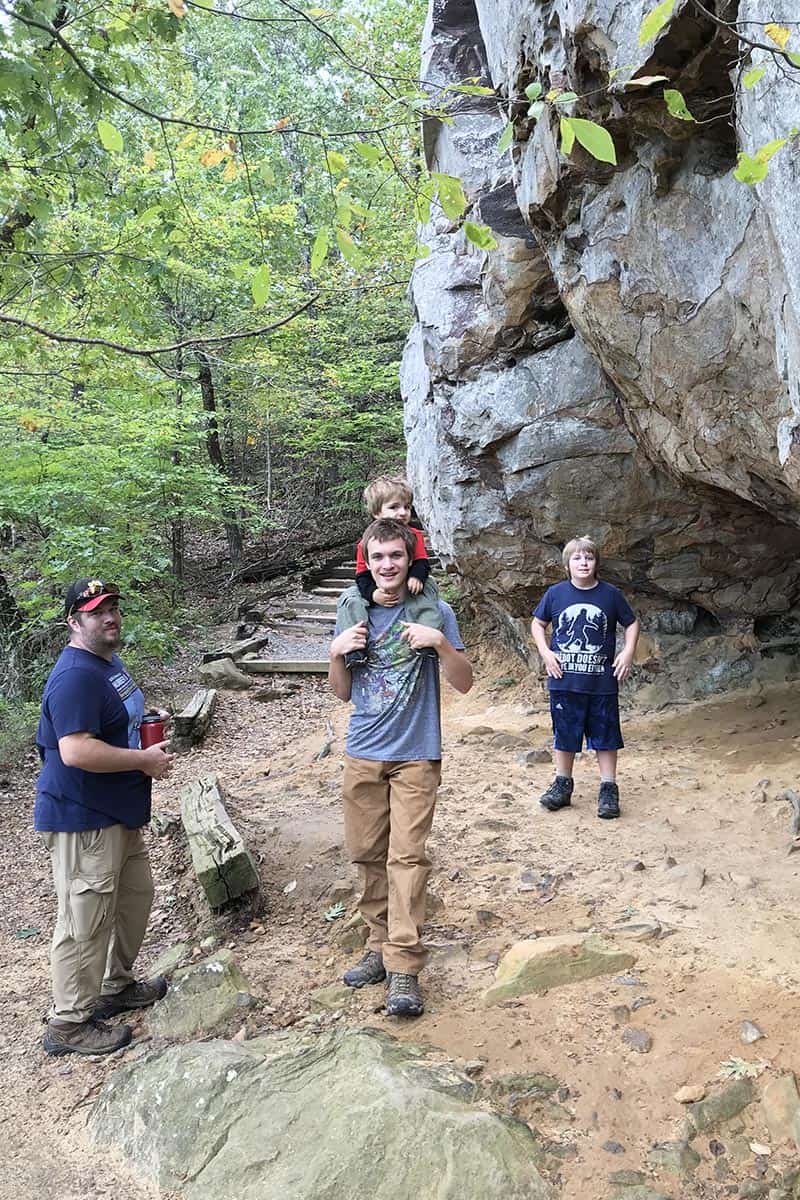
    family with toddler hiking Bear Cave Trail, Arkansas hiking trail in Petit Jean State Park

    Get Jaden’s “Bigfoot Doesn’t Believe in You Either” T-shirt.

    But especially if you’re hiking with kids, you may want to pack a few things for your short trip through the most wondrous of nature’s playgrounds.

    • Water – Pack plenty of water for everyone to stay well hydrated.
    • Backpacks with snacks and other necessary items – Snacks and water can make all the difference in fueling your body back up before heading back out onto the trail.
    • Shoes – While you’ll be wearing these and not necessarily packing them, I still think it’s worth mentioning wearing the proper footwear for this hike. You need good shoes for this trail, especially with all the rocks and boulders. If you plan to stay on the main trail and not climb around, you’re likely good with regular sneakers.
    • A copy of Arkansas Hiking Trails (I also recommend Arkansas Waterfalls) by Tim Ernst. These books give you all the ins and outs of waterfalls and hiking trails in Arkansas; Arkansas Waterfalls even mentions other falls in the area you may want to see on each journey you take.

    Learn more about the park, including sights to see, food options, lodging information, and more.

    SAFETY TIPS AND THINGS TO KNOW BEFORE HITTING THIS ARKANSAS HIKING TRAIL

    Again, this is an easy trail to hike, but safety should always be number one whenever you head out on any trail. And if you’re planning to explore and climb around, it’s definitely important.

    climbing around on gigantic boulder and rock formations on Bear Cave Trail in Petit Jean State Park, Arkansas

    It’s always a good idea to let someone know when and where you are going.

    The trail is not accessible for wheelchairs.

    There are no bathrooms and no water along the trail. Mather Lodge is just up the road and does have restrooms, along with a restaurant. Be sure to plan accordingly and pack plenty of water, so everyone will stay well hydrated.

    If you happen to get turned around, look for the small green trail markers here and there on trees along the trail. This trail is really well traveled, though, and pretty easy to navigate.

    Watch your step and wear good shoes. Especially watch for rocks sticking up out of the ground, and watch your step as you walk along the bluff line and climb around on boulders.

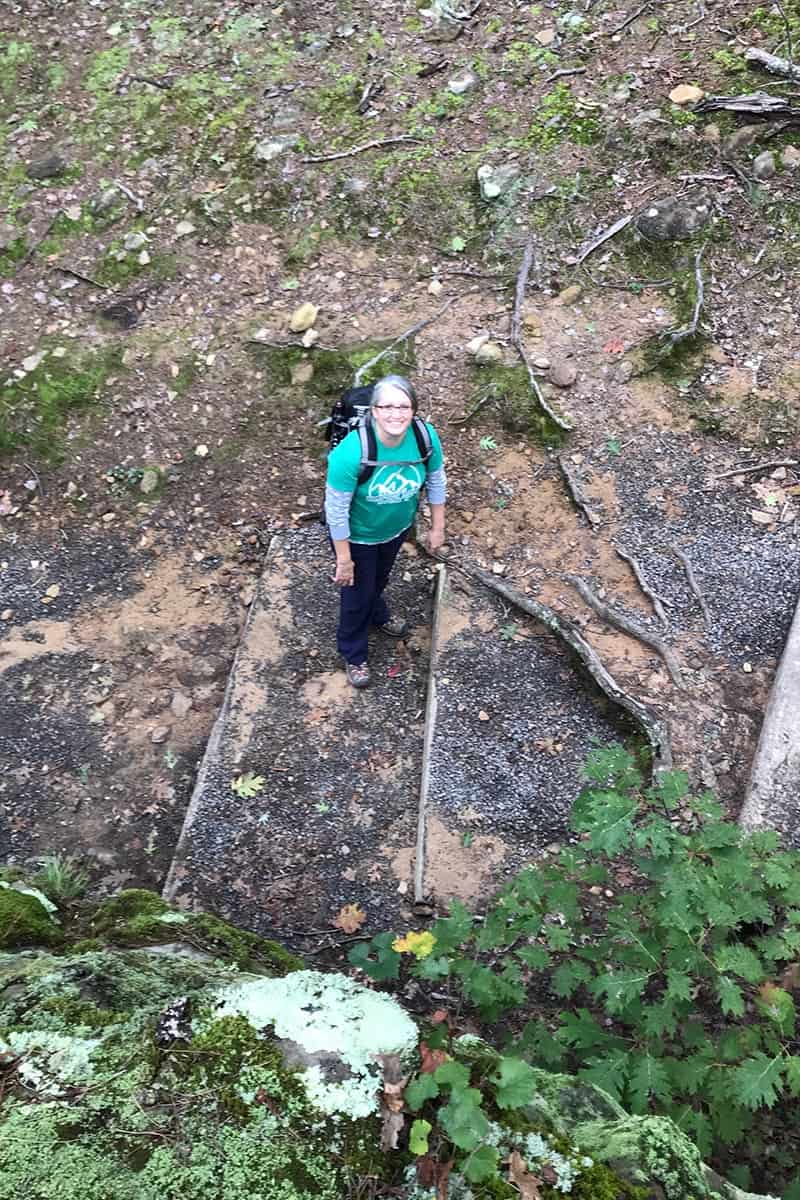
    woman with backpack hiking Bear Cave Trail in Petit Jean State Park, Arkansas

    If you’re making the hike with kids, watch your kids closely because of the bluffs and steep areas on this trail. Keep little ones closer, maybe even using a hiking carrier like the one we mentioned above.

    Check the weather before you head out hiking in Arkansas. Avoid hiking in thunderstorms and other inclement weather. If you decide to hike in rainy or drizzly conditions, be very careful as parts of the trail could be very slippery, especially the tops of cliffs and boulders.

    LEAVE NO TRACE

    Finally, our motto: Leave no tracePack out what you pack in. The more you practice this, the safer and more enjoyable hiking will be for everyone, including hikers who come after you.

    This is one hike you and your kids will never forget. In fact, they’ll likely be begging you to go back because not only is it beautiful and fun, but it’s Arkansas hiking at its best, chock full of natural wonders.

    Hiking Bear Cave Trail in Petit Jean State Park
    hiking along bluff lines on Bear Cave Trail in Petit Jean State Park
    hiking Bear Cave Trail at Petit Jean in Arkansas
  • Roof Top Tent vs. Ground Tent: The Inside Scoop

    Roof Top Tent vs. Ground Tent: The Inside Scoop

    HOW TO CHOOSE BETWEEN A ROOF TOP TENT OR GROUND TENT

    Pros and cons of a roof top tent vs. ground tent for camping and overland travel. The inside scoop on set up, storage, affordability, sleep space, and more.

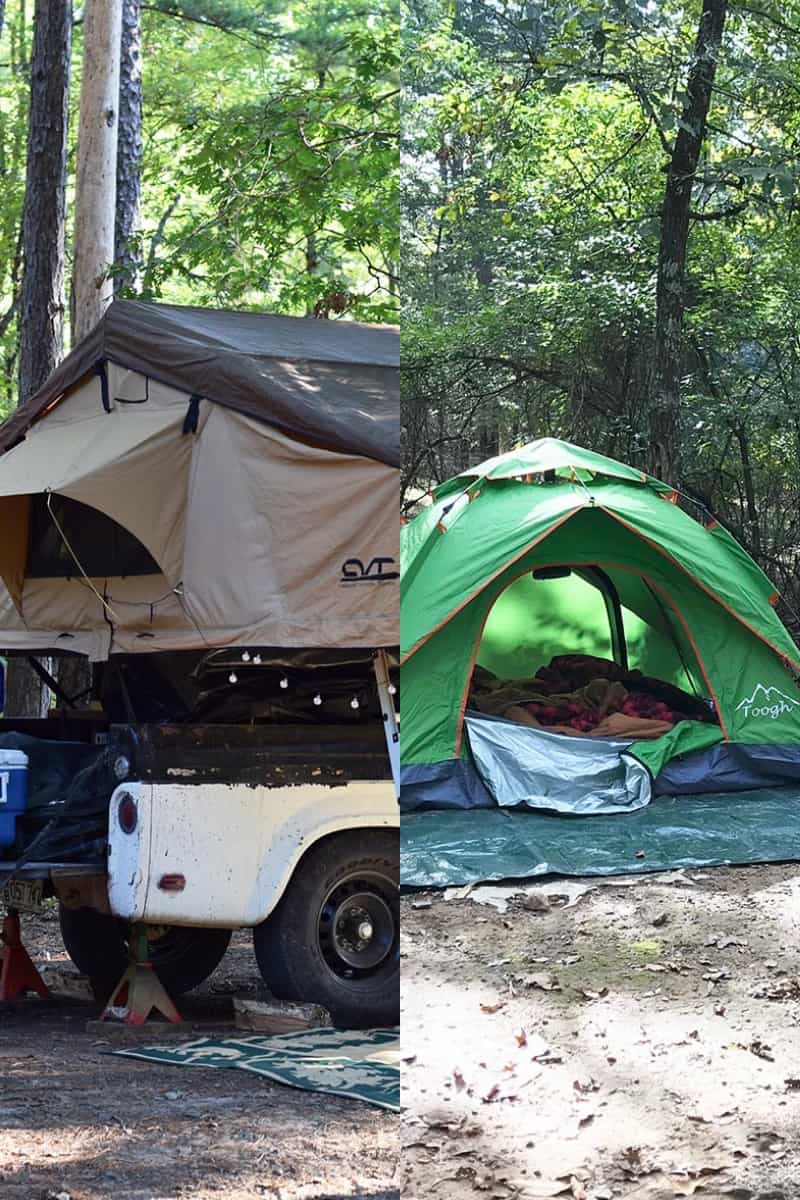
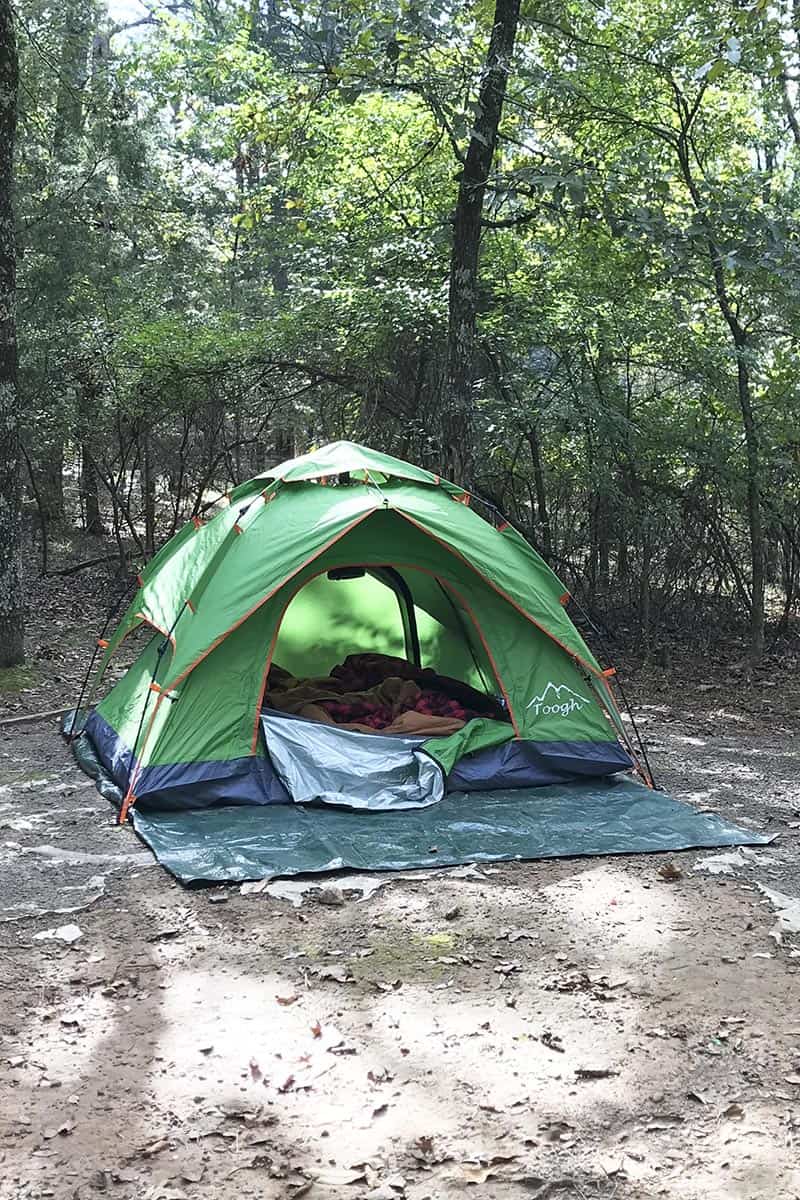
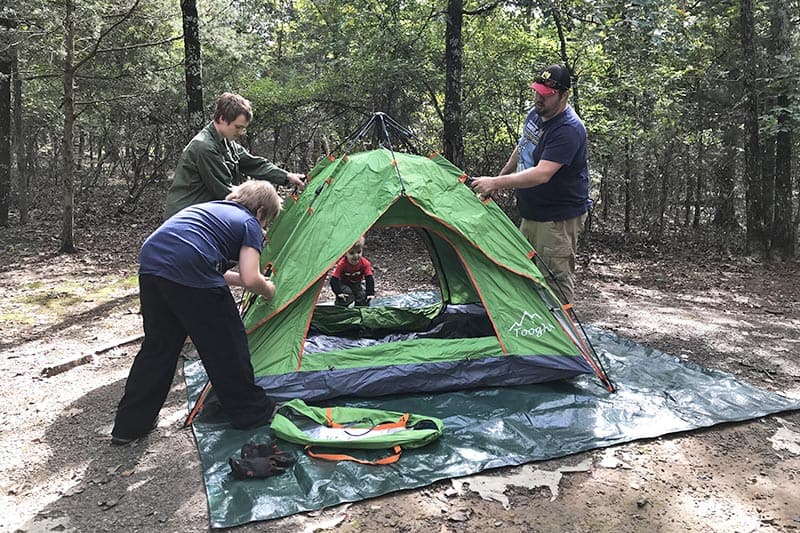
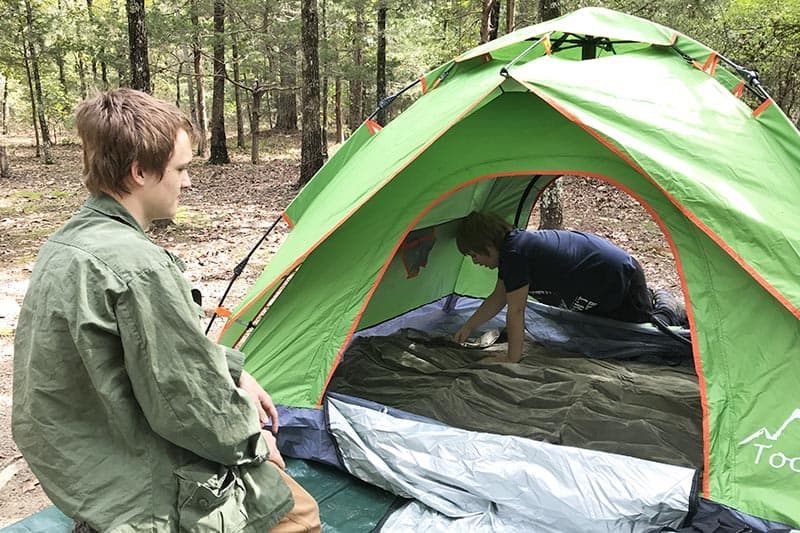
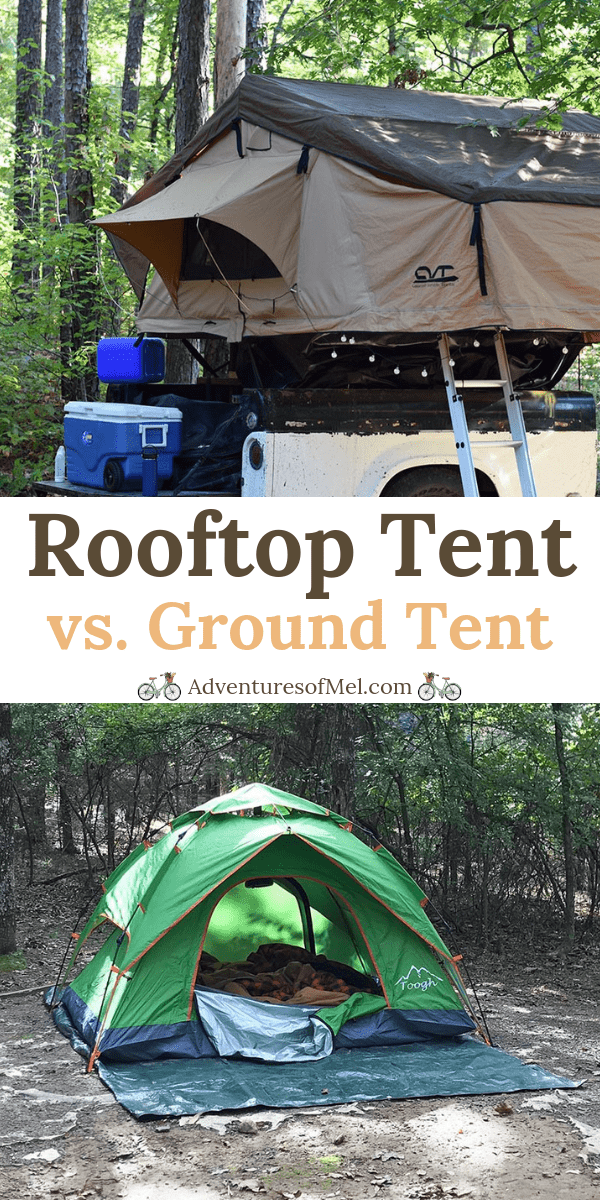
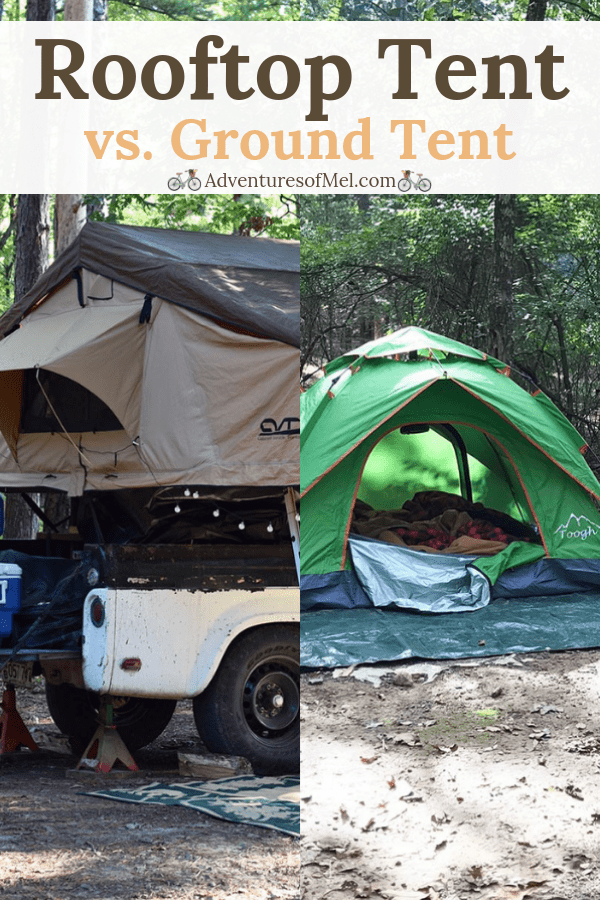
    roof top tent on camp trailer and ground tent on green tarp with front flap open

    Dispersed camping and overland travel have afforded our family the option to see places and go on trips we never would have had the opportunity to take otherwise. This was the goal when we made the decision to invest in a roof top tent.

    We’ve always enjoyed camping, and we’ve experienced both the good and bad of both a rooftop tent and more traditional ground tent.

    These days, since our family has grown, we actually use both kinds of camping tents. There are pros and cons to each.

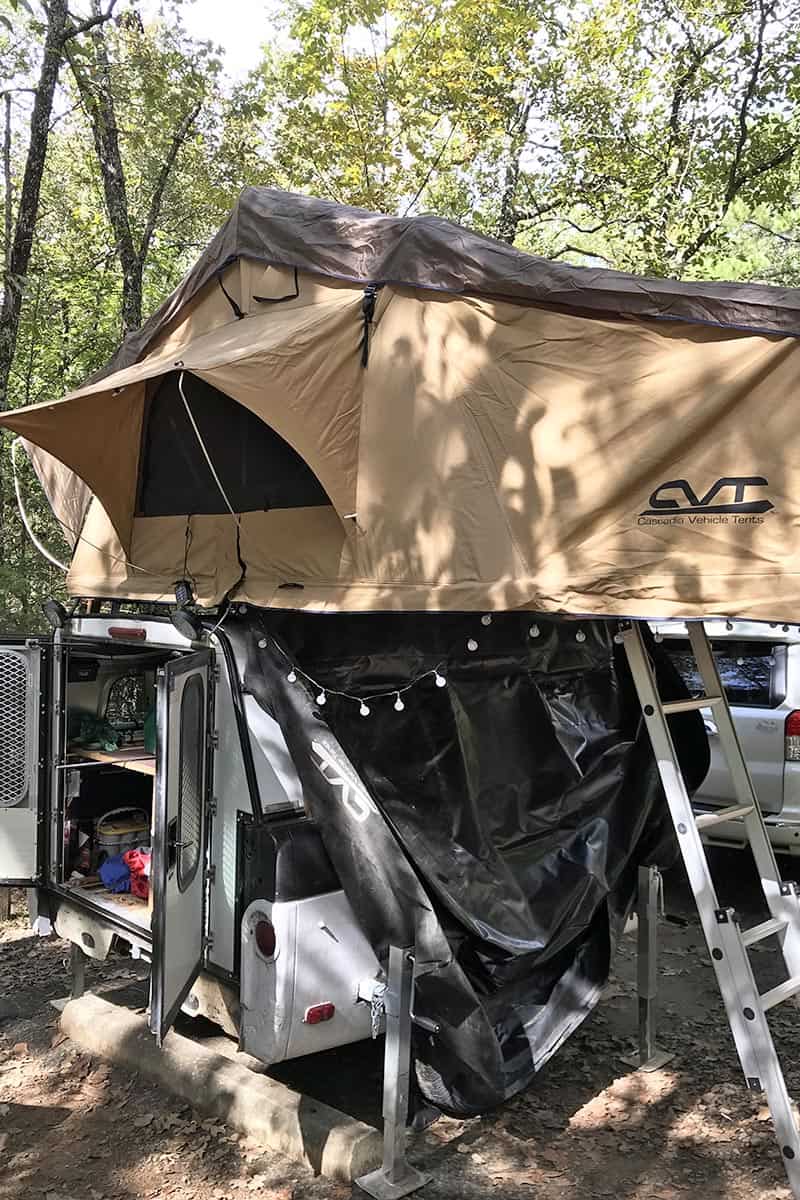
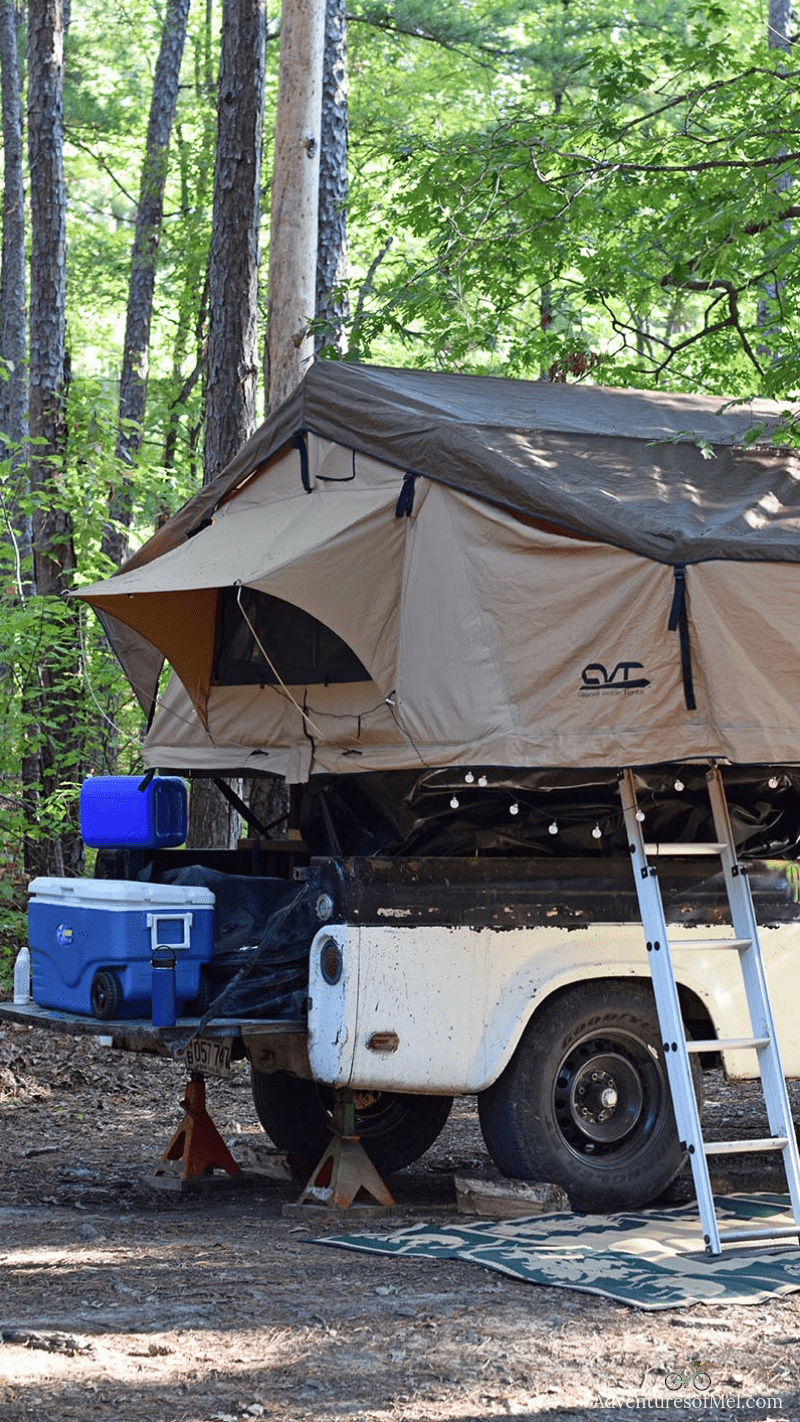
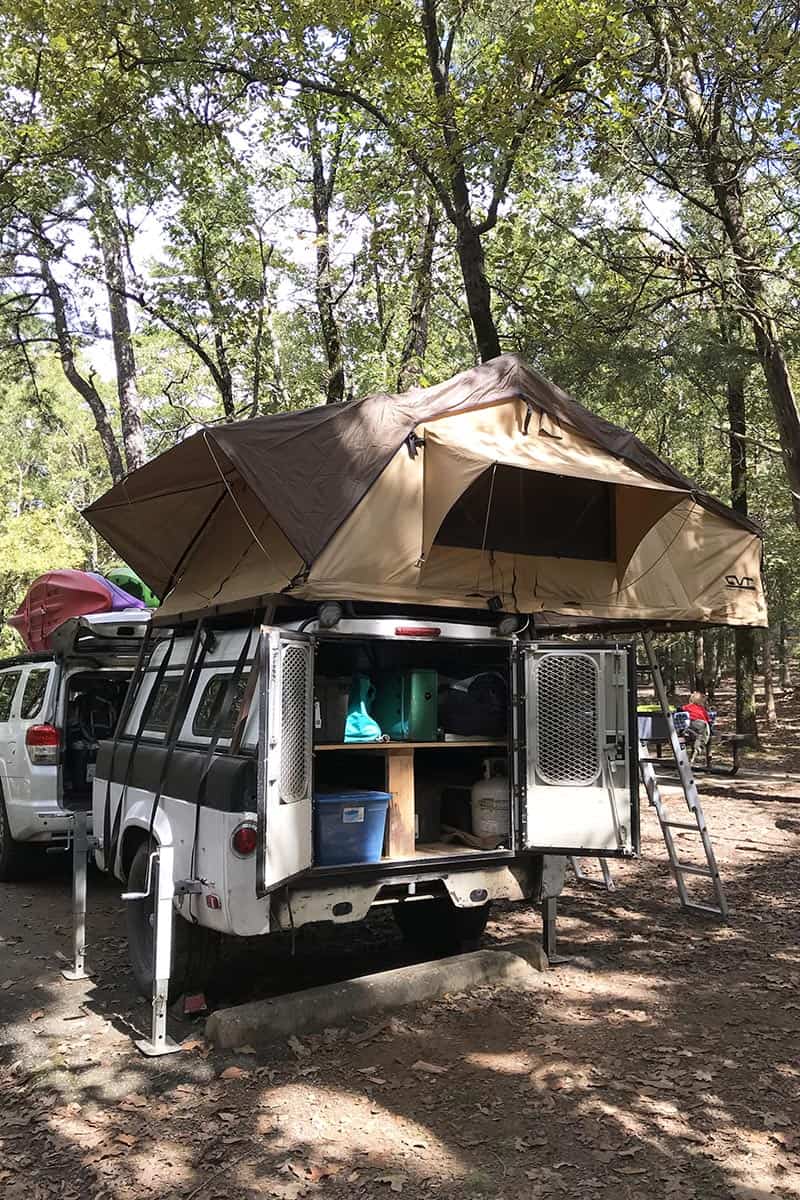
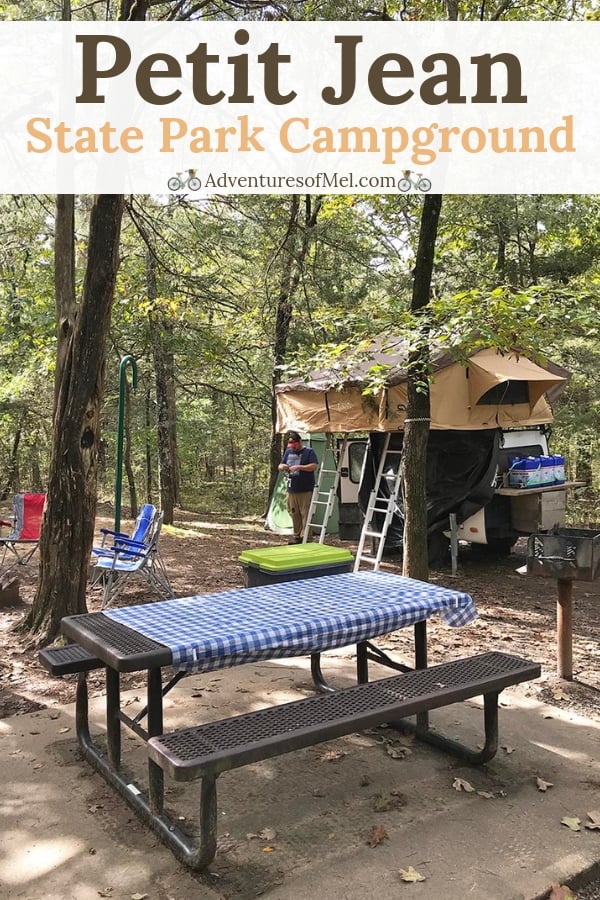
    roof top tent on camp trailer in Petit Jean State Park

    The decision to buy a tent is an important one. It’s an investment, and we want to help you figure out the best option for your family, whether you enjoy wild camping or more traditional campground digs.

    Wondering where to go camping? Check out how we find free campsites in the USA.

    A FEW QUESTIONS TO ASK YOURSELF BEFORE BUYING A TENT

    You really need to ask yourself a few questions before you make the decision to buy a roof-top tent or a traditional camping tent

    • Do you like camping as a family and camping with kids? Is it something you can see yourselves doing for the long haul?
    • What kind of camping do you plan to do? Boondocking? Traditional campground?
    • What is your budget for a family tent/s? How many tents will you need?
    • Do you have the equipment necessary for the kind of tent you’re purchasing? If not, do you have the budget for it, as well? (We’ll get into more detail about this in the pros and cons below.)
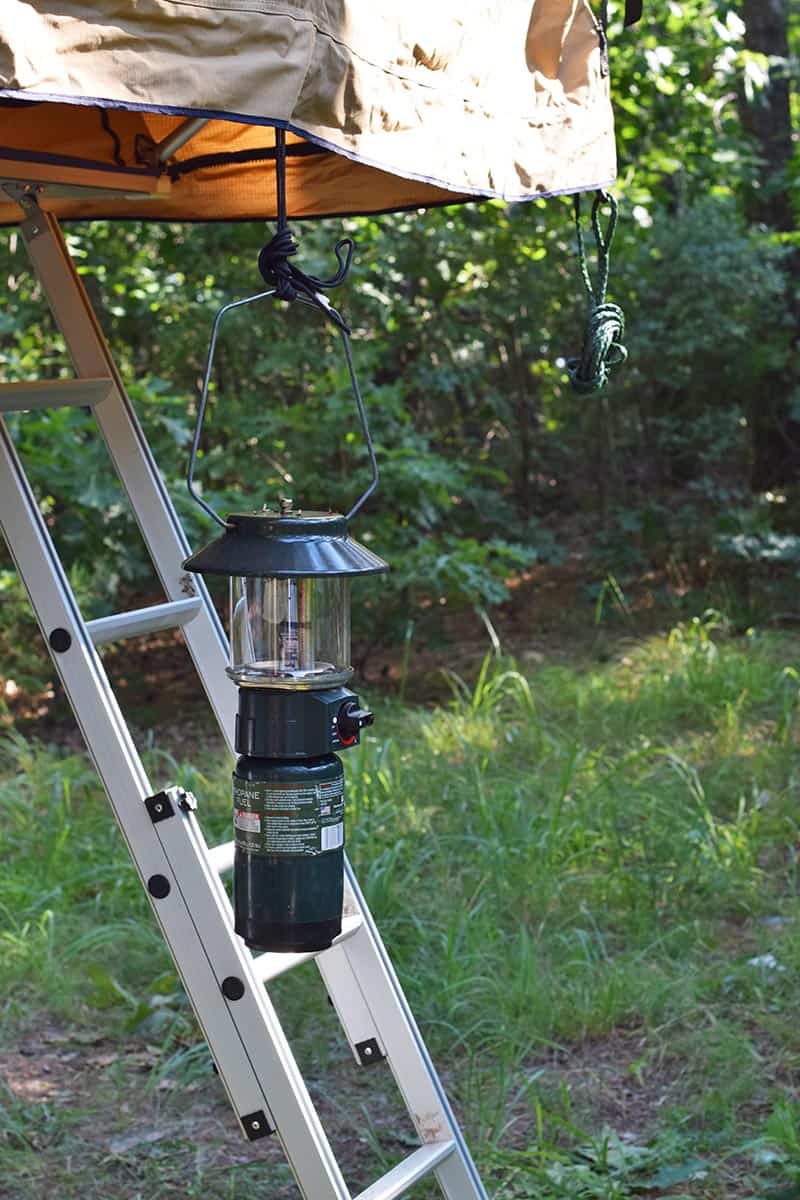
    roof top tent ladder with hanging lantern and rope

    PROS OF A ROOF TOP TENT

    A car roof tent is especially helpful when you do a lot of overlanding, off the grid travel, or boondocking with your family. It gives you the option to find free camping spots in places all across the country.

    You can go just about anywhere with a rooftop tent. It doesn’t necessarily require a level place to park your tent as long as your tent is on a trailer and you have jacks to level it up.

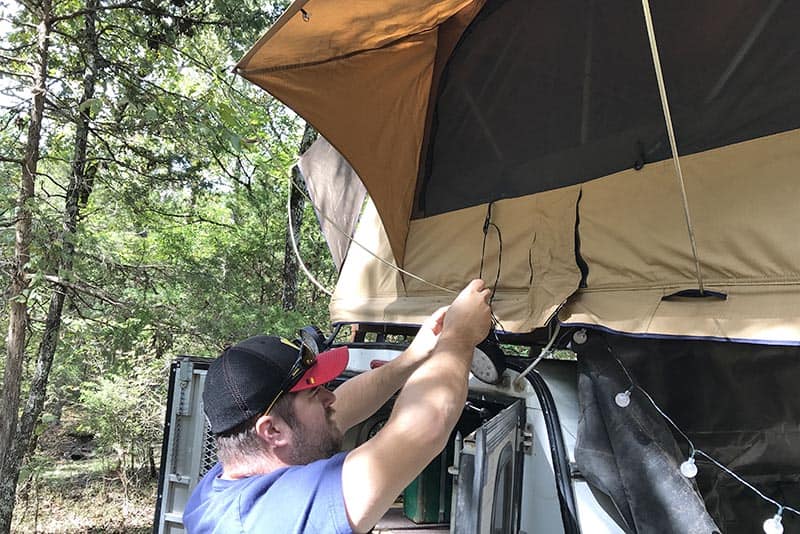
    A car top tent pretty much unzips and pops up. We’ll talk a bit more about this in the cons, but depending on personal preferences, it can be a really nice set up process.

    setting up a rooftop tent for tent camping

    A roof rack tent also saves on packing and storage space inside your vehicle. You don’t have to pack the tent, and you can just keep your sleeping bags in the tent.

    Roof top tents usually have their own mattress too, so no need to buy an air mattress unless you want extra cushioning. I actually use a self inflating sleeping pad for a little extra cushion.

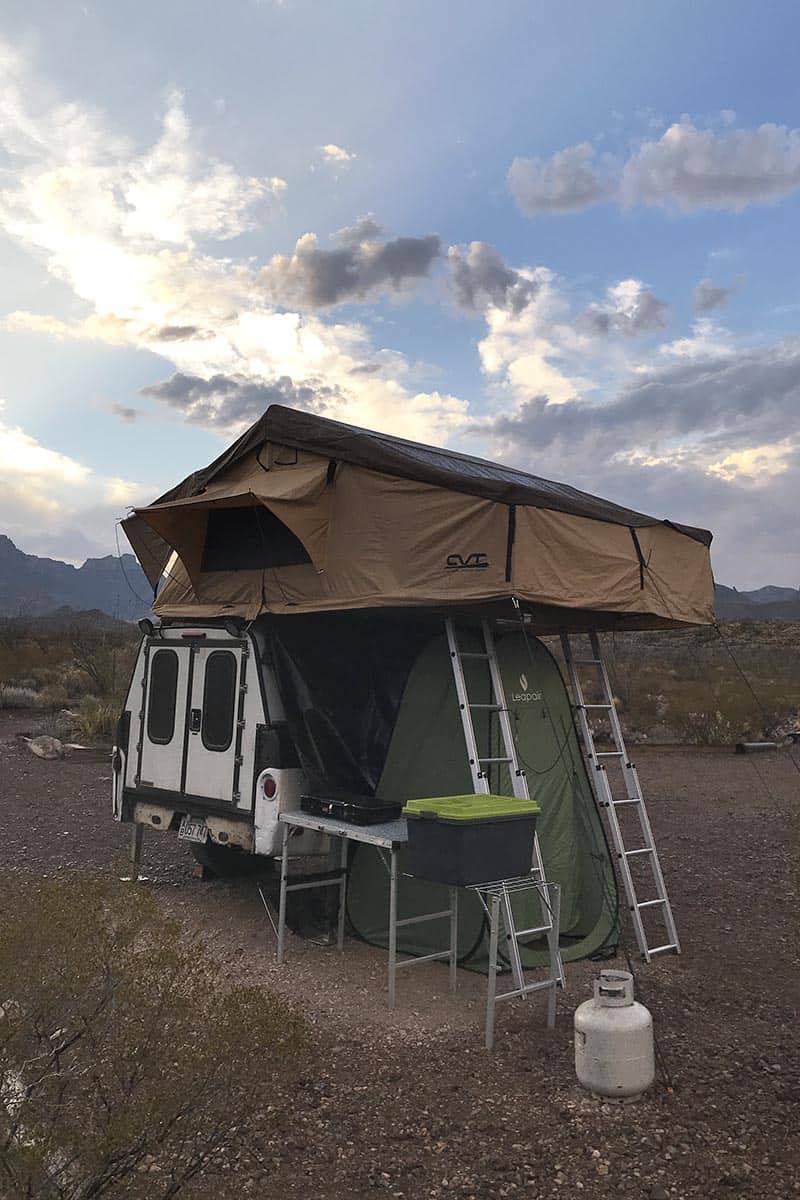
    Also, when we’re camping in Big Bend National Park where it’s very very hot, we’ve discovered that the bit of shade it provides from the part that flips over with the ladders, is wonderful.

    rooftop tent camping setup at Big Bend National Park in Texas

    You can sometimes put an extra room or awning on rooftop tents for more space, shade, and privacy.

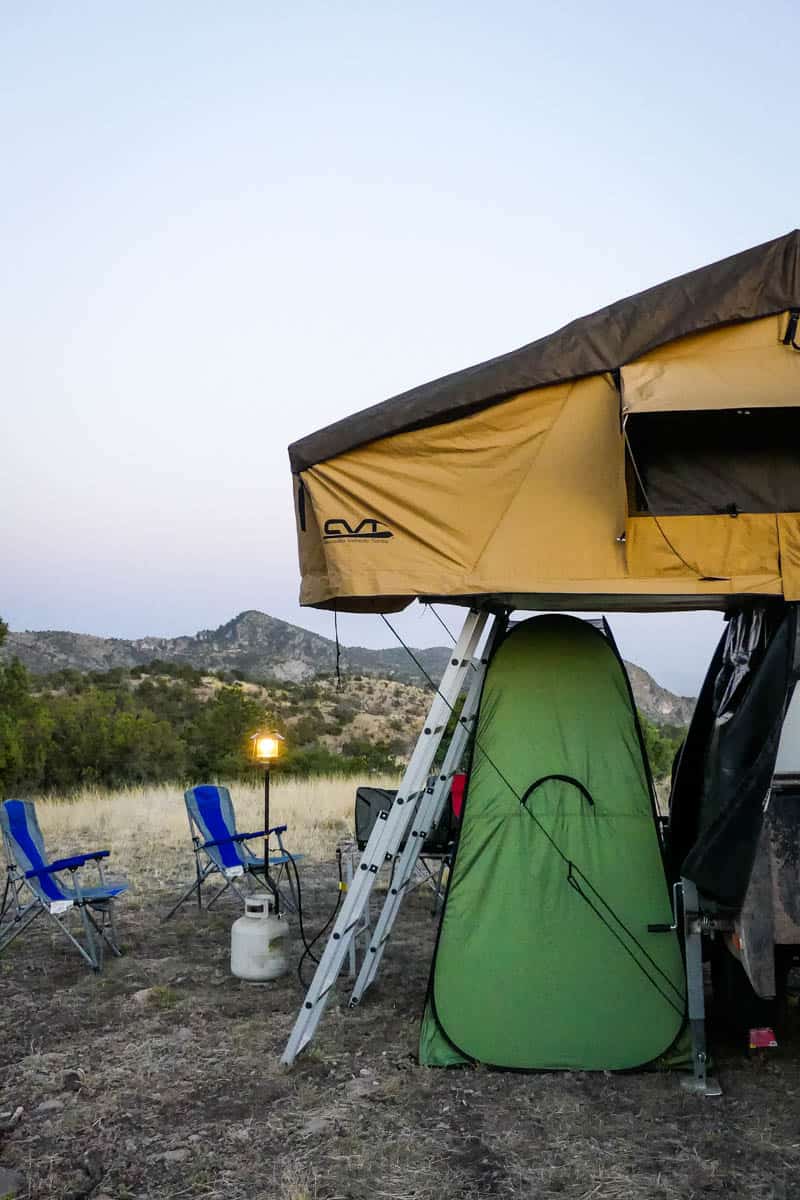
    One thing I love about our CVT tent…

    It gets us up off the ground. We don’t have to worry much about ground water or critters, and the fact that it’s off the ground means it has less of an impact when we’re not camping on a tent pad.

    CONS OF A CAR ROOF TENT

    Believe it or not, there are cons to owning a tent like this.

    For one, the initial price can be quite expensive if it’s not a true investment for your family. A larger rooftop tent can cost upwards of $2500 or more.

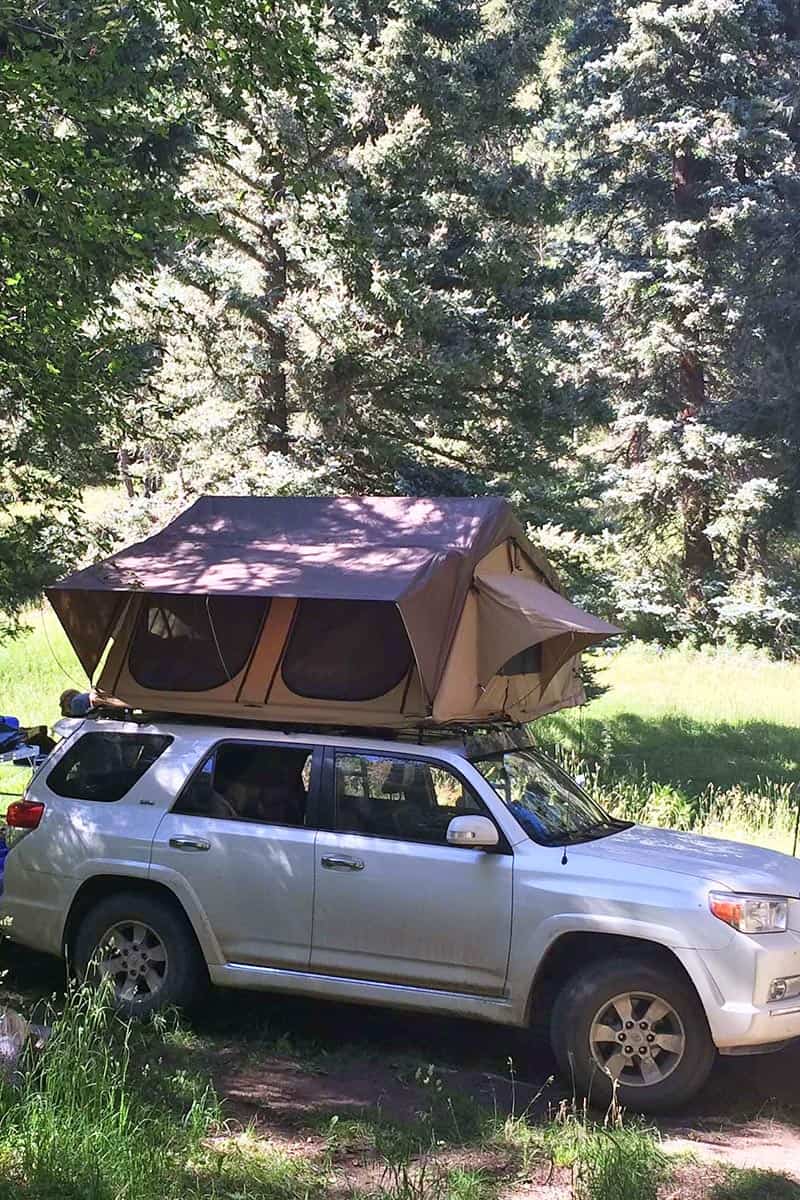
    If you’re not using a camp trailer, you’ll definitely need a roof rack for the tent to sit on top of your car. And if your tent is on top of your vehicle, you’ll also need to find level ground to set it up when camping.

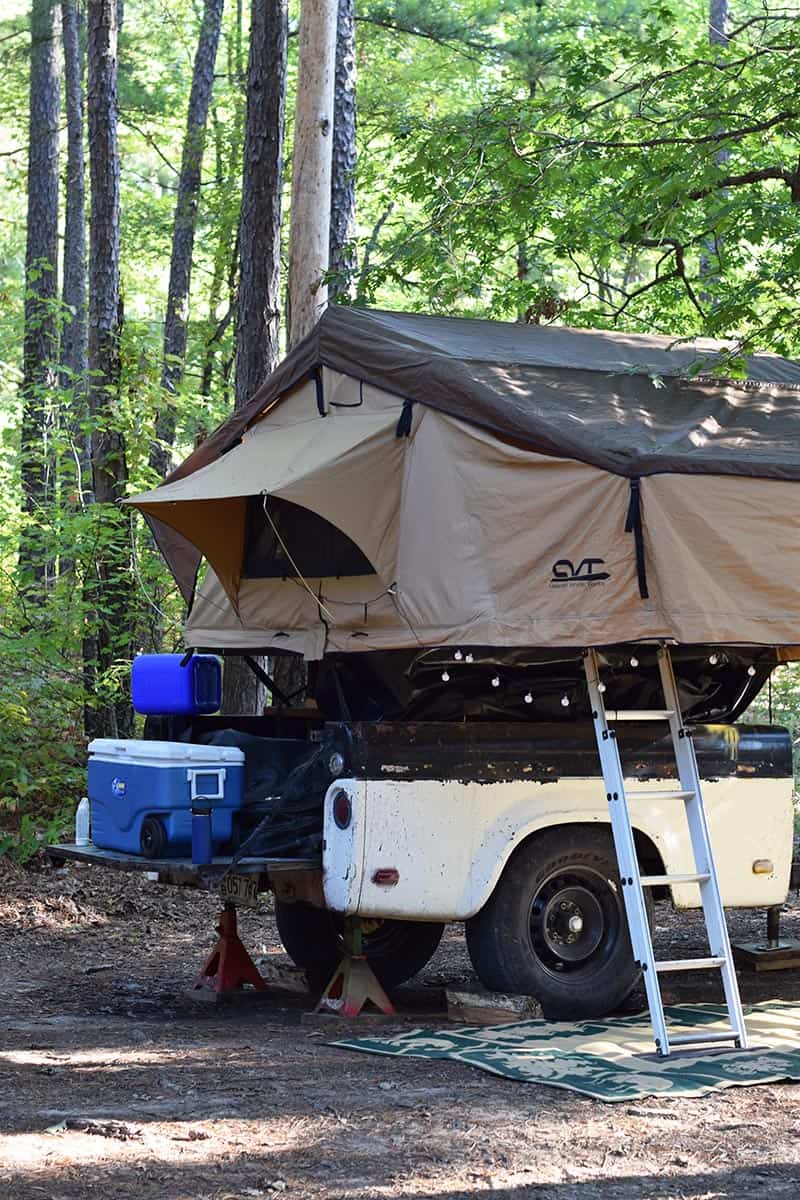
    roof top tent setup on camp trailer with jacks

    Especially if you do a lot of camping in the mountains, you may need to think about building a camp trailer so you can use jacks to level out the tent when the ground isn’t level. And then you can leave camp without having to tear down every single day.

    Having a roof top tent on your vehicle when you want to go explore means you’ll have to take down and set up every day of your trip. You won’t be able to just drive away without losing your spot.

    Depending on the height of your vehicle, you may need to carry a step ladder to help with set up and take down.

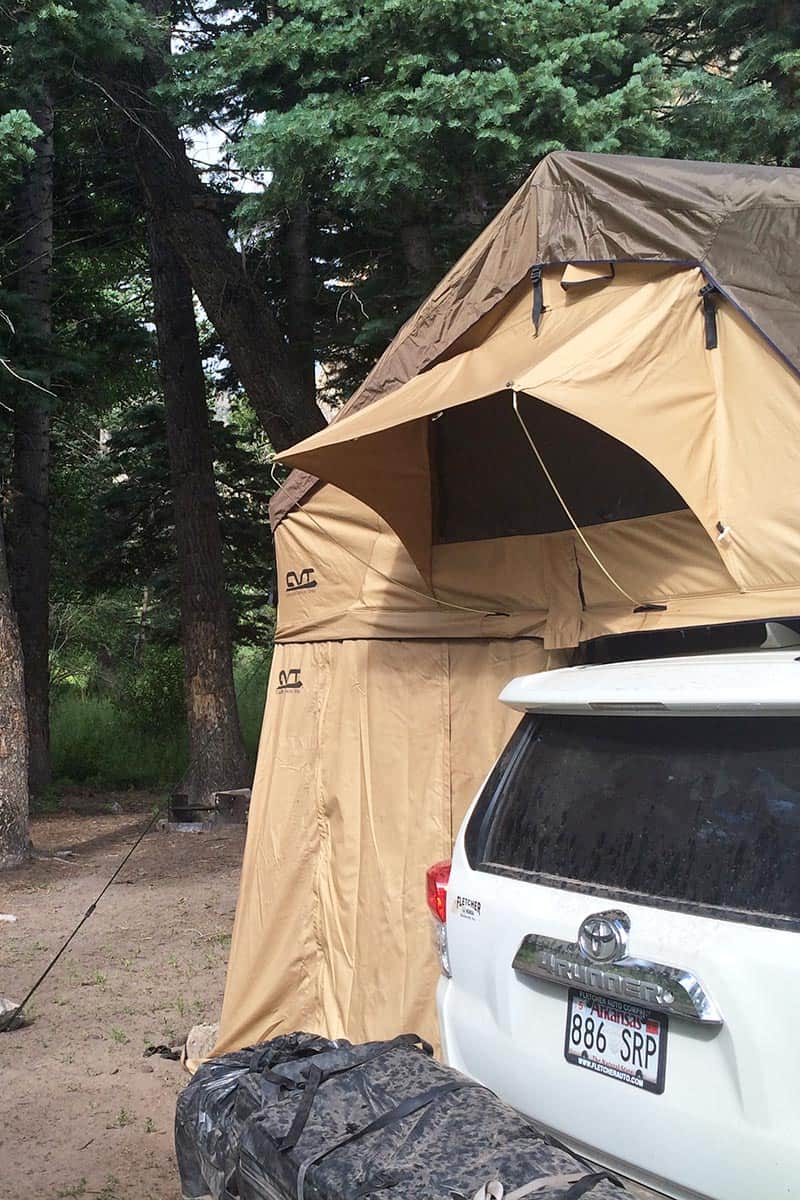
    CVT tent, car roof tent on white Toyota 4Runner

    And, of course, you have to climb the tent ladder to get into and out of your tent, go to the bathroom, and grab the blankie you forgot to grab out of the 4Runner.

    One more con is that you can’t simply walk into your tent. There’s not enough room to stand upright, so simple things like getting dressed can be more of a chore to do in the tent (unless you add an annex onto your tent).

    Wind can be a game changer in any kind of tent, even a durable roof top tent…

    Dan would tell you that set up can be a huge pain when it’s super windy; and if you’re like us camping all over the place in the mountains, the desert, or the plains, you will encounter wind.

    We had one particular trip where we went out on BLM land outside Roswell, New Mexico. We’d just gotten everyone settled, when all of a sudden, the wind came gusting like nothing I’ve ever experienced. It was the scariest thing.

    PROS OF A GROUND TENT

    If you don’t have the money to invest in a rooftop tent, a ground tent can be a much more affordable option. Most ground tents start in the $50 price range, sometimes even cheaper than that depending on the size tent you need.

    green camping tent on ground at Petit Jean State Park

    You can literally just throw a tent in the back of your car and head out camping. No extra equipment needed for setup, besides maybe a tarp for the ground underneath and stronger tent pegs.

    A simple camping tent can be a quick setup, especially if it’s one of these newer popup tents. And even a lot of the non pop up tents have improved to where they take just a few minutes to set up.

    setting up a green pop up tent in Petit Jean State Park Campground in Arkansas

    A ground tent is good for walk in sites, as well. If you do a lot of backpacking or you look for more private walk in sites at campgrounds (kinda like our site at Cosby Campground in the Smoky Mountains), a ground tent may be a better option for you.

    CONS OF A TRADITIONAL CAMPING TENT

    The cons of a traditional tent would start with being on the ground. There’s a higher risk of ground water getting in, and even critters getting in your tent if it’s not zipped up tight.

    You have to find a level spot to set up the tent. Level isn’t an option in quite a few places, especially if you’re overlanding.

    Speaking of a campsite, when you don’t have a tent pad available, you make more of an impact on the ground and hence the ecosystem with a traditional camping tent.

    When it’s cold, you’re sleeping on or next to the ground, so you may be a little colder than you would be in a roof top tent.

    boys airing up the air mattress in a green pop up tent at Petit Jean State Park

    And you’ll need an air mattress or sleeping pad for sure. The ground gets quite hard when you’re trying to get some shuteye.

    DECIDING BETWEEN A ROOF TOP TENT OR A GROUND TENT

    We actually use both a roof top tent and a ground tent when we’re camping now.

    We have a ground tent for our older two boys because we’ve kinda outgrown the whole family sleeping in the rooftop tent together. They actually prefer to sleep on the ground too, so it works out well for us.

    When you’re making your decision, it’s important to think about your own family’s preferences and the impact your purchase will have on everyone involved.

    Ask yourself the questions I mentioned above. Study the pros and cons, and give yourself enough time to make a sound decision.

    roof top tent with annex on Toyota 4Runner in Great Sand Dunes National Park primitive camping site

    A tent is such a personal choice for any outdoorsman/woman. It’s your home away from home and can actually make or break a trip.

    If you’re trying to make a decision but just not sure which one to go with, you can always reach out with questions. We have a lot of experience with both kinds of tents and would love to help however we can.

    More camping gear suggestions for you:

    Wash up with a Solar Outdoor Shower for Camping

    The Ultimate Camping Checklist for Packing

    Homemade No Rinse Body Wipes for Camping

    Best Baby Carrier Backpack for Hiking and Outdoors

    Camping Cooking Gear and Outdoor Cooking Tips

    Happy camping!

    Roof Top Tent vs. Ground Tent: The Inside Scoop
    how to choose between a roof top tent and ground tent
    decide between a rooftop tent or traditional camping tent
  • Seven Hollows Trail to the Natural Bridge in Petit Jean

    Seven Hollows Trail to the Natural Bridge in Petit Jean

    HIKE SEVEN HOLLOWS TRAIL TO THE NATURAL BRIDGE IN PETIT JEAN STATE PARK

    Hike part of Seven Hollows Trail to the Natural Bridge at Petit Jean State Park in Arkansas. A moderate hike with caves, rocks, and beautiful scenery.

    mom and sons at Natural Bridge on Seven Hollows Trail in Petit Jean State Park

    On a recent trip camping at Petit Jean State Park, we hiked several trails, including Cedar Falls Trail, Bear Cave Trail, and part of Seven Hollows Trail. While we didn’t have time to hike the entire trail, we had just enough time to hike to the Natural Bridge.

    And what a wondrous hike it was! I think Seven Hollows won our hearts and became our favorite trail in all of Petit Jean State Park.

    We fell in love with it because it was such a quiet, peaceful trail without crowds of people. We even had the Natural Bridge all to ourselves.

    view through the Natural Bridge on Seven Hollows Trail at Petit Jean State Park

    It was a really beautiful trail. The trees were gorgeous as they were starting to lighten up for fall; and the rock formations, caves, and bubbling stream were just spectacular.

    If I had one day to spend in Petit Jean, I’d spend it on Seven Hollows Trail; that’s how much I loved this trail.

    HOW TO GET TO SEVEN HOLLOWS TRAIL IN PETIT JEAN STATE PARK

    Petit Jean State Park is close to both Morrilton, Arkansas, and Dardanelle, Arkansas, pretty much in the heart of the Natural State.

    Seven Hollows Trail is just past Bear Cave on Highway 154, the main route that runs through Petit Jean Mountain.

    Seven Hollows Trail Head with sign at Petit Jean State Park near Morrilton, Arkansas

    A parking lot provides ample parking, as well as signs with information about the trail.

    Walk past the signs right onto the trail, following the light blue trail markers as you make your way down the trail. You’ll also see occasional mile markers, letting you know how far you’ve gone.

    blue mile marker on Seven Hollows Trail in Petit Jean State Park

    WHAT IT’S REALLY LIKE HIKING TO THE NATURAL BRIDGE

    The Seven Hollows area is originally what inspired the creation of Petit Jean State Park as one of the Arkansas State Parks, and I can definitely see why.

    As you make your way down the trail, you’ll pretty quickly come to a fork in the trail. You can choose to go left toward the Natural Bridge, or you can go right toward the Grotto.

    hikers hiking through the forest of Seven Hollows Trail in Petit Jean State Park in the Natural State

    We chose to go left, since we only had time to go to the Natural Bridge this trip; though we plan to go back and hike the entire trail in the near future.

    FEATURES OF SEVEN HOLLOWS TRAIL TO THE NATURAL BRIDGE

    The trek to the Natural Bridge is close to 1 1/2 miles, making it right around 3 miles roundtrip. If you hike the entire Seven Hollows Trail, it’s about a 4 1/2 mile loop and takes anywhere from 2 to 4 hours.

    rocky slab on Seven Hollows Trail in Petit Jean State Park

    There are sections of the trail where you’re making a slight descent and other parts where you’re climbing back up. The trail has a lot of rocks and tree roots, signature features of many an Arkansas hiking trail.

    rocky descent on Seven Hollows Trail in Petit Jean State Park in Arkansas

    Don’t just rush to the Natural Bridge, because there is so much to see as you saunter along through the forest.

    bluff with little caves on Seven Hollows Trail in Petit Jean State Park

    Trees with canopies of leaves overhead, massive boulders and sandstone bluffs, the stream… Give this trail the time and attention it deserves all along the way; drink it all in.

    boy crossing over stream on Seven Hollows Trail in Petit Jean State Park

    We followed the stream, crossing it here and there, all the way through the first hollow. We could hear it bubbling and flowing as we stopped to admire sandstone bluffs and take in scenic views of the forest.

    The boys couldn’t resist walking up the trails to a cave or two, stepping just inside to let out an echoing call.

    tree knot grown into boulder on Seven Hollows Trail in Petit Jean State Park

    At one point, we passed a tree that had seemingly grown into a boulder that looked as if it’d come to rest on the tree. The tree had a huge knot that had grown into the side of the rock.

    DON’T MISS THE NATURAL BRIDGE

    We didn’t even know we were at the Natural Bridge until we actually rounded the corner and saw the sign that pointed up to our left. We thought what we were seeing was just a huge tower of rocks.

    side of the Natural Bridge on Seven Hollows Trail in Petit Jean State Park

    Then we rounded the corner, saw the sign, and looked up to our left. And there it was…

    sign pointing to the Natural Bridge on Seven Hollows Trail in Petit Jean

    The Natural Bridge is quite the majestic sight. And it’s a natural stopping point for a break on the trail, as well as a beautiful photo opp.

    dad and sons posing with Natural Bridge on Arkansas hiking trail, Seven Hollows Trail, in Petit Jean State Park

    Sit a spell and just take it all in; maybe grab a little fuel for the hike back up the trail.

    the Natural Bridge on Seven Hollows Trail in Petit Jean State Park, one of the most beautiful Arkansas State Parks

    You can hear the creek flowing below as you climb up and around the huge rock formation. Just be careful; the rocks can be slick.

    looking through the arch of Natural Bridge on Seven Hollows Trail in Petit Jean State Park

    According to the Seven Hollows brochure, the large sandstone arch is thought to have once spanned this entire first hollow, but parts of it have worn away or collapsed. In fact, if you look down through the hollow, you can see the collapsed portions of the bridge.

    Natural Bridge arch in Petit Jean State Park in fall

    Kinda the way I felt while hiking Hawksbill Crag, I didn’t really want to leave such a peaceful spot.

    WILDLIFE YOU MAY ENCOUNTER HIKING SEVEN HOLLOWS TRAIL

    Again, we didn’t see a lot of wildlife on this trail. But that doesn’t mean they’re not there.

    berries growing on Seven Hollows Trail in Petit Jean State Park, Arkansas

    That said, you may see a few birds and animals in Petit Jean State Park, including the following:

    • Rabbits
    • Quail
    • Birds
    • Deer
    • Possums
    • Skunks
    • Bobcats
    • Foxes
    • Black Bears, etc.

    Anytime you get out into nature, especially in the Natural State, you’re sure to see some sort of wildlife if you just take the time to look and observe.

    boy on boulder on Seven Hollows Trail in Petit Jean State Park in Arkansas

    WHAT TO PACK FOR HIKING TO THE NATURAL BRIDGE

    Especially if you’re hiking with kids, you’ll want to pack a few things for your trip down Seven Hollows Trail.

    hiking Seven Hollows Trail with a toddler and hiking carrier in Petit Jean State Park
    • Water – Pack plenty of water for everyone to stay well hydrated.
    • Backpacks with snacks and other necessary items – Snacks and water can make all the difference in fueling your body back up before heading back out onto the trail.
    • Shoes – While you’ll be wearing these and not necessarily packing them, I still think it’s worth mentioning wearing the proper footwear for this hike. You need good shoes for this trail, especially with all the rocks and tree roots.
    • A copy of Arkansas Hiking Trails and/or Arkansas Waterfalls by Tim Ernst, especially if you plan to hike to the Grotto. These books give you all the ins and outs of hiking trails and waterfalls in Arkansas; Arkansas Waterfalls even mentions other falls in the area you may want to see on each journey you take.
    Natural Bridge on Seven Hollows Trail in Petit Jean State Park

    SAFETY TIPS AND THINGS TO KNOW BEFORE HIKING SEVEN HOLLOWS TO THE NATURAL BRIDGE

    Seven Hollows Trail is a 4 1/2 mile loop trail; if you hike to the Natural Bridge and back, it’s between 2 1/2 to 3 miles roundtrip. While it’s not a long hike, per sé, it’s still a moderate hike, and the last part of the trail is the more strenuous part of the trail.

    In fact, when we go back, we plan to hike to the Grotto first and then loop around to the Natural Bridge, mainly because we know what to expect on the uphill sections in this part of the trail.

    hiking around boulders on Seven Hollows Trail in Petit Jean

    It’s always a good idea to let someone know when and where you are going.

    The trail is not accessible for wheelchairs.

    There are no bathrooms and no water along the trail. Mather Lodge is just up the road and does have restrooms, along with a restaurant. Be sure to plan accordingly and pack plenty of water, so everyone will stay well hydrated.

    If you happen to get turned around, look for the small light blue trail markers or paint marks here and there on trees along the trail. This trail is really well traveled, though, and pretty easy to navigate.

    boulders and bluffs on Arkansas hiking trail, Seven Hollows Trail, in Petit jean State Park

    Watch your step and wear good shoes. Especially watch for rocks sticking up out of the ground, and watch your step as you cross muddy, rocky areas with water or climb around on boulders.

    If you’re making the hike with kids, watch your kids closely because there are bluffs and steep areas on this trail. Keep little ones closer, maybe even using a hiking carrier like the one we mentioned above.

    Check the weather before you head out hiking in Arkansas. Avoid hiking in thunderstorms and other inclement weather. If you decide to hike in rainy or drizzly conditions, be very careful as parts of the trail could be very slippery.

    peeking through boulders on the Natural Bridge in Petit Jean State Park

    LEAVE NO TRACE

    Finally, our motto: Leave no tracePack out what you pack in. The more you practice this, the safer and more enjoyable hiking will be for everyone, including hikers who come after you.

    The hike to Natural Bridge is a gorgeous hike and totally worth every step. It’s Arkansas hiking at its best and truly a Natural State treasure you’ll never forget.

    Hiking Seven Hollows Trail to Natural Bridge in Petit Jean State Park
    hiking seven hollows trail to natural bridge in petit jean state park in arkansas
    hiking to the natural bridge on seven hollows trail in petit jean state park in the natural state
  • Hiking Cedar Falls Trail in Petit Jean State Park

    Hiking Cedar Falls Trail in Petit Jean State Park

    TAKE A HIKE DOWN CEDAR FALLS TRAIL IN PETIT JEAN

    Cedar Falls Trail is a strenuous hike that ends with a waterfall in Petit Jean State Park. What it’s like to hike this beautiful Arkansas trail.

    hiking Cedar Falls Trail to Cedar Falls in Petit Jean State Park, beautiful Arkansas waterfall

    While camping at Petit Jean State Park, we did several hikes, including the infamous hike to Cedar Falls and a hike down Seven Hollows Trail to the Natural Bridge.

    Out of all the Arkansas State Parks, Petit Jean is one beautiful state park; and Cedar Falls is one heck of a waterfall to hike to in the Natural State.

    We were a little apprehensive about this Arkansas hiking trail because we’d read a lot about it before ever embarking upon it. It was said to be a little crowded and popular; it was also said to be a very strenuous trail.

    We couldn’t not hike down to the falls, though, especially once we’d seen them from the overlook. I can’t imagine how it’d be during spring break, when all the trees are starting to leaf out and bloom.

    view of Cedar Falls from Cedar Falls Overlook in Petit Jean State Park

    After visiting Petit Jean and the many wonders of Petit Jean Mountain, I can easily see how this park and this trail have become one of the most popular places to visit in Arkansas.

    Related: Hiking Bear Cave Trail in Petit Jean State Park

    HOW TO GET TO CEDAR FALLS TRAIL IN PETIT JEAN STATE PARK

    Petit Jean State Park is close to both Morrilton, Arkansas, and Dardanelle, Arkansas.

    Cedar Falls Trail is on Petit Jean Mountain and begins behind Mather Lodge in Petit Jean State Park.

    Mather Lodge Breezeway and entrance to Cedar Falls Trail in Petit Jean State Park in Arkansas

    You can leave your car parked in the Mather Lodge parking lot.

    Walk through the breezeway to the left of the main lodge entrance, and you’ll be met with the most amazing view. Keep walking down the steps, and the trail starts to your left.

    Follow the red trail markers; they’ll guide you all along the trail.

    red trail marker on tree on Cedar Falls Trail in Petit Jean

    Cedar Falls Trail is the most popular trail in Petit Jean State Park, so it can get a little crowded. We found that to be the case the day we hiked it in mid October.

    WHAT IT’S REALLY LIKE HIKING TO CEDAR FALLS

    As you make your way down the trail from the Lodge, you’ll pass a couple of signs, including one that warns that this is a strenuous hike. It is a strenuous hike, mainly because of the very beginning and end of the trail.

    rocky hill on Cedar Falls Trail in Petit Jean State Park

    Cedar Falls Trail is right around 2 miles roundtrip. It’s a steep climb down and a really huffing puffing climb back up when you return.

    But really, the ascent on the way back up wasn’t near as bad as I expected it to be. As long as you take your time, stay hydrated, and give yourself a little fuel in terms of snacks, it can be done pretty quickly and easily.

    Once you’re past the descent, the rest of the trail is pretty level and easy, besides a little rock hopping here and there.

    hiking down the main descent on Cedar Falls Trail in Petit Jean State Park in the Natural State

    The trail descends through a rock staircase between two boulders. Then it keeps climbing down and down, through several switchbacks, over rock steps, and down a very rocky trail.

    If it’s been raining recently and water is flowing well, you can stop and take in a small waterfall on the descent.

    hiking around a small waterfall on Cedar Falls Trail in Petit Jean State Park

    Before you know it, you will have descended about 200 feet in elevation in the first 20 minutes or so.

    AFTER THAT INITIAL DESCENT…

    Once you get through the initial descent, the trail seems to flatten out just a bit with little climbs here and there.

    family on footbridge crossing Cedar Creek in Petit Jean State Park, Arkansas

    You’ll cross a foot bridge (2 person max) over Cedar Creek. There was no 2 person max sign until we’d already crossed over the bridge, hence the photo above.

    Cedar Falls Trail footbridge over Cedar Creek in Petit Jean State Park

    Anyway, cross over the footbridge; then take the trail to your right. Only 1/2 mile to go!

    sign pointing the way to Cedar Falls in Petit Jean State Park, Arkansas

    The trail winds along the edge of Cedar Creek at this point, with several opportunities for gorgeous photos and videos, especially if the creek is really flowing.

    Don’t just rush to the falls, because there is so much to see as you saunter along beside the creek.

    Cedar Creek beside Cedar Falls Trail in Petit Jean State Park

    Trees with canopies of leaves overhead, massive boulders, Cedar Creek, bluffs… Give this trail the time and attention it deserves all along the way; drink it all in.

    AND FINALLY, CEDAR FALLS…

    You’ll hear it way before you ever see it. And if it’s really flowing, it’ll be kind of like a roar.

    Then your heart will begin to race because adrenaline will hit and it’s all you can do to not run. Round another boulder in the trail, and there it will be.

    view of Cedar Falls from Cedar Falls Trail in Petit Jean State Park in Arkansas

    It’s hard to put Cedar Falls into words, and pictures could never do it justice. There’s nothing like seeing it in person.

    It was one thing to see this 95′ waterfall from the overlook, which was amazing in and of itself. But to be up close with the falls was a mesmerizing experience.

    Grab a spot on a boulder and just take it all in for a little while, maybe grab a little fuel for the hike back up that crazy ascent.

    people standing beside Cedar Falls in Petit Jean State Park in Arkansas

    There will likely be a lot of people taking it in with you. Some may even climb up close to the waterfall, which really puts its massive size into perspective.

    The bluffs around the waterfall are layer upon layer of rock. If the trees are changing, add in vibrant fall colors to the beauty of this place.

    Cedar Falls in Petit Jean State Park in the Natural State

    Cedar Falls is one place I was a bit reluctant to leave, and not just because of the uphill climb we faced on the way back out. Much like Hawksbill Crag, I knew we’d stumbled on another Arkansas treasure, and I just wanted to stare at it a little while longer.

    TAKE THE BEAUTY OF CEDAR FALLS HOME WITH YOU!

    In fact, my friend Jeanetta, from Jeanetta Darley Art, has kicked off a new series. It’s called The Beauty of the Natural State.

    She recently hiked the trail and created a beautiful print of Cedar Falls, just in case you’re like me and want to stare at it just a li’l longer, in your own home even! Be sure to check out her shop!

    WILDLIFE YOU MAY ENCOUNTER HIKING CEDAR FALLS TRAIL

    I’ll be honest, we didn’t see a lot of wildlife, and I think it’s because this is such a well traveled trail. We did see a dead raccoon just off the trail, not sure what had happened, but other than that we didn’t see much.

    rocky trail going down to Cedar Falls in Petit Jean State Park

    Come to think of it, we also had a family of coons visit us in the campground. So Petit Jean must be a haven for raccoons.

    That said, you may see a few birds and animals in Petit Jean State Park, including the following:

    • Rabbits
    • Quail
    • Birds
    • Deer
    • Possums
    • Skunks
    • Bobcats
    • Foxes
    • Black Bears, etc.

    Anytime you get out into nature, especially in the Natural State, you’re sure to see some sort of wildlife if you just take the time to look and observe.

    WHAT TO PACK FOR HIKING TO CEDAR FALLS

    Especially if you’re hiking with kids, you’ll want to pack a few things for your trip to Cedar Falls.

    family hiking down Cedar Falls Trail in Petit Jean State Park
    • Water – Pack plenty of water for everyone to stay well hydrated.
    • Backpacks with snacks and other necessary items – Snacks and water can make all the difference in fueling your body back up before heading back up that steep ascent.
    • Shoes – While you’ll be wearing these and not necessarily packing them, I still think it’s worth mentioning wearing the proper footwear for this hike. You need good shoes for this trail, especially with all the rocks and steep steps.
    • A copy of Arkansas Waterfalls by Tim Ernst. This book gives you all the ins and outs of waterfalls in Arkansas and even mentions other falls in the area you may want to see on each journey you take.

    SAFETY TIPS AND THINGS TO KNOW BEFORE HIKING CEDAR FALLS TRAIL

    Cedar Falls Trail is right around 2 miles roundtrip. While it’s not a long hike, per sé, it’s still a moderate hike, and the last part of the trail back to Mather Lodge is a very steep climb.

    It’s always a good idea to let someone know when and where you are going.

    While the trail to the bottom of the falls is not accessible for wheelchairs, the trail to Cedar Falls Overlook is. And it’s a beauty of a view.

    teen hiking Cedar Falls Trail in Petit Jean State Park

    There are no bathrooms and no water along the trail. Mather Lodge does have restrooms, along with a restaurant; be sure to plan accordingly and pack plenty of water, so everyone will stay well hydrated.

    Cedar Falls Trail can get very crowded, so you may want to consider hiking during the week, avoiding the weekend. Also, hike really early in the morning to avoid a crowded trail.

    If you happen to get turned around, look for the small red trail markers here and there along the trail. This trail is really well traveled, though, and pretty easy to navigate.

    Watch your step and wear good shoes. Especially watch for rocks sticking up out of the ground, and watch your step as you cross muddy areas with water or climb around on boulders.

    Swimming is not allowed, so don’t swim in the pool at the bottom of the waterfall.

    If you’re making the hike with kids, watch your kids closely because there are very steep drop offs and boulders, not to mention the waterfall, on this trail. Keep little ones closer, maybe even using a hiking carrier like the one we mentioned above.

    rock formation on Cedar Falls Trail in Petit Jean State Park

    Check the weather before you head out hiking in Arkansas. Avoid hiking in thunderstorms and other inclement weather. If you decide to hike in rainy or drizzly conditions, be very careful as the trail can be very slippery and dangerous.

    Finally, our motto: Leave no tracePack out what you pack in. The more you practice this, the safer and more enjoyable hiking will be for everyone, including hikers who come after you.

    The hike to Cedar Falls, Arkansas, even with that steep descent and ascent, is totally worth every step. It’s Arkansas hiking at its best and truly a treasure you’ll never forget.

    Hiking Cedar Falls Trail in Petit Jean State Park in Arkansas
    Hiking Cedar Falls Trail in Petit Jean State Park
    Cedar Falls at Petit Jean State Park in the Natural State
  • Hiking Hawksbill Crag in the Natural State

    Hiking Hawksbill Crag in the Natural State

    EXPLORING AND HIKING HAWKSBILL CRAG NEAR PONCA, ARKANSAS

    What it’s really like to hike Hawksbill Crag, or Whitaker Point Trail, in Arkansas. An autumn hike on a beautiful trail in the Ozark National Forest.

    man on Hawksbill Crag from afar, Whitaker Point Trail in Arkansas

    For as long as we’ve lived in the Natural State, we’ve wanted to hike Hawksbill Crag Trail, otherwise known as Whitaker Point.  A 2.9 mile roundtrip trail out and back, it’s a moderate hike to a rock formation that looks like a hawk’s beak jutting out from the side of the mountain over the valley below.

    Fun Fact: Did you know that of all the hiking trails in Arkansas, Disney filmed the opening to Tuck Everlasting here?

    Of course, we chose the yuckiest, rainiest, foggiest day ever. But our goal was to both avoid crowds and capture some beautiful shots.

    I’m happy to report that we succeeded. While there were a few other hikers the afternoon we went, we had the trail mostly to ourselves; and when we reached the point, we had the entire Crag all to ourselves.

    flaming yellow bush beside Hawksbill Crag in autumn

    When we reached Whitaker Point, it was almost as if God parted the fog just enough for us to catch a glimpse of fall peeking through the cloudy mist.

    Related: Hiking Bear Cave Trail in Petit Jean

    HOW TO GET TO WHITAKER POINT TRAIL AND HAWKSBILL CRAG

    There are a few ways to get to the trail, depending which direction you’re coming from.

    • If you’re coming from Kingston or Ponca, continue on Highway 21 through Boxley Valley.
    • Right before you cross the Buffalo River, turn right on County Road 5, or Cave Mountain Road, a gravel road that’ll take you 6 miles up the mountain to the trailhead.
    Hawksbill Crag Road, 6 mile dirt road to Whitaker Point Trailhead

    Be sure to watch for elk as you drive through Boxley Valley.

    While a lot of people have mentioned in reviews that you need four-wheel-drive to drive Cave Mountain Road, we didn’t find that to be the case. Sure, it’s steep and gets muddy when it rains (it was very rainy the day we visited), but other cars had made the drive.

    foggy autumn road, Cave Mountain Road to Hawksbill Crag Trailhead near Ponca, Arkansas

    More importantly, gauge it for yourself. Take your time if you do decide to venture up the road, and be prepared in case something happens because there are no gas stations; it is a wilderness area with just a few houses here and there.

    DANGER, WILL ROBINSON

    When you arrive at the small parking area, you can park on either the left or right sides of the road. A sign designates the trails and gives information.

    family hiking Hawksbill Crag Trail in Arkansas in autumn

    As we got out of our car and prepared to enter the trail, a local woman drove up and wanted to know where we were from. She reminded me so much of my grandmother; I mean, it was uncanny the similarities, even the way she talked.

    She proceeded to tell us how we needed to be careful and how dangerous the trail can be, emphasizing how many people had died out there.

    Already kinda nervous to hike this trail, she just confirmed every fear I was feeling. Let me just say that hiking with boys is not for the faint of heart, especially when you already know all of the stories of deaths on and near the Crag, and a local native confirms all of your fears.

    We had already laid down the ground rules, though, before we ever even left home for this hike. There would be no going close to the edge, no going out past the halfway point on the Crag, no shenanigans. I pretty much put my foot down, with Dan’s support, of course.

    family hiking muddy Whitaker Point Trail in Arkansas

    Before you enter this trail, know that it can be a very dangerous trail and many people have died on it, quite a few of them before they ever even reach the Crag. Rocks and roots are very slippery, especially in rainy conditions but also in normal conditions.

    Boulders, the bluffline, and the Crag can all be very unsafe if not taken seriously and with extreme caution.

    That said…

    WHERE TO GET ON HAWKSBILL CRAG TRAIL

    You’ll enter the trail to the Crag on the left side of the road, walk just a few feet down into the forest, and you’ll see a closed up box with a sign beside it.

    This is where you can open up the box and sign in to let the rangers know you’re out there on the trail. You’ll need to sign back out on your return.

    teen boy hiking Whitaker Point Trail in Ozark National Forest in Arkansas

    WHAT IT’S LIKE HIKING HAWKSBILL CRAG

    Hiking Hawksbill Crag is pretty much a rite of passage for any Arkansas hiking enthusiast.

    This trail is one of the most popular places to visit in Arkansas, specifically in the Upper Buffalo River Wilderness. In fact, they say it can get so crowded it’s impossible to get pictures alone out on the Crag.

    autumn leaves on Hawksbill Crag Trail in Upper Buffalo River Wilderness

    Well, we picked one of the rainiest, chilliest, yuckiest days to go hike it, partially because it was the day we’d planned on hiking and partially because we wanted to avoid the crowds.

    Our plan worked because we only met a few other people on the trail, hiking pretty much all by ourselves with no one else around. It was amazing.

    autumn leaves and trees on Hawksbill Crag Trail

    The trail heads downhill, especially in the beginning, descending around 400 or more feet before you reach the Crag. There are a lot of tree roots and rocks to step on and over, which can get quite slippery on a normal day, let alone a rainy day.

    You’ll hike through a switchback or two, cross a small creek, and hike through parts of the Ozark National Forest that look like they could be an enchanted forest. Small red trail markers are scattered on trees here and there to keep you on track.

    Hawksbill Crag Trail markers to guide hikers along on the trail to Whitaker Point in the Ozark National Forest

    A couple sections of the trail are quite tricky, one with a very narrow trail down a muddy slope and another part of the trail descending on the roots of a tree, as if they’re steps. Be careful of your footing so you don’t fall.

    We climbed the trail, ascending on a couple of rock steps to meander through the forest just a bit, eventually following the bluffline as we kept trudging on toward the Crag.

    Arkansas hikers following Hawksbill Crag Trail through an autumn forest

    Along the way are beautiful views of the Upper Buffalo River Wilderness, especially with the fog and the autumn colors. You’ll also see huge boulders and stunning rock formations.

    rock formations and foggy autumn colors on Hawksbill Crag Trail in the Upper Buffalo River Wilderness

    Speaking of fall colors, the trees still had quite a bit of green, and others were bright and beautiful. Golden hues with yellow leaves gently falling to the ground were the theme of this rainy autumn day.

    yellow leaves and autumn hike on Hawksbill Crag Trail

    AND FINALLY… THE CRAG

    Finally, you’ll come to a spot along the bluff line where you can see the Crag jutting out over the trees below. Photo opp!

    view of Hawksbill Crag from Whitaker Point Trail in the Natural State

    Only a few more steps and you’ll come to the Crag where you can step into the light and just take in the view.

    While the fog kinda covered up our view, it parted just enough so we could see tiny glimpses of fall peeking through the veil. The fog, the fact that it was dusk, and the cloudy conditions made it so eerily beautiful.

    man and toddler on Hawksbill Crag in Arkansas

    Having the Crag all to ourselves didn’t hurt either. I never imagined we would have an opportunity like this, and I kinda wish I’d snapped more pictures.

    family photo opp on Hawksbill Crag

    However, it was starting to get dark and we had a hike back out in the dark ahead of us, again not recommended. I can definitely see now how easy it would be to get lost.

    We did make it out, though, and a plus to hiking in the dark? We couldn’t see the uphill battle we faced to get back to our 4Runner. Definitely a positive because the hike back out is no joke.

    view of the Upper Buffalo River Wilderness from Hawksbill Crag Trail with fall colors

    We have plans to go back and do a little waterfall hunting in the very near future. According to Tim Ernst’s book, Arkansas Waterfalls, there are 3 waterfalls in the area, and we’re on a mission to find them.

    WILDLIFE YOU MAY ENCOUNTER HIKING WHITAKER POINT TRAIL

    While we didn’t see any wildlife while hiking the trail, it’s a very real possibility you could.

    boy hiding in hollow tree on Whitaker Point Trail in Ozark National Forest

    While hiking Hawksbill Crag and spending any time in the Buffalo National River area, you may encounter the following animals:

    • Black bears
    • White-tailed deer
    • Wild turkey
    • Skunks
    • Opossums
    • Minks
    • Pheasants
    Arkansas hiking trail to Hawksbill Crag in Buffalo National River area in the Natural State

    Though we feared we might see a bear on that hike back out in the dark, we didn’t see one… Who knows if they saw us, though?

    WHAT TO PACK FOR HIKING TO WHITAKER POINT

    Especially if you’re hiking with kids, you’ll want to pack a few things for your trip to Hawksbill Crag.

    hiking with kids to Hawksbill Crag or Whitaker Point in the Natural State
    • Water – Pack plenty of water for everyone to stay well hydrated.
    • Backpacks with snacks and other necessary items – Snacks and water can make all the difference in fueling your body back up before heading back uphill to your vehicle.
    • Binoculars
    • Hiking Carrier – This is hands down the BEST thing we could have ever gotten for our baby/now toddler. We’ve used it so many times. Read our review of our favorite baby carrier backpack.
    • Shoes – While you’ll be wearing these and not necessarily packing them, I still think it’s worth mentioning wearing the proper footwear for this hike. You need good shoes for this trail, especially with all the roots and rocks.
    teen hiking Hawksbill Crag, taking in the view of the Ozark National Forest and Upper Buffalo River Wilderness

    SAFETY TIPS AND THINGS TO KNOW BEFORE HIKING THE TRAIL TO HAWKSBILL CRAG

    Hawksbill Crag Trail is about 2.9 miles roundtrip. While it’s not a long hike, per sé, it’s still a moderate hike, and the trail back to the parking area is mostly uphill.

    uphill on Whitaker Point Trail in the fall

    There are no bathrooms and no water at the trail head or along the trail. You can very likely find bathrooms in the nearby town of Ponca, Arkansas, before heading up the mountain to hike. Plan accordingly and pack plenty of water to carry along, so everyone will stay well hydrated.

    Hawksbill Crag can get very crowded, so you may want to consider hiking during the week, avoiding the weekend.

    pine trees on Hawksbill Crag Trail

    If you get turned around, look for the small red trail markers here and there along the trail. While the trail is well traveled, there are lots of little trails that veer off the main trail, and the markers can help guide you.

    Watch your step and wear good shoes. Especially watch for roots and trees sticking up out of the ground, for rocks, and watch your step on boulders and bluff lines.

    boulder on Hawksbill Crag Trail

    It’s always a good idea to let someone know when and where you are going.

    If you’re making the hike with kids, watch your kids closely because there are very steep and sheer drop offs, not to mention the Crag, on this trail. Keep little ones closer, maybe even using a hiking carrier like the one we mentioned above.

    Check the weather before heading out. Avoid hiking in thunderstorms and other inclement weather. If you decide to hike in rainy or drizzly conditions, be very careful as the trail can be very slippery and dangerous.

    fall hiking to Hawksbill Crag or Whitaker Point in the Natural State, autumn view of the Buffalo National River Wilderness and Ozark National Forest

    Finally, leave no tracePack out what you pack in. The more you practice this, the safer and more enjoyable hiking will be for everyone, including hikers who come after you.

    The hike to Hawksbill Crag is one you’ll never forget. If you’ve been planning to make this hike, stop planning, get out there, and just hike it.

    And if you need a nearby place to camp, check out our guide for camping in the Ozark National Forest.

    Arkansas Hiking Hawksbill Crag in the Natural State
    hiking Hawksbill Crag in the Natural State
    what it's like hiking Hawksbill Crag or Whitaker Point Arkansas
  • Camping at Petit Jean State Park in Arkansas

    Camping at Petit Jean State Park in Arkansas

    CAMPING IN PETIT JEAN STATE PARK CAMPGROUND

    Camping at Petit Jean State Park is a beautiful way to enjoy the park. With both open and more tucked in sites, there’s something for every outdoor enthusiast.

    campsite in Petit Jean State Park campground with rooftop tent and campfire

    Petit Jean State Park Campground can be your “home away from home” while you explore all the wonderful trails and waterfalls that exist in the park, like Cedar Falls Trail, Bear Cave Trail, and Seven Hollows Trail to the Natural Bridge.

    While we usually prefer dispersed camping out on our own, we’re still on the lookout for good dispersed camping in Arkansas. But for a developed campground, Petit Jean really does have different types of sites for any outdoor lover.

    It somewhat reminded me of Cosby Campground in the Great Smoky Mountains.

    We lucked out this time by reserving a site right next to a bubbling stream. I’ll tell ya, there’s nothing like sleeping in a tent to the sounds of a bubbling brook; never mind a sore back from sleeping in the tent, it’s still some of the best sleep you’ll ever get.

    wooded stream in Petit Jean State Park campground

    There’s only one campground on Petit Jean Mountain. While you can reserve a cabin, a yurt, or a room in Mather Lodge, we usually prefer camping because it’s more affordable.

    We were excited to unplug and explore Petit Jean. Out of all the Arkansas state parks on our list, this is one park we’d been wanting to visit for a very long time.

    lantern hanger in Petit Jean State Park campsite

    WHERE EXACTLY IS PETIT JEAN STATE PARK CAMPGROUND?

    The campground is right smack dab in the middle of Petit Jean State Park on top of Petit Jean Mountain near Morrilton, Arkansas. At about 1180′ in elevation, the park is about an hour west of Little Rock.

    campsite with rooftop tent at Petit Jean State Park, one of our favorite Arkansas state parks

    While you can find some food and supplies on Petit Jean Mountain, you can also make the drive into Morrilton where you can find hotels, gas, and food. If you want a larger town, Conway isn’t too far down the road.

    WHAT’S PETIT JEAN CAMPGROUND LIKE?

    Petit Jean Campground has a total of 125 campsites, including 26 that are pull-thru sites. 35 sites have 50 amp electrical, water, and sewer hookups; the other 90 sites have 30 amp electrical and water hookups.

    wooded campsite in Petit Jean State Park campground

    All of the sites can be reserved through Reserve America.

    more open but wooded campsites in Petit Jean State Park

    You can choose from Loop A, B, C, or D; they have a group camping area, as well. You can choose between more open sites, more wooded sites, or sites with a view of Lake Bailey.

    campsites in Petit Jean State Park campground

    Every loop has one bathhouse with flushable toilets and hot showers. Trash and recycling receptacles are also available outside the bathrooms.

    bathroom and bathhouse in Petit Jean State Park campground

    Just a short drive in either direction from the campground, you can explore the Visitor’s Center, the Petit Jean Country Store, various overlooks and trails, Mather Lodge, the Museum of Automobiles, and more.

    When we arrived, we registered at the Visitor’s Center, a must do for anyone camping at Petit Jean. Then we made our way to Site 74.

    backing into our campsite at Petit Jean State Park campground

    Our site gave us enough room to back our 4Runner and camping trailer back in, set up our rooftop tent, and set up a tent for our older boys on the provided tent pad.

    toddler in ground tent in Petit Jean State Park campsite

    We really enjoyed being next to a small little brook that bubbled and babbled all night long. And while we were fairly close to the site on our right, there were still lots of trees to kinda give us a bit of the solitude we so crave when we’re camping.

    OUR PETIT JEAN CAMPING EXPERIENCE

    Campfires at night, exploring by day… Does life really get any better than that?

    campfire while camping at Petit Jean State Park in Arkansas

    It’s so easy to get busy and to not get that time together as a family that’s really necessary in order to thrive. If you think about it, with today’s technology, the world is not just at our doorstep but literally in our homes every second of every day.

    Nights in the campground were a time for us to roast marshmallows, chat around the fire, chase Zeke, and finally get that time together we so desperately needed.

    campsite with fire ring and camping chairs at Petit Jean State Park

    The campsite was spacious enough that we had room for both our rooftop tent and the boys’ ground tent.

    rooftop tent setup in Petit Jean State Park campground with picnic table and camping chairs

    We set up our picnic table with a tablecloth and our box of camping cooking gear ready to do some outdoor cooking that night. We gathered firewood for the campfire and set out our camping chairs.

    mom and toddler getting camping cooking gear on Petit Jean State Park campground picnic table in campsite

    There was a bathroom right down the road, maybe a 2 to 3 minute walk from our site. Although we didn’t need to use it because we brought Randy, our faithful portable toilet (yes, the kids have named him, but that’s another story for another day).

    back of campsite at Petit Jean State Park with shower tent and rooftop tent with camping trailer

    And even though we had water at our site, we’re just so used to carrying our own water that we did, along with Campsuds. Since our trip was shorter, we decided to take along our favorite homemade no rinse wipes instead of worrying about the outdoor shower this trip.

    water in Petit Jean State Park campsite

    Our first night was pretty quiet and peaceful, but as we got closer to the weekend and the campground started to fill up, it got a little louder. Most everyone that was there looked like they were escaping life for a few days, as well, just enjoying the peace of a campfire or the fun of a bike ride around the campground.

    picnic in Petit Jean State Park campsite

    WILDLIFE IN OUR CAMPSITE

    For the most part we enjoyed a really peaceful camping experience at Petit Jean. While wildlife is abundant in the park, we didn’t see a whole lot of animals in the campground.

    toddler playing with trucks in Petit Jean State Park campsite

    We did have a cat that was trying to get into our trash. And then our second night, we had a family of raccoons come calling.

    Being fall, we heard a lot of crows cawing and a lot of squirrels chattering as they gathered up stores of nuts for the winter.

    rooftop tent camping at Petit Jean State Park in campsite

    PETIT JEAN CAMPGROUND AMENITIES INCLUDE THE FOLLOWING:

    • Camp host
    • Restrooms with flush toilets and hot showers
    • Drinking water
    • Picnic tables
    • Tent pads
    • Lantern poles
    • Information/Contact Station
    • Parking
    • Trash and Recycling Station
    • Fly-in tent sites at Petit Jean Airport

    Learn more about Petit Jean and things you need to know before camping there. You can also check out our camping checklist for things you might need for your own camping trip.

    If you’ve never camped before, I highly encourage you to do so. Camping is an experience that will definitely change your life for the better, and you may even fall in love with it.

    camping at Petit Jean State Park in Arkansas
    camping at Petit Jean State Park campground in Arkansas
    Petit Jean State Park camping in Arkansas
  • 12 Things to do in St. Louis with Kids

    12 Things to do in St. Louis with Kids

    Things to do in St. Louis – 12 fun things to do in St. Louis with kids on a family vacation, including outdoor adventures, historical sites, museums, and free activities!

    12 things to do in st. louis with kids

    You’ll find all sorts of things to do in St. Louis, Missouri, especially if you’re traveling with your family. There’s no end to the adventures you can have, whether you live there or are just traveling through.

    And the thing is, there are a lot of free or nearly free things to do in St. Louis. You just have to do your research before you go.

    Hopefully, I can help you cut down just a teensy bit on that research by giving you a few suggestions for fun things to do in St. Louis. Whether your family is like mine and seriously loves the outdoors or yours is more of an indoor museum kind of family, you’ll find that many St. Louis attractions appeal to both types.

    Also, St. Louis makes a great spring break family getaway. There are just so many wonderful things to do!

    And what I love about the city of Saint Louis is its history. I love all the historical places, the architecture, St. Louis foods, you name it… St. Louis is chock full of history and culture.

    Below are 12 things you may want to add to your travel itinerary. Some are free (or nearly free), and others are not, but in my opinion, are totally worth the cost.

    things to do in St. Louis include Gateway Arch National Park with the Arch, base of the Arch

    1. Explore Gateway Arch National Park

    The Arch is a national landmark and definitely can’t be left off the list of what to do in St. Louis, especially with kids.

    While it’s free for you to explore all around the park and inside the Arch Museum, you’ll likely have to pay for parking and there is a charge to go up in the Arch for a view of the city.

    Visit the Arch, explore the Old Courthouse, take a walk or scooter ride around the park, and maybe even take a ride on a riverboat.

    2. Take a Walk in Missouri Botanical Garden

    My mom used to take me to Missouri Botanical Garden when I was a little girl. I remember being mesmerized by all the little trails that wound here and there throughout the garden.

    With 79 acres, including more than 4,800 trees, the garden is a nature lover’s paradise. I remember especially loving the tropical rain forest theme of the Climatron, or geodesic dome.

    things to do in st. louis include shopping at Soulard Market for baked goods

    3. Go Shopping at Soulard Farmer’s Market

    Grab your reusable bags and head out for some fresh produce at Soulard Market in the Soulard neighborhood in St. Louis.

    You’ll find both free and metered parking.

    You’ll also find the most delicious gooey butter cake at Soulard Bakery and the most refreshing Virgin Bloody Mary at Norton’s Cajun Corner.

    things to do in St. Louis include watching the hippos swim with the fish at the St. Louis Zoo

    4. Head to the St. Louis Zoo

    Go see all the animals at the St. Louis Zoo, including animals from many different regions around the world.

    While admission to the zoo itself is free, other activities inside the zoo like the Children’s Zoo, the train, and the Sea Lion Show are not. While the extra activities are affordable, you can still have a lot of fun without doing any of them.

    Tip: Save money for activities by parking for FREE on the street; you will have a bit of a walk if parking outside actual zoo parking, but it’s usually not too far.

    5. Pick a Museum, Any Museum

    St. Louis is full of awesome museums, including options the whole family will love like…

    • Got a plane, train, or automobile enthusiast in the family? I do! Visit the National Museum of Transportation.
    • One of my favorite field trips as a kid was the Magic House, where kids can really get hands on with all the exhibits and even make their hair stand on end.
    things to do in St. Louis include Ulysses S. Grant National Historic Site with Grant's home

    6. Visit Grant’s Farm and Home

    History buff in the family? Visit the Ulysses S. Grant National Historic Site, where you can go in Ulysses S. Grant’s home and barn and explore around the grounds.

    Go across the street to Grant’s Farm where you can see animals from around the world, ride a camel, visit the Budweiser Clydesdales (requires a private tour), and more.

    7. Watch the St. Louis Cardinals or the St. Louis Blues

    Take in a Cardinals baseball game at Busch Stadium. You can even take a guided tour of the stadium.

    Or take in a hockey game at the Enterprise Center, and watch the St. Louis Blues duke it out on the ice.

    things to do in St. Louis include walking across Chain of Rocks Bridge, a Route 66 icon

    8. Walk Across Chain of Rocks Bridge

    Originally a famous landmark for anyone driving Route 66, the Chain of Rocks Bridge is now part of the Route 66 Bikeway.

    At midpoint the mile-long bridge makes a 30-degree turn above the Mississippi River. It’s really a sight to behold and one of the most unique old bridges I’ve ever seen.

    9. Have a Picnic in Forest Park

    Forest Park itself with 1,371 acres could take a day or more to explore, especially if you add in attractions that are in and around the park.

    Maybe take a break from city life and enjoy a day in the park. Pack a picnic lunch, go for a bike ride, go ice skating, and more in one of our country’s largest urban parks.

    fun things to do in St. Louis include a visit to Fitz's Root Beer

    10. Get a Root Beer

    Whether you want a full meal or just a bottle of root beer, Fitz’s Root Beer is another fun stop while you’re in St. Louis.

    Watch the bottling line at work while you enjoy a frosty mug of your favorite soda.

    And while you’re in the Delmar Loop area, why not explore all the little shops and restaurants that abound in this fun, quirky area of the city?

    things to do in St. Louis include visiting the Cathedral Basilica of Saint Louis

    11. Go Inside the Cathedral Basilica of Saint Louis

    I love visiting cathedrals wherever we happen to roam. I love to go in, sit down, and just soak up the quiet peace and tranquility.

    The Cathedral Basilica made my head and neck ache from all of my craning to see every detail. Its domed ceiling is filled with mosaics, made up of millions of tiny pieces of tile, that took nearly a century to complete.

    It is absolutely beautiful and costs nothing to visit.

    tile mosaics inside the Basilica Cathedral of St. Louis

    12. Take a Drive

    Take a drive around St. Louis and surrounding neighborhoods.

    Drive through downtown past the gorgeous colonial architecture of City Hall and the old Union Station. Take a drive around The Hill neighborhood, where you can enjoy some of the most delicious Italian food in the city. Drive around neighborhoods filled with craftsman style houses near Washington University.

    Take a drive and explore this beautiful city filled with historic buildings, beautiful architecture, and so many wonderful things to see.

    looking at the St. Louis Zoo map in one of the free St. Louis attractions

    Whatever you choose, there are all sorts of things to do in St. Louis with kids, whether you want to get outside or would rather stay inside. It’s easy to create a LOT of fun memories in a very short time, especially when you’re exploring with your family.

    MORE THINGS TO DO IN ST. LOUIS, MISSOURI:

    What It’s Like to Visit the Arch in St. Louis, Missouri

    5 Reasons to Visit Soulard Market in St. Louis, Missouri

    8 Delicious St. Louis Foods and Where You Can Eat Them

    12 fun things to do in St. Louis with kids
  • 8 Delicious St. Louis Foods and Where You Can Eat Them

    8 Delicious St. Louis Foods and Where You Can Eat Them

    St. Louis Foods – St. Louis has the best food, including gooey butter cake. 8 must try St. Louis foods, and restaurants where you can eat and enjoy with family and friends.

    delicious must try St. Louis foods and best restaurants in St. Louis

    Some of the best food in the country can be found smack dab in the middle, in the city of St. Louis, Missouri. St. Louis foods include a wonderful mix and array of Midwest tastes coupled with ethnic and cultural traditions.

    I might be a little partial to Saint Louis food, since I spent half my childhood there. I have a feeling that even if I were just a traveler passing through, I’d still have a love for all of it.

    Nothing delves you into a place quite like the food. For it’s in the food and the people who make that food where you discover all the stories, traditions, flavors, and personality that come together to make a city like St. Louis the place that it is.

    The city of St. Louis is a very special place that doesn’t get enough recognition, in my opinion, compared to bigger cities like Chicago and New York. Don’t get me wrong, those bigger cities have wonderful food and places to explore; but even a smaller city like St. Louis is bursting at the seams with all sorts of good things to eat.toddler eating pretzel stick from Gus' Pretzel, one of many delicious St. Louis foods

    Below you’ll find a listing of some of our favorite St. Louis foods, as well as some of the best restaurants in St. Louis.

    Looking for more St. Louis family fun? You may also enjoy these St. Louis adventures: What It’s Like to Visit the Arch5 Reasons to Visit Soulard Market, and 12 Things to Do in St. Louis with Kids.

    1. Gooey Butter Cake

    Gooey butter cake is one of my favorite desserts of all time. My mom would make it homemade, and it’s pretty much a St. Louis staple.

    slice of gooey butter cake from Soulard Bakery, staple St. Louis foods

    Gooey butter cake (and pumpkin spice gooey butter cake) is an ooey gooey cake made with butter, cream cheese, and powdered sugar. It has a chewy edge and slightly salty crust with a gooey sweet center.

    Apparently, it was an accidental dessert created by a German American baker back in the 1930’s. Nowadays you can’t walk into a St. Louis bakery and not find this sticky gooey treat.

    Places to Eat in St. Louis: My personal favorite place to get gooey butter cake in St. Louis is Soulard Bakery at Soulard Market; theirs is just the right texture, thickness, sweetness, everything.

    You can also find it at Park Avenue Coffee, Gooey Louie’s, Missouri Baking Company, and so many more places, I could go on and on because it’s that good.

    Soulard Bakery: 730 Carroll Street; St. Louis, MO 63104.

    2. Toasted Ravioli

    Yet another St. Louis staple is toasted ravioli, a crispy, breaded, meat-filled, deep-fried ravioli best served with a sprinkling of parmesan and dipped in marinara sauce.

    another St. Louis foods staple, toasted ravioli with marinara sauce, from Mama Toscano's

    Most of the stories you’ll read of its origins point to the Italian neighborhood in St. Louis known as The Hill, where they say it was another accidental discovery.

    The Hill St. Louis is where baseball greats like Yogi Berra and Joe Garagiola, Sr., grew up. You’ll find many of the best Italian restaurants on The Hill.

    Places to Eat in St. Louis: We really enjoyed the toasted ravioli from Mama Toscano’s, family owned for four generations. The ravioli is handmade and so delicious.

    Culture Trip provides a whole listing of other places where you can enjoy the best toasted ravioli in St. Louis.

    Mama Toscano’s: 2201 Macklind Ave.; St. Louis, MO 63110.

    3. Pretzels and Pretzel Sticks

    If you haven’t been to Gus’ Pretzel, another family-owned and operated business since 1920, you’re missing out.

    salted pretzel from Gus Pretzel, St. Louis foods staple

    Their menu includes pretzel sticks and fresh pretzels, including cinnamon-sugar pretzels and garlic-butter pretzels. They also offer pretzel sandwiches, pretzel endz, deli sandwiches, and dips.

    While parking is behind the restaurant, you may want to go in the front door, where you can actually watch the pretzels being made as you walk toward the counter.

    Gus’ Pretzel: 1820 Arsenal St.; St. Louis, MO 63118.

    4. Concrete and Frozen Custard

    Any St. Louis native will tell you where you can get the best frozen custard and that’s Ted Drewes.

    St. Louis foods include Ted Drewes Frozen Custard

    Since 1930, Ted Drewes has been serving frozen custard to St. Louis residents and visitors. We couldn’t make a trip and not pay a visit for some delicious custard treats.

    The menu includes treats like concretes, malts, shakes, sundaes, floats, ice cream sodas, and a mean banana split. My personal favorite is the Lemon Crumb concrete with vanilla custard, lemon cream, and graham crackers… It’s so good!

    banana split St. Louis foods from Ted Drewes

    You can also get the Muddy Mississippi, filled with vanilla custard, peanut butter, chocolate chips, and pieces of cone.

    Ted Drewes Frozen Custard: 6726 Chippewa; St. Louis, MO 63109.

    5. Hot Salami Sandwich

    Gioia’s Deli in The Hill neighborhood is home to the “famous homemade hot salami.” In fact, Gioia’s actually has 3 locations and is celebrating 100 years this year!

    While in town, we knew we wanted to try their original hot salami. We’re a sucker for a good deli, as well as a good sandwich.

    hot salami sandwich St. Louis foods from Gioia's Deli on The Hill St. Louis

    Their hot salami sandwiches are made to order, so you can get just about anything you want on your sandwich from dressings to toppings and cheeses.

    My hot salami sandwich did not disappoint; and it was so big I was able to eat part of it the next day for lunch too. Also, I may be the only one excited about this, but you can buy strawberry Vess soda at Gioia’s Deli. Yum!
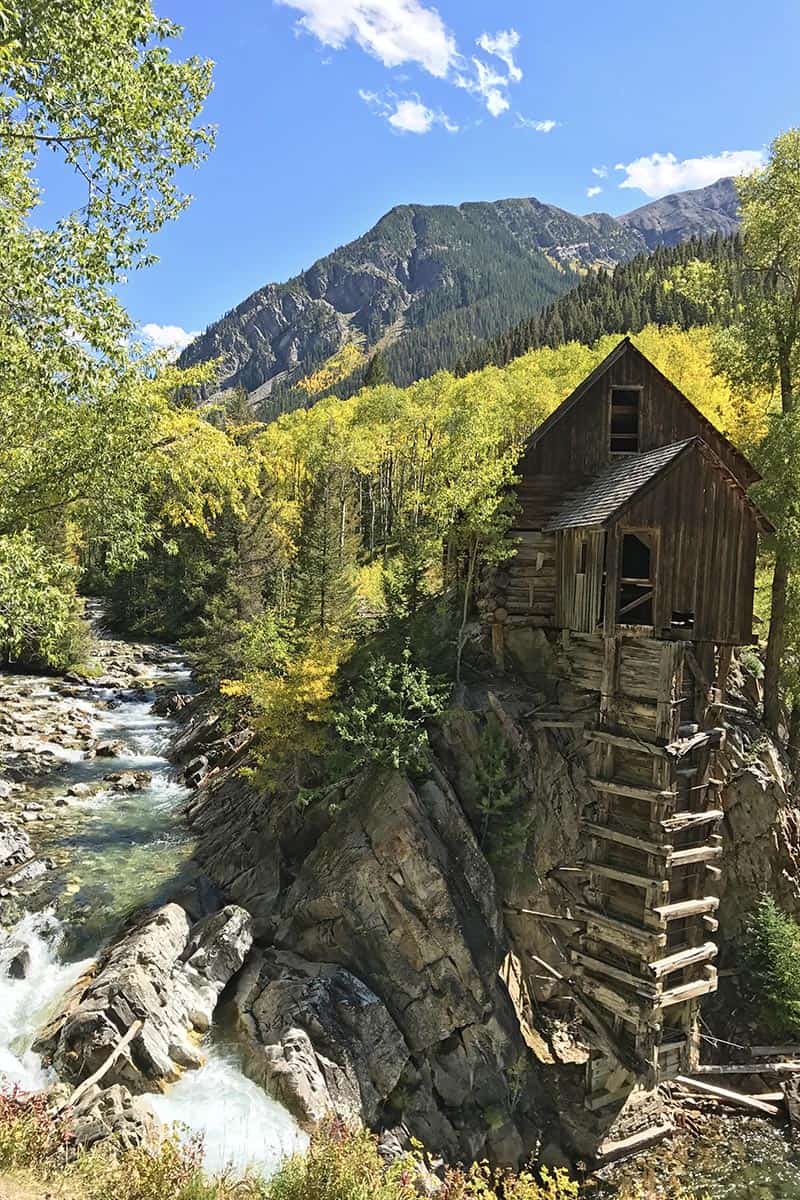
    Gioia’s Deli: 1934 Macklind Ave.; St. Louis, MO 63110.

    6. Fitz’s Root Beer

    Wanna eat a yummy meal and watch root beer and other flavored sodas on a vintage bottling line? Fitz’s Root Beer is one of the most fun places to eat in St. Louis.

    Fitz’s Root Beer started as a drive-in restaurant with root beer and hamburgers back in 1947. Then it went away for several years before it came back in 1993.

    Fitz's Root Beer bottles from Fitz's, one of many fun places to eat in St. Louis, full of delicious St. Louis foods

    You can enjoy your original recipe root beer in a frosty mug or straight from the bottle. They also serve other flavors, including diet root beer, cream soda, orange, pumpkin, peach, berry pomegranate, grape, strawberry, key lime, black cherry, and more.

    They even have their own Fitz’s Root Beer BBQ Sauce, and it is so good.

    After you’re finished eating, you may as well go out and explore the Delmar Loop, where you’ll find all sorts of fun quirky shops and restaurants.

    Fitz’s Root Beer: 6605 Delmar Boulevard; St. Louis, MO 63130.

    7. “Rajun Cajun” Bloody Mary

    Dan will tell you where to get the best Bloody Mary drink in all of St. Louis, and that would Norton’s Cajun Corner at Soulard Market. In fact, it was so good he went back for another one the next day.

    bloody Mary drink from Norton's Cajun Corner in Soulard Market when you can experience must try St. Louis foods

    I’m pretty sure it was the best Bloody Mary he’s ever had. Rimmed with their signature Norton’s Cajun Spice and topped with a stalk of celery, I know it looked amazing.

    Their menu options, including gumbo and jambalaya, looked and smelled delicious.

    Norton’s Cajun Corner: 730 Carroll St.; St. Louis, MO 63104.

    8. Thin Crust Pizza

    Anyone will tell you the place to eat pizza in St. Louis is Imo’s Pizza, where you can get another Saint Louis staple, thin crust pizza.

    Started by Ed and Margie Imo back in 1964, Imo’s offered both pick-up and delivery. The pizza chef they hired made the pizza with a thin crust and used Provel cheese instead of the typical mozzarella.

    Now Imo’s is a franchise and has 96+ stores.

    You’ll find Imo’s Pizza in locations all across the city, as well as in suburbs and locations outside the city.

    cinnamon sugar pretzel from Gus' Pretzel, favorite St. Louis foods to try

    St. Louis foods are not to be missed, whether you’ve lived there for 50 years or are just traveling through. Whether you’re in the mood for a full on dinner, a snack, dessert, or even just a drink, St. Louis restaurants have you covered.

    Happy eating!

    MORE ST. LOUIS, MISSOURI, TRAVEL ADVENTURES:

    What It’s Like to Visit the Arch in St. Louis, Missouri

    5 Reasons to Visit Soulard Market in St. Louis, Missouri

    12 Things to Do in St. Louis with Kids

    delicious must try St. Louis foods and the best places to eat in St. Louis

  • 5 Reasons to Visit Soulard Market in St. Louis, Missouri

    5 Reasons to Visit Soulard Market in St. Louis, Missouri

    CULINARY ADVENTURE AT SOULARD MARKET IN ST. LOUIS, MISSOURI

    5 reasons to visit Soulard Market, the historic St. Louis Farmer’s Market that began in 1779. Culinary travel adventure full of history and delicious food!

    5 reasons to visit Soulard Market in St. Louis, Missouri

    Soulard Farmer’s Market is a historic farmer’s market that’s been around since 1779. Yes, you read that right, since colonial days of old.

    And though it doesn’t make me colonial, I remember going there with my mom when I was a little girl. I also remember Mom would always try to save money by finding free parking on the street.

    Soulard holds kind of a special place in my memories because we went there a lot. Whether we were shopping for fresh produce or picking up auto parts nearby, the area brought back a lot of memories for me on a recent trip to St. Louis.

    Even though the market has changed and grown through the years, just walking into the market made me want to reminisce about the old days. Good food always has a way of doing that, doesn’t it?

    open air stalls at Soulard Market with fresh vegetables and fruits

    And so I give you 5 reasons you should visit Soulard Market on your next trip to St. Louis, Missouri.

    For this list, I’m going to do something a little different and count down; because even though they’re all very good reasons for visiting the market, #1 is my absolute favorite reason why you should get yourself to this historic St. Louis Farmer’s Market.

    Looking for more St. Louis family fun? You may also enjoy these St. Louis adventures: What It’s Like to Visit the Arch8 Delicious St. Louis Foods, and 12 Things to Do in St. Louis with Kids.

    breads and baked goods at Soulard Market

    5 REASONS EVERYONE SHOULD VISIT SOULARD MARKET

    #5. Buy Anything and Everything You Can Imagine

    While you’d think this reason would be #1, you’ll understand when you get there.

    buying fresh produce at Soulard Market in St. Louis

    Soulard Market offers both locally grown and shipped in goods. When I say locally grown, I mean produce that’s been grown in both Missouri and Illinois, since Illinois is literally right across the Mississippi River.

    You’ll find all sorts of good things, including meats, cheeses, farm fresh eggs, breads and other baked goods, pastas, fresh vegetables, fresh fruits, fresh flowers from Soulard Florist, all kinds of spices at Soulard Spice Shop, cheeses, jams, jellies, candy, popcorn, souvenirs, and so much more.

    carrots, cucumbers, and potatoes at Soulard Market, St. Louis Farmer's Market in Missouri

    I could likely spend most of my time and a LOT of our money at Soulard Spice Shop, where you’ll find spices, seasonings, and dressings of all kinds. It smells so amazing.

    Soulard Spice Shop at Soulard Market in St. Louis, Missouri

    My mouth is watering just thinking about it all.

    #4. The Historical Significance of Soulard Farmer’s Market

    Like I mentioned above, Soulard Farmer’s Market began in 1779 as a field where farmers would meet to sell their products, which included produce, dairy, and livestock.

    outside Soulard Market, historic farmer's market in St. Louis since 1779

    A 122-acre plot was gifted to Antoine Soulard by his father-in-law in 1795, and that plot included the farmer’s market. After a series of events, including the Louisiana Purchase of 1803, a legal battle, and Antoine’s death, Julia Soulard, his widow, acquired the deed to the land in 1836.

    Soulard Market Sign outside the St. Louis Farmer's Market

    Julia is the one who officially set aside two city blocks for the farmer’s market in 1841. Since then it has had 2 buildings, and the current building was built in 1929 in the Renaissance style of Italy.

    Renaiisance style building at Soulard Market in St. Louis, Missouri

    The first floor of said building has all the shops and is connected to the open-air farmer’s market. I had no idea, but the second floor has both a gymnasium and a theater.

    #3. That Soulard Atmosphere

    The atmosphere at Soulard Market is pretty relaxed, and the people are friendly. You’ll have about 147 stalls to browse.

    sunflowers from Soulard Florist at Soulard Market in St. Louis

    Take a walk or a scooter ride in the Soulard neighborhood, and you’ll find beautiful colonial architecture and brickwork, loads of restaurants and good places to eat, and beautiful churches.

    #2. The Bloody Mary Drink at Norton’s Cajun Corner

    Dan loves a good Bloody Mary drink. He usually always gets the non alcoholic version, just because neither one of us likes the taste of alcohol. (We don’t like coffee either. Haha!)

    Buying a Bloody Mary at Norton's Cajun Corner in Soulard Market

    The Bloody Mary at Norton’s must have been good because we went back the next day for a second one.

    I’m pretty sure it was the best Bloody Mary he’s ever had. I know it looked amazing.

    Bloody Mary drink at Soulard Market Farmer's Market in St. Louis, Missouri

    #1. Gooey Butter Cake at Soulard Bakery

    Now you understand why I had to save this one for #1.

    Seriously, the BEST gooey butter cake in likely all of St. Louis… I say likely because I only tried one other place, but I didn’t need to try anymore after getting this piece from Soulard Bakery inside the farmer’s market.

    Soulard Bakery at Soulard Market in St. Louis

    I almost want to say it was just as good as homemade, if not better. It was that good.

    It was just the right thickness, the right texture, the right sweetness, everything!

    gooey butter cake from Soulard Bakery in Soulard Market St. Louis Farmer's Market

    If you’ve never had gooey butter cake, it’s a St. Louis staple. I grew up enjoying my mom’s gooey butter cake, and now I make it for my kids.

    It’s the most delicious ooey gooey cake made with cream cheese and powdered sugar. You can make it homemade or even with a cake mix; it’s delicious either way.

    Here’s my recipe for semi-homemade gooey butter cake… You may also enjoy pumpkin spice gooey butter cake. You’ll thank me later.

    fresh peanuts for sale at Soulard Market in St. Louis

    THINGS TO KNOW BEFORE YOU HEAD TO SOULARD FARMER’S MARKET IN ST. LOUIS

    Soulard Farmer’s Market is located at 730 Carroll Street in St. Louis, Missouri. Parking is available both on the street and in a parking lot next to the market; both free and metered parking are available.

    fresh eggs for sale at Soulard Market, Soulard Farmer's Market in St. Louis

    There are a few things you should know before heading out to the market on your St. Louis travels.

    • Soulard Market hours are Wednesday through Saturday, year round. Hours are 8am to 5pm Wednesday thru Friday and 7am to 5:30pm on Saturday.
    • The Soulard Market website gives info on when are the best times to shop and which days have more vendors. Since we shopped during the week, there were not near as many vendors as there would be on a Saturday. Saturday farmer’s market for the win!

    handmade pasta at Soulard Market St. Louis

    • You can also find information on which seasonal foods will be available on the Soulard Market site.
    • Bring cash. Some vendors take cards, but many take cash only. An ATM is available on site.

    vegetable stall at Soulard Market, historic St. Louis Farmer's Market

    • While pets are not allowed, service animals are welcome.
    • The market is partially wheelchair accessible.
    • And as for restrooms, I am not sure. I didn’t see any while we were there, but that doesn’t mean there aren’t any.

    If you’ve never been to Soulard Market, the good news is you can go anytime year round. And you’ll definitely find the best gooey butter cake around at the market!

    MORE ST. LOUIS, MISSOURI, TRAVEL ADVENTURES:

    What It’s Like to Visit the Arch in St. Louis, Missouri

    8 Delicious St. Louis Foods and Where You Can Eat Them

    12 Things to Do in St. Louis with Kids

    5 reasons to visit Soulard Market in St. Louis, Missouri

  • What It’s Like to Visit the Arch in St. Louis, Missouri

    What It’s Like to Visit the Arch in St. Louis, Missouri

    EXPLORE THE ARCH IN ST. LOUIS, MISSOURI, WITH YOUR FAMILY

    Everything you need to know for your family’s visit to the Arch in St. Louis, Missouri. From the tram to the museum, parking, fun things to do, and more!

    Running fountain in front of the Old Courthouse and the Arch in St. Louis, Missouri

    The Arch has always held a fascination for me, ever since I was a little girl growing up near St. Louis, Missouri. I remember the day we finally got to go up in it and look out over the city of Saint Louis and the Mississippi River with Illinois beyond.

    I knew I wanted our boys to experience that same feeling of awe that I had as a little girl looking out over such a view. So we planned a trip to St. Louis, with the Gateway Arch as one of our focal places of interest while there.

    family picture at the Arch in Gateway Arch National Park

    It was definitely the highlight of our trip, not just because of the view but because of our entire experience. Gateway Arch National Park goes on my list of favorite places we’ve visited as a family.

    And even though it’s not the beach, it makes for one of many wonderful and unusual spring break destinations for families.

    Looking for more St. Louis family fun? You may also enjoy these St. Louis adventures: 5 Reasons to Visit Soulard Market8 Delicious St. Louis Foods, and 12 Things to Do in St. Louis with Kids.

    WHAT DOES THE GATEWAY ARCH REPRESENT?

    The Gateway Arch represents a gateway to the West. It’s a symbol of westward expansion in the 19th century and what that meant for our country.

    According to the National Park Service, “The park is a memorial to Thomas Jefferson’s role in opening the West, to the pioneers who helped shape its history, and to Dred Scott who sued for his freedom in the Old Courthouse.”

    trail to the Arch in St. Louis

    The national park consists of 90.96 acres, including both the Arch and the Old Courthouse, along with beautiful trails all around the Arch.

    WHEN WAS THE ST. LOUIS ARCH BUILT?

    The Arch’s design was created by architect Eero Saarinen, who entered his design in a competition in 1947-1948. His monument design won the competition.

    monument depicting the building of the St. Louis Arch in the Arch Museum

    The Arch was then built from 1963 to 1965. It cost less than $15 million to build it.

    HOW TALL IS THE ARCH?

    The Arch is 630 feet tall at its highest point. And fun fact: It actually sways when you’re up there.

    top of the Arch on the Observation Deck at 630 feet

    In fact, the Arch sways up to 1 inch in 20mph winds and is actually built to sway up to 18 inches. Can you imagine?!

    ends of the Arch in Gateway Arch National Park in Saint Louis

    The foundations of the Arch go 60 feet into the ground. The Arch itself is constructed of stainless steel.

    CAN YOU GO INSIDE THE ST. LOUIS ARCH?

    Yes, you can, and if you have the opportunity to actually take the tram ride to the top, I highly recommend it. It’s a once-in-a-lifetime opportunity.

    While there are exits at both ends of the Arch, the only entrance is up the sidewalk a ways from the ends.

    kids picture in front of the St Louis Arch in Gateway Arch National Park

    You’ll walk toward the grassy knoll that extends out from the Old Courthouse to find the entrance, where you can go in and purchase tickets, get more information, and head through security.

    After going through security, you’ll take a walk through the museum in order to get to the tram and the gift shop. You’ll have opportunity to explore the museum both before and after going to the top.

    covered wagon exhibit in the Gateway Arch Museum in St. Louis, Missouri

    The Arch Museum is filled with history, including stories of pioneers and westward expansion.

    One of the most memorable exhibits for me was about the St. Louis Fire of May 1849, that destroyed a great deal of St. Louis, including the Riverfront and many steamboats.

    The museum also houses artifacts like a stagecoach, a covered wagon, and an authentic life sized tipi.

    waiting in line to get to the top of the Arch in St. Louis

    WHAT TO EXPECT ON A ST. LOUIS ARCH TRAM RIDE TO THE TOP

    As you hop into line for either the North or South tram just outside the museum, you’ll have a bit of a wait to get to the top. The entire tour, including pre-boarding, can take about an hour, depending on how long you stay at the top.

    Be careful not to get in line any earlier than 5 minutes before your scheduled time, though.

    After scanning tickets, you’ll slowly move toward the entrance to the St. Louis Arch elevator, where you’ll meet your guide for your trip to the top. She’ll assign you a tram car number for your ride up.

    After watching a short movie about the years when the Arch was being built, they’ll snap a quick picture, which you can purchase when you come back down. Then you’ll walk down the stairs to the tram doors.

    St. Louis Arch tram car with 5 seats, St Louis Arch elevator pod

    Before you can enter your car, people coming down will empty out of it. Get ready to squeeze in because it’s a tight fit; each pod holds only 5 seats, perfect for our family of 5.

    The doors will seal, and up and away you’ll go. You’ll be able to see out the windows of your door all the way up. So you’ll be able to see down, as well as the stairwell that seemingly goes on and on forever; you’ll get a glimpse of the inner Arch, which includes a lot of concrete.
    Jacob mentioned he’d hate to be the maintenance guy that forgets a tool and has to walk all the way back down to get it. I’d have to agree with him.

    Observation Deck at the top of the Arch

    VIEW FROM THE TOP OF THE ARCH

    Once you’re at the top, you can stay as long as you like. There will be guides and even a park ranger or two.
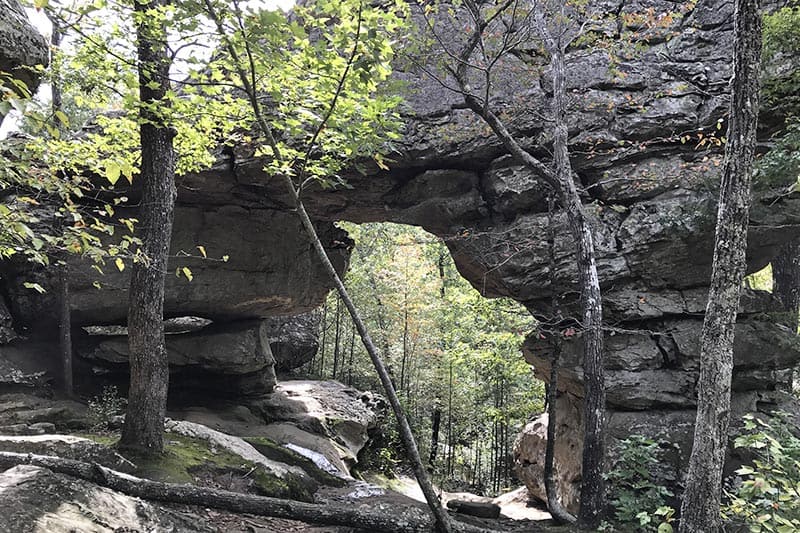
    view of the city of St. Louis from the top of the Arch
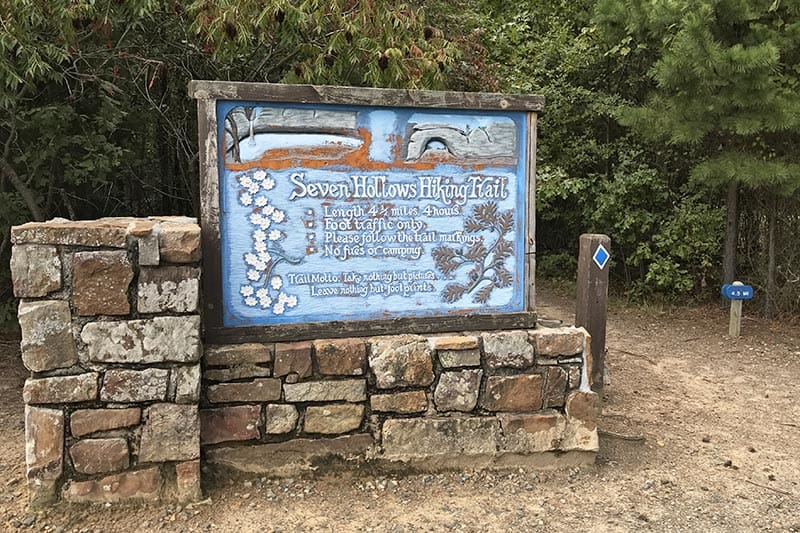
    Enjoy the view of the city on one side and the view of barges gliding by on the Mississippi River, bordering Illinois, on the other side. As a little girl, I remember being fascinated by the swimming pools on the roofs of hotels.

    If the sun’s out, you might capture a picture of the Arch’s shadow.

    view of the Mississippi River with an Arch shadow from the top of the Gateway Arch

    My boys really enjoyed being up there, even with the swaying we felt as we tried to walk down the center aisle. Zeke was just mesmerized by all of it, by the cars, the barges, the city, the riverfront.

    teen and toddler boys enjoying the view from the top of the Arch in St. Louis, Missouri

    I couldn’t help but be a little mesmerized myself. It’s easy to forget how small we really are as human beings.

    boy enjoying the view of St. Louis from the top of the Arch

    Warning: It can get quite crowded, and you’ll likely rub shoulders with other people perched on a ledge gazing out at the city. Also, as you make your way down to the tram, you’ll need to pack in super tight as you wait for the trams to empty so you can get back on and head back down to the bottom.

    The whole unforgettable experience is worth the wait time, worth the crowds, and worth being packed like sardines in a pod that feels like it’s going to the moon.

    below the St. Louis Arch in Gateway Arch National Park

    HAVE A LI’L FUN OUTSIDE THE ARCH TOO!

    I think we had just as much fun on the ground as we did going way up high. We took some time to walk up to the Old Courthouse.

    view of the Old Courthouse and the Arch in St. Louis, Missouri

    We also took time to get a few pictures and go for a scooter ride.

    Which brings me to the scooters in St. Louis… You’ll likely see them on just about every corner. They are so fun!

    I imagine locals probably get annoyed, but we had fun zooming up and down the tree-lined pathways all around the Arch.

    teen riding scooters in Gateway Arch National Park in St. Louis, Missouri

    And we weren’t the only ones. Many many visitors were enjoying this fun, unique way to explore the city.

    Disclosure: Technically, you’re supposed to be 18 and have a driver’s license to ride the scooters. Don’t judge. And don’t follow our example. (I know, I know, shame on us, since we all took turns on the one scooter we could find at the Arch… But man, it was fun.)

    Gateway Arch National Park with tree lined pathways and grassy knolls in St. Louis, Missouri

    WHERE IS THE GATEWAY ARCH?

    Gateway Arch National Park is located at 11 North 4th Street in St. Louis, Missouri, on the St. Louis Riverfront.

    You can enter via the riverfront, the Walnut Street Bridge near the Old Cathedral, or through Laclede’s Landing.

    They offer a Pedestrian Map to help you find your way.

    cathedral and Gateway Arch in Saint Louis, Missouri

    WHERE CAN YOU FIND GATEWAY ARCH PARKING?

    Finding St. Louis Arch parking is not for the faint of heart. Even though you’ll likely have to pay, there are plenty of places to park; you just have to find them.

    The Arch itself has no parking.

    walking through the arches of Eads Bridge to the Arch in St. Louis, Missouri

    While we parked in a parking garage just down the way from the Gateway Arch Grand Staircase on the other side of Eads Bridge, you can also pay for parking on the levee near the riverboat dock, just off South Leonor K. Sullivan Blvd.

    The parking garage cost us $7, and it was good for all day. We did have to walk maybe 1/4 mile, but it was a nice walk along the Mississippi River and underneath the beautiful arches of the Eads Bridge.

    Eads Bridge over the Mississippi River in St. Louis, Missouri

    Get Around St. Louis lists available parking facilities all around the city of St. Louis.

    HOW DO YOU GET ST. LOUIS ARCH TICKETS?

    Gateway Arch tickets can be purchased online, and they highly recommend reserving them in advance, especially if you’re visiting in peak season. We purchased them online the day of, but there were only 2 time slots available, so I’d probably recommend advance purchase, as well.

    view from beside the Arch in St. Louis in Gateway Arch National Park

    They also have combo tickets available, so you can do a ride to the top and a riverboat cruise; or you can watch the Documentary Movie. Just be sure you’re buying what you mean to buy before clicking.

    It’s relatively easy to buy tickets from your phone and have them sent to email. That way there’s no need to even print the tickets.

    St. Louis Arch prices range from $3 to $34.

    the St. Louis Arch on the Mississippi Riverfront at sunset

    KNOW BEFORE YOU GO TO THE ST. LOUIS ARCH

    There are a few things you need to know before heading to the Arch:

    • You will need to allow enough time to get through security. While our wait time was maybe 10 minutes, you may have a much longer wait during peak times.
    • While most facilities at Gateway Arch National Park are wheelchair accessible, there are a few that are not, including the tram ride to the top, the second and third decks of riverboats, and the upper floors at the Old Courthouse.
    entrance to the Arch in Gateway Arch National Park, St. Louis, Missouri
    • Service animals are permitted.
    • Strollers are allowed everywhere except the tram and the Observation Deck at the top. There is an area to park your stroller before heading up.
    • There are no seats and no restrooms at the top of the Arch.

    The St. Louis Arch is an unforgettable place and one we’re definitely adding to our list of favorite places.

    If you’ve never been, now is the time to go explore and check out all of the renovations that have been made, spend some time in the park, and maybe even reminisce about old times.

    MORE ST. LOUIS, MISSOURI, FAMILY TRAVEL ADVENTURES:

    5 Reasons to Visit Soulard Market in St. Louis, Missouri – a historic farmer’s market that began in 1779.

    8 Delicious St. Louis Foods and Where You Can Eat Them

    12 Things to Do in St. Louis with Kids

    What it's like to visit the Arch in St. Louis, Missouri
  • Kayaking the Current River from Akers Ferry to Pulltite

    Kayaking the Current River from Akers Ferry to Pulltite

    EXPLORE THE CURRENT RIVER FROM YOUR KAYAK

    Kayaking adventure on the Current River from Akers Ferry to Pulltite in Missouri. Plan a float trip with tips for Ozark National Scenic Riverways!

    kayaking on the Current River in Missouri

    Out of all the rivers in the Ozarks, the Current River is the most spring-fed of all of them. This makes it a great river for floating in Missouri, even during the hottest months of summer.

    The Upper Current River in my home state of Missouri, the Show Me State, is a popular river for kayaking, canoeing, rafting, and tubing. This 54-mile stretch from Montauk State Park to its junction with the Jacks Fork River east of Eminence, Missouri, is actually one of the more popular float trips in Missouri, meaning it can get especially crowded on weekends.

    You can float anywhere from a few hours to a few days on the Current River. Parts of the river move fast, and other parts move slow, requiring a bit more paddling than the Jacks Fork River.

    river kayaking on the Current River on Ozarks National Scenic Riverways in Missouri

    We planned yet another kayaking trip with my family and set out for a full day of fun, floating on Ozark National Scenic Riverways in Missouri.

    WHERE TO LAUNCH YOUR BOAT ON THE CURRENT RIVER

    There are several popular float trips you can take on the Current River, with several spots to launch your boat. This trip we decided to float from Akers Ferry to Pulltite Campground, so we launched at Akers Ferry.

    In order to launch your kayak at Akers Ferry, you’ll need to follow the signs to the launch spot, which is down a gravel road from the general store.

    launching kayaks on the banks of the Current River at Akers Ferry

    There’s a spot on the riverbank to unload your kayaks. Then you need to drive just a little bit further to a small parking lot where you can leave your vehicle for pickup later.

    If you’re launching on the weekend, you’ll likely be unloading with other groups of people, maybe even a bus full of floaters. The launch spot isn’t hard to miss.

    WHEN TO LAUNCH FOR A FLOAT TRIP FROM AKERS FERRY TO PULLTITE CAMPGROUND

    The Current River is very popular, so it can get really crowded on summer weekends, especially when it’s really hot. Not only that, but people like to float and drink at the same time.

    You throw drinking and inexperience into the mix, and you’ve got a recipe for “fun.”

    Most other nature lovers and those who crave solitude will tell you if you’re floating on the weekend, to launch either early in the morning or mid-afternoon. They’ll also tell you weekdays are the most peaceful time to float.

    peaceful float trip in Missouri on the Current River from Akers to Pulltite

    We launched mid-morning on a Saturday in mid-September; and although it was nearly fall, there were still quite a few people floating that day, including a large group of college students.

    Akers Ferry to Pulltite on the Current River is about a 5 hour float, so early in the morning is probably best, unless you’re floating when the days are longer in summer.

    WHAT TO EXPECT AS YOU FLOAT FROM AKERS TO PULLTITE ON THE CURRENT RIVER, MO

    When you get in the river at Akers Ferry, you may launch with a small group of people. You’ll paddle past the ferry and the campground, but soon you’ll be enjoying the wild expanse of the Ozark National Scenic Riverways.

    Akers Ferry on the Current River, MO

    Being spring-fed, the river is very cold, and the water is crystal clear, though it does get darker in some of the deeper spots.

    Floatable year-round, there are only a few shallow spots where you may have to give yourself a boost to keep going; but most of the time you’ll have no trouble at all. I don’t think I had to get out of my kayak once on this trip, besides during our little incident when I got out to help.

    There are places with ripples and small sets of rapids. The Current River is rated a Class I-II whitewater river. Most of the areas with ripples are pretty easy to paddle through, though we did have trouble in one spot, and I’ll get to that in a minute.

    kayaking through ripples on the Current River

    Just like kayaking the Jacks Fork River, there are places where trees stick out over the water or up from under the water. You’ll sometimes come upon sunken logs or boulders submerged in the water.

    While I almost felt the Jacks Fork River was more beautiful, scenery on the Current River has a beauty all its own, and it’s still a beautiful river to float in Missouri.

    kayakers kayaking past bluffs on the Current River from Akers Ferry to Pulltite Campground

    There aren’t quite as many bluffs as on the Jacks Fork, though there are still a few bluffs and quite a few caves, Cave Spring being one of them.

    There really isn’t any development along the river either, though you will see a privately owned cabin along the way. You’ll also likely see camping enthusiasts enjoying dispersed camping along the banks of the river.

    Missouri Canoe shares a Current River map, also giving a really helpful mile-by-mile description of the Current River and sights to watch for, places like Akers Ferry, Lewis Hollow, Cave Spring, and Rock House Cave.

    WHAT IS CAVE SPRING ON THE CURRENT RIVER LIKE?

    Cave Spring is a stop you’ll definitely want to make while floating the Current River.

    kayaking at Cave Spring on the Current River

    A little over 3 miles from Lewis Hollow, the spring will be on your left. You can’t miss it with the crowd of people who will likely already be there.

    the view from inside Cave Spring on the Current River in Missouri

    The cave is large enough to paddle your kayak into the entrance, but it doesn’t go back very far.

    According to Missouri Canoe, the water at the back of the cave “is 120 feet deep and comes from Devil’s Well via nearby Wallace Well Cave.”

    WHAT THE WATER’S LIKE ON THE CURRENT RIVER

    The water is clear and cold, shallow in spots, and deeper in others with a beautiful deep blue color.

    You can see to the bottom in many parts of the river. I watched schools of minnows swimming along through the water and actually wished we could do a little fishing.

    The current actually felt a bit stronger to me in some areas than Jacks Fork… Then in other areas, I felt like I had to paddle more because it slowed way down.

    kayaking into Cave Spring on the Current River

    Fed by springs, the water is really cold, so if you flip your kayak, be prepared for a cool down. Normally, you shouldn’t have a problem, but this brings me to my next point.

    IN WHICH WE HAD A LITTLE KAYAKING INCIDENT

    Closer to Pulltite, there’s a fork in the river where it can get a little sketchy.  Where the fork converges on the other end, there’s a tree with a tree root sticking out in the water.

    As I rounded the corner and started down a small set of ripples, the current getting stronger, I could see there was a canoe stuck on the tree up ahead.

    Jaden was in front of me in his kayak, but he was way ahead of me. He tried so hard to miss them, but ended up crashing into their canoe, which eventually set off a small pileup of people… Then I saw him flip and get sucked under their canoe.

    I couldn’t see him come up on the other side, so of course, I started to freak out just a bit, while at the same time trying to stay calm. A very nice man, an experienced kayaker (let’s just call him an angel) stopped to help, which was no easy feat in the current.

    In fact, quite a few people stopped to help. Jaden had come up on the other side and was clinging to the tree root; but he wasn’t the only one who had flipped, and stuff was floating down the river.

    boy kayaking the Current River from Akers Ferry to Pulltite Campground

    It was a scary moment, and Jaden was white as a sheet by the time he finally made it to shore. But all’s well that ends well, and I’m thankful for the ones who stopped to help.

    I’m also thankful he didn’t panic. In fact, besides the people in the canoe who were pretty much yelling and screaming, everyone remained pretty calm, for the most part.

    WILDLIFE TO WATCH FOR ON THE JACKS FORK RIVER

    Whether you’re a fisherman, an avid birdwatcher, or a nature lover, there are all sorts of animals, birds, and fish to watch for as you float this beautiful river in the Missouri Ozarks.

    • Bring your fishing pole (and license). The Current River is chock full of smallmouth bass. You may also be able to catch catfish, walleye, hog suckers, etc.
    • Mussels and crayfish
    • We did not see any snakes on this kayaking trip, but don’t you worry, there are 25 species of snakes, the most popular of which is the copperhead. While there aren’t quite as many trees to duck under on the Current, you still need to watch out because there may just be a snake sunning itself on a low lying branch. Eek! Also, watch where you put your hands if you float up close to the banks of the river… Again, snakes love to sun themselves on outcropping rocks and boulders.
    • Watch for amphibians like bullfrogs, grotto salamander, and the very rare Ozark Hellbender.
    • With 198 species of birds, the Current River is the perfect place to get out your binoculars and watch for new birds to add to your bird watching list.
    • You may see whitetailed deer and wild turkey.
    • We saw what looked like an otter; you may also see mink, beaver, and muskrat.
    • There are also a wide variety of insects and arachnids. You may even encounter a tarantula or scorpion.
    • And be on the lookout for bears, mountain lions, and cougars.

    The thing to remember with animals is that if you respect their space, they will pretty much leave you alone. Remember: YOU are the one invading THEIR space. Respect that and you’ll be fine.

    kayaking under trees on the beautiful Current River in Missouri

    WHERE TO GET OUT OF THE RIVER AT PULLTITE CAMPGROUND

    Pulltite isn’t hard to miss. It’s a larger area with a huge gravel bar where you can pull up your kayaks and load them up.

    We recommend parking one vehicle at Akers Ferry and one at Pulltite Campground. It’s about a 30 minute drive from one place to the other.

    There is at least one shuttle service that will shuttle your vehicle for you, but it costs around $50, so if you have the time, it’s probably worth planning your trip so you can shuttle yourselves back and forth more efficiently and affordably.

    WHAT IF I DON’T HAVE A KAYAK? ARE THERE OUTFITTERS FOR THE CURRENT RIVER?

    Yes, there are several outfitters that will set you up with what you need to float the river, including shuttle service. There are also several places to stay, including campgrounds and cabins.

    kayaking over ripples on the Current River in Ozark National Scenic Riverways

    You can usually rent canoes, kayaks, rafts, etc.

    Here is a listing of places that offer rentals:

    And if you don’t want to rent a kayak, there’s always the option to buy your own kayak, especially if you see yourself kayaking more than just one time. We do enough kayaking, especially on Beaver Lake, that it made sense for us to buy our own.

    WHAT TO PACK FOR KAYAKING THE UPPER CURRENT RIVER FROM AKERS TO PULLTITE

    Especially if you’re kayaking with kids, you’ll want to be sure to pack a few things for your paddle from Akers Ferry to Pulltite in Missouri.

    kayaking with a toddler on the Current River on Ozark National Scenic Riverways

    • Sunscreen – On a sunny day and even an overcast day, you’ll burn very quickly. My friend, Lynsey from Moscato Mom, has shared her experience with basal cell carcinoma and why it’s so important to guard yourself against skin cancer.
    • Life Jackets – Everyone needs a life jacket, but kids 7 and under have to wear one; it’s the law!

    Also, wear water shoes or sandals meant for being in the water, something comfortable for walking on rocks and pebbles. Dan loves his Body Glove water shoes, and I love my Teva sandals.

    SAFETY TIPS FOR KAYAKING THE CURRENT RIVER

    Be sure to check water levels and the weather forecast before floating or river kayaking. You want to make sure it’s safe and suitable for kayaking, especially if the area is experiencing drought or on the other hand, you’re floating after a heavy rainfall.

    The National Park Service provides a ton of helpful information, including river levels, places to explore, and a whole lot more.

    teen boy kayaking on the clear water of the Current River, one of the best float trips in Missouri

    Watch out for other people in canoes, kayaks, rafts, and tubes. Make sure to give yourself and the people around you enough room to maneuver your kayaks, especially through areas where the current gets stronger and the water’s swift.

    Especially on hot summer weekends, there are a lot of inexperienced floaters; it’s a great river to float for novice floaters. But when you couple inexperience with alcohol, it can be a little dicey.

    Learn how to best use your paddle to maneuver through areas of swifter water; the water can turn you around before you even know what’s happening. And you can get into tricky areas with crowds.

    In most areas, you’ll be just fine; but learning how to paddle yourself through these places and around other people can save you from experiencing any injuries or problems along the way.

    You will see trees, sunken logs, and boulders sticking up out of the water, and there may be trees sticking out over the water. Watch out for these things, warn others in your group, and do your best to paddle around them.

    With 25 species of snakes in the park, you’re very likely to see a few, especially on low lying branches of trees sticking out over the water or on the banks of the river. When paddling close to shore, do your best to keep yourself away from rocks and branches sticking out; snakes love to sun themselves, and we’ve actually had a few close calls.

    A FEW RULES FOR KAYAKING ON OZARK NATIONAL SCENIC RIVERWAYS

    Glass containers are and styrofoam coolers are prohibited on rivers, trails, in caves, and within 50 feet of the river.

    Speaking of caves, all caves in the Ozark National Scenic Riverways are closed, except Round Spring. Do not go into the caves. It’s also prohibited to wade or swim in any of the springs.

    Per a Park Service representative, however, it is permissible to float into Cave Spring and then exit back out, since it is not a through cave.

    kayaking past bluffs on the Current River in Missouri

    You’ll likely see people swinging on rope swings… Don’t do it. It’s illegal to do so.

    Check with the park for more laws and policies.

    LEAVE NO TRACE

    Finally, leave no trace. Pack out what you pack in. The more you practice this, the safer and more enjoyable kayaking will be for everyone, including paddlers who come after you.

    If you’re considering kayaking in Missouri, the Current River from Akers to Pulltite is a wonderful place to explore. It’s a great place, even for kayaking beginners to get your bearings, with the opportunity to learn how to maneuver your kayak through obstacles here and there.

    And it’s an opportunity to create some beautiful memories with your family… Memories you’ll likely cherish for many years to come.

    Missouri float trips on the Current River, from Akers Ferry to Pulltite Campground

    float trips in Missouri on the Current River, Akers to Pulltite
    river kayaking on the Current River in Missouri from Akers Ferry to Pulltite on Ozark National Scenic Riverways
  • Jacks Fork Float Trips – Alley Spring to Eminence

    Jacks Fork Float Trips – Alley Spring to Eminence

    Of all the Jacks Fork float trips, the Alley Spring to Eminence float is one of my favorites. Where and when to embark and tips for Ozark National Scenic Riverways, along with a video of this amazing float.

    This Eminence, MO float trip is an incredible way to explore the Jacks Fork River from your kayak. You’ve never experienced a kayaking adventure quite like Jacks Fork kayaking.

    kayaking on Jacks Fork float trips, on the Alley Spring to Eminence float, looking up at a bluff side cave

    A tributary of the Current River, the Jacks Fork River is a beautiful place for a float trip in Missouri. Shallow spots, deep spots with blue green water, bluffs, and caves all along the way provide an escape for nature lovers.

    Like our favorite spot on Beaver Lake in Arkansas, the Jacks Fork proved to be yet another mesmerizing place to kayak, this time in my home state of Missouri, the Show Me State.

    We planned a kayaking trip with both of my sisters, and off we went for an afternoon full of fun, kayaking the Alley Springs to Eminence float. I don’t think I’d laughed that much in a really long time.

    Jacks Fork River kayaking next to a bluff, from Alley Spring to Eminence, MO

    If you decide to float the river, I highly recommending gathering a small group of family and friends and experience it together. You’ll create a lifetime of memories in just one afternoon of fun.

    If you love Jacks Fork River kayaking, you may also love kayaking the Current River.

    Table of Contents

    Where to Launch Your Boat at Alley Spring

    There are a couple of spots that are open to boat launch; however, closure of the pedestrian bridge has also closed the river underneath the bridge. Noone is allowed to float underneath the bridge.

    kayaks getting ready to launch on the banks of the Jacks Fork River at the Burr Oak day use area at Alley Spring

    In order to launch your kayak, you’ll need to drive to the Burr Oak day use area just downstream from the bridge, where you can drive out on the gravel, unload, then go park.

    How Long is the Float from Alley Spring to Eminence?

    The float from Alley Spring to Eminence is about 7 miles long, with about a 4 hour float time duration.

    This stretch of the Jacks Fork River has a reputation as party central. Not to burst your nature loving bubble, though, because none of us that went on this float trip enjoy the party scene.

    We do, however, love experiencing the quiet solitude of nature, and we hardly saw any party floaters ’til we got more toward the end of our float, closer to Eminence, MO.

    Most other nature lovers and those who crave solitude will tell you if you’re floating on the weekend, to launch either early in the morning or mid-afternoon. They’ll also tell you weekdays are best.

    family kayaking the Jacks Fork River from Alley Spring to Eminence, Missouri

    We launched mid-afternoon on a Saturday, fearing that we’d be too late, but it turned out to the best time we could have floated.

    If we’d launched just a few hours earlier, we would have been caught up in a HUGE band of noise makers and since I’ll try to be nice here, those who do not appreciate nature but would rather party it up.

    Rule of thumb: Early morning or after 2pm, and you’ll be fine. Mid-afternoon will usually leave plenty of time before it gets dark, at least in the summertime.

    family resting on the banks of the Jacks Fork River in Missouri

    What to Expect on This Float

    When you get in the river at Alley Spring, the water will be quite shallow, and there are usually quite a few people enjoying the day use area. Paddle just around the bend, and you’ll likely find yourself alone on the river.

    The river is spring-fed, so the Lower Jacks Fork is usually floatable year round. There were a few places where we had to push ourselves over the rocks, but I think I only had to get out of my kayak one time and that’s because I chose to go around the rapids (or maybe I should call them ripples).

    paddling through small rapids on the Jacks Fork River, Eminence, MO float trip

    Speaking of rapids, the Jacks Fork River is rated a Class I-II whitewater river. Most of the areas with rapids are fairly easy to maneuver through with your paddle.

    There are a few areas where trees stick out over the water, or they stick up from under the water. You may need to duck down as you paddle through.

    float the Jacks Fork River, one of the most popular float trips in Missouri

    Scenery on the Jacks Fork River is just amazing. It’s one of the most beautiful places we’ve kayaked so far.

    Numerous bluffs and rock formations give plenty of opportunities for photos. You’ll also see a cave or two; at one point, we rounded a corner, looked up, and saw what appeared to be some sort of cavern or cave high up on the bluff overlooking the river.

    Jacks Fork kayaking below bluff cavern overlooking Jacks Fork River, part of the Ozark National Scenic Riverways

    You’ll Come to a Fork in the River

    At one point about halfway through your float, you’ll see a small sign that points you left for the national park… While you may be tempted not to go that way because it looks tricky (and it is a little tricky), go left anyway.

    Paddle, paddle, paddle, as you round the corner on a small set of rapids and keep following the river.

    kayaks navigating fork in the Jacks Fork River

    There are not many meadows along the banks, but toward the end of the float, you’ll see a few, along with a couple of homes and farms. Speaking of homes, there really is no development until you get closer to Eminence.

    Missouri Canoe shares a Jacks Fork River map, also giving a good mile-by-mile description of the Jacks Fork River and sights to watch for, places like Horse Hollow and Mahan’s Creek.

    kayaking with a toddler on the Jacks Fork River in Missouri

    What the Water’s Like

    Being a spring-fed river, the Jacks Fork River is crystal clear and cool. Especially below Alley Spring, the temperature of the water is colder.

    Parts of the river are deeper with that deep blue green color of deeper water. On shallower parts of the river and even some deeper parts, you can see clear to the bottom.

    kayaking past a bluff on the Jacks Fork River

    You can watch schools of fish swim by and look for unique rocks and pebbles.

    People You’ll Meet on Jacks Fork Float Trips

    You’ll meet some interesting people along the way, and even if you’re craving solitude, it’s always interesting to meet others with a similar intention of getting out and exploring nature.

    On our trip, there were a few guys floating with trash receptacles, for the sole purpose of keeping the waterway clean. There were extended families who do weekly or monthly float trips on Ozark rivers, enjoying quality time together.

    kayaking the Jacks Fork River with my sister

    You’ll likely see camping enthusiasts enjoying dispersed camping along the banks of the river.

    Then, of course, toward the end, there are the partygoers whose sole purpose is floating on a tube and having a beer (ok, a few beers), loud music and all. When you really get to the end, you’ll likely see some silly stuff.

    Wildlife to Watch for on the Jacks Fork River

    Whether you’re a fisherman, an avid birdwatcher, or a nature lover, there are all sorts of animals, birds, and fish to watch for as you float this beautiful part of the Missouri Ozarks.

    • Bring your fishing pole (and license). There are 67 species of fish on the Jacks Fork River, including chain pickerel, smallmouth bass, largemouth bass, shadow bass, and warmouth.
    • Mussels and crayfish
    floating the Jacks Fork River, Missouri
    • Oh the snakes you will see. Ducking under a tree branch? Watch out because there may just be a snake sunning itself on that low lying branch. Eek! Also, watch where you put your hands if you float up close to the banks of the river… Again, snakes love to sun themselves on outcropping rocks and boulders.
    • With 198 species of birds, the Jacks Fork River is the perfect place to get out your binoculars and watch for new birds to add to your bird watching list. One of the most memorable birds we saw were what we believe were kingfishers.
    • You may see whitetailed deer and wild turkey.
    • There are also a wide variety of insects and arachnids. You may even encounter a tarantula or scorpion.
    floating the crystal clear water on the Jacks Fork River

    The thing to remember with animals is that if you respect their space, they will pretty much leave you alone. Remember: YOU are the one invading THEIR space. Respect that and you’ll be fine.

    Where to Get out of the River in Eminence, Missouri

    We recommend parking one vehicle at Alley Spring and the other vehicle at Lions Ball Park in Eminence. You’ll take out on your right, about a quarter mile below the Highway 19 bridge.

    river kayaking on the Jacks Fork River

    What If I Don’t Have a Kayak? Are There Outfitters Nearby?

    Yes, there are several outfitters that will set you up with what you need to float the river, including shuttle service. There are also several places to stay, including campgrounds and cabins.

    Here is a listing of places that offer rentals:

    Missouri float trip on the Jacks Fork River from Alley Springs to Eminence float

    What to Pack for Kayaking the Lower Jacks Fork River from Alley Spring to Eminence

    Especially if you’re kayaking with kids, you’ll want to be sure to pack a few things for your paddle from Alley Spring to Eminence, Missouri.

    Here are a few of the recommended items to pack along with you…

    river kayaking on Jacks Fork River Missouri float trip

    Also, wear water shoes or sandals meant for being in the water, something comfortable for walking on rocks and pebbles. Dan loves his Body Glove water shoes, and I love my Teva sandals.

    Safety Tips for Jacks Fork River Kayaking

    Check water levels and the weather forecast before floating or river kayaking. You want to make sure it’s safe and suitable for floating, especially if the area is experiencing drought or on the other hand, you’re floating after a heavy rainfall.

    The National Park Service provides a ton of helpful information, including river levels, places to explore, and a whole lot more.

    Watch out for other kayakers, tubes, and rafts. Make sure to give yourself and the people around you enough room to maneuver your kayaks, especially through areas where the water gets swift.

    boulder sticking up out of the water on the Lower Jacks Fork River in Missouri

    Trees can stick out over the water, and you’ll float past trees and sunken logs sticking up out of the water. You may also come across huge boulders just under the water. Watch out for these things and do your best to paddle around them.

    You’re very likely to see snakes, especially on low lying branches of trees sticking out over the water. When paddling close to shore, do your best to keep yourself away from the rocks and branches sticking out; snakes love to sun themselves, and we’ve had a few close calls.

    Learn how to best use your paddle to maneuver through areas of swifter water. There was one really tricky part of the river where one of us ended up turned around backwards, then finally got turned around and ran smack into the bank of the river; the water can turn you around before you even know what’s happening.

    In most areas, you’ll be just fine; but learning how to paddle yourself through these places can save you from experiencing any injuries or problems along the way.

    kayaking the clear waters of the Jacks Fork River

    Glass containers and styrofoam coolers are prohibited on rivers, trails, in caves, and within 50 feet of the river.

    Speaking of caves, all caves in the Ozark National Scenic Riverways are closed, except Round Spring and Devils Well. Do not go into the caves.

    Leave No Trace

    Finally, leave no trace. Pack out what you pack in. The more you practice this, the safer and more enjoyable kayaking will be for everyone, including paddlers who come after you.

    If you’re considering a vacation kayaking in Missouri, the Jacks Fork River from Alley Spring to Eminence is a wonderful place to explore. It’s a great place, even for kayaking beginners to get your bearings, with the opportunity to learn how to maneuver your kayak through obstacles here and there.

    Not to mention, it’s an opportunity to explore one of rural Missouri’s more beautiful hidden gems.

    Video from Our Float

    Have you floated from Alley Spring to Eminence? Let me know what you thought of it in the comments. You can also follow me on Pinterest, Facebook, Instagram, and YouTube. And subscribe to my email list too!

  • Hiking Santa Elena Canyon in Big Bend National Park

    Hiking Santa Elena Canyon in Big Bend National Park

    Explore Santa Elena Canyon Trail and the Rio Grande River

    Cross Terlingua Creek and hike up through beautiful Santa Elena Canyon and along the Rio Grande River, with stunning views of Big Bend National Park!

    mouth of Santa Elena Canyon with the Rio Grande River in Big Bend National Park in Texas

    Before we ever left for Big Bend in Texas, I knew I wanted us to hike Santa Elena Canyon Trail, a 1.7 mile roundtrip river hike on the western side of the park. Just from everything I’d read and seen, it looked to be a really beautiful area.

    And wow, did it ever live up to its reputation. It was an absolutely beautiful hike, one I’ll remember the rest of my life, much like our experience camping in Big Bend National Park.

    dad with toddler in hiking carrier enjoying a view of Big Bend from Santa Elena Canyon Trail

    While it was late May and really quite hot, it was still a gorgeous hike. Starting out on the banks of the Rio Grande River, looking over into Mexico and up through the canyon, we were in awe of this magnificent place.

    Big Bend is a force of nature to be reckoned with. It is so worth every road trip I inevitably see in our future to the far reaches of West Texas.

    HOW TO GET TO SANTA ELENA CANYON IN BIG BEND NATIONAL PARK

    There are two ways you can get to Santa Elena Canyon Trail:

    • Ross Maxwell Scenic Drive from the eastern side of the park
    • and Old Maverick Road from the western side of the park

    If you’re coming from over Panther Junction way and over toward Boquillas, you can drive Ross Maxwell Scenic Drive, taking in the sights as you go.

    Along the way, you may want to stop and explore the history of places like Sam Nail Ranch, Homer Wilson Ranch, and Castolon Historic Compound. Enjoy the view at Sotol Vista, Mule Ears Overlook, Tuff Canyon, and Santa Elena Canyon Overlook, which is just before the entrance to the trail.

    Santa Elena Canyon Trail trailhead in Big Bend

    If you’re coming by way of Terlingua, you can drive Old Maverick Road, a 14 mile “improved” dirt road with views of the Terlingua Creek badlands. The road is usually passable for any vehicle, but keep in mind it can flood after storms; it’s also a very rough, slow going road with a lot of washboard spots that rattled us up pretty good.

    THE EVER FORMIDABLE SANTA ELENA CANYON

    The Rio Grande makes its way through Santa Elena Canyon, and they say the best way to see the canyon is by floating the river. Sheer limestone walls tower 1500 feet above the river on both sides.

    the Rio Grande flowing through Santa Elena Canyon

    About a mile below the entrance to the canyon, located in Lajitas, is an area known as the Labyrinth, a rock slide that creates a pretty formidable hazard for those who float the river. Moving on past the rockslide, the canyon becomes more narrow, in some places as narrow as 25 feet across.

    While it widens up the closer you get to the mouth of the canyon, located near Castolon, it definitely provides an unforgettable experience to those who choose to float this beautiful area of the Rio Grande.

    hiking with kids along the Rio Grande through Santa Elena Canyon

    According to the Texas State Historical Association, these features of Santa Elena Canyon made it a thorn in the side of early explorers. Most were so afraid of the repercussions they might face from actually going through the canyon, they chose to detour around it instead, extending the length of their expeditions.

    Until October 1899, when Robert T. Hill took on a “scientific exploration of the canyon.” Then in 1937, historian Walter Prescott Webb took a well-known trip through Santa Elena Canyon; he was a part of the work to establish Big Bend as a National Park, and what better way to help that cause along than to show off the magnificent beauty of this formidable force of nature.

    walls of Santa Elena Canyon rising up above the Rio Grande River in West Texas

    By the way, Big Bend National Park opened up in 1944. I think it’s safe to say Mr. Webb’s work paid off.

    WHAT IT’S LIKE HIKING SANTA ELENA CANYON TRAIL

    Entering Santa Elena Canyon Trail requires hiking in toward the river at first. You can walk right up to the Rio Grande.

    The riverbank is actually the perfect spot to stop and grab a photo that captures the magnitude of the sheer walls that climb up and up into the sky.

    cactus growing on the sides of Santa Elena Canyon in Big Bend National Park

    Of course, if it’s been raining, Terlingua Creek may be up, so you may have to wade across… Unless it’s been raining a lot and the creek is up, and then it may be too dangerous to do so. While we were there, the creek was a mere trickle into the Rio Grande, so we easily stepped right over.

    hike with kids on Santa Elena Trail in Big Bend in Texas

    Walk up through a bit of vegetation, and you’ll begin a climb up the canyon walls via paved steps, small switchbacks, and a winding bluff side trail.

    hiking with kids up through Santa Elena Canyon Trail

    You’ll climb 160 feet above the Rio Grande River, giving you spectacular views of Big Bend National Park, the Rio Grande, and the narrow gorge.

    view of Big Bend National Park, the Rio Grande River, and Mexico, from on top of Santa Elena Canyon Trail

    As you descend back down to the river, you’ll pass through a very sandy area with bushes and other vegetation, along with huge boulders. Eventually, you’ll come to the end where the trail meets the river. This is where the river moves freely on through the gorge, as you stop to take in the scenery.

    end of Santa Elena Canyon Trail

    Look up and you might get a little dizzy with the sheer magnitude of those limestone walls seemingly reaching to the heavens.

    WILDLIFE YOU MAY ENCOUNTER WHILE HIKING IN BIG BEND NATIONAL PARK

    There is a LOT of amazing wildlife to be found in Big Bend. In fact, according to the National Park Service, “wide-ranging ecosystems within the Big Bend provide habitat for more than 450 species of birds, 75 species of mammals, 56 species of reptiles, and 11 species of amphibians.”

    hiking in Santa Elena Canyon with kids

    Big Bend is a bird watcher’s paradise, and little did I know that there are bears in the park. We actually had the opportunity to see both javelinas and jackrabbits up close; and of course, we also saw a scorpion one night.

    While hiking Santa Elena Canyon, you may encounter the following animals and reptiles:

    • Ringtails
    • Rock squirrels
    • Coachwhip
    • Diamondback rattlesnake
    • Rock and black-tailed rattlesnakes
    • Mountain patchnose snakes
    • Trans-pecos copperheads


    • Bullsnake
    • Tree lizards
    • Southwestern earless lizard
    • Southern prairie lizard
    • Crevice spiny lizard
    • Checkered whiptail
    • and more!

    With the closeness of the Rio Grande, you may also see waterfowl, fish, turtles, beavers, and any number of amphibians.

    riverbank and vegetation along Santa Elena Canyon Trail in Big Bend

    WHAT TO PACK FOR HIKING INTO SANTA ELENA CANYON

    Especially if you’re hiking with kids, you’ll want to pack a few things for your trip into the canyon.

    • Water – Pack plenty of water for everyone because this can be a very hot hike. There really is not a lot of shade, if any, and there are no places to refill along the trail, so pack plenty of water for everyone to stay well hydrated.
    • Sunscreen – The sun will beat down on you, reflecting off both the river and those sheer limestone walls. Protect yourself and your family. If you need a reason why it’s important to protect yourself, read about my friend Lynsey’s experience with basal cell carcinoma.

    boy hiking in Santa Elena Canyon in West Texas

    • Hiking Carrier – This is hands down the BEST thing we could have ever gotten for our baby/now toddler. We’ve used it so many times. Read our review of our favorite baby carrier backpack.
    • Shoes – While you’ll be wearing these and not necessarily packing them, I still think it’s worth mentioning wearing the proper footwear for this hike.

    SAFETY TIPS AND THINGS TO KNOW BEFORE HIKING IN SANTA ELENA CANYON

    Santa Elena Canyon Trail is about 1.7 miles roundtrip. While it’s not a long hike, per sé, it’s still a moderate hike and hiking in Big Bend National Park can be dangerous due to the extreme heat.

    While there are bathrooms at the trail head, there are no bathrooms and no water along the trail. Again, pack plenty of water to carry along, so everyone will stay well hydrated.

    hiking Santa Elena Canyon in Big Bend National Park

    It’s very hot in Big Bend, so you may want to consider hiking this trail in early morning or evening. We hiked it mid-morning, and we all got a little too hot.

    Watch your step and wear good shoes. Watch for insects and snakes, but also watch your step as you climb the steps and pass through several small switchbacks.

    It’s always a good idea to let someone know when and where you are going.

    If you’re making the hike with kids, watch your kids closely because there are very steep and sheer drop offs, not to mention the river, on this trail. Keep little ones closer, maybe even using a hiking carrier like the one we mentioned above.

    hiking along the Rio Grande in Santa Elena Canyon in Big Bend

    The weather at Big Bend National Park can change on a dime; if the weather looks stormy, maybe postpone your hike until later. Thunderstorms can be extremely dangerous in the desert, and if Terlingua Creek is really flowing, it may be too dangerous to cross.

    Finally, leave no trace. Pack out what you pack in. The more you practice this, the safer and more enjoyable hiking will be for everyone, including hikers who come after you.

    Hiking Santa Elena Canyon is definitely one of our most memorable adventures from Big Bend National Park. While it was extremely hot and the climb up the steps of that canyon wall were quite steep, the views were amazing and worth every step we took. I’d recommend this hike to anyone planning a visit to Big Bend National Park.

    MORE BIG BEND ADVENTURES YOU MAY ENJOY:

    Backcountry Camping in Big Bend National Park

    Boquillas – Crossing the Rio Grande River to Mexico

    Santa Elena Canyon in Big Bend National Park

    Hiking Santa Elena Canyon in Big Bend, Texas
  • Kayaking Beaver Lake at Scenic Van Winkle Hollow

    Kayaking Beaver Lake at Scenic Van Winkle Hollow

    EXPLORE VAN WINKLE HOLLOW FROM YOUR KAYAK ON BEAVER LAKE

    One of our favorite kayaking spots in Arkansas is Van Winkle Hollow in Hobbs State Park on Beaver Lake. Much like the Jacks Fork River and the Current River in Missouri, it’s a beautiful paddle with numerous caves, lakeside bluffs, and scenic views!

    kayakers in a cove in Hobbs State Park on Beaver Lake

    The water is warm, so it’s also a great place to shore your kayak and take a dip in the lake. With about 60 miles of shoreline on Beaver Lake, Hobbs State Park is a great place to get away from it all.

    WHERE TO LAUNCH YOUR BOAT IN VAN WINKLE HOLLOW

    Though there are a few spots to launch your boat, including Rocky Branch Park, our favorite place to launch is at the end of Van Hollow Road. It’s a gravel road off Highway 303.

    launching kayaks off Van Hollow Road on Beaver Lake in Northwest Arkansas

    You’ll drive all the way to the end of the gravel road, and there’s plenty of room to park, unload, and gear up. During more rainy seasons, it can be quite muddy, so I suggest launching from the left where there’s a bit of a gravel bar for easier footing.

    Be sure to park your car along the side where it’s out of the way so bigger vehicles with boats will be able to turn around if needed.

    WHAT TO EXPECT AS YOU PADDLE THIS AREA OF BEAVER LAKE

    You can expect to paddle at least a couple of miles exploring this area of the lake. In fact, you may want to launch from different areas on different trips, so you can see even more.

    kayaking with kids on Beaver Lake in Arkansas

    Launching from Van Hollow Road, you can kayak to your right a short ways to where a creek or spring flows into the lake. The water is shallow, so you’ll likely feel your paddle hitting sunken logs and sometimes even the ground.

    Paddling back down the arm, you’ll find a tiny cove lined with bluffs that lends to a quiet fishing hole away from boats who wander up this arm of the lake, some of them pulling tubes, boards, and skis.

    For the most part, this area of the lake is really quiet and peaceful. There’s no development, so really the only noise you’ll hear is the sound of the occasional boat coming up the arm; but duck into a quiet cove, and you’re in for a peaceful paddle.

    kayaking on Beaver Lake in Hobbs State Park

    Watch out for trees sticking up out of the water as you paddle your way over toward Pigeon Roost Trail, where you’ll find a quiet cove filled with numerous lakeside and bluff side caves.

    WHAT THE WATER’S LIKE ON THE VAN WINKLE ARM

    Depending on the time of day you decide to kayak, the water may be as smooth as glass, or it may be a gorgeous blue green color, reminding you of a tropical cove.

    kids swimming with their dad in Beaver Lake in Northwest Arkansas

    It’s warm too, so it’s a beautiful place to find shore and take a swim. Personally, I love just floating on my back looking up at the blue of the sky… It reminds me of our trip to Captiva Island just a few years back.

    In my opinion, this area of Northwest Arkansas has some of the best kayaking in Arkansas.

    EXPLORING ARKANSAS CAVES ON BEAVER LAKE

    Paddling back toward Pigeon Roost Trail leads to a quiet cove where you’ll encounter the occasional hiker, swimmer, or fisherman.

    kayaker exploring maple trees in Hobbs State Park

    As you come to a fork in the lake, you can paddle to your left and land near a grove of beautiful maple trees.

    Or you can paddle to your right and come to a group of caves, two of which are lakeside, so you can feel the chill of the air coming out of the caves. Look up on the bluffs, and you’ll see more caves hidden behind trees and bushes that seemingly grow right out of the rocks.

    exploring Arkansas caves from a kayak on Beaver Lake in Hobbs State Park

    If you have your fishing license, this is a great place to stay awhile and see if you can’t catch a few. Depending where you are on Beaver Lake, you may catch trout, bass, crappie, bluegill, or catfish.

    WILDLIFE TO WATCH FOR ON BEAVER LAKE

    From the moment you get out of your car, you’ll encounter a whole ecosphere of wildlife.

    beautiful cove on Beaver Lake

    • Geese like to swim around the area near Van Hollow Road.
    • Beaver Lake is also a renowned place for eagle watching, especially during the months of November through February.
    • If you’re into bird watching, this is the perfect place to get out your binoculars and watch for new birds to add to your checklist of sightings.
    • Hobbs State Park is full of whitetail deer, wild turkey, beaver, and more. We’ve seen deer with their fawns while paddling; we’ve also seen loads of snakes (shiver).
    • Snakes are abundant near any type of water source, and Beaver Lake is no exception. Watch out for water moccasins, copperheads, and more.

    The thing to remember with animals is that if you respect their space, they will pretty much leave you alone. Remember: YOU are the one invading THEIR space. Respect that and you’ll be fine.

    boys paddling in a cove on Beaver Lake

    WHAT TO PACK FOR KAYAKING THE VAN WINKLE ARM OF BEAVER LAKE

    Especially if you’re kayaking with kids, you’ll want to be sure to pack a few things for your paddle around Van Winkle Hollow.

    • Sunscreen – The water is clear and very reflective on this part of the lake. You’ll burn very quickly. My friend, Lynsey from Moscato Mom, has shared her experience with basal cell carcinoma and why it’s so important to guard yourself against skin cancer.
    • Life Jackets – Everyone needs a life jacket, but kids 12 and under have to wear one; it’s the law!

    paddling kayak through boulders sticking up out of Beaver Lake

    SAFETY TIPS FOR KAYAKING THIS AREA OF HOBBS STATE PARK

    Make sure you have plenty of room before crossing the wider parts of the arm, and be ready to ride a few waves as boats pass you by. Don’t assume that boats can see you; always be observant and exercise caution.

    Waves can be quite large sometimes and can almost feel like they’re going to throw you into the bluff if you’re near the bluff lined parts of the shoreline. Make sure to give yourself and the people around you enough room to maneuver your kayaks.

    smooth glass waters of Beaver Lake in Arkansas

    When the lake is down, and even when it’s up, trees can stick up out of the water. Be sure to watch for trees and sunken logs sticking up out of the water.

    Again, you’re very likely to see snakes. When paddling close to shore, maybe keep your hands away from the rocks and branches sticking out; snakes love to sun themselves, and we’ve had a few close calls.

    Finally, leave no trace. Pack out what you pack in. The more you practice this, the safer and more enjoyable kayaking will be for everyone, including paddlers who come after you.

    kayaking beside bluffs near Pigeon Roost Trail on Beaver Lake

    If you’re considering kayaking in Arkansas, the Van Winkle arm of Beaver Lake is a wonderful place to explore. It’s a great place, especially for kayaking beginners to get your bearings, with not too many boats and the opportunity to learn how to maneuver your kayak through obstacles here and there.

    And it’s just plain beautiful… What more could you ask for?

    Kayaking Beaver Lake at Scenic Van Winkle Hollow

    kayaking with kids on Beaver Lake in Northwest Arkansas, the Van Winkle arm of Hobbs State Park