Category: Condiments

  • How to Make Salted Butter from Raw Milk

    How to Make Salted Butter from Raw Milk

    Learn how to make salted butter from raw milk or store bought cream. You only need 2 ingredients to make this easy homemade butter recipe, and you can make it with a mixer, blender, or churn. Fresh butter never tasted so good!

    When we started milking our A2 Jersey cows, we knew we wanted to regularly make 2 things… Ice cream and butter. Learning how to make butter from raw milk was the #1 thing on our to do list when we started milking.
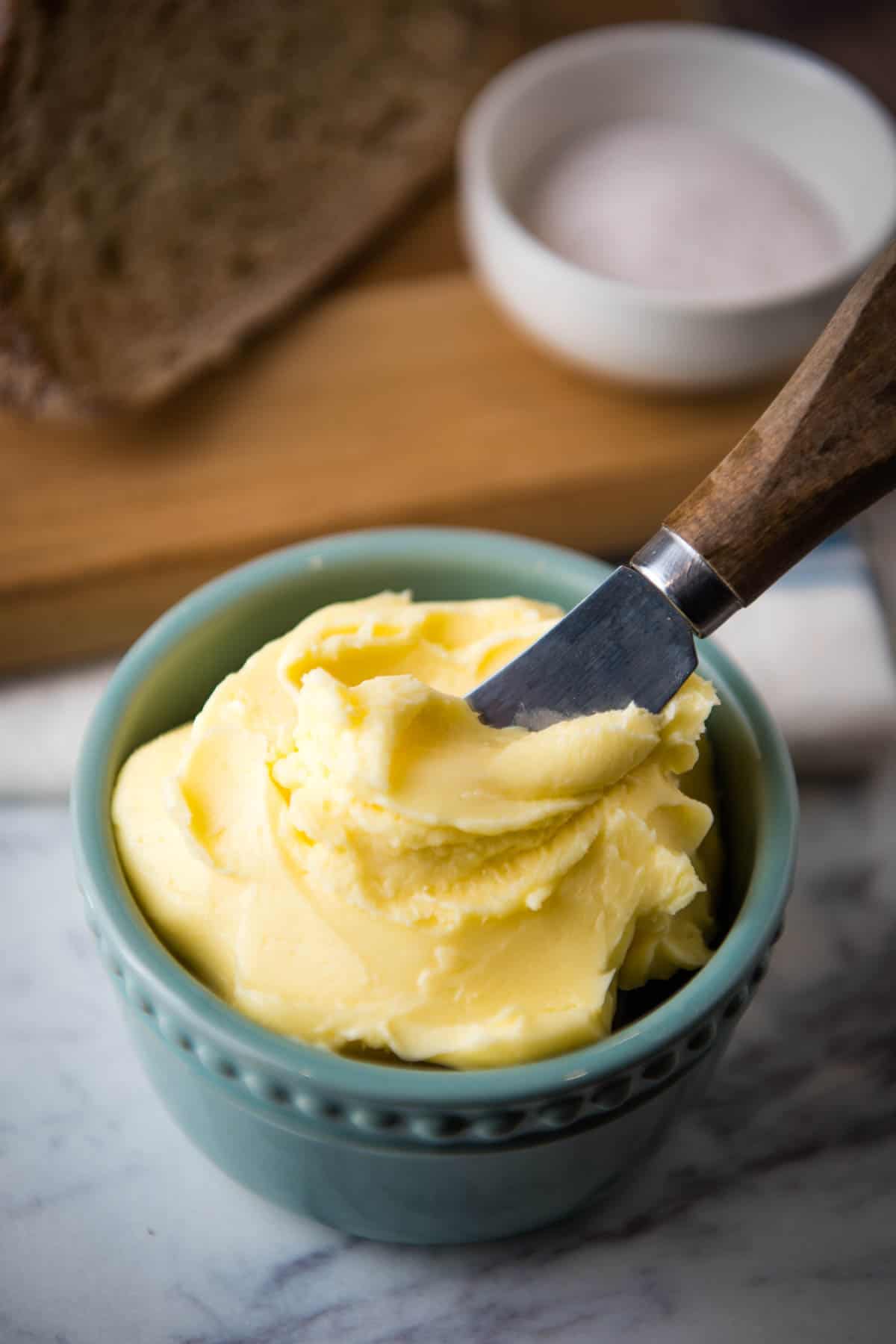
    homemade salted butter in blue ramekin with butter knife in it, in front of wood cutting board with sliced bread and small bowl of sea salt

    Making homemade butter is a relatively simple process, and you don’t need a bunch of fancy tools to make it; you can even make it in a jar if you’re making a smaller quantity.

    I’m going to show you how to make butter from heavy cream and share some of the benefits and ways you can use homemade salted butter. Now that we’ve been eating butter made from our cows’ fresh milk, I can’t imagine going back to store bought butter; and I’m willing to bet that once you taste it, you won’t want to either.

    Why You’ll Love Making Homemade Butter

    • Homemade butter has a deliciously rich flavor and even a darker yellow coloring, especially during the warmer months when the cows can eat more fresh green grass versus hay in the winter.
    • It’s relatively simple and easy to make. There are a few steps to it, but the steps are easy to follow.
    • If you’re needing A2 butter like I do, making it is the cheapest and sometimes the only option. Before we had our own cows, I was buying small half-pints of A2 cream from a natural grocery store an hour and a half away, sometimes ordering thru Azure. Said cream was not cheap; I think it was around $8 for a 12-oz. bottle. Now… Factor in the cost of feeding and caring for a cow, store bought cream is definitely more affordable. However, if you’re buying raw milk from a local farmer at say, $8/gallon, and able to skim off the cream to use for butter, local raw milk is the way to go, especially in terms of cost-effectiveness.
    • You can eat it fresh, you can use it in baking, and you can make all sorts of things with homemade butter. You can even add flavorings to it, which we’ll talk more about below.
    • Contrary to what much of society, not to mention what our modern healthcare system thinks, butter has a lot of health benefits. It’s not only good for the immune system, it’s also a healthy source of fatty acids, healthy cholesterol, and antioxidants. It’s a good source of selenium. It’s also a good source of nutrients that protect against heart disease. It contains vitamin A, which is good for healthy thyroid function, something many of us need. And did you know that butter contains saturated fats that actually help protect against cancer? You can read more about the benefits and learn why butter is better.
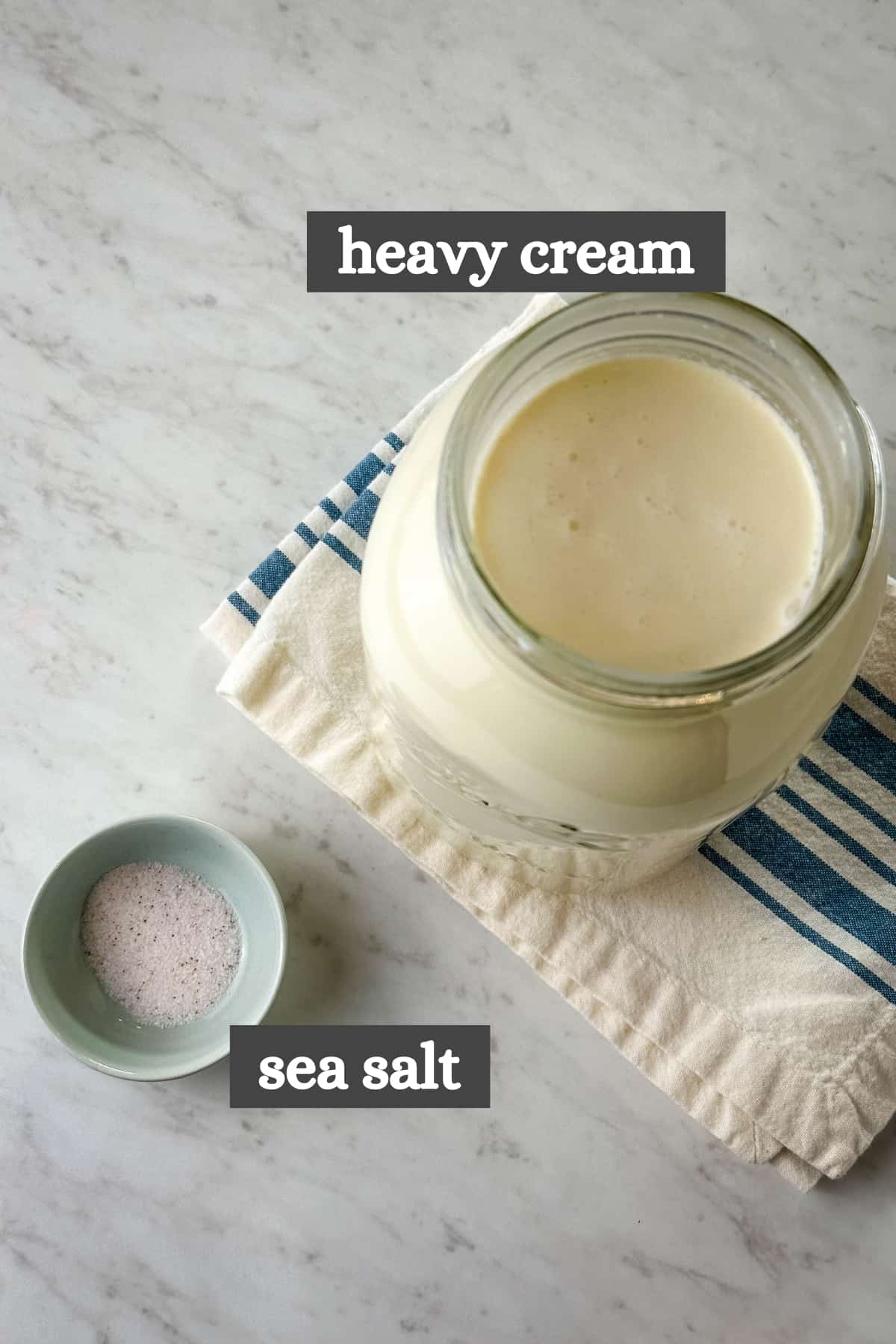
    half gallon of raw milk cream and small bowl of sea salt, ingredients for homemade salted butter

    Ingredients and Substitutions Notes:

    This section is pretty simple, because you only need 2 ingredients to make butter…

    • Heavy Cream – You can separate the cream from raw milk, and I’ll share how to do that a little further below. Or you can buy a carton of heavy whipping cream from your local grocery store. To find a good source of raw milk, start researching your local area; you can find raw milk dairy farmers through Real Milk’s Raw Milk Finder. You may also search local Facebook groups, Facebook Marketplace, or ask around in local community groups you’re involved with.
    • Sea Salt – I recommend using a healthy sea salt. Redmond Sea Salt is the best.

    How to Make Salted Butter from Raw Milk

    Before getting started, it’s important to chill the milk in the fridge ’til the cream has separated. Cream will rise to the top, and milk will be left underneath. I usually let fresh milk sit in the fridge, untouched, for 6-12 hours before skimming off the cream.

    How to Separate Cream from Cows’ Milk

    1. Once you have a definitive cream line, it’s ready to skim.
    2. Use a ladle or large gravy spoon to skim the cream off the milk. You can even use a turkey baster to gather up the cream. As you skim, add the cream to a large 1/2 gallon jar or mixing bowl.
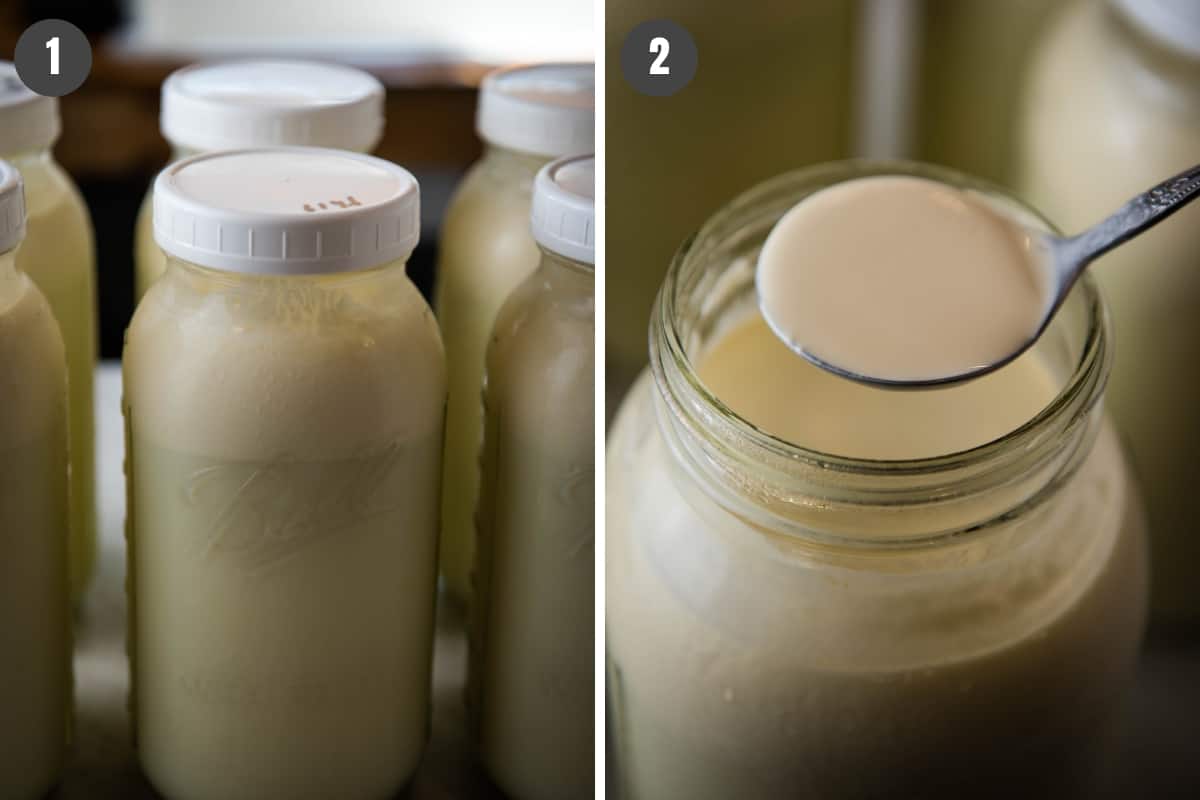
    cream line on half gallon Mason jars; skimming cream off raw milk with small ladle or gravy spoon

    How to Mix the Butter

    Now keep in mind, you can use whatever you have, whether it’s a blender, a stand mixer, or a butter churn. We actually alternate on which one we use, depending how much cream we have; sometimes we have multiples going at once, but lately, we’ve been using our blender quite a bit.

    1. Add the cream to your preferred small appliance, whether it’s a stand mixer, blender, or butter churn. If you’re using a mixer, you’ll want to cover the mixer with a flour sack towel, or use a shield to keep it from splattering all over the place.
    2. Allow it to run ’til the butter separates from the milk (less than 5 minutes for a blender, about 20 minutes for a mixer, and maybe 30 minutes for a butter churn); then drain the milk off the butter curds. You’ll know when it’s ready because you’ll have chunks of butter separate from the liquid.
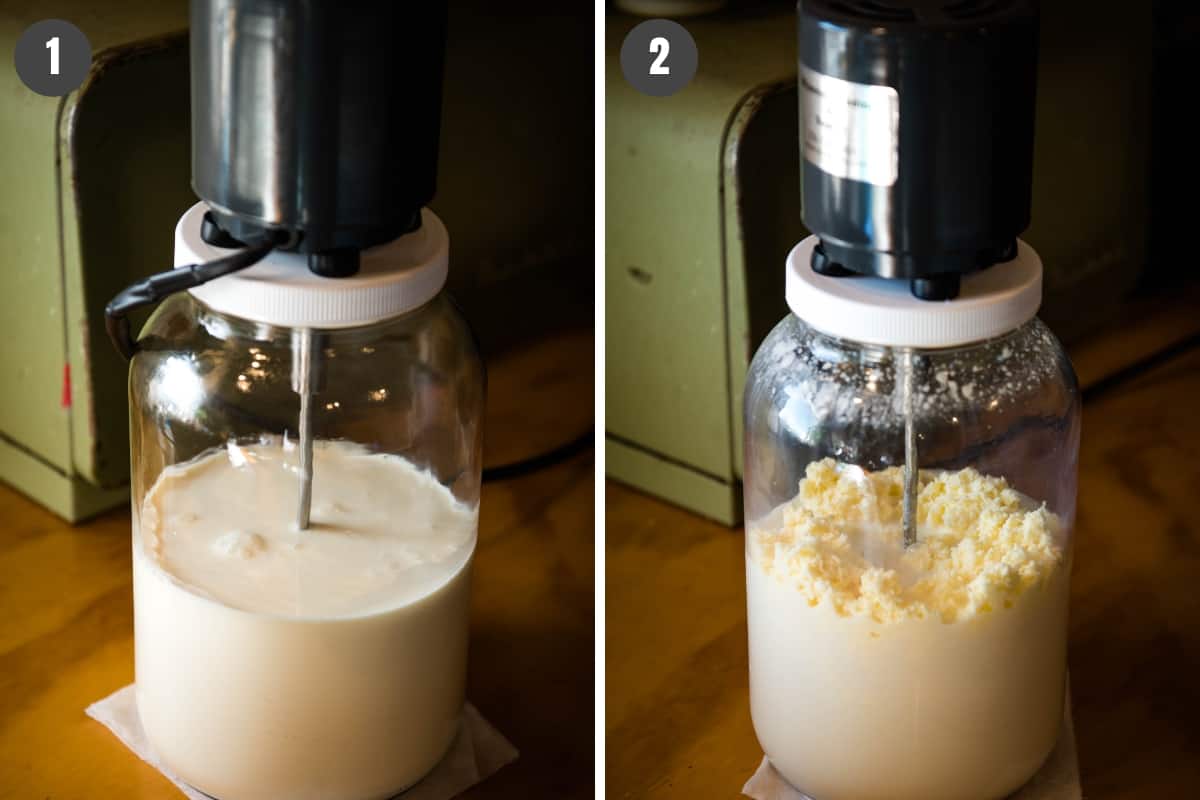
    churning raw milk into butter with Buttermeister butter churn

    Now Squeeze the Milk out of the Butter

    1. If the butter is too soft, add ice water to the churn and let the butter firm up before removing the liquid.
    2. Remove the butter from the jar and squeeze out as much milk as possible.
    3. Place the butter on a cutting board, and roll it with a rolling pin to squeeze out more milk.
    4. Alternate cooling the butter down in a bowl of ice water to keep it firm.
    5. Keep squeezing more milk out, as much as possible, until the liquid you squeeze out is as clear as possible. You can use paddles, if so inclined, but we prefer to use our hands.
    6. Keep cooling in ice water in between squeezing more milk out.
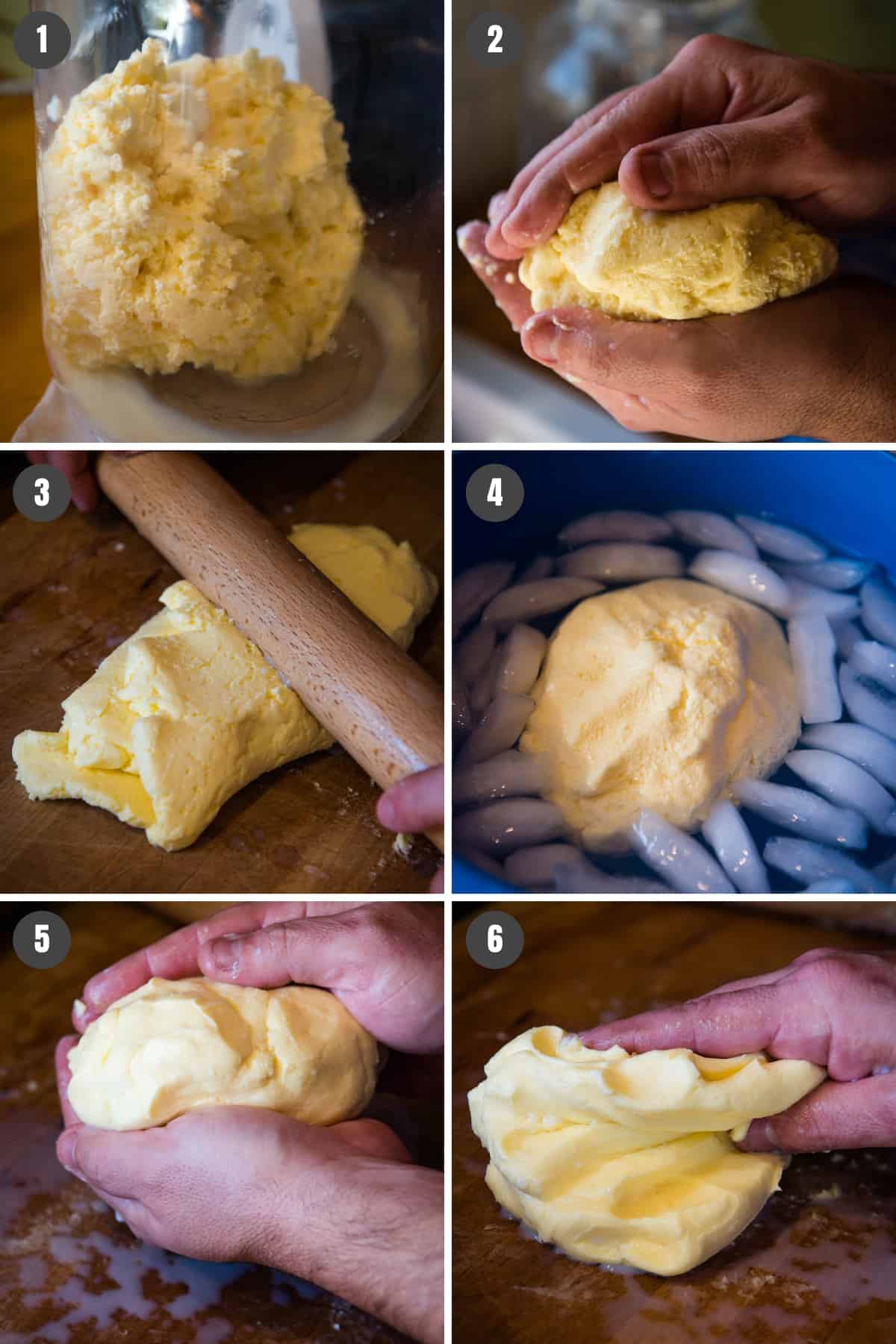
    how to make butter from raw milk by taking churned butter in churn, then hands alternating squeezing milk out of butter, rolling milk out of butter with rolling pin, and butter in ice bath

    When to Add Salt to Homemade Butter

    1. Once you’ve gotten as much milk out as possible, add the sea salt on top of the butter.
    2. Work the salt into the butter with your hands or with butter paddles.
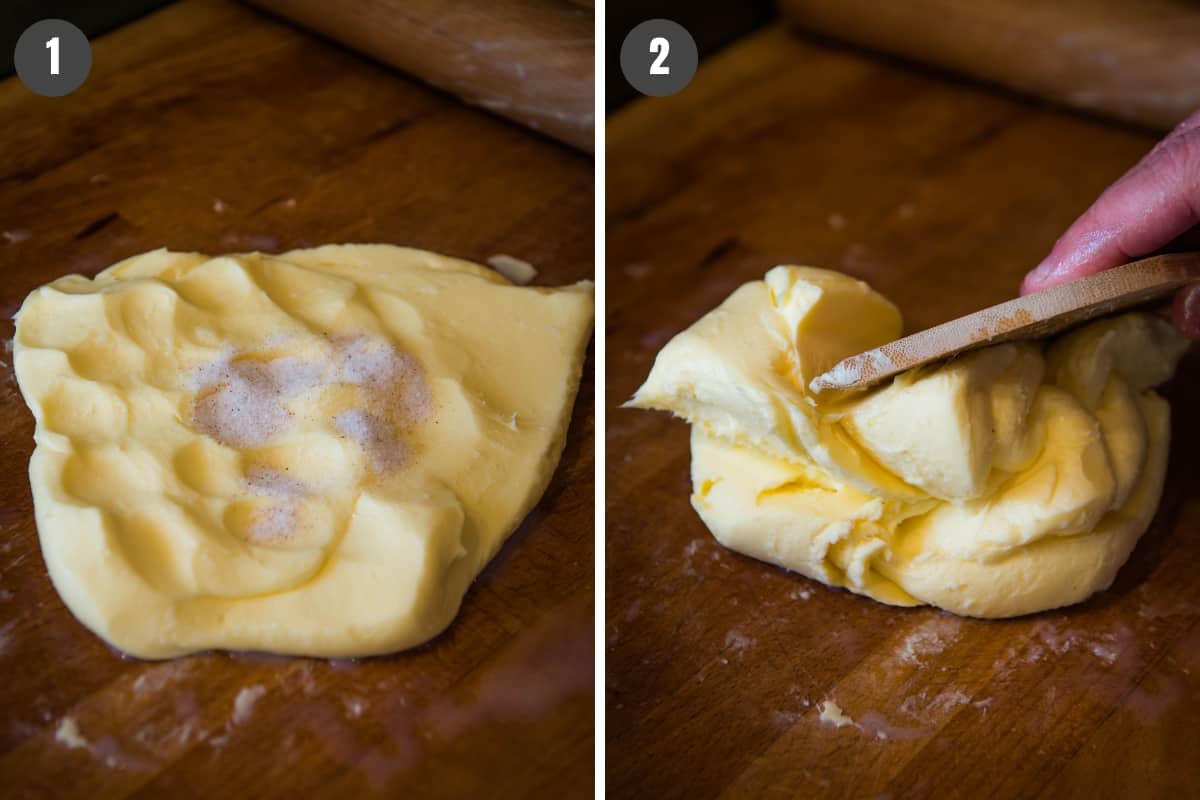
    how to make salted butter by adding sea salt on pile of homemade butter, then mixing salt into butter with wooden butter paddle

    How to Make Homemade Butter into Sticks

    You can just put your butter into a container, refrigerate it, and use it as is. Or you can form it into sticks or blocks, then refrigerate or freeze. We use butter stick molds for this.

    1. Press the butter into the butter molds.
    2. Then level the butter in the mold.
    3. Cover and freeze the butter sticks for 3-4 hours.
    4. Once the butter has sufficiently frozen, remove the sticks from the butter molds, and wrap each one individually in wax paper. Then store in a freezer bag or airtight container in the freezer ’til ready to use.
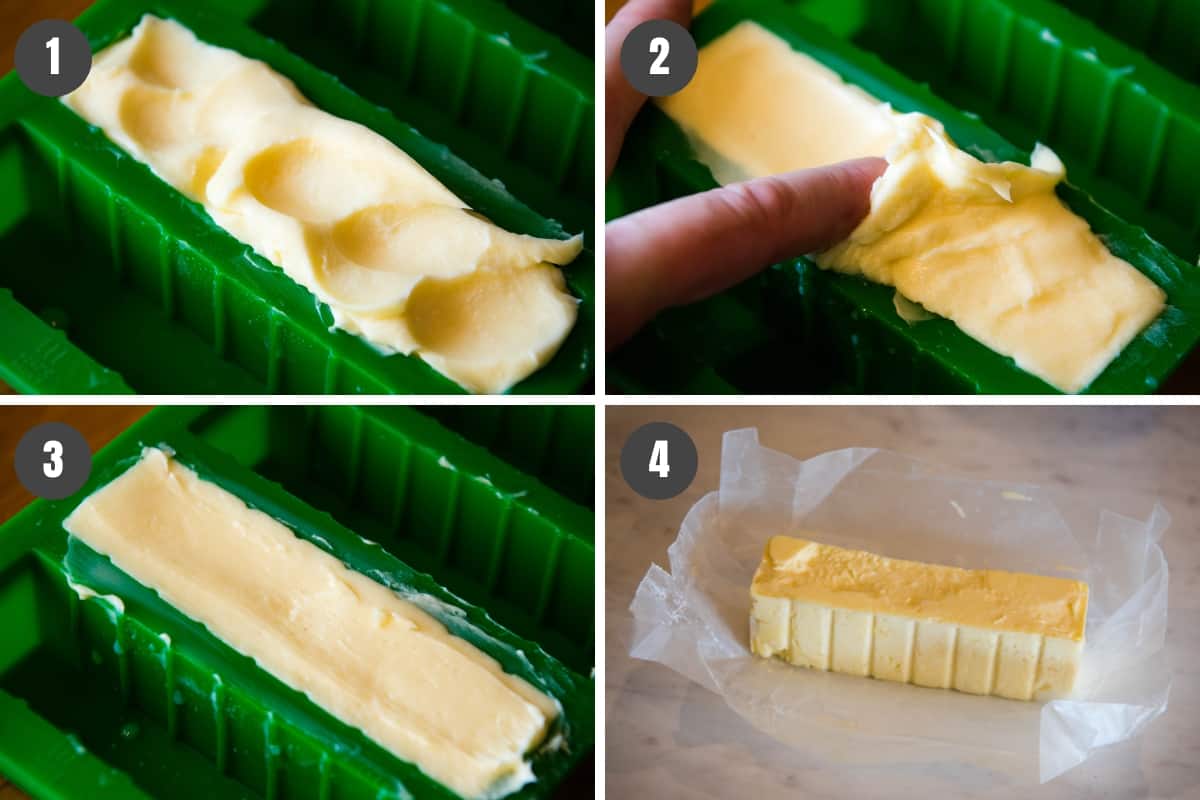
    steps for how to make homemade salted butter into sticks, including putting butter in green silicone butter stick mold, leveling, freezing, and wrapping in wax paper

    And that’s it! Now you have a batch of homemade butter to enjoy.
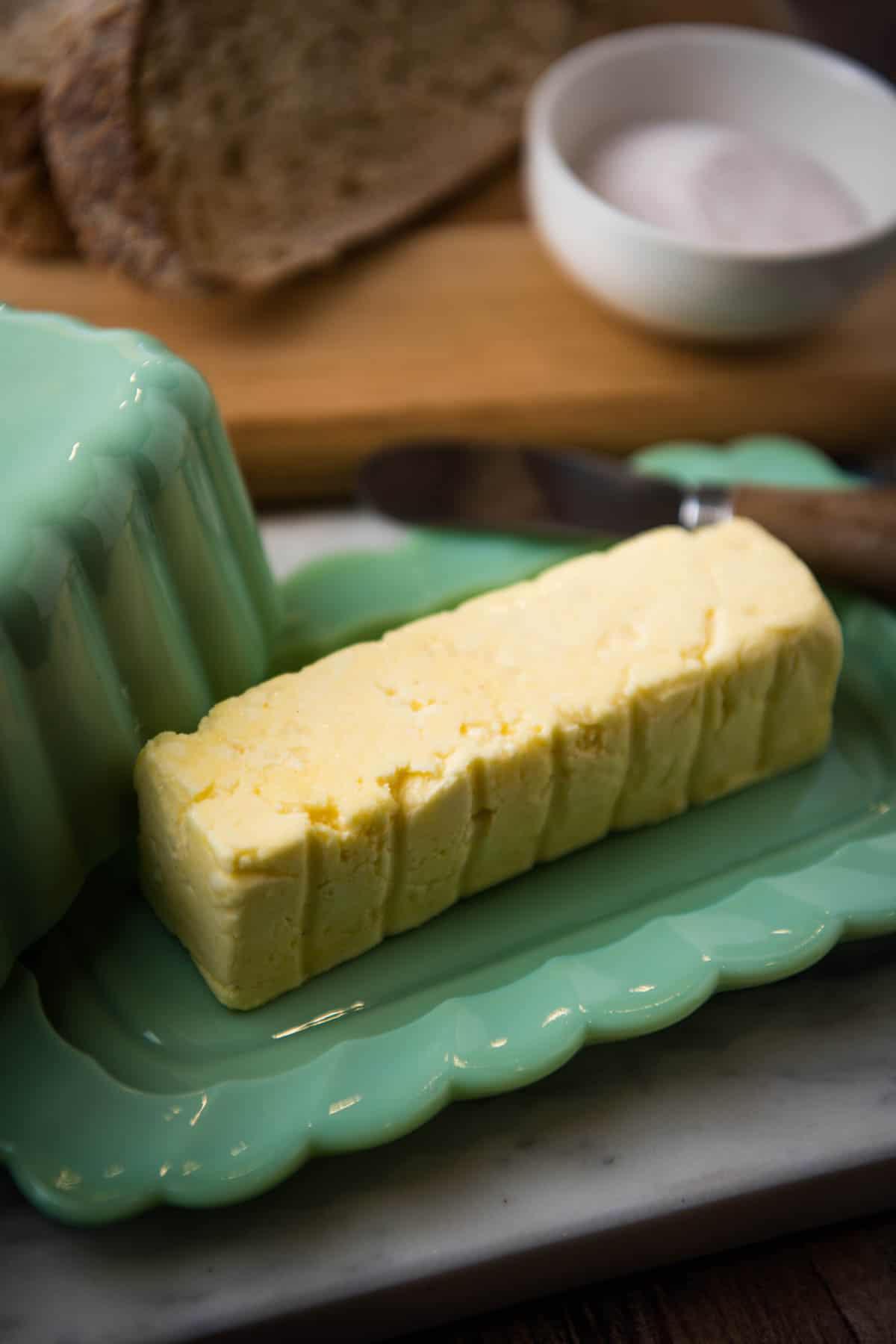
    homemade raw milk butter stick on jadeite green butter dish

    Can I Add Flavorings to Homemade Salted Butter?

    Yes, you can totally add flavorings, and gently stir or whip them in with a rubber spatula. You likely only need a dash of seasoning to mix up a cup of flavored butter.

    Here are a few ideas…

    Expert Tips and Recipe FAQ’s

    How should I store butter, and how long will it last?

    It’s better to keep raw milk butter in the fridge, and use it as needed. It should keep for 2-3 weeks in the fridge.

    If I keep it in the fridge, won’t it be extremely hard to spread?

    Yes, it will harden in the fridge. However, you can get it out a little ahead of time if you know you need butter with breakfast or dinner. And if you’re buttering hot toast or homemade biscuits or Grandma’s homemade yeast rolls, I’ve found lightly scraping the top of the butter with a butter knife allows me to get a good amount of butter that melts right into my toast or bread.

    Can homemade butter be frozen?

    You betcha it can! In fact, it’ll keep for at least 6 months to a year, possibly longer. Just make sure it’s wrapped tightly in wax paper or parchment paper and store in either an airtight container or a sealed freezer bag.

    What should I do with the leftover buttermilk?

    Well, you can drink it. Or you can use it to make a batch of raw milk ice cream. Or save it for later use; just be sure to store it in an airtight container or jar in the fridge.

    Can homemade butter be used for baking?

    You better believe it. In fact, one of my favorite things to make with it is a big batch of chocolate chip cookies. It also makes a mean Texas sheet cake.
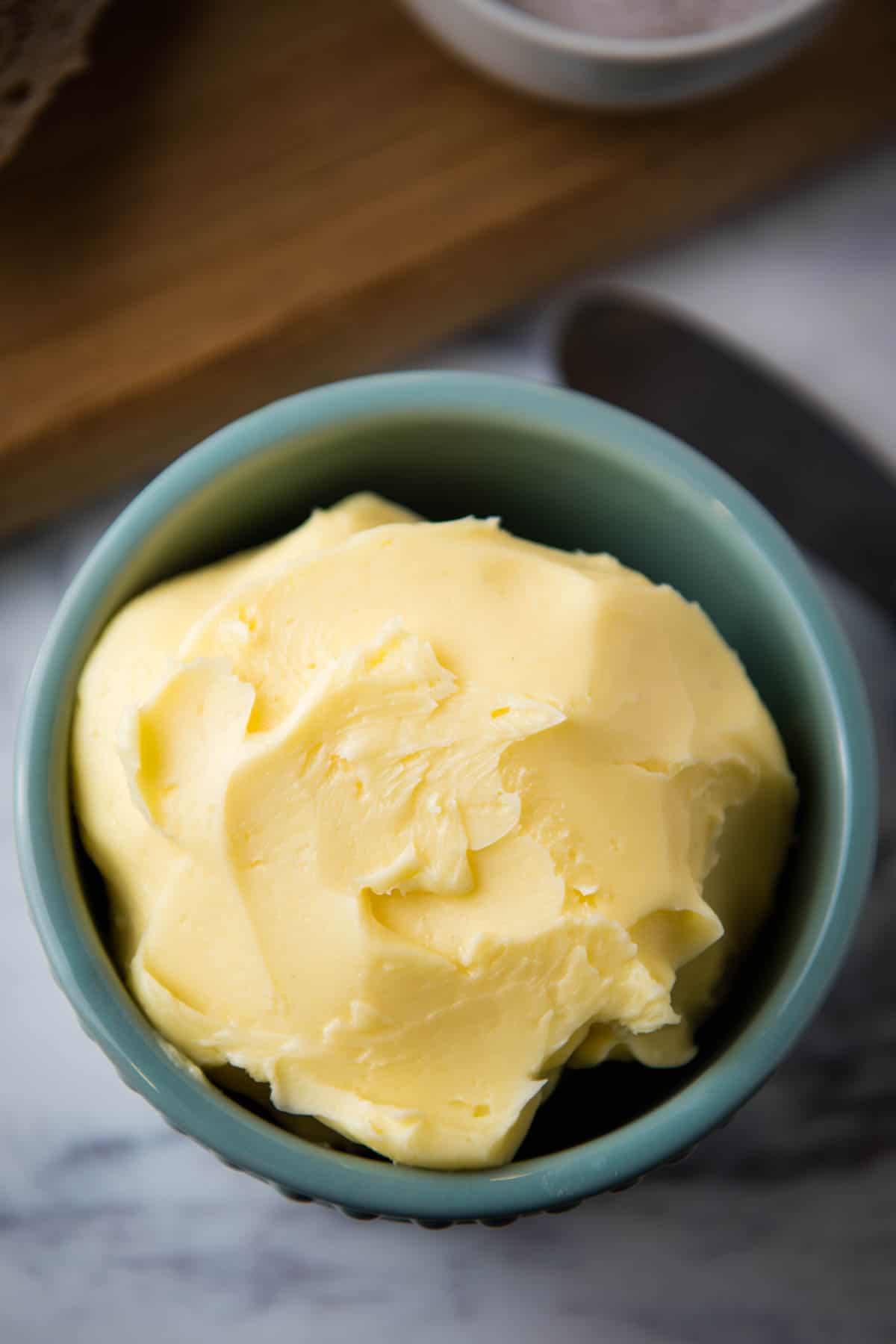
    homemade salted butter from raw milk in blue ramekin on white marble countertop

    More Raw Milk Recipes

    If you love making butter from cream, you’ll love these recipes too…

    If you try this recipe, why not leave a star rating in the recipe card right below and/or a review in the comment section further down the page? I always appreciate your feedback. You can also follow me on Pinterest, Facebook, Instagram, and YouTube. And subscribe to my email list too!

    How to Make Salted Butter
    Learn how to make salted butter from raw milk or store bought cream. Easy recipe using a mixer, blender, or churn. Only 2 ingredients needed!

    • Blender
    • Stand Mixer
    • Butter Churn
    • Large Mixing Bowl
    • Butter Stick Molds
    • Wax Paper
    • 1/2 gallon heavy cream
    • 1 teaspoon sea salt
    1. Once you have a definitive cream line*, use a ladle or large gravy spoon to skim the cream off the milk. As you skim, add the cream to a large 1/2 gallon jar or mixing bowl.

    2. Add the cream to your preferred small appliance, whether it's a stand mixer, blender, or butter churn. If you're using a mixer, you'll want to cover the mixer with a flour sack towel, or use a shield to keep it from splattering all over the place.

    3. Allow it to run 'til the butter separates from the milk (less than 5 minutes for a blender, about 20 minutes for a mixer, and maybe 30 minutes for a butter churn); then drain the milk off the butter curds. You'll know when it's ready because you'll have chunks of butter separate from the liquid.

    4. If the butter is too soft, add ice water to the churn and let the butter firm up before removing the liquid.

    5. Remove the butter from the jar and squeeze out as much milk as possible.

    6. Place the butter on a cutting board, and roll it with a rolling pin to squeeze out more milk.

    7. Alternate cooling the butter down in a bowl of ice water to keep it firm.

    8. Keep squeezing more milk out, as much as possible, until the liquid you squeeze out is as clear as possible. You can use paddles, if so inclined, but we prefer to use our hands.

    9. Keep cooling in ice water in between squeezing more milk out.

    10. Once you've gotten as much milk out as possible, add the sea salt on top of the butter.

    11. Work the salt into the butter with your hands or with butter paddles.

    12. You can just put your butter into a container, refrigerate it, and use it as is. Or you can form it into sticks or blocks, then refrigerate or freeze. We use butter stick molds for this.

    13. Press the butter into the butter molds.

    14. Then level the butter in the mold.

    15. Cover and freeze the butter sticks for 3-4 hours.

    16. Once the butter has sufficiently frozen, remove the sticks from the butter molds, and wrap each one individually in wax paper. Then store in a freezer bag or airtight container in the freezer 'til ready to use.

    17. And that's it! Now you have a batch of homemade butter to enjoy.

    *Before getting started, make sure raw milk has been chilled in the refrigerator ’til the cream has separated, about 6-12 hours.

    How should I store butter, and how long will it last?

    It’s better to keep raw milk butter in the fridge, and use it as needed. It should keep for 2-3 weeks in the fridge.

    What should I do with the leftover buttermilk?

    Well, you can drink it. Or you can use it to make a batch of raw milk ice cream. Or save it for later use; just be sure to store it in an airtight container or jar in the fridge.
    Condiments
    American
    homemade butter, homemade salted butter, how to make butter from cream, how to make butter from heavy cream, how to make butter from raw milk, how to make salted butter, how to make salted butter from heavy cream
  • Easy Chicken Gravy from Bouillon

    Easy Chicken Gravy from Bouillon

    How to make delicious chicken gravy from bouillon, no drippings needed! You can make this easy gravy recipe last minute to go with dinner, and it only takes 6 simple ingredients you probably already have in your pantry!

    My husband introduced me to the world of gravy when we got married. I grew up eating biscuits and gravy; but other special gravies like brown gravy, chicken stock gravy, ham gravy, and turkey gravy were reserved for holidays like Thanksgiving, Christmas, and Easter dinner.

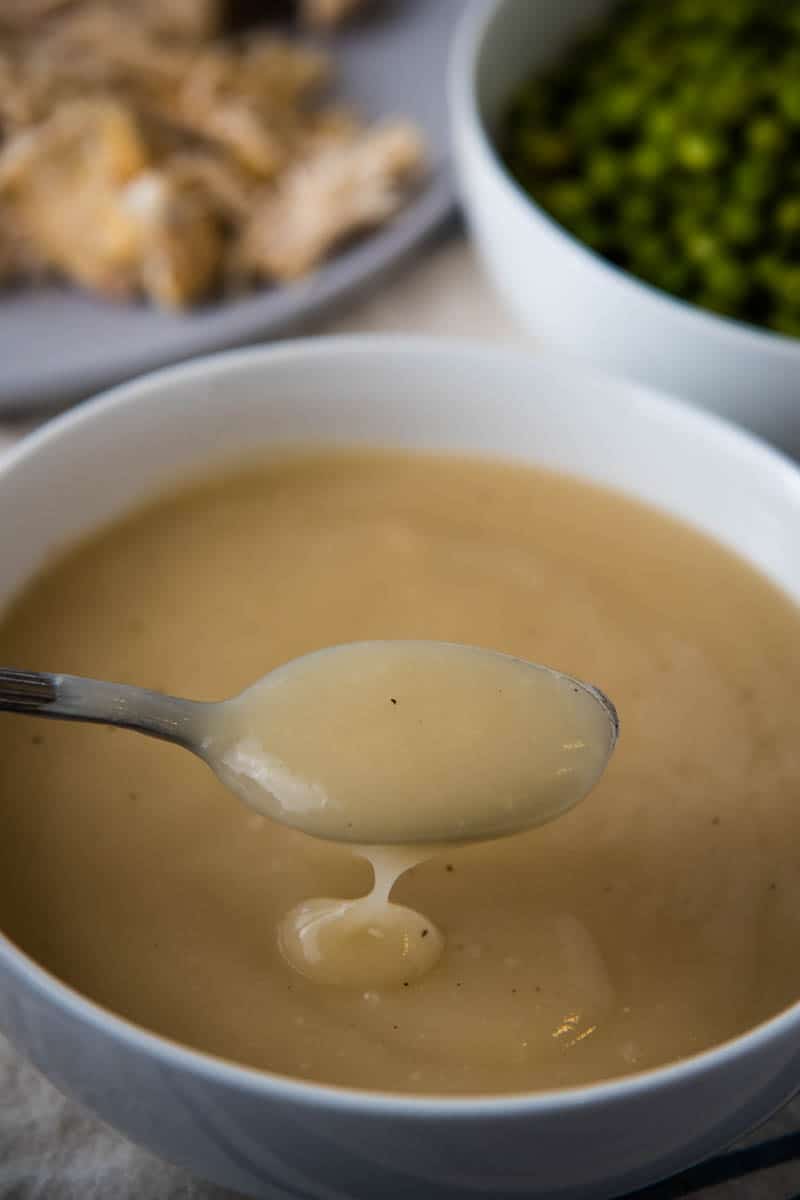
    spoonful of easy chicken gravy from bouillon over white bowl full of gravy

    Chicken gravy without drippings is especially easy to make, so it makes the perfect addition to an Instant Pot whole chicken. You can also pair it with baked chicken drumsticks or whole chicken in the CrockPot. It’s also a fantastic addition to a mashtini bar or baked potato bar if you happen to be entertaining guests or hosting a dinner party.

    Why You’ll Love Making Gravy with Chicken Broth

    • All you need to make chicken gravy from broth are 6 simple ingredients you likely already have in your pantry. 3 of those ingredients are seasonings, just onion powder, salt, and pepper.
    • As I mentioned above, it’s really easy to make and only takes a few minutes.
    • You can make this chicken gravy with bouillon or from broth. Only difference is you’ll need to mix the bouillon into broth before you begin cooking.
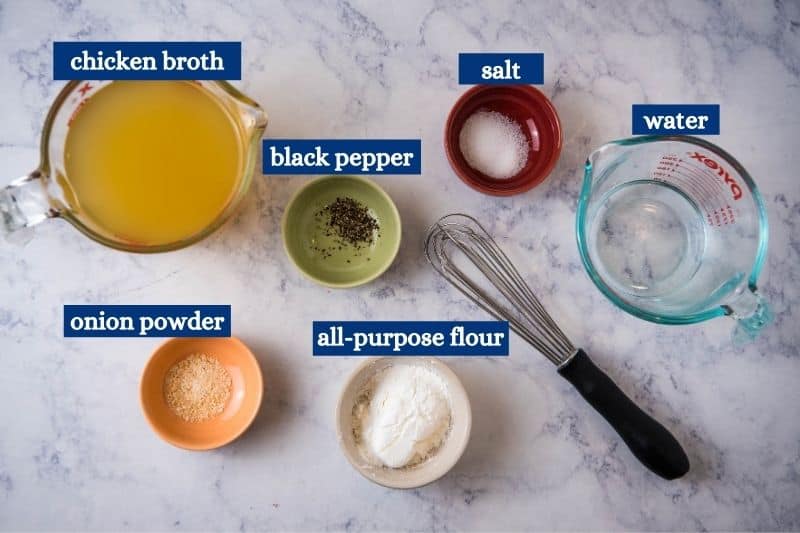
    chicken gravy ingredients, including chicken broth from bouillon, black pepper, salt, water, onion powder, and all-purpose flour on white marble countertop with black whisk

    Ingredients and Substitutions Notes:

    To make this chicken gravy recipe, you’ll need 6 simple ingredients. Gather your ingredients and let’s make some delicious gravy.

    • Chicken Broth: Like I mentioned above, you can use straight up chicken broth, including bone broth. Or since bouillon is basically dehydrated broth, you can just mix bouillon into broth and make your gravy with that bouillon broth. You can also use homemade chicken stock to make this gravy.
    • Onion Powder: Here’s a little tip. I haven’t been able to find a gluten-free onion powder in store. You’d think all seasonings are gluten-free, but they are not. So I took a little bit of dried minced onion we had on hand and crushed it into onion powder.
    • Water
    • All-Purpose Flour: I tried making this with corn starch; it did not go well. So my advice is to stick with flour. Flour makes a silky, smooth gravy. And yes, you can use a good gluten-free flour instead.
    • Salt and Pepper: These are really only added to taste. I’ve found it needs quite a bit of salt, but I only add a dash of black pepper.

    How to Make Chicken Gravy from Bouillon

    For this gravy, I prefer to make a slurry over a roux. It’s part of prepping and gathering my ingredients together so I’m ready for each step along the way.

    If I were making a roux, I would melt butter in my pan and then whisk flour into the butter, cooking the mixture. Instead I prefer to just mix my thickening agent, in this case flour, with water before starting the process of cooking the gravy… It works for me, and I know it’ll work well for you too.

    How to Make the Slurry

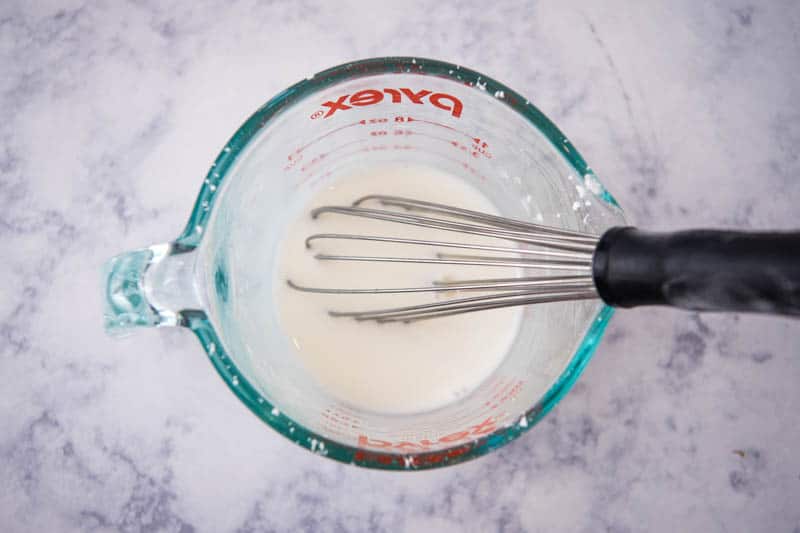
    To make the slurry, whisk together the water and flour, making sure there are no lumps and no flour sticking to the bottom of your bowl or measuring cup. Then just set your slurry aside ’til you need it.

    chicken gravy slurry in Pyrex glass measuring cup with black whisk

    Making a slurry allows us to add flour to our gravy without adding any lumps, ensuring a lump-free gravy.

    Then Make the Gravy

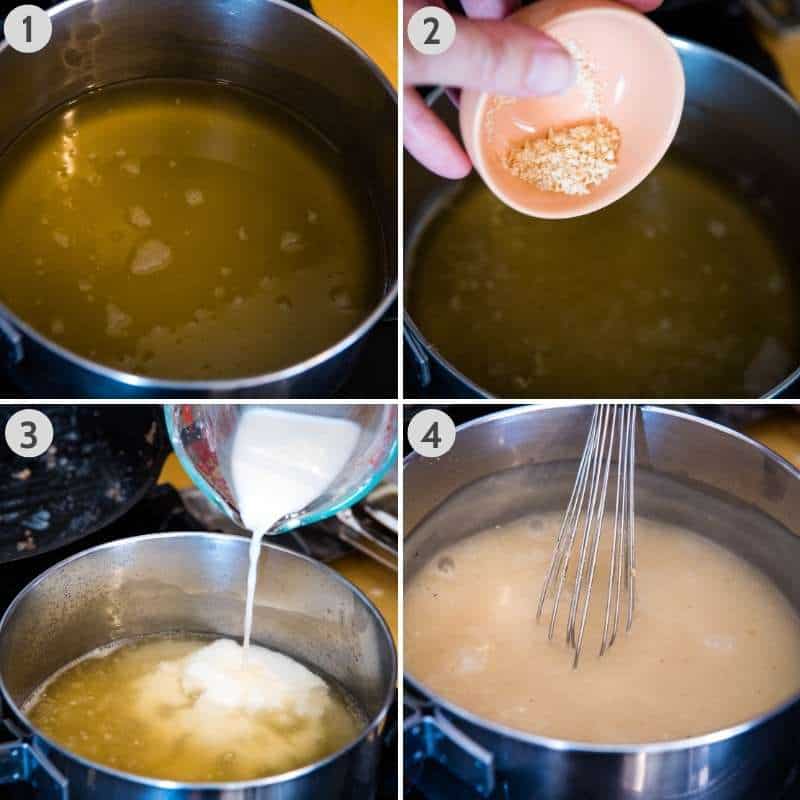
    1. Add chicken broth to a medium sauce pan, and bring to a boil over medium heat.
    2. Whisk in the onion powder, cooking another 1 to 2 minutes.
    3. Now whisk your slurry mixture into the boiling broth, stirring constantly ’til the gravy thickens; it will start to thicken right away. If, for some reason, your gravy is too thin and not thickening up enough, you can whisk another tablespoon of flour into just a little bit of water (making another slurry), and add that to your gravy to help it thicken up more.
    4. Add salt and pepper, to taste.
    steps for how to make chicken gravy from broth in sauce pan, including boiling broth, adding onion powder, stirring in slurry, and whisking 'til thickens

    Then serve the gravy while warm with your dinner. It’s a good idea to make gravy just before you’re ready to eat.

    Expert Tips and Recipe FAQs:

    How should you store chicken gravy?

    Store in the fridge in an airtight container. Chicken gravy will keep in the fridge for 2-3 days.

    Can you freeze leftover gravy?

    Yes, you can store a flour-based chicken gravy in the freezer for up to 4 months.
    Store in an airtight container or freezer bag. Just be sure to allow enough time to thaw in the fridge before serving.

    How do you re-heat gravy?

    You can re-heat gravy on the stovetop in a sauce pan, stirring frequently until hot. Or you can re-heat in a microwave at 30 second intervals, stirring in between ’til heated. If the gravy is really thick after cooling, you may need to add just a little bit of water to thin it out a bit.

    Can you make gluten-free gravy?

    Yes. Gluten-free flour works like a charm with this gravy. Just make sure to check all your other ingredient labels to make sure they are truly gluten-free, as well, especially seasonings.

    What should you do if the gravy is too thick?

    Add chicken broth or water 1/2 cup at a time until your gravy is the desired consistency. Keep in mind, adding liquid may necessitate adding a bit more seasoning, as well, especially salt and pepper.

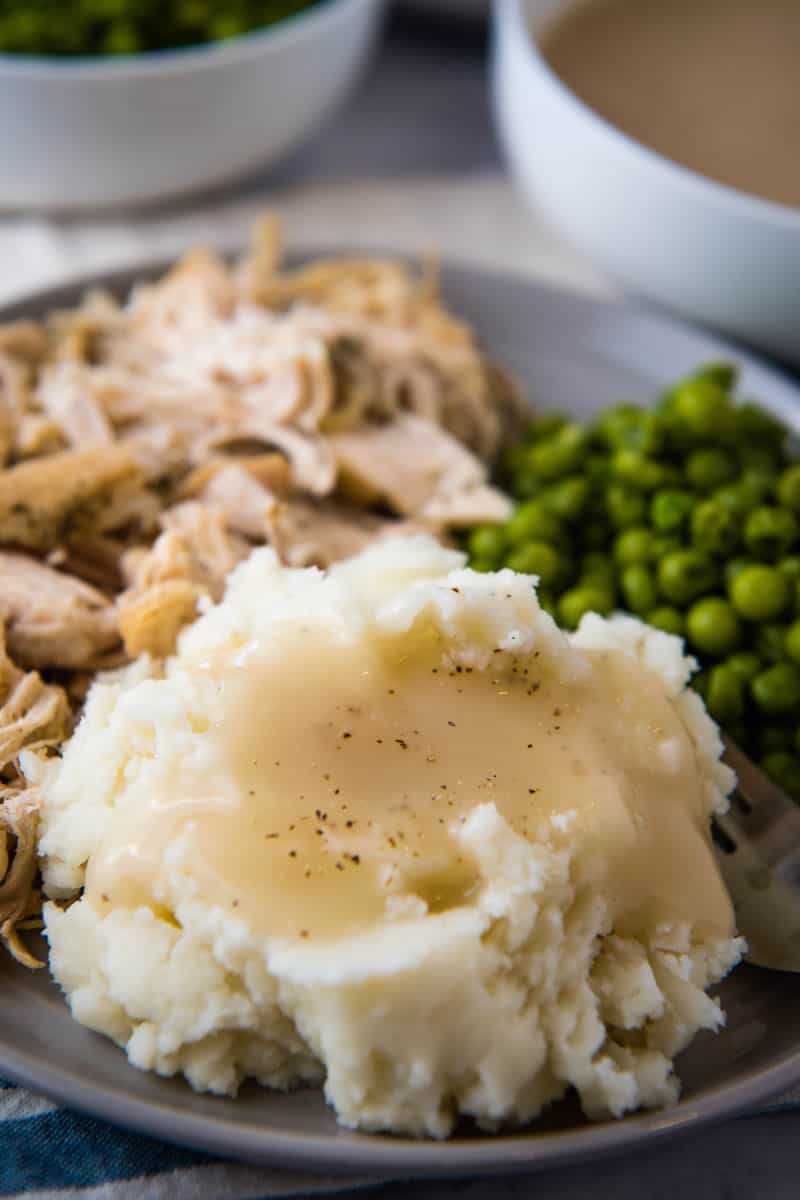
    chicken gravy with bouillon poured over mashed potatoes on gray plate with shredded chicken and green peas

    Good Recipes to Make with Chicken Gravy:

    If you love this easy chicken gravy recipe as much as I do, you’ll love pairing it with these dishes…

    If you try this recipe, why not leave a star rating in the recipe card right below and/or a review in the comment section further down the page? I always appreciate your feedback. You can also follow me on Pinterest, Facebook, Instagram, and YouTube. And subscribe to my email list too!

    Chicken Gravy from Bouillon

    How to make chicken gravy from bouillon, no drippings needed! Easy recipe you can make last minute to go with dinner. Simple ingredients!

    • Medium Sauce Pan
    • Whisk
    • Heat-Resistant Spatula
    • Liquid Measuring Cup
    • Gravy Boat
    • 1/4 cup water
    • 3 tablespoons all-purpose flour*
    • 2 cups chicken broth
    • 1 teaspoon onion powder
    • Salt (to taste)
    • 1/8 teaspoon ground black pepper
    1. To make the slurry, whisk together the water and flour, making sure there are no lumps and no flour sticking to the bottom of your bowl or measuring cup. Then just set your slurry aside 'til you need it.

    2. Add chicken broth to a medium sauce pan, and bring to a boil over medium heat.

    3. Whisk in the onion powder, cooking another 1 to 2 minutes.
    4. Now whisk your slurry mixture into the boiling broth, stirring constantly ’til the gravy thickens; it will start to thicken right away. If, for some reason, your gravy is too thin and not thickening up enough, you can whisk another tablespoon of flour into just a little bit of water (making another slurry), and add that to your gravy to help it thicken up more.
    5. Add salt and pepper, to taste.
    6. Then serve the gravy while warm with your dinner. It’s a good idea to make gravy just before you’re ready to eat.

    *You can use a good gluten-free flour instead.

    Store leftover chicken gravy in the fridge in an airtight container. It will keep in the fridge for 2-3 days. 

    You can re-heat gravy on the stovetop in a sauce pan, stirring frequently until hot. Or you can re-heat in a microwave at 30 second intervals, stirring in between ’til heated. If the gravy is really thick after cooling, you may need to add just a little bit of water to thin it out a bit.

    What should you do if the gravy is too thick?

    Add chicken broth or water 1/2 cup at a time until your gravy is the desired consistency. Keep in mind, adding more liquid may necessitate adding a bit more seasoning, as well, especially salt and pepper.

    Condiments, Sauces & Dressings
    American
    chicken broth gravy, chicken gravy from bouillon, chicken gravy from broth, chicken gravy with bouillon, chicken gravy without drippings, chicken stock gravy, easy chicken gravy, gravy with chicken broth, how to make chicken gravy without drippings
  • How to Make Ham Gravy with Cornstarch and Drippings

    How to Make Ham Gravy with Cornstarch and Drippings

    Learn how to make ham gravy with cornstarch and either drippings or broth. This easy recipe will help you cook and thicken any gravy, including ham, turkey, chicken, or brown gravy. It’s especially good at Thanksgiving, Christmas, and Easter; but it’s also great for family dinner!

    One of my most popular recipes, especially around Christmas and Easter, is my homemade ham gravy recipe; unlike this cornstarch gravy recipe, it’s made with flour and ham drippings.

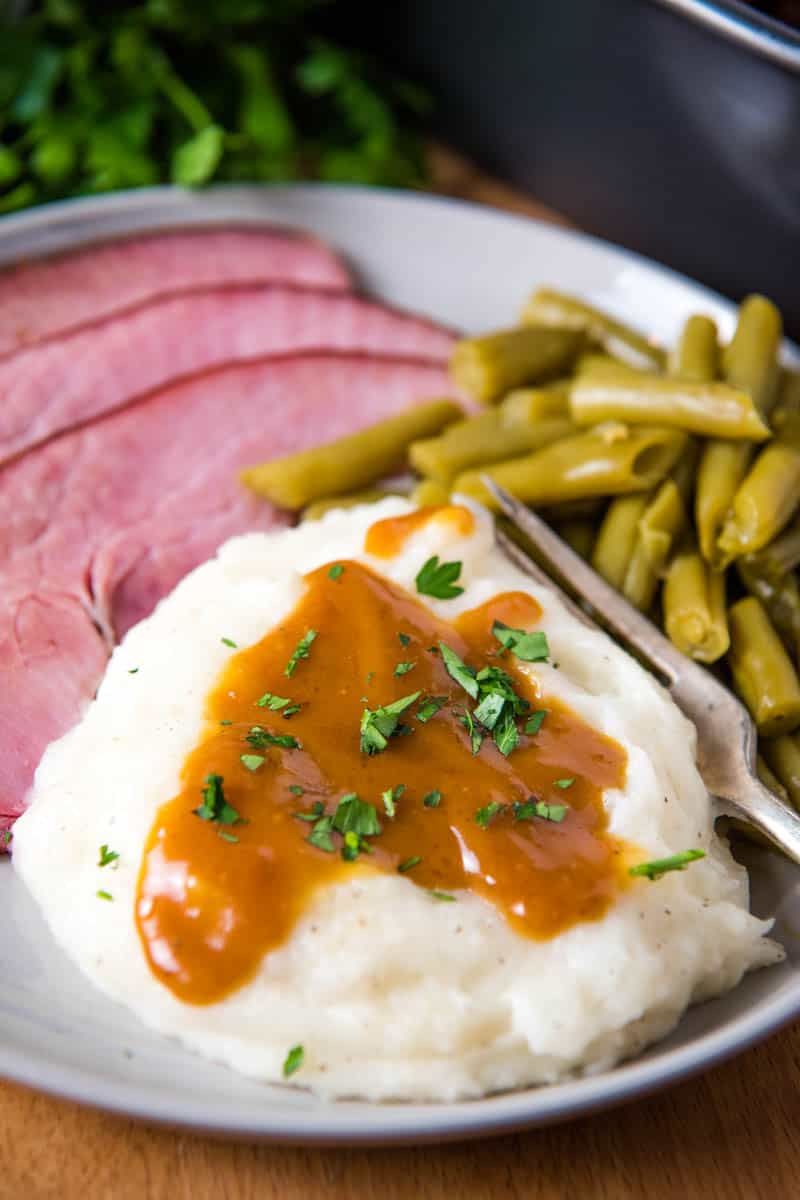
    ham gravy with cornstarch on mashed potatoes, served on grate plate with baked ham, green beans, and a fork

    This good gravy, on the other hand, is made with cornstarch and ham drippings. Learning how to make gravy with cornstarch is super easy to do, and it just so happens to be gluten-free ham gravy (as long as all of your ingredients contain no gluten; I always recommend you double check to be safe).

    Now you do have to know how to bake a ham for this easy gravy recipe. And, in fact, you can switch out the pan drippings for any flavor broth you like to make any flavor corn starch gravy you like; so you can make brown gravy, turkey gravy, chicken gravy, vegetarian gravy, and more.

    Keep in mind… The main flavoring for this flavorful gravy comes directly from the ham itself. So if you glaze your ham, like I did with my pineapple glazed ham, the flavoring from that glaze will go into your homemade gravy. Rule of thumb: If you’re using a sweet glaze, your gravy will be a little sweeter.

    Why You May Want to Make Gravy with Cornstarch

    • If you’re like me and need to make gluten free ham gravy, then corn starch gravy is the key. Just make sure the brand of cornstarch you use is gluten-free, and make sure all your other ingredients are too.
    • Ham gravy goes hand in hand with creamy mashed potatoes. It also makes a great addition to your baked potato buffet or mashed potato buffet.
    • Gravy made with cornstarch is a great condiment for Thanksgiving dinner, Christmas dinner, and Easter dinner.
    • Learning how to make gravy with cornstarch also makes a great addition to any ordinary family dinner, because it’s absolutely easy to make; and if you don’t have drippings, no problem. Use broth instead.
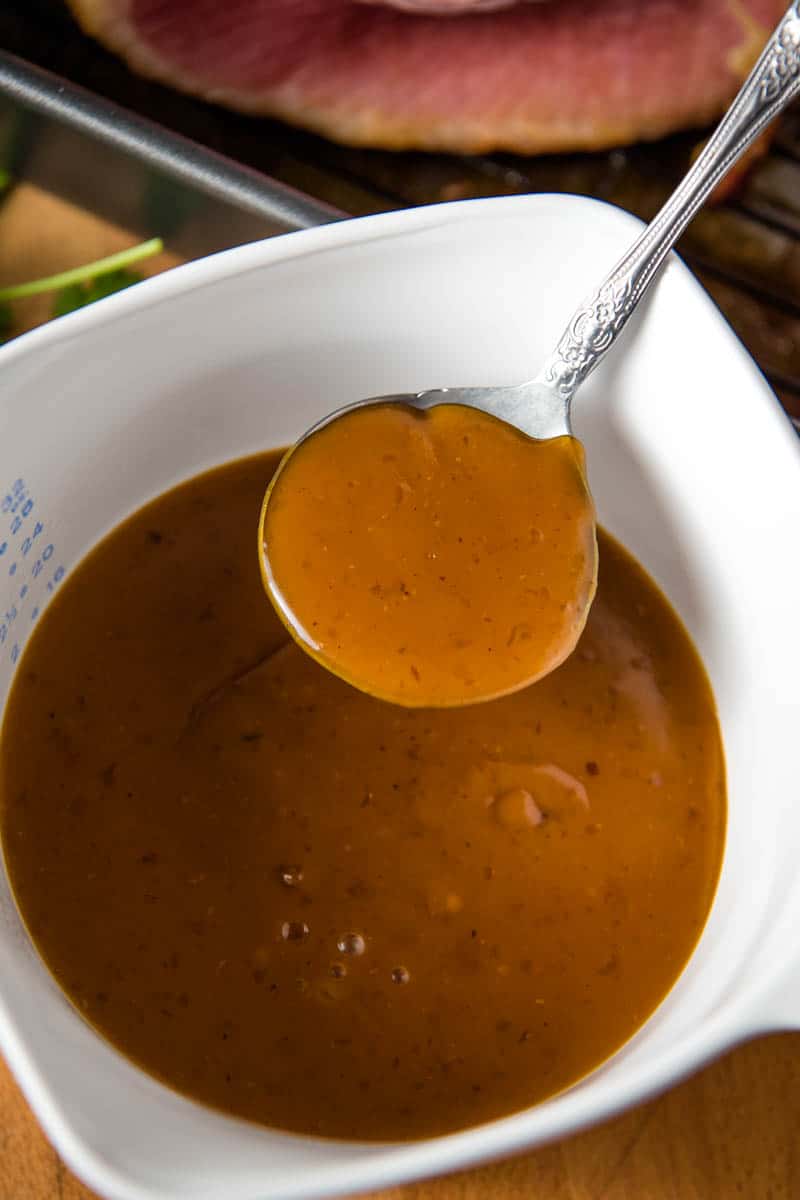
    homemade ham gravy made with cornstarch in white Corning Ware dish with spoon

    Ingredients and Substitutions Notes

    • Ham Drippings – You can get ham drippings when you bake any kind of ham, whether you bake a bone-in ham, spiral ham, fresh ham, etc. Of course, you can substitute broth for drippings if you’re not making a big roast; while ham broth may not have the excellent flavor real ham drippings have, it still makes a fine gravy. This goes for other types of meat, as well… You can use beef broth to make brown gravy, chicken broth for chicken gravy, vegetable stock to make vegetarian gravy, etc. You can also substitute other types of drippings, like turkey drippings to make homemade turkey gravy, pot roast drippings to make roast beef gravy, etc.
    • Cold Water
    • Heavy Whipping Cream I use both cream and water in this recipe for ham gravy. You can replace the cream with milk, though, if preferred.
    • Cornstarch It doesn’t take much cornstarch to make a good gravy, only about 3 tablespoons of cornstarch.

    How to Make Ham Gravy with Cornstarch

    There are different methods to making a good gravy, but this is my simple recipe…

    1. First, whisk together the water, heavy whipping cream, and cornstarch in a liquid measuring cup and set aside.
    2. Add the brown bits of ham drippings or pan juices from the roasting pan, to a medium saucepan, and start to cook on medium heat.
    3. Add the cornstarch mixture, as a thickening agent, to the ham drippings in the pan, and continue whisking and stirring constantly ’til the mixture boils and the gravy begins to thicken.
    4. Once your gravy has thickened, this hot liquid is ready to pour into a gravy crock or gravy boat for serving.
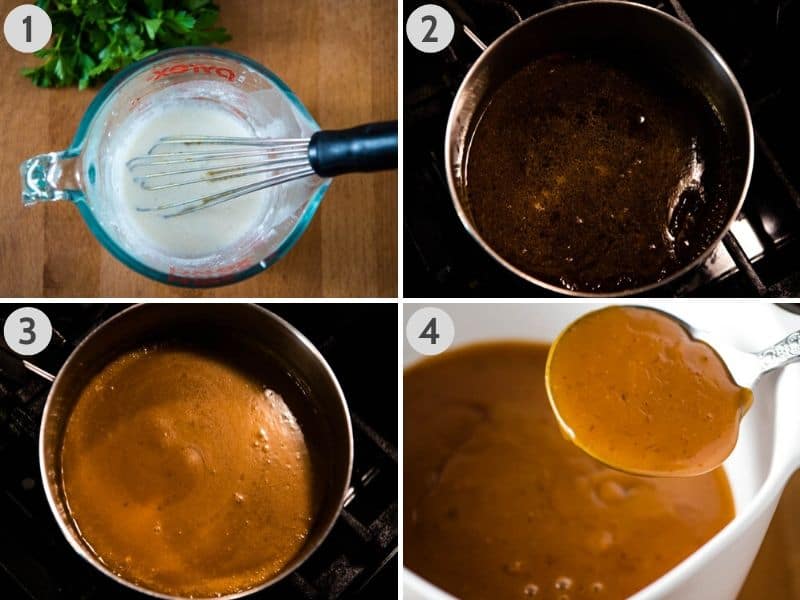
    steps for how to make ham gravy with cornstarch

    Now keep in mind, depending how salty your gravy is, you may need to add a little extra water to bring that saltiness down. If you add extra water, you’ll need to add a pinch up to a tablespoon of cornstarch (depending how much extra water you add), in order to keep a thicker consistency.

    And always, always, if you’re going to add more cornstarch, whisk it together into a cornstarch slurry with liquid in a separate dish first to avoid lumps. Speaking of lumps…

    How to Avoid Lumpy Gravy

    Here’s the easy way and the best way to prevent lumps in your gravy…

    • It’s important to start by mixing together a slurry of cornstarch, water, and heavy whipping cream in a small small bowl or glass measuring cup. Whisking this together in the beginning will help prevent lumps in your gravy, as well as thicken the gravy.
    • Use a wire whisk to stir your gravy while it’s cooking. It’s pretty much a given that you may have a few lumps, but you can minimize them by whisking the gravy.
    • Also, there’s no hurry. Take your time to avoid any lumps in your delicious gravy.
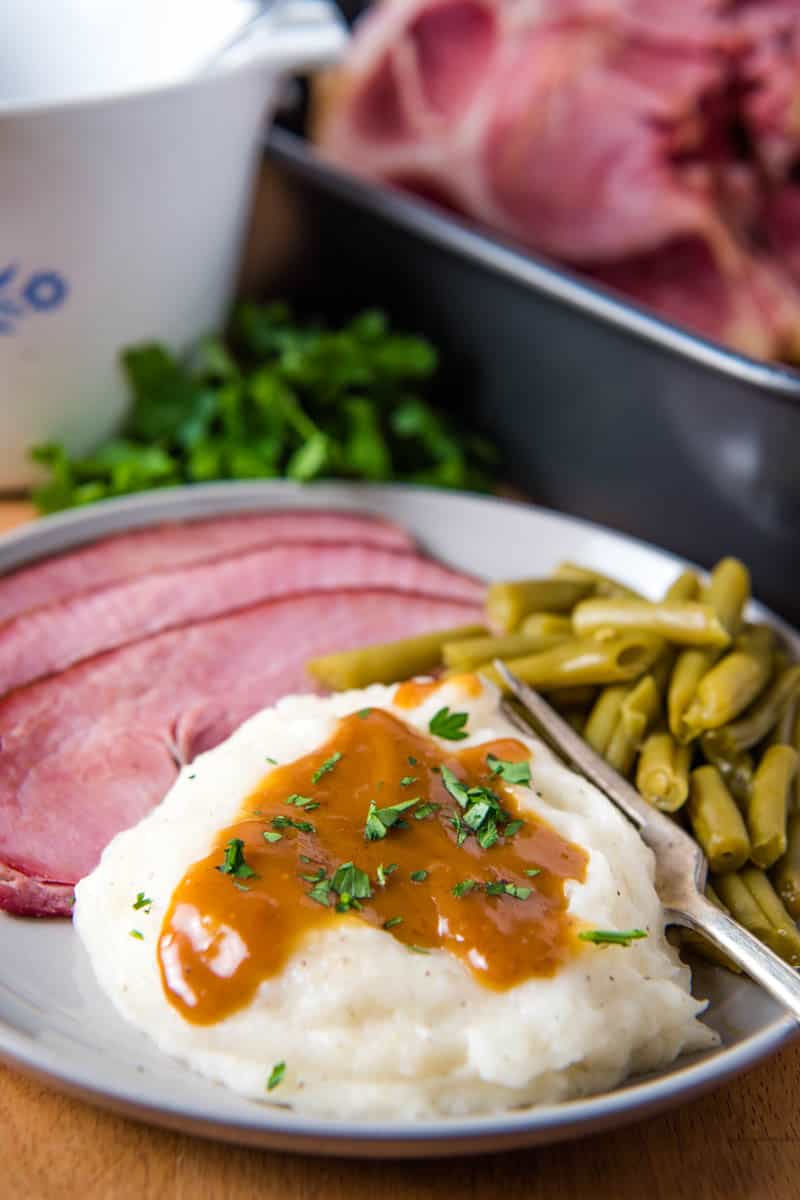
    ham drippings gravy on mashed potatoes, served with sliced ham and green beans on gray plate with fork

    Expert Tips and Recipe FAQ’s

    Why is my gravy bland?

    If your gravy happens to be bland upon tasting, you likely just need to add a little salt and pepper to give it added flavor.

    How should you store leftover gravy?

    Store it in an airtight container in the refrigerator.

    Can you freeze ham gravy with cornstarch?

    While you’d have no problem freezing a gravy made with water and flour, this gravy contains cream and will not freeze well. It will likely change the consistency when it thaws, so you’re better off not to freeze it.

    More Recipes to Enjoy with Gravy

    If you love ham gravy with cornstarch and making homemade gravy with cornstarch, you’ll love these recipes to go with your homemade gravy!

    If you try this recipe, why not leave a star rating in the recipe card right below and/or a review in the comment section further down the page? I always appreciate your feedback. You can also follow me on Pinterest, Facebook, Instagram, and YouTube. And subscribe to my email list too!

    How to Make Ham Gravy with Cornstarch

    Learn how to make ham gravy with cornstarch and either drippings or broth. This easy recipe will help you cook and thicken any gravy, including ham, turkey, chicken, or brown gravy. It's especially good at Thanksgiving, Christmas, and Easter; but it's also great for family dinner!

    • Medium Saucepan
    • Whisk
    • Liquid Measuring Cup
    • Gravy Boat
    • 1/4 cup water
    • 1/4 cup heavy whipping cream
    • 3 tablespoons cornstarch
    • 2 cups ham drippings
    1. First, whisk together the water, heavy whipping cream, and cornstarch in a liquid measuring up, and set aside.

    2. Add the ham drippings* or pan juices from the roasting pan, to a medium saucepan, and start to cook on medium heat.

    3. Add the cornstarch mixture to the ham drippings in the pan, and continue whisking and stirring constantly ’til the gravy begins to thicken.*
    4. Once your gravy has thickened, it's ready to pour into a gravy boat for serving.

    *You can substitute broth for drippings if you’re not making a big roast. You can use beef broth to make brown gravy, chicken broth for chicken gravy, etc. You can also substitute other types of drippings to make homemade turkey gravy, roast beef gravy, etc.

    *Depending how salty your gravy is, you may need to add a little extra water to bring that saltiness down. If you add extra water, you’ll need to add a pinch of cornstarch, as well, in order to keep a thicker consistency. Always, always, if you’re going to add more cornstarch, whisk it together with liquid in a separate dish first to avoid lumps.

    How to Avoid Lumpy Gravy

    Here are a few tips to help prevent lumps in your gravy…

    • It’s important to start by mixing together the cornstarch, water, and heavy whipping cream in a small small bowl or glass measuring cup. Whisking this together in the beginning will help prevent lumps in your gravy.
    • Use a whisk to stir your gravy while it’s cooking. It’s pretty much a given that you may have a few lumps, but you can minimize them by whisking the gravy.
    • Also, there’s no hurry. Take your time to avoid any lumps in your gravy.
    Condiments, Sauces & Dressings
    American
    cornstarch gravy, gluten-free ham gravy, gravy for ham, gravy recipe, ham gravy with cornstarch, how to make gravy with cornstarch, how to make ham gravy with cornstarch, how to thicken gravy with cornstarch, recipe for ham gravy
  • Easy Ham Gravy Recipe {How to Make with Drippings}

    Easy Ham Gravy Recipe {How to Make with Drippings}

    How to make an easy homemade ham gravy recipe, made last minute with leftover ham drippings. This gravy makes a delicious side dish with ham, mashed potatoes, and all the fixings at your holiday or family dinner!

    Homemade ham gravy (like its counterpart turkey gravy) is a staple side dish whenever we cook a ham in the oven, which is mostly on holidays like Thanksgiving, Christmas, or Easter. Family dinner and holiday dinners just wouldn’t be the same without gravy to smother over our sliced ham and mashed potatoes.

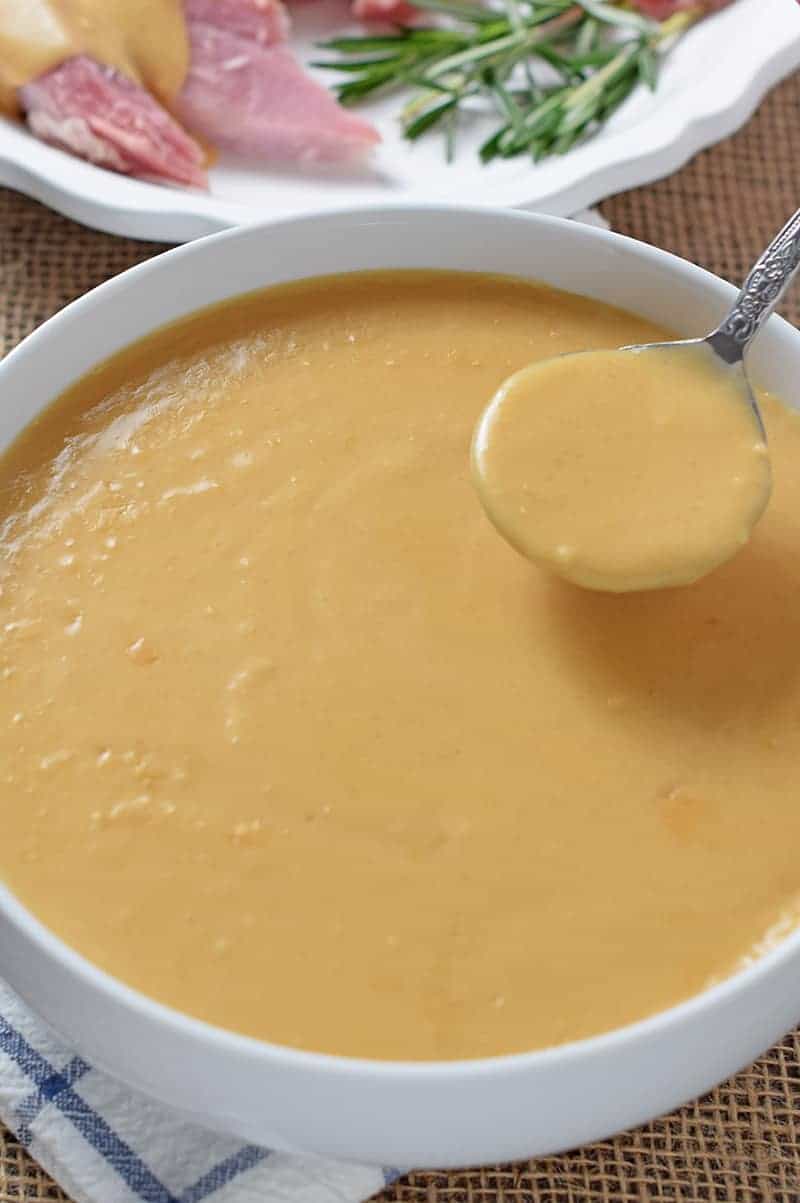
    homemade ham gravy recipe in white serving bowl with spoon

    Now it’s important to remember… The main flavoring for ham gravy comes directly from the ham itself. So if you glaze your ham, like with a brown sugar glaze or something like this sweet pineapple honey baked ham, the sweet flavoring from the glazed ham will go into your gravy for ham, and the end result will be a sweet gravy.

    It’s so easy to make homemade gravy, and it’s super quick too. It’s delicious and definitely worth the minimal effort.

    ham gravy on mashed potatoes served with ham and green beans on white plate

    Why You’ll Love Knowing How to Make Ham Gravy

    There are a lot of reasons to love this delicious gravy recipe…

    • It’s an easy condiment to make, takes less than 30 minutes to make, and it’s something you can make last minute just before serving the main meal.
    • It takes a very minimal amount of ingredients to make gammon gravy. In fact, they’re all pretty simple, and you likely already have them on hand.
    • It’s a delicious ham gravy!
    • Ham gravy is so versatile and can be used in so many delicious ways. Not only does it complement a ham dinner, but it makes a very tasty addition to your next baked potato bar or mashed potato bar, as well as a tasty dip for leftover ham crescent rolls. And you can use it in place of brown gravy or chicken gravy in a mashed potato bowl.
    • It’s a fantastic addition to your holiday dinner spread. I’ve added this ham gravy recipe with drippings to my collections of favorite Thanksgiving recipesChristmas recipes, and Easter dinner recipes, where you’ll find all the holiday inspiration you need in one place.
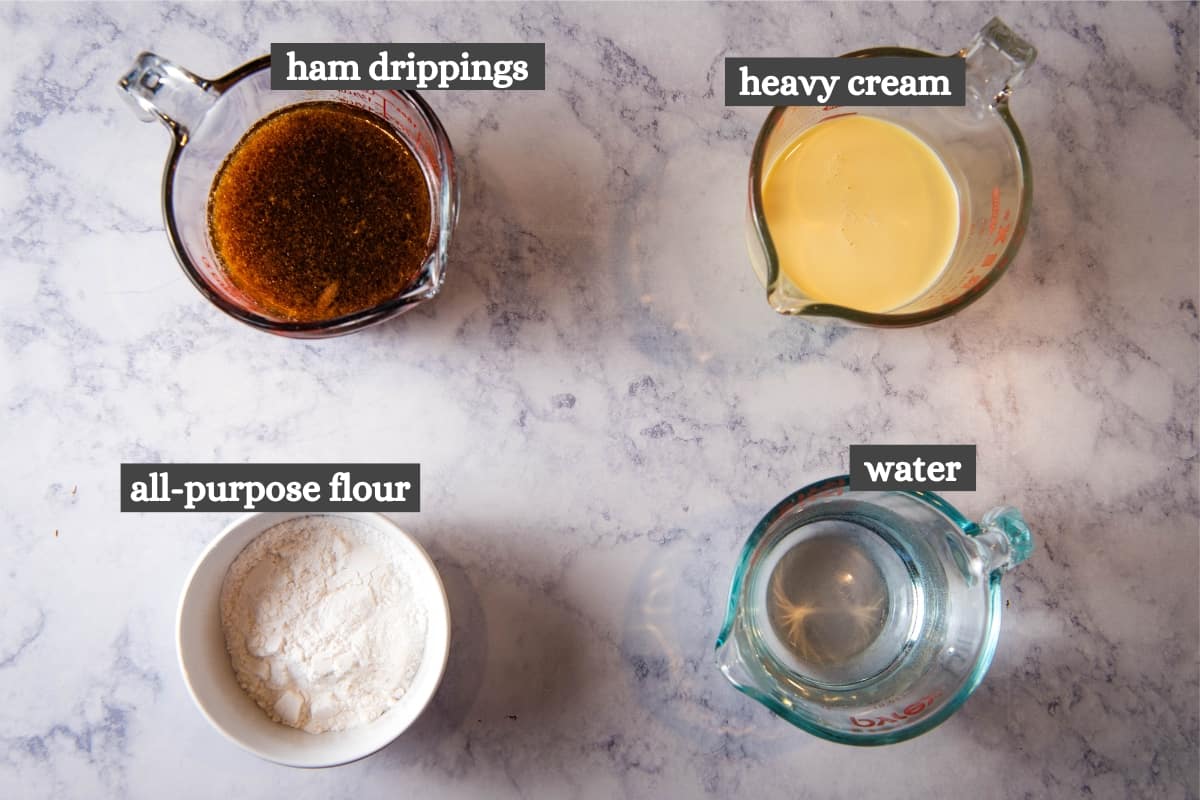
    ham gravy ingredients on white marble countertop

    Ingredients and Substitutions Notes

    You’ll need just a handful of ingredients to make gravy for gammon (or ham). While you should have most of the ingredients on hand, you’ll likely need to purchase a ham at the grocery store, in order to have leftover ham drippings.

    • All-Purpose Flour – I prefer to use an unbleached all-purpose flour; you can also use a good gluten-free flour, although it’s important to note that gravy made with gluten-free flour doesn’t stay thick as long as with regular flour… In other words, it won’t store well. If you need a good gluten-free ham gravy alternative, ham gravy with cornstarch is just the thing.
    • Heavy Cream – You can skim heavy cream off of raw milk, or you can use store bought heavy whipping cream.
    • Ham Drippings – You can scoop the ham juices and pan drippings from the roasting pan after baking a spiral ham, bone-in whole ham, or boneless ham. You should have enough drippings to at least make a small batch of homemade gravy. These leftover ham drippings will likely give you all the delicious flavor you need without any extra seasoning, salt, or black pepper. If you don’t have any ham drippings, you can always use ham broth made from bouillon to make ham gravy.
    • Water

    How to Make This Old-Fashioned Ham Gravy Recipe

    Making this easy gravy for ham is actually really simple, but there are a few tips and tricks that will ensure you make a really good gravy from ham drippings.

    How to Avoid Lumpy Gravy

    Before we get started, here are 3 tips for preventing lumpy gravy…

    • It’s important to start with a roux, and you do this by mixing together the flour and heavy whipping cream in a small mixing bowl or glass measuring cup. Whisking this together in the beginning will help prevent lumps in your gravy.
    • Use a whisk to stir your gravy while it’s cooking. It’s pretty much a given that you may have a few lumps, but you can minimize them by whisking the gravy.
    • Take your time to avoid any lumps in your gravy. To me, this right here is the secret to good gravy… Patience and being willing to take your time. Work on medium-low heat, and don’t get in a hurry, and you’ll make a good gravy.

    Now Let’s Make Ham Gravy

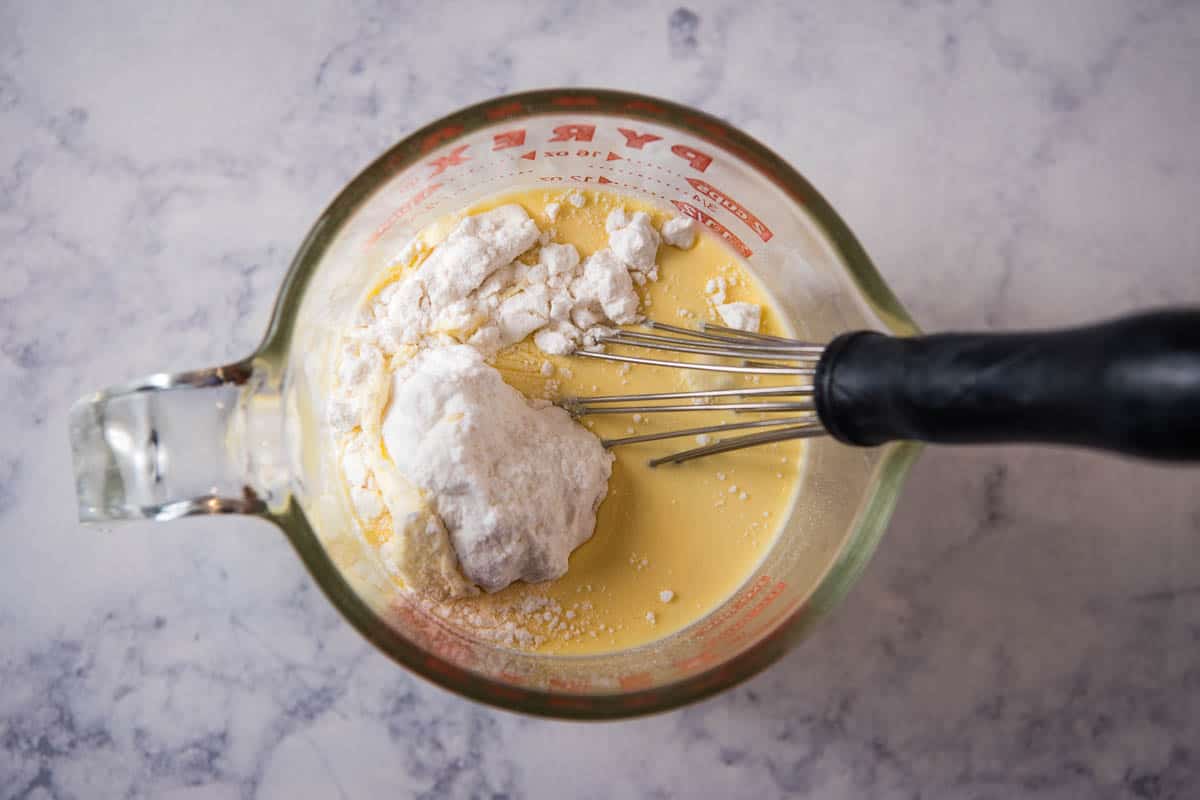
    1. Mix together the flour and heavy whipping cream in a small mixing bowl or glass measuring cup.
    making ham gravy roux in glass measuring cup with whisk
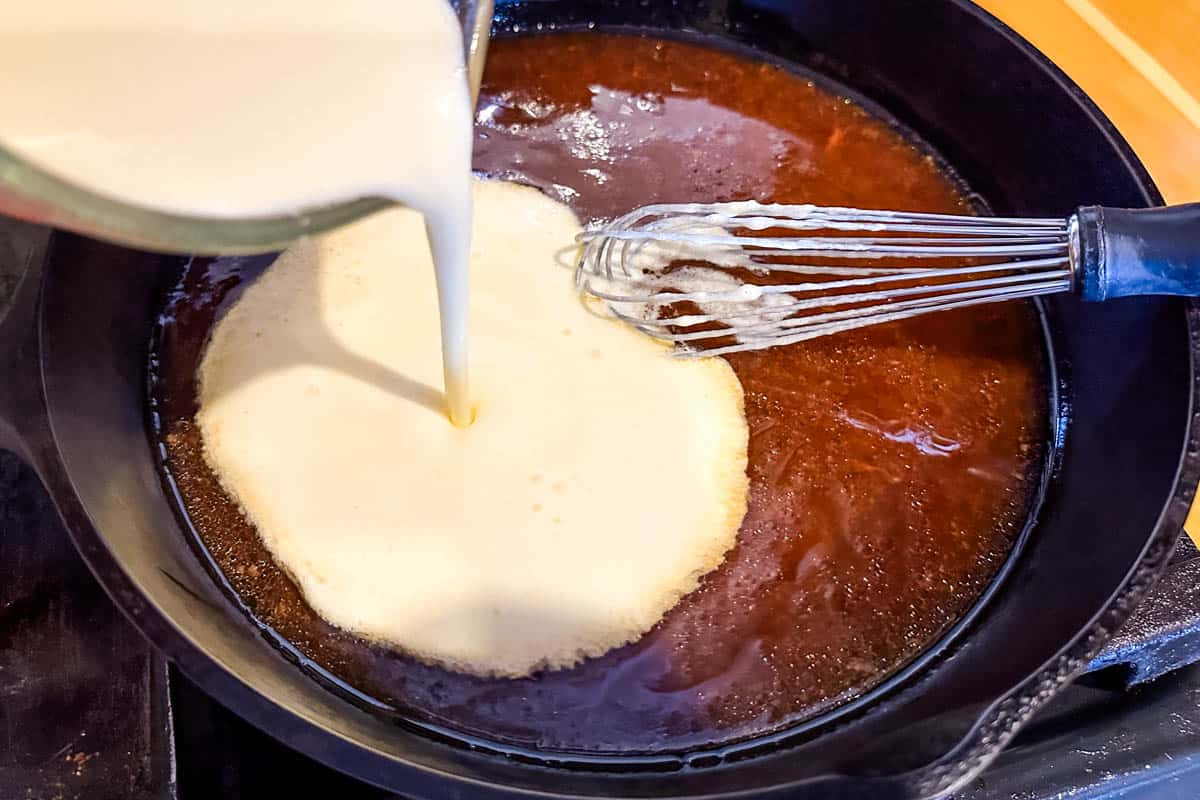
    1. Gradually whisk together the flour/cream mixture with the pan drippings in a large saucepan or skillet on medium heat.
    how to make ham gravy with roux and ham drippings in cast iron skillet
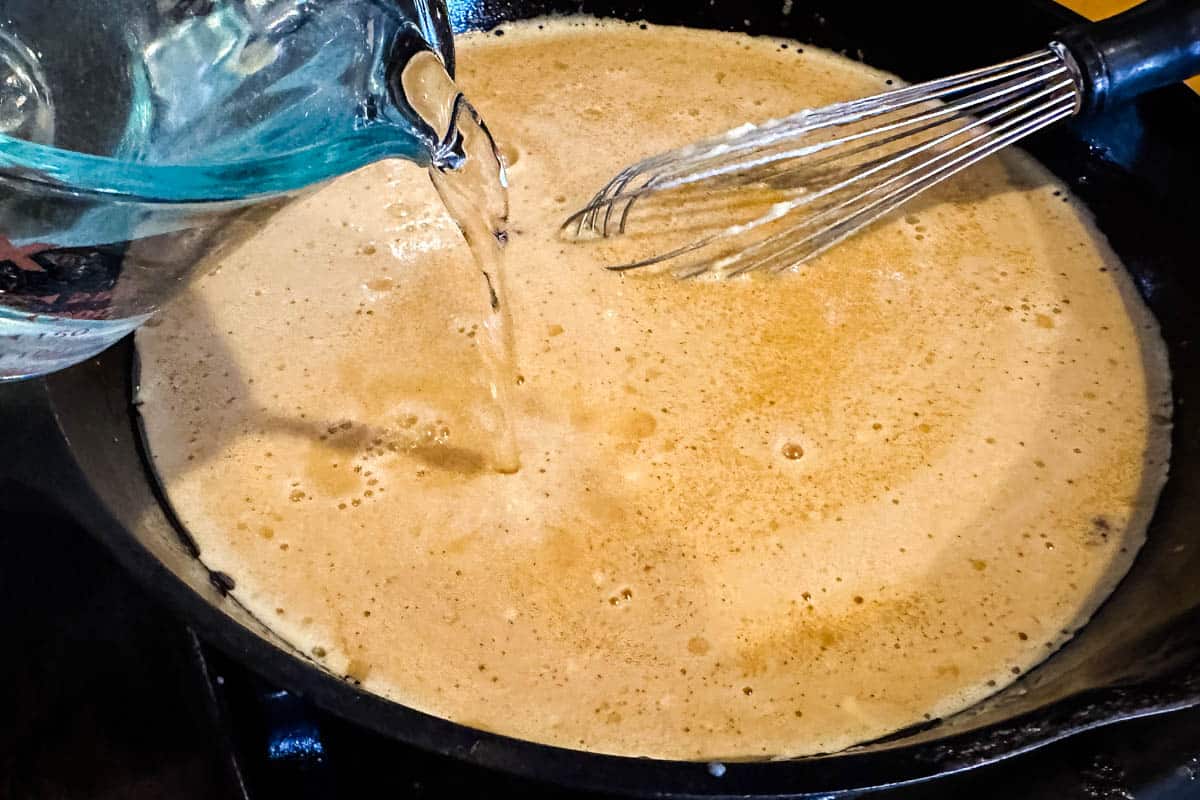
    1. Add in the water.
    whisking water into gravy for ham in cast iron skillet
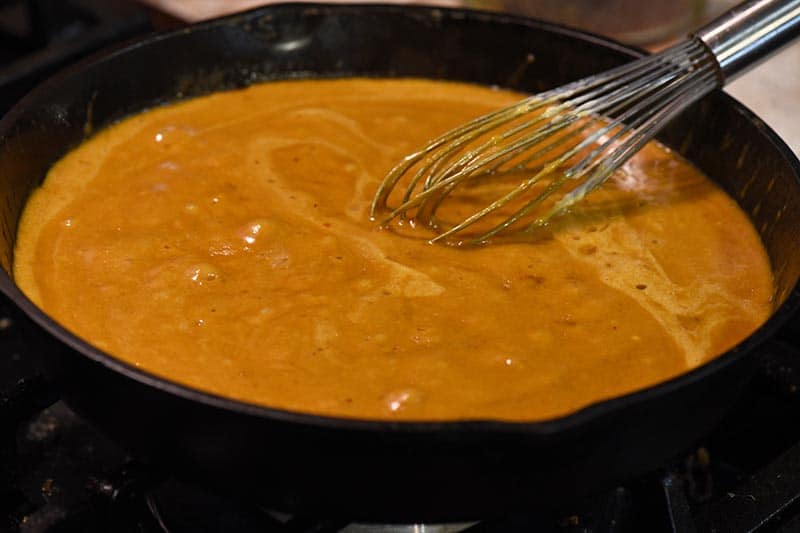
    1. Continue whisking and stirring the gravy until it begins to thicken and is ready to serve.
    simmering ham gravy recipe with drippings and whisking it until it thickens in cast iron skillet

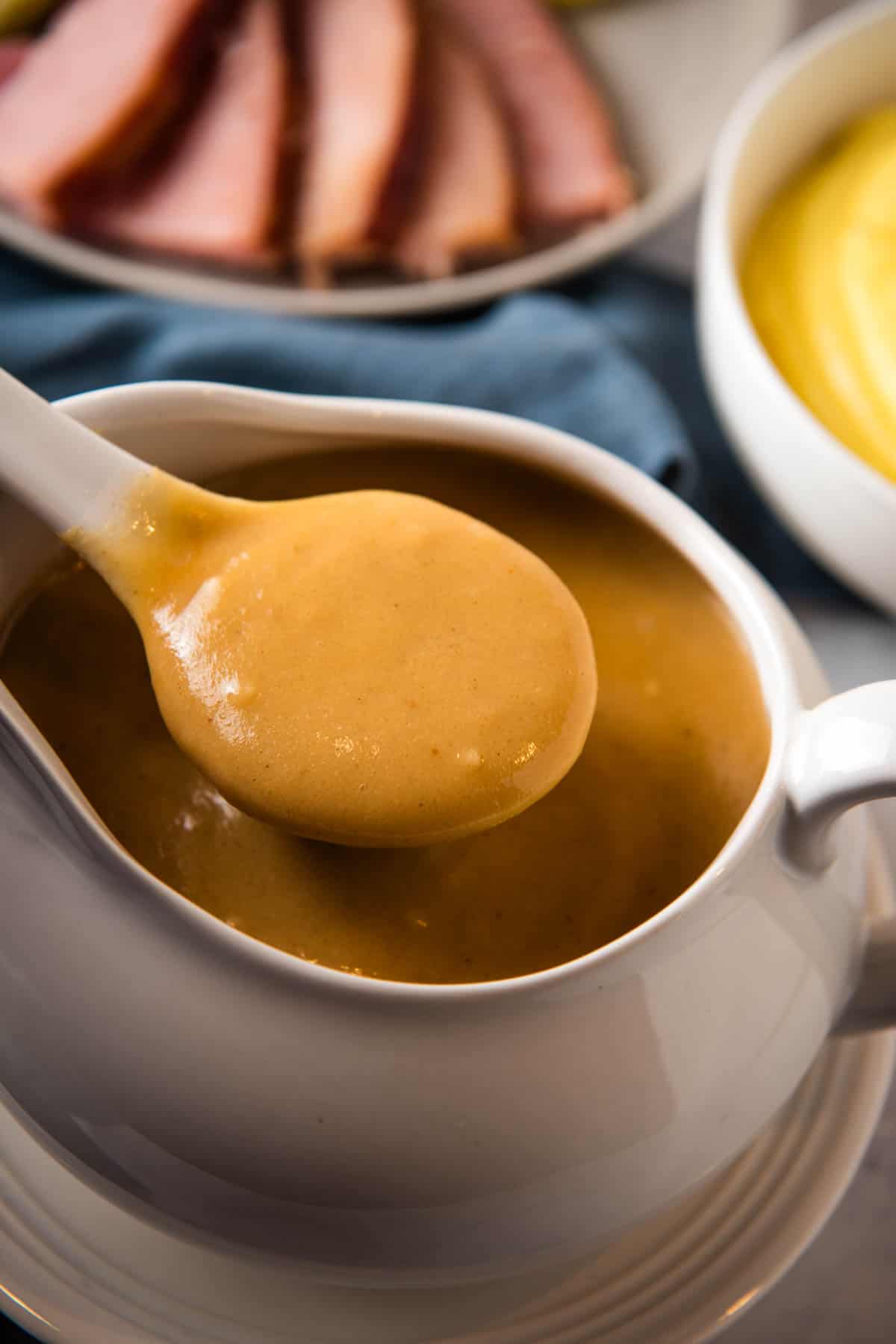
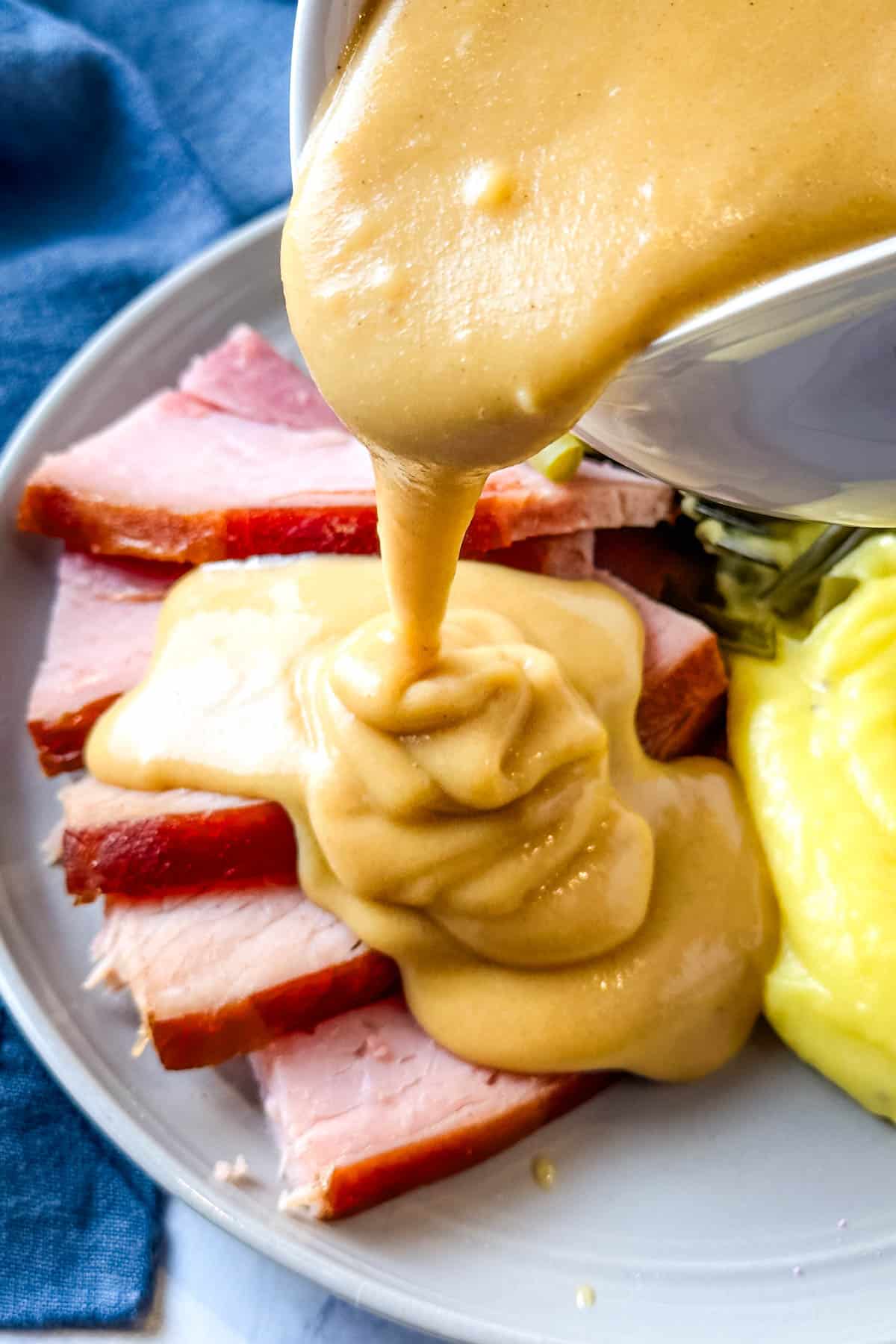
    Then just pour the gravy into a gravy boat, and serve it with ham, mashed potatoes, and all the fixin’s! It will add such a rich flavor to your mashed potatoes, you’ll wish you had that ham flavor the next time you eat potatoes.

    spoonful of homemade ham gravy over white gravy boat full of ham gravy

    Expert Tips and Recipe FAQ’s

    How much gravy should you make per person?

    The answer to this will really depend on the consistency of your gravy. When we make this recipe, we usually have a lot of leftover gravy. You want to plan on about 1/3 to 1/2 cup per person, again depending on how thick your gravy is.

    How do you store and reheat ham gravy?

    Store leftover gravy in an airtight container in the fridge; it should keep for about 3-4 days. You can re-heat gravy by placing it in the microwave in a microwave-safe dish for a few minutes, stirring between every 30-second increments of time, ’til heated through; or put the gravy in a saucepan, and heat it up over low to medium heat on the stove, constantly stirring so it doesn’t scorch.

    Can you freeze gravy?

    Yes, you can. Just be sure to put it in an airtight freezer-friendly container, so it doesn’t get freezer burn. It should keep for about 4 to 6 months.

    pouring homemade ham gravy from white gravy boat, pouring over home cooked ham

    More Side Dish Recipes to Serve with Ham Dinner

    Whenever we make a ham dinner or turkey dinner, we usually serve it with sides like Instant Pot southern green beans, honey glazed carrots, or Jiffy corn casserole. Of course, homemade cranberry sauce is a must at Thanksgiving and Christmas.

    If it’s more gravy recipes you’re looking for, Moscato Mom has a delicious recipe for slow cooker short ribs with gravy (also a keto recipe). And 918 Plate has a very yummy recipe for jumbo drop biscuits with brown butter gravy.

    If you try this recipe, why not leave a star rating in the recipe card right below and/or a review in the comment section further down the page? I always appreciate your feedback. You can also follow me on Pinterest, Facebook, Instagram, and YouTube. And subscribe to my email list too!

    Ham Gravy Recipe

    How to make an easy homemade ham gravy recipe with leftover ham drippings. Delicious side dish with ham, mashed potatoes, and all the fixings!

    • Mixing Bowl
    • Large Skillet
    • Whisk
    • Wooden Spoon
    • Heat-Resistant Spatula
    • Gravy Boat
    • 1/2 cup unbleached all-purpose flour
    • 1 cup heavy whipping cream
    • 2 cups ham drippings
    • 1 cup water
    1. Mix together the flour and heavy cream in a small mixing bowl or glass measuring cup.

    2. Gradually whisk together the flour/cream mixture with the pan drippings in a large saucepan or skillet on medium heat.

    3. Add in the water.
    4. Continue whisking and stirring the gravy until it begins to thicken and is ready to serve.
    5. Serve with ham, mashed potatoes, and all the fixin's!

    *Take your time whisking in the flour mixture to avoid any lumps in your gravy. It’s pretty much a given that you may have a few lumps, but you can minimize them by starting with the roux and taking your time, whisking the gravy.

    Store leftover gravy in an airtight container in the fridge; it should keep for about 3-4 days. You can re-heat gravy by placing it in the microwave in a microwave-safe dish for a few minutes, stirring between every 30-second increments of time, ’til heated through; or put the gravy in a saucepan, and heat it up over low to medium heat on the stove, constantly stirring so it doesn’t scorch.

    Condiments, Sauces & Dressings, Side Dish
    American
    gammon gravy, gravy for gammon, gravy for ham, gravy from ham drippings, gravy recipes, ham gravy, ham gravy recipe, ham gravy recipe with drippings, homemade ham gravy, how to avoid lumpy gravy, how to make gravy, how to make ham gravy, making ham gravy